Visit Qingshen for the moment a woven picture stops looking like a drawing and you can see the strips that make it. Qingshen County, part of Meishan in Sichuan, is known for bamboo weaving in three forms you can compare on one outing: flat pictures, shaped objects and fine weaving fitted over porcelain. In the Langou area, start with the International Bamboo Weaving Art Exhibition Hall if you want an exhibition. Choose the museum at China Bamboo Art City if you want to look closely at traditional objects. Make a short beginner session the main event only if you have a place booked.
You can visit from a Meishan hotel and return after lunch. Staying in Qingshen makes more sense if you want a longer workshop or a second morning nearby. The attractions share similar English names, so save the Chinese name and the entrance pin for the particular hall you intend to visit.
Choose the hall or make something
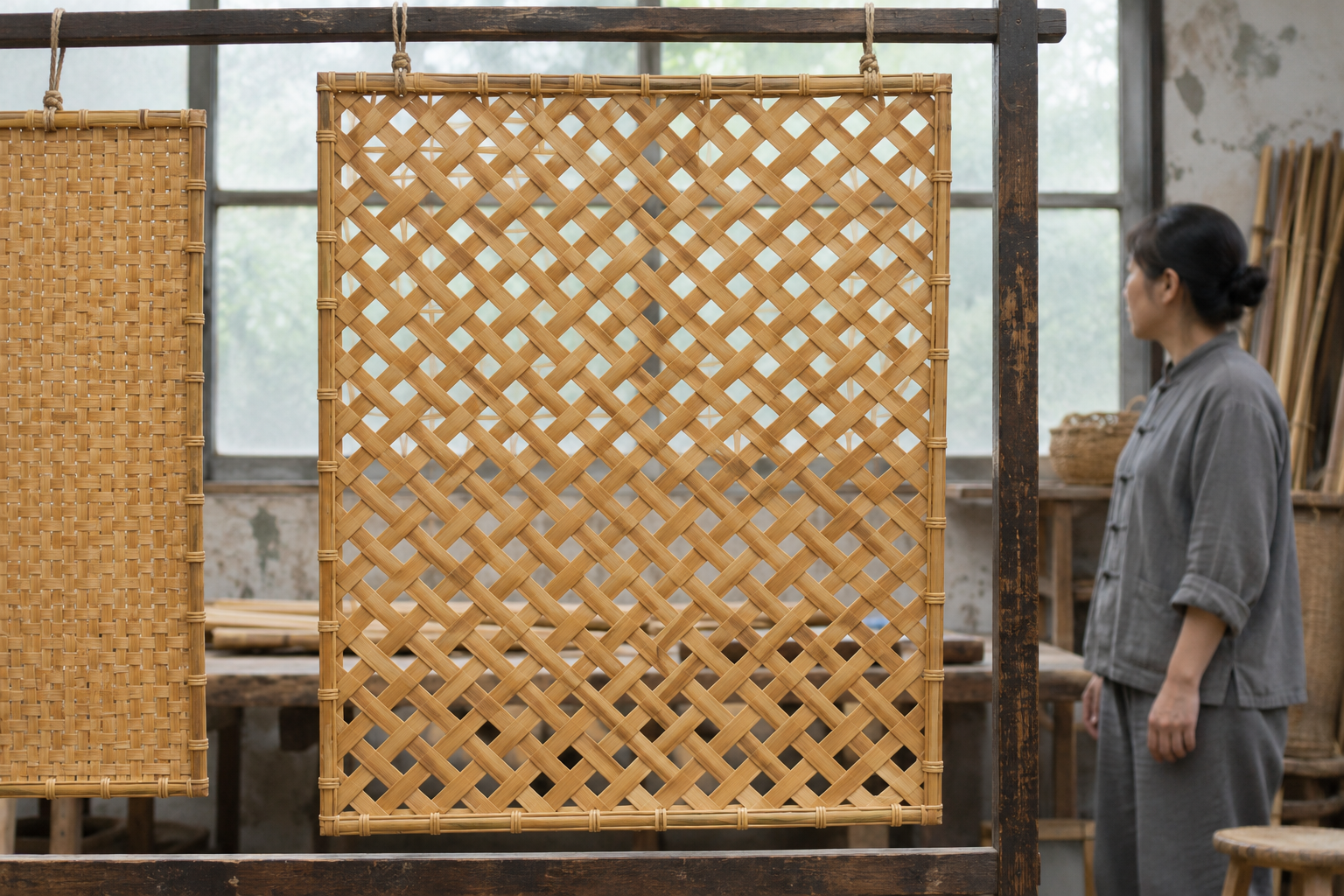
International Bamboo Weaving Art Exhibition Hall (国际竹编艺术博览馆). Use this pin for the basket-shaped exhibition building. Start by finding one flat piece you can see both from across the room and up close. Look at the change in texture where a figure meets the background, then see whether you can follow the direction of the strips through the design. Qingshen’s fine weaving can create an image dense enough that the structure is easy to miss at first glance.
China Bamboo Art City (中国竹艺城) and the China Bamboo Weaving Art Museum (中国竹编艺术博物馆). This is the other ticketed stop named in Meishan’s public visitor information. Ask for the museum entry specifically. Compare an object that holds its own shape with a piece woven over a ceramic body if both are on display. Look for the places where the weave turns around the shoulder of a vase or meets an exposed rim. A small object can make it easier to see how the maker controls the curve.
Beginner weaving. Keep one part of your morning free if you would like to sit down and try it. A simple bookmark or other small piece makes a reasonable request. Local reports show short public activities in the area as well as longer courses for organized groups. Ask for the beginner session by name and confirm the meeting point, project, length, materials and teaching language. If a lesson is your reason for travelling, settle those details before you commit to the car.
| Option | What to focus on | What to check |
|---|---|---|
| International Bamboo Weaving Art Exhibition Hall | Compare a woven image, an open pattern and a shaped object. | Correct entrance, open gallery, lighting and photography rules. |
| China Bamboo Art City museum | Look for a traditional vessel and a piece woven around a ceramic body. | The museum entry is available and the relevant objects are on view. |
| Beginner session | Ask about a small project with prepared strips and a seat. | Booking, teaching language, age guidance, tools and materials. |
In September 2026 the Meishan tourism information centre listed the two weaving venues separately and advertised both single entry and a two-venue option. It also listed a midday gap in opening. Use the Meishan visitor notice to identify the venues. Ask about the current ticket choices before you go. A late arrival before lunch can leave too little time to see a collection in detail. If you have one morning, give it to one hall and use a second stop only if it fits the confirmed hours.
Look at a flat surface, a curve and a rim
The people documenting Qingshen’s weaving tradition describe bamboo split into very fine filaments and arranged by hand. Thin strips make it possible to weave small changes in colour or density into a picture. Stand back for the full image first. Then choose one boundary, such as the edge of a leaf, and see how the weave changes across it. If the display allows a view from the side, try looking obliquely for the slight relief of crossing strips.
With a basket or another three-dimensional piece, follow one strip from the base into the wall. The base has to support the sides, and the edge has to hold the ends. If a woven porcelain vessel is on display, look at how closely the bamboo follows the solid form and where the ceramic remains visible. These two objects answer different questions about the material: how the weave supports itself and how it fits a shape already there.
A guided demonstration can show how strips of different widths behave. Ask the demonstrator to point out one repeat of the pattern or show you a sample before beginning a complicated explanation. If the day is self-guided, use the Chinese labels 青神竹编 (Qingshen bamboo weaving), 平面竹编 (flat bamboo weaving) and 瓷胎竹编 (bamboo weaving over porcelain) to make it easier to ask about an object. Follow the hall’s rules on touching and photography.
Plan Qingshen from hotel to lunch and back
Start at your hotel in central Meishan or Qingshen and agree on the arrival gate before leaving. Give the driver the Chinese name of the hall or workshop, along with the pin. When two travellers are going to different venues, agree on one lunch meeting place so each person can finish at their own pace. Add Zhu Li Xiangzi (竹里巷子) or a short walk in the bamboo wetland only if the paths you need are open and conditions are good. Group craft activities and special events have their own locations.
For lunch, choose a seated meal in Qingshen after the visit or book enough time between a morning exhibition and an afternoon workshop. Ask about whatever bamboo shoots are in season. Hanyang cured pork (汉阳腊肉), a local speciality from the same county, is another dish to look for when available. For a vegetarian lunch, specify that you also want to avoid pork stock and lard. A shared table with available vegetables and rice can be easier to arrange than a named dish if you are arriving after the lunch rush.
| Part of the day | Suggested plan | Confirm first |
|---|---|---|
| Morning | Start at your Meishan or Qingshen hotel. Ride to the agreed public hall or booked classroom. | Use the venue’s Chinese name for the drop-off pin. |
| Lunch | Sit down in Qingshen for a shared meal. Ask about seasonal bamboo shoots or Hanyang cured pork. | Kitchen hours, ingredients, meat stock, and any dietary needs. |
| Return | Rejoin the car at the agreed gate or lunch spot. Return to the hotel or continue to the named station. | Driver waiting, luggage space and final drop-off. |
For travellers who tire easily on their feet, a single gallery and a seated lunch are enough. Ask how far the relevant road drop-off is from the gallery door, whether you will need stairs and where you can sit. A weaving lesson involves hand work even when everyone is seated. Ask for larger strips or choose to watch if fine finger movements would make the session uncomfortable. In wet weather, skip the outdoor detour and use a confirmed indoor venue, provided road access and the short walk from the gate are suitable.
Finish at a named hotel or station. Qingshen town, the craft area and central Meishan are different drop-offs. If you need your bags, retrieve them at the hotel before going to the station, or confirm luggage space and a safe storage arrangement before travelling with them. Use a later train after a workshop if the finishing time is uncertain. Carry your original passport and confirm how visitors with your document buy or collect the hall ticket. Published accounts of overseas trainees describe organized classes. For an independent visit, confirm the current counter or booking method for the specific venue you choose.
Stay in Meishan or Qingshen
Pick Meishan if the Sansu Shrine is as important to you as the weaving. The shrine has its own courtyards and literary context, so it is worth a separate morning. Pick Qingshen if you would rather stop for lunch and take a second look at the craft displays later. Choose a hotel with a convenient vehicle drop-off for your bags and an evening meal you can reach comfortably. Ask about check-in and meal hours before choosing a small property away from town.
| Trip length | Suggested order | Hotel nights |
|---|---|---|
| 3 days / 2 nights | Arrive in Meishan. Visit Qingshen on day two and return to your hotel. Leave from the agreed station on day three. | 2 Meishan. |
| 4 days / 3 nights | Arrive in Meishan. See the Sansu Shrine on day two. Visit Qingshen and return on day three. Depart on day four. | 3 Meishan. |
| 5 days / 4 nights | Arrive in Meishan and visit the Sansu Shrine on day two. Transfer to Qingshen on day three. Visit the bamboo halls on day four. Continue from the agreed station on day five. | 2 Meishan, then 2 Qingshen. |
For a larger craft-focused trip, Jiajiang’s bamboo paper guide covers another use of the material in a different county: forming sheets for writing and printing. Give that visit its own day from the Leshan and Emeishan area if you want time to compare the two crafts. For a short stay based in Chengdu, use Qingshen as the main destination for the day and decide on the complete return journey before adding another stop.
Questions about visiting Qingshen
Which bamboo venue should I visit first?
Start at the International Bamboo Weaving Art Exhibition Hall for a gallery visit. Choose the China Bamboo Art City museum instead if you are especially interested in traditional objects. If your lesson has a fixed start time, use the booked meeting point as your first stop and fit a gallery around it.
Can I weave a piece without taking a long class?
Short public activities have been offered in Qingshen. Ask whether a small beginner project is running on your date and whether you can reserve it. Confirm the teaching language and the use of prepared strips. For a child, ask about age guidance and who handles any cutting tools.
Can I visit the morning I arrive by train?
Yes, if there is enough time after the station transfer and you know when the hall closes for lunch. Allow time to deal with your bags. If your arrival is close to a midday closure, have lunch first and visit at the next confirmed opening, or keep the craft visit for the next morning.
What can Verotrip quote for this visit?
Price on request. Tell your travel consultant whether your priority is a gallery, a beginner class or time in the county. Include your date, pickup hotel, final drop-off, group size, luggage and teaching-language needs. Confirm the original-passport ticket method and have the written quote specify admissions, tuition and materials, vehicle waiting and return, any English-language assistance, lunch and hotel nights as separate items.