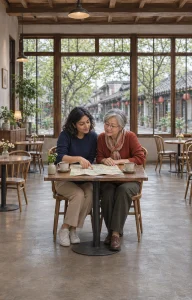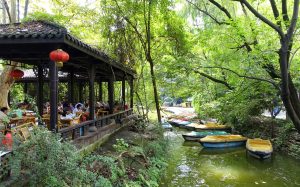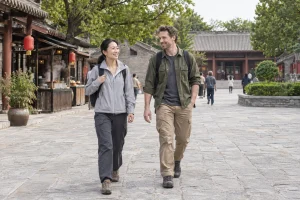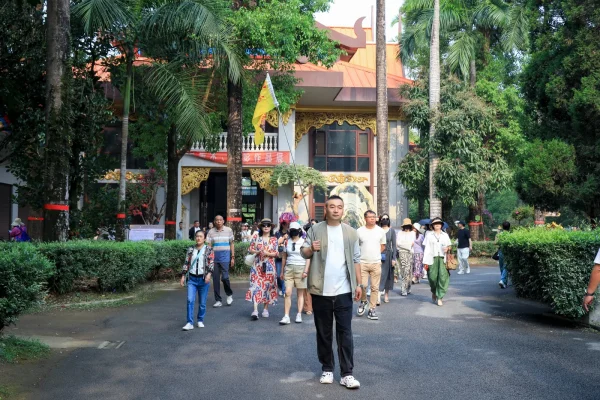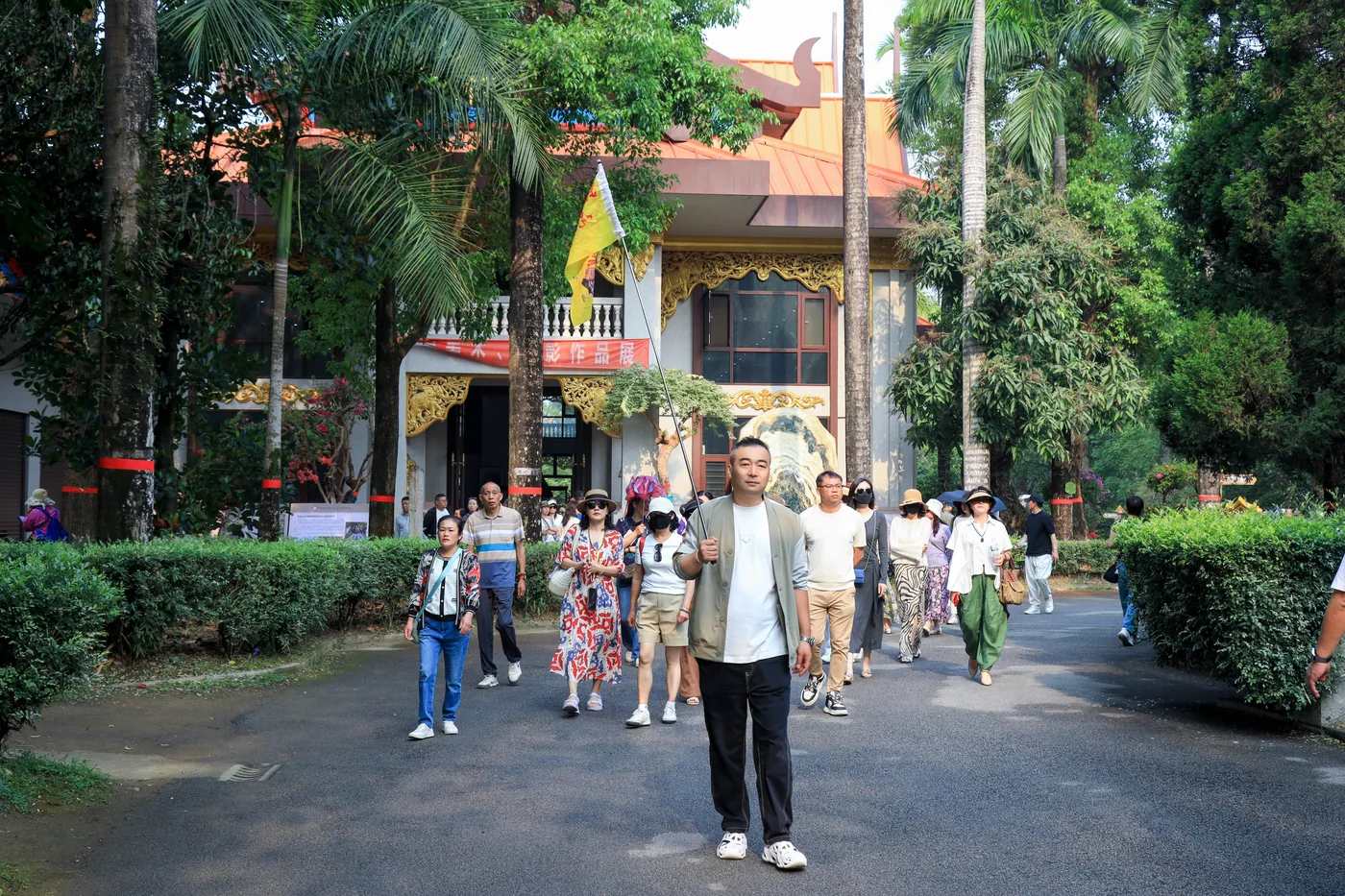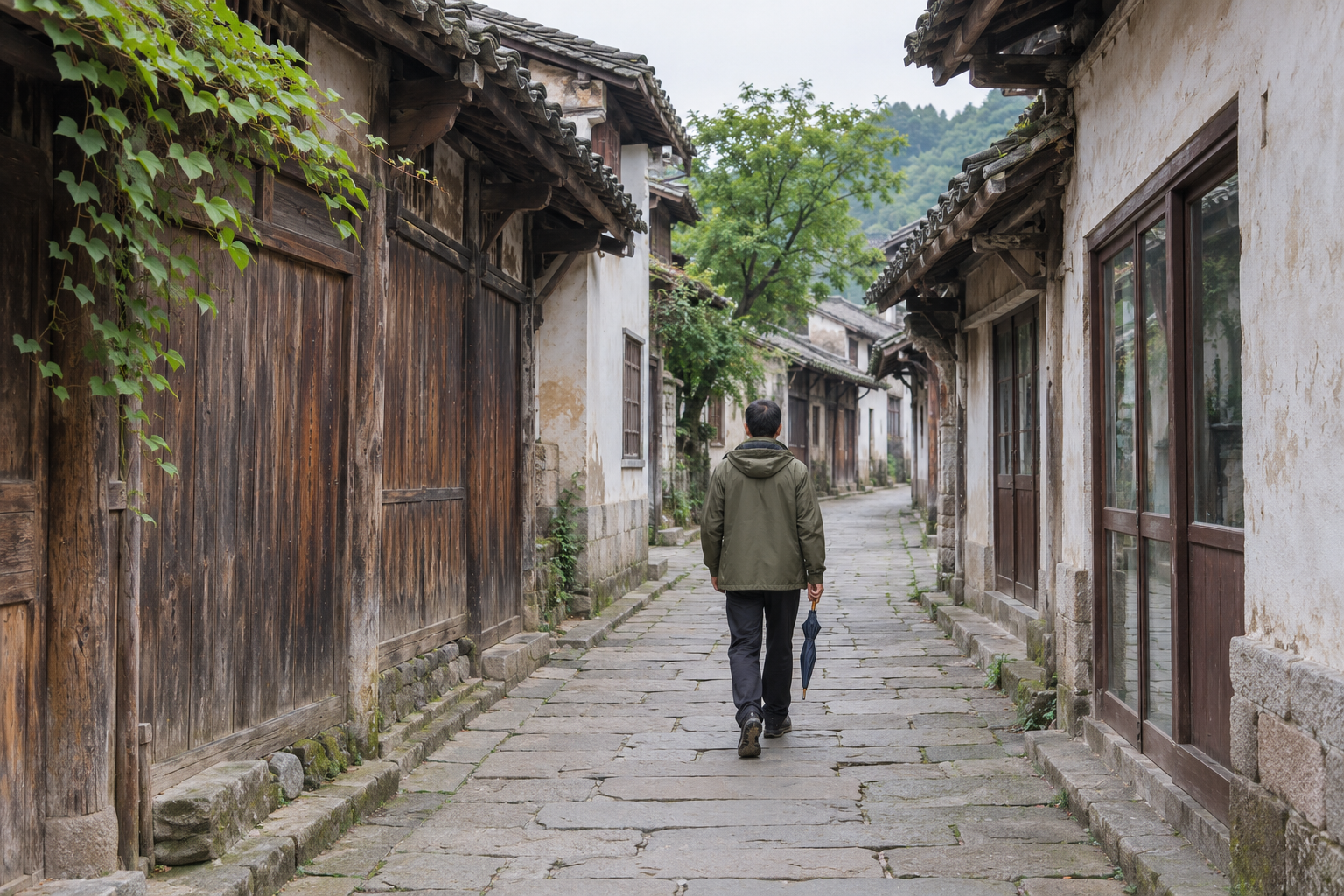
Choose Chengxiang for a slower day of old streets, an academy and a seated local lunch. This town in Chengdu’s northeastern Qingbaijiang District works best when you want to look closely at buildings and ordinary street life. Make Xiuchuan Academy your cultural priority, subject to the actual visitor arrangements, and leave time to walk back through the lanes before returning to your Chengdu hotel.
Save the destination as 城厢古城,成都市青白江区, and the academy as 绣川书院. The district matters: “Chengxiang” is not a precise pickup or navigation instruction on its own. Plan this as a dedicated daytime outing, with the full outward journey, lunch and return included in your time allowance.
Why Chengxiang deserves its own day
The appeal is the relationship between the town’s lanes and its places of learning and worship. Instead of treating every doorway as another attraction, choose a few features to understand: how a courtyard draws you away from the street, how classrooms and halls are arranged, and how older buildings sit beside present-day homes and businesses.
A 2022 People’s Daily Overseas report describes the town’s conservation and renewal, including its street network, academy and traditional food businesses. It also discusses buildings needing protection. That is a useful way to approach Chengxiang: a place with layers of use and repair, rather than an entirely untouched historical set.
Do not assume that a courtyard shown on a map is open to visitors. Some places serve residents or businesses; others have separate exhibition or activity arrangements. A worthwhile walk can include looking at permitted exteriors without entering every building. Keep residents’ entrances clear and ask before photographing a person at close range.
Chengxiang is a different choice from the Hakka interests around Luodai or a Huanglongxi riverside outing. Use our Luodai and Huanglongxi comparison to choose the town that matches your interests. Visiting several ancient towns in one day leaves little time to notice what makes each one different.
Start with the town layout, then choose one main interior
A Chengxiang town report published in April 2026 describes a model of the old town in the visitor hall and identifies several cultural stops. If that orientation display is accessible on your date, use it to understand the street pattern before choosing a short walking circuit. Otherwise, use the current visitor map and ask where the open public route begins.
The visitor hall and Xiuchuan Academy serve different purposes. The first can explain the town’s setting; the second gives you an architectural and educational subject to explore. Neither needs to become an exhaustive exhibition visit. Agree where you will finish and how you will reach the return vehicle before leaving the arrival area.
| Focus | What to look for | What to establish first |
|---|---|---|
| Town orientation | The street pattern and the relationship between lanes and cultural buildings. | The accessible visitor information point and a manageable public walking route. |
| Xiuchuan Academy | The sequence of courtyards, teaching spaces, windows and rooflines. | Current public rooms, admission arrangements and the interpretation you want. |
| One additional cultural building | A Confucian or temple subject that genuinely interests the party. | The exact venue, its open visitor area and the additional walking involved. |
| Street life and lunch | Permitted exterior views, food businesses and a seated rest. | A practical dining choice and the walk back to the collection point. |
The Civil Temple and Martial Temple are alternatives for extending the cultural theme, rather than compulsory extra stops. The April report discusses Confucian material at the former and carved architectural features at the latter. Ask which areas are open and choose one if the party still wants another interior after the academy.
The same report mentions several other historical sites, but a list of names is not a ready-made walking route. Pick an additional stop only after checking its location, public access and relevance to your interests. Avoid turning a relaxed academy visit into a race around a long checklist.
What to look for at Xiuchuan Academy
A January 2025 Chengdu reporting visit describes Xiuchuan’s sequence of four courtyards, classrooms and lecture spaces, with grey tiled roofs and lattice windows. It identifies the buildings’ Qing architectural character. The institution’s earlier history and the age of every building component are different questions; avoid assuming that everything you see dates from its foundation.
Start with the transition from street to courtyard. Notice how the view changes as you move through the permitted entrance, then look at the placement of the teaching spaces. Where interpretation is available, connect the rooms with the academy’s educational purpose. You can learn more from a few well-explained features than from photographing every surface.
Windows and rooflines provide another focus. Look at repetition, proportions and the way openings frame an adjacent space. Stay on the visitor route and observe carvings without touching them. Do not enter a classroom, side room or upper level merely because a door is open; ask whether it belongs to the public visit.
A September 2024 overseas media visit included the academy and specially arranged cultural activities. Such reporting helps explain the kinds of interpretation that have taken place here, but it does not establish an everyday rubbing workshop, tea session or English-language programme. If an activity matters to your trip, request its named provider, date, language, duration and separate cost.
Make lunch part of the town visit
Sour-and-spicy vermicelli and sweet-skinned duck are two local food options mentioned in the 2022 reporting on West Street. Look for the actual menu and preparation on the day rather than expecting a named historical stall to trade unchanged. Choose a seated meal if the academy and lanes have already involved a lot of standing.
For vermicelli, ask about chilli, broth, toppings and portion size. For duck, decide how much the party wants and what will accompany it. A shared duck dish, a vegetable dish and rice may suit a leisurely meal better than several large snacks eaten while walking. These are ordering suggestions, not a fixed restaurant menu or an included lunch.
Explain dietary needs separately from your preferred spice level. “Less chilli” does not answer questions about meat stock, cooking fat, peanuts or other ingredients. If a provider cannot establish the preparation you need, choose another meal. Carry a usable translation of important requirements and avoid relying on a dish’s English name alone.
A January 2026 report describes foreign visitors enjoying a Laba festival banquet on West Street. That is evidence of a particular public celebration, not an everyday long-table meal. Plan around ordinary dining; treat any festival, performance or tasting as a separate, date-specific possibility.
A complete outing from a Chengdu hotel
Have breakfast before leaving and carry a small day bag. Confirm the town’s current drop-off location, the walk from there to your first stop and the collection point for the return. An address in a narrow lane may be useful for finding a building on foot but unsuitable for meeting a vehicle.
Morning: travel from the hotel, orient yourselves at the visitor area and prioritise Xiuchuan Academy if its arrangements have been confirmed. Keep the first street walk short enough that everyone arrives at the main visit with energy. If admission or weather changes, choose the agreed alternative rather than waiting indefinitely at a closed entrance.
Middle of the day: walk towards your selected dining area and take a proper lunch break. Discuss whether the afternoon should contain another cultural stop or simply a shorter return through the public streets. There is no need to add a second temple just to fill the time.
Afternoon: finish the chosen lane section, return to the agreed pickup point and travel back to the same Chengdu hotel. Allow for traffic and the final walk to the vehicle. Keep dinner flexible at your base rather than attaching an inflexible city performance to the return.
A booked car arrangement should specify waiting, permitted pickup points and the complete hotel return. If using public transport, check the actual connections in both directions, including the last local leg. A station name or an advertised train journey does not account for reaching the station, waiting, changes and the walk at the destination. This guide does not promise a direct metro journey or a fixed hotel-to-town travel time.
Choose a base and allow enough full days
Keep your existing Chengdu hotel for a single Chengxiang outing. That makes it easier to leave large bags in agreed storage and return to familiar restaurants and transport. Compare central areas in our Chengdu trip-planning guide, then choose the actual property for the rest of your stay as well as this one day.
Staying in Qingbaijiang can make sense when you deliberately want more time in the district. It changes the wider itinerary, so check the precise hotel address, original-passport check-in arrangements, room access and onward transfer before moving. A photograph of a courtyard hotel or a special hosted visit does not confirm a room for your dates.
| Stay | Suggested sequence | Hotel nights |
|---|---|---|
| 3 days / 2 nights | Day 1: arrival and hotel transfer. Day 2: Chengxiang, lunch and same-hotel return. Day 3: breakfast, checkout and departure transfer. | Chengdu 2 nights. This gives the only full day to the town. |
| 4 days / 3 nights | Day 1 arrival. Day 2 a selected Chengdu city visit and meal. Day 3 Chengxiang with lunch and complete return. Day 4 departure. | Chengdu 3 nights. Keep one base for both full days. |
| 5 days / 4 nights | Day 1 arrival. Days 2 and 3 separate city interests, meals and hotel returns. Day 4 Chengxiang. Day 5 checkout and onward transfer. | Chengdu 4 nights. Reorder the full days around confirmed openings and weather. |
For a first Chengdu visit with only one full day, make a clear choice between the city priorities and this town excursion. Chengxiang can be the main interest, but it should not quietly displace a panda or museum visit you had assumed was also included. The table is a planning framework; each named city attraction needs its own current arrangements.
Three days and two nights mean two actual hotel nights. On the departure day, allow for breakfast, checkout, baggage collection and the full transfer to the station or airport shown on your ticket. Chengdu East, Shuangliu Airport and Tianfu Airport are different endpoints. Send the exact details rather than requesting a generic “Chengdu transfer.”
Walking, weather and luggage
Expect a town visit to involve standing as well as walking. Courtyard thresholds, uneven paving and the approach from a drop-off point can matter more than the distance shown on a map. Wear shoes with grip and check the actual route for a wheelchair or stroller; the presence of a renovated visitor area does not establish step-free access to every historical building.
For a shorter version, keep orientation, one confirmed interior and lunch, then return. This preserves the purpose of the outing without requiring the whole party to continue to every lane. Arrange a clear meeting place if companions split up, and make sure someone can communicate with the transport provider.
In light rain, shorten the exposed walking and choose an available seated break. Interiors still need confirmed access; they are not automatic wet-weather shelters. Under a severe-weather warning or a local closure, change the day rather than relying on the old streets remaining usable. In warmer conditions, avoid making the midday period one continuous outdoor walk.
Keep suitcases at the hotel by agreement when returning there. If luggage travels with you, confirm passenger and bag capacity, storage responsibility and the retrieval point. Do not assume that the academy or visitor hall can store a large case. A same-day flight or train requires a separate connection assessment; move the town outing earlier in the stay when the margin is too small.
Entry, interpretation and the written proposal
Reports of ordinary foreign visitors in the public streets support Chengxiang as a place to consider for an overseas visitor’s itinerary. They do not verify every passport’s booking process at every venue. Confirm the named interiors, date, original-document requirements and actual payment or collection channel before committing to them.
If you want the educational history explained in English, specify accompanying interpretation rather than assuming an English-speaking staff member will be available. Decide whether you want a short architectural introduction or a more detailed cultural visit. Any arranged workshop needs separate confirmation; an exhibition about a craft is not the same thing as participating in it.
| Item | What to specify | Avoid assuming |
|---|---|---|
| Transport | Hotel pickup, lawful drop-off, waiting, luggage arrangements and the complete return endpoint. | That a one-way fare or driver automatically includes an English cultural guide. |
| Visits and activities | Named venues, date, passport procedure and any separately confirmed activity. | That a public street visit includes all interiors, workshops or festival events. |
| Meals and accommodation | The lunch arrangement, dietary communication and any hotel nights explicitly selected. | That snacks, a banquet, a courtyard hotel or drinks are included. |
| Changes and other costs | Applicable price, cancellation or weather terms, overtime and any insurance arrangement. | That an illustrative itinerary establishes availability or a confirmed departure. |
Price on request. Send Verotrip your dates, hotel, party size, cultural interests, walking limits and the required return destination through Plan My Trip. A travel consultant can use those details to develop a selective proposal. Transport, admissions, interpretation, activities, meals, accommodation and insurance apply only when stated in the written confirmation.
For another independent cultural outing, our Baoguang Temple guide focuses on Xindu and its Arhat Hall. Compare the subject and the full journey; a place elsewhere in northern Chengdu is not automatically a convenient addition to this academy day.
Questions about visiting Chengxiang
Is Chengxiang mainly a shopping street?
Browsing can be part of the visit, but the academy, public lanes and selected cultural buildings give it a more specific purpose. Choose one historical subject and a meal rather than expecting every business or courtyard to be an attraction.
Can we visit every courtyard and temple?
No complete-access promise is made here. Check the current public areas and any separate venue arrangements. Closed doors, residential areas, restoration work and private spaces should remain outside your route.
Are the festival meals and workshops available every day?
No. The activities described in dated reports belonged to particular visits or events. Build the day around confirmed public visiting and ordinary dining, then add an activity only when its actual provider and date have been established.
Do we need to stay overnight in Chengxiang?
A same-hotel Chengdu return is the plan developed here. An overnight stay is an optional change for people who want more district time, with its own hotel confirmation and onward transport. It is not needed simply to justify a selective academy-and-lanes visit.