Make Baoguo Temple the cultural focus of a lower Emeishan stay. Read the entrance inscriptions, follow the rising halls at your own pace and observe the working Buddhist setting. Lunch and a hotel return complete the half-day; the Golden Summit needs a separate plan.
Save 峨眉山报国寺 as the destination on your map. If you arrange a lift, agree on a meeting point for the return as well. A coach boarding point for the upper mountain can be a different pin from the temple entrance.
For a holiday combining the wider mountain with Leshan, start with the Emeishan and Leshan trip planner. The visit here is more focused: understand one temple well, eat locally and choose a useful lower base.
Start with the name and the entrance
Emeishan’s official local-history account traces the temple to the Ming Wanli period, when it was called Huizong Hall. The earlier name referred to the meeting of Confucian, Buddhist and Daoist traditions. The account records its move and rebuilding in the Qing period, followed by the Kangxi emperor’s bestowal of the Baoguo name in 1703. Source: Emeishan municipal local-history extract, March 2023.
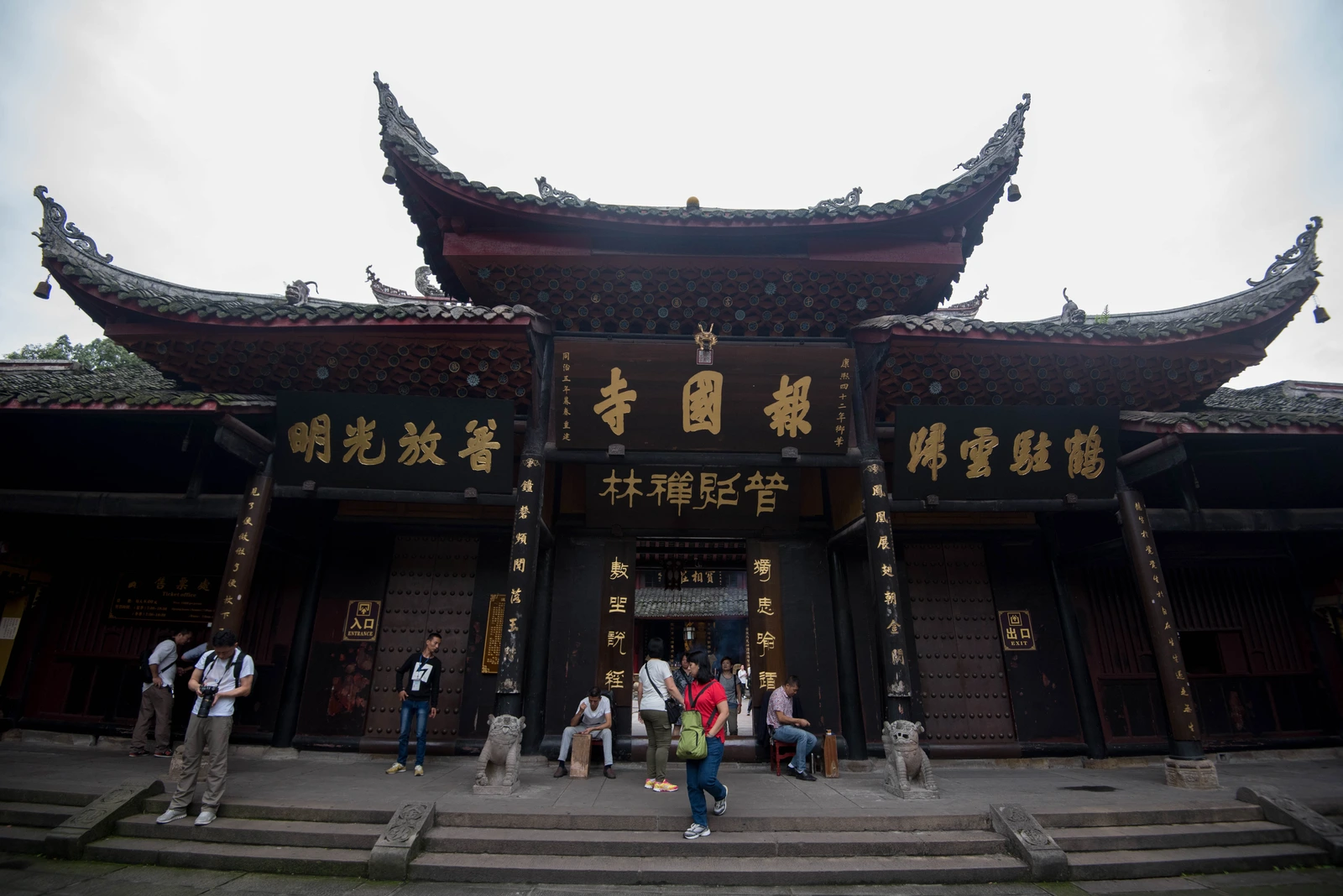
Look up at the three gold characters on the entrance board. Emperor Kangxi gave the temple its name in 1703. In her history of the temple, Cai Yonghong dates the recarving of the board to 1978, when an earlier photograph served as the model. The words and the wood therefore tell stories nearly three centuries apart. Cai Yonghong’s account in Huaxi Metropolis Daily, December 2023.
In the September 2017 photograph, read 報國寺 from right to left, with 普照禪林 below. Locate the side inscriptions under the spreading roofs before looking closely at individual characters.
Stand clear of the entrance and follow the roofline up to the main nameboard. An interpreter can read one side inscription with you here. The gateway also makes a worthwhile finish for someone avoiding further stone steps.
Follow the halls at a comfortable pace
The central sequence rises through Maitreya Hall, Mahavira Hall, Seven Buddhas Hall and Puxian Hall — 弥勒殿、大雄宝殿、七佛殿、普贤殿. Match the signs to the open route and decide at each court whether to continue.
| Interest | What to look for | Keep flexible |
|---|---|---|
| Entrance and inscriptions | The main nameboard, adjacent lettering and the relationship between the gateway and rooflines. | A close-up photograph from a blocked doorway or access behind barriers. |
| Courtyards and halls | The transition between open courts, steps and the next hall on the central sequence. | Completing every level when stairs or standing become tiring. |
| Religious art | One permitted hall, with a clear explanation of its name and the images you can actually see. | Unrestricted interior photography or viewing every treasured object. |
| A quieter lower-mountain outing | A selective temple visit, a seated meal and the complete hotel return. | A compulsory second temple, forest circuit or summit excursion. |
At the first open court, look at the next hall’s approach and sheltered entrance, watching how visitors and worshippers move between them. There is no need to reach the last building to understand the sequence.
Spend time in one hall that is open. Seven Buddhas Hall’s name offers a starting question; 普贤 identifies Puxian Hall. Use labels or local interpretation to identify the figures actually visible.
Compare the courtyards between the halls as well as their roofs. Changing ground levels are part of the architecture. The gateway and one inner court can make a meaningful shorter visit.
Cai dates Puxian Hall to 1928 and describes a scripture library upstairs. That history helps explain the building even from the court; any room visit still follows the posted public route.
Visit respectfully, with room for worship
Keep conversation quiet, let worshippers pass and follow the instructions at each hall. Ask before photographing religious interiors or identifiable people. A photograph permitted in the courtyard does not settle the rule inside. Avoid leaning on carved fittings, stepping across barriers or moving objects to improve a composition.
You can appreciate the building without joining a ceremony or buying incense. If a religious activity is taking place, observe from an appropriate position or return to the public courtyard. A cultural visit does not include a private ritual, a monk-led explanation or a scheduled performance by default.
Choose historical explanation, Buddhist imagery or independent looking time before arranging a guide. An English booking confirmation does not provide an interpreter or English-speaking temple staff.
A complete half-day from an Emeishan base
Begin with breakfast and the actual hotel departure. Leave the large suitcase at an agreed storage point if returning there. Carry documents, water and the small items needed for the outing. Check the road drop-off, remaining walk and collection point together; a hotel described as being near Mount Emei is not necessarily within an easy walk of this temple.
Give Baoguo the main block of the outing, including its approach, entry checks and selected courts. Half a day allows for the whole journey, with pauses and a shorter route when needed.
Sit down for lunch near the actual exit and onward transport, whether in the lower visitor area or back towards the city. Settle ordering and payment instead of depending on an English menu.
Return to the hotel and leave any further walk optional. Before an afternoon train, add bag collection, the correct station transfer and boarding procedures to the plan.
An afternoon version works too: lunch first, then the selected temple visit and a return within the current opening arrangements. Do not use the half-day label to justify starting late and continuing into closed visiting hours. Keep dinner and any evening activity separate from the temple programme.
Food and a pause outside the temple
Three useful names to save for lunch are doufunao (豆腐脑), a soft tofu dish, niurou tangguo (牛肉汤锅), beef served in a pot of broth, and baizai ji (白宰鸡), a local chicken dish. All three appear in the city’s record of Emeishan food traditions. Emeishan commerce bureau, November 2020.
For doufunao, ask what goes into that restaurant’s tofu preparation, including stock, meat toppings and chilli. For chicken or a soup hotpot, settle the portion size, cuts and sauce before ordering. A tofu dish is not automatically vegetarian, and a request for less chilli does not address an allergy or halal requirement.
Choose lunch around when and where the group needs a seat. A particular city dish may justify a transfer; an immediate rest may favour the collection area. Check a hoped-for temple meal directly for your date.
Use a comfortable tea stop to rest and talk about the visit. Check the ordering basis; a brand, tasting or purchase is not part of this outline.
Choose the hotel for the rest of your stay
Consider the lower Baoguo or Huangwan areas for this temple and a separately arranged mountain day. Compare actual addresses and pickup points, since similar area names can still mean a road journey.
An Emeishan city hotel can suit a food-focused stay or a different onward journey. Ask how you will reach Baoguo and return after lunch. A station-area property serves another priority; check which station is on the issued rail ticket. Emei and Emeishan are different station names, so save the exact Chinese name and booking details.
For any property, confirm passport reception, bed configuration, bathroom, lift or stair access, breakfast and luggage storage. Ask about the final walk from the vehicle to reception. Staying near a temple does not imply temple accommodation, a mountain view, quiet rooms or a reserved place at a religious meal.
| Stay | Suggested sequence | Nights |
|---|---|---|
| 3 days / 2 nights | Arrive and settle; Baoguo, lunch and hotel return; depart. | Two at the same Emeishan base. |
| 4 days / 3 nights | Arrive; Baoguo half-day; one separately planned mountain or local day; depart. | Three at the same lower or city base. |
| 5 days / 4 nights | Chengdu arrival; transfer to Emeishan; Baoguo day; return to Chengdu; depart. | Chengdu one, Emeishan two, Chengdu one. |
Two nights protect one full Emeishan day; three nights allow a different main experience separately. An upper-mountain day needs its own transport, walking and return arrangements.
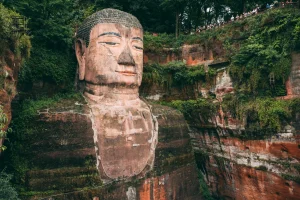
The five-day version has one full Emeishan day and a Chengdu night on either side of the regional stay. Add time if you also want a dedicated Leshan Giant Buddha visit. For a broader holiday, the Sichuan trip planner helps choose which regional extension deserves the extra nights.
Access, weather and services to settle
A Japanese traveller describes walking to Baoguo during a lower-mountain afternoon, then spending a separate day on the mountain. Travellers using an overseas passport should check which document the temple accepts and how to obtain admission for the intended date. Read the traveller’s October 2026 account.
Carry the original passport matching any accepted reservation. If an online form does not accommodate your document, obtain the proper authorised procedure rather than inventing identity details. Ask about the temple visit specifically: the requirements for a mountain coach, ropeway or another attraction do not automatically answer the temple-entry question.
Lower mountain does not mean level ground. Explain limits with steps, descending, standing or wheelchair access before choosing the approach. Wear shoes with grip. Rain can make the route less comfortable even when the buildings remain open; retain a shorter visit or a different open local activity if the approach becomes unsuitable. Do not use a closed gate or unmarked hillside path as an alternative.
| Element | What the written arrangement should identify |
|---|---|
| Entry and interpretation | Date, original-document procedure, current public areas, language and meeting point. |
| Transport and belongings | Legal drop-off and collection, waiting or return journey, luggage custody and final hotel or station. |
| Meals and rooms | Lunch venue or payment basis, dietary needs, named accommodation and the correct number of nights. |
Price on request. Identify admission, transport, waiting, interpretation, meals, rooms and insurance in the accepted proposal, together with changes if an essential hall or approach is unavailable.
Questions before visiting Baoguo Temple
Do I need to go to the Golden Summit as well?
No. A Baoguo-focused half-day can stand alone. The upper mountain requires a separate transport and walking plan. Choose it because it interests your party and fits your available days, rather than treating it as the compulsory finish to a temple visit.
Is the entrance plaque an untouched Kangxi original?
The name dates to 1703. Cai Yonghong records that the entrance board was carved again in 1978 using a photograph of an earlier board. Both dates are part of the history of the name you see above the gateway.
Can I enter the scripture library or stay inside the temple?
Do not assume either. A historical room name does not establish public upstairs access, and accounts of temple lodging do not secure a room for your dates or passport. This outline uses separately arranged hotel accommodation and currently permitted visitor areas.
Should I add Fuhu Temple to the same outing?
Only if you want a second religious visit and its current approach, walking and return suit everyone. It is optional, not a requirement to make Baoguo worthwhile. Keep lunch and the final transfer intact when deciding how much to add.
Plan a lower-mountain visit with time to look
Send a Verotrip travel consultant your dates, arrival and departure services, hotel preference, party size, walking limits, language and food needs through Plan My Trip. Say whether inscriptions, architecture or religious art matters most. Request Baoguo Temple by name in the agreed programme, with lunch and the complete return described together.
Header photograph: Baoguo Temple entrance, 19 September 2017, by Siyuwj / Wikimedia Commons, CC BY-SA 4.0. Resized and converted to WebP; responsive crops share the same license. The photograph records that date, not current access or conditions.