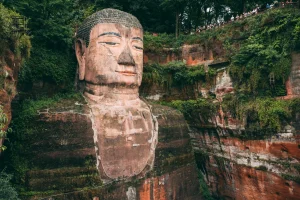
Give Wuyou a Leshan hillside block for temple space and scholarship. Choose halls and inscriptions or Ma Yifu’s wartime academy, with lunch and a complete hotel return. It deserves more attention than the last compulsory stop after an exhausting Buddha visit.
Save 乌尤寺 / Wuyou Temple, Leshan with the agreed visitor approach. The temple, the similarly named cruise terminal and the Giant Buddha’s viewing areas are different destinations. A driver needs the actual legal drop-off and collection point, not just a photograph of a temple doorway.
This guide develops a temple-centred half-day and a Leshan stay. Use the Leshan Giant Buddha sculpture guide for the separate choice between an upper cultural visit, a permitted descent and a river view. Neither outing has to include the other to be worthwhile.
Choose what you want to understand at Wuyou
| Interest | Make this the main visit | Leave optional |
|---|---|---|
| Temple architecture | Selected public courtyards, hall exteriors and their inscriptions. | Every building, upper floor and religious interior. |
| Religious sculpture | The Arhat Hall if open, with time to look carefully. | Counting every figure or expecting unrestricted photography. |
| Wartime scholarship | Ma Yifu and Fuxing Academy, with an explanation at permitted heritage points. | Entry to former living rooms or a scheduled lecture. |
| A gentler Leshan day | Only a suitable managed approach, a short visit and a seated meal. | The full Giant Buddha circuit and a boat departure. |
Discuss the hill approach before making any of these choices. Wuyou is not a level city museum. The steps, time standing and descent back to the pickup point remain part of the outing even if you visit only one hall. If the approach exceeds someone’s comfortable ability, choose a different day programme rather than promising an easy version without checking the route.
Look at the temple as a sequence of spaces
Look first at approach, court and the building framed by its entrance. Notice shelter and movement around the hall. A doorway pause can explain the sequence before the group searches for another name.
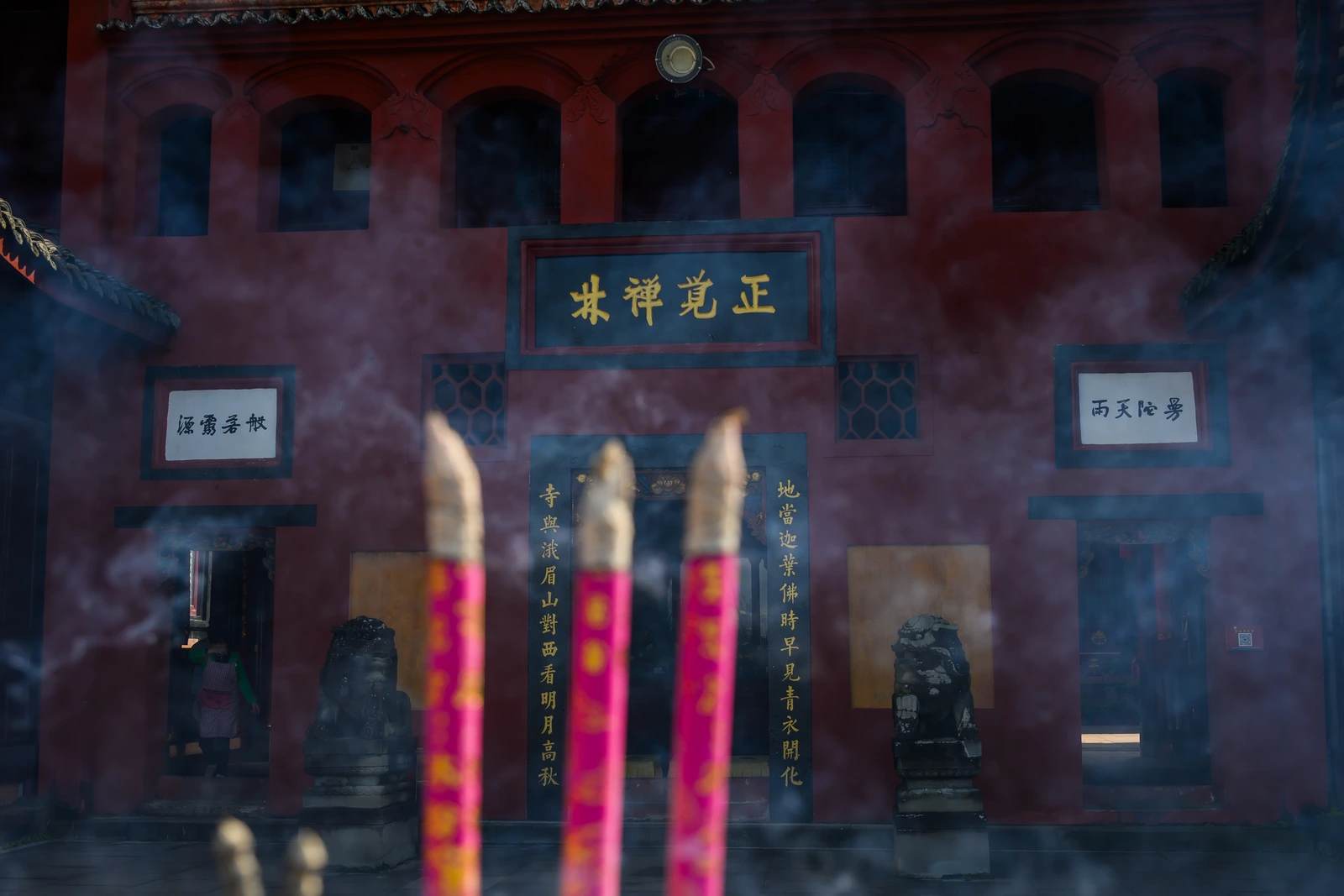
The header photograph records a Wuyou entrance in October 2026, with the plaque 正觉禅林, red walls and incense in the foreground. It gives a specific architectural reference for this guide. It does not establish which doors will be open, the amount of incense or the conditions on your visiting day.
Ask for one inscription explained in its actual setting. Its position and purpose may reveal more than character-by-character translation. Lettering, repair and roofwork can belong to different periods within one old institution.
This is a religious setting as well as a cultural visit. Leave worshippers room to move, keep conversations quiet and ask before photographing interiors or people. Incense, ceremonies and food are not compulsory visitor activities. You can observe the architecture respectfully without participating in worship.
If the Arhat Hall is open, concentrate on a few figures and compare their expressions, posture and surrounding arrangement. Ask what the interpretation identifies, rather than assigning identities from appearance alone. The inbound visitor introduction to Wuyou describes this hall and the stair approach; its published hours and ticket wording are not used here as current admission instructions.
View halls under their own access and photography rules. A roof across the court establishes no interior entry, and an upper window no public platform. Accessible exteriors can hold the visit’s interest without moving into residential or working areas.
Ma Yifu and the academy within the monastery
The Sichuan local-chronicles account by Tang Changshou describes a second history at Wuyou. In 1939, the scholar Ma Yifu established Fuxing Academy here. Kuangyi Pavilion and Erya Terrace were used for teaching, while other temple rooms supported the library and accommodation. Classes began on 15 September 1939.
The account describes study of the classical texts, students’ reading notes and opportunities to question the teacher. The academy also printed books. It moved to Haoshang Cottage in 1940; teaching ended in 1941. These were wartime educational arrangements, not a description of a visitor course operating today.
The same 2023 account records surviving places and inscriptions associated with that history, including Kuangyi Pavilion, Erya Terrace and Lizhi Building. Their historical roles make useful subjects for interpretation. Current entry, upstairs access and any displayed material need separate confirmation.
For the academy story, ask how worship, teaching, reading and daily living shared a monastery. The historical function may be explained from a court even when the room remains closed.
Distinguish event location, surviving material and later interpretation. Those layers prevent every room becoming an unchanged wartime classroom in the telling. An old plaque photograph also proves no current exhibition.
Choose the academic thread for intellectual history or spend more of the block with architecture and sculpture. Families might simply ask what students needed to study here. A single shared question need not become a long lecture.
Keep the temple approach separate from the boat pier
The Pacific Asia Travel Association’s Leshan introduction lists Wuyou in a walking itinerary and separately names Wuyou Temple Cruise Terminal. It also identifies the South Tourist Center and Haoshang Bridge in the wider visitor geography. These names help orient a conversation; the published circuit does not confirm every connecting section is open today.
Before setting out, identify the current temple approach, any admission or document procedure, the managed path to use and the point where road transport finishes. Establish the return while everyone is together. A route through another attraction may have different admission conditions from a temple-only visit.
Do not book a river product merely because its pier shares the temple’s name. Sailing past the Giant Buddha and walking to Wuyou’s halls are different activities. If a boat is wanted as well, it needs its own operator, boarding point, availability, boarding requirements and final transfer.
A train ticket to Leshan covers the railway journey. It does not include the station-to-hotel journey, luggage storage or the temple approach. For a Chengdu day return, add every road and rail connection, lunch and the final city transfer before deciding whether two substantial sightseeing visits are realistic.
For most people who want the academy story as well as the temple, a Leshan base gives the day more flexibility. A late start or a longer rest can then change the amount of optional sightseeing without threatening the last connection back to Chengdu.
A complete half-day from a Leshan hotel
Have breakfast, leave larger luggage at an agreed storage point and travel to the confirmed approach. Keep your passport and essential belongings with you. Use the arrival pause for toilets where available, a review of the route and a clear agreement about when and where to meet again.
Ascend comfortably, give the chosen architecture or hall fresh attention and rest before the scholarship account. The half-day is a planning block with no guaranteed minute-by-minute gate or queue sequence.
Descend while the party still has energy for the return. Meet the vehicle or use the agreed public-transport connection, then have a seated lunch at the selected venue. Depending on the actual approach and appetite, lunch can be near the visit or back in the city; decide this before the outing, rather than relying on finding a suitable meal at the temple.
Finish at the hotel after lunch. A short city walk can remain optional for anyone who wants it, with a separate meeting plan if the party divides. If you have a departure that afternoon, collect all stored luggage and allow the full transfer and boarding process. Reaching the bottom of the hill is not the end of that journey.
An afternoon visit needs the same elements in a different order: lunch first, the temple block and a return before the actual visitor route closes. Keep any dinner or river outing separate. A cultural half-day should not quietly expand into an unplanned late-night finish.
Make room for Leshan food and a useful hotel base
For lunch, consider qiaojiao beef with its broth and dipping sauce, or a small selection of bobo chicken and vegetables. Sweet-skin duck and savoury tofu pudding are other local choices. PATA’s Leshan food introduction also identifies Zhanggongqiao and Shangzhongshun as dining areas; choose the actual restaurant around the day’s transfer.
Order for a meal rather than collecting every famous snack. Ask which cuts, broth and sauces are in the dish and whether spice can be adjusted before preparation. Tofu and vegetable ingredients do not by themselves establish vegetarian cooking, and a regional speciality is not automatically suitable for an allergy or halal requirement.
Do not make the day depend on a monastery buffet. A meal mentioned by another visitor is evidence of that visit, not a reservation, current serving schedule or dietary assurance. If a temple meal matters to you, have its availability and actual conditions confirmed and retain a city lunch alternative.
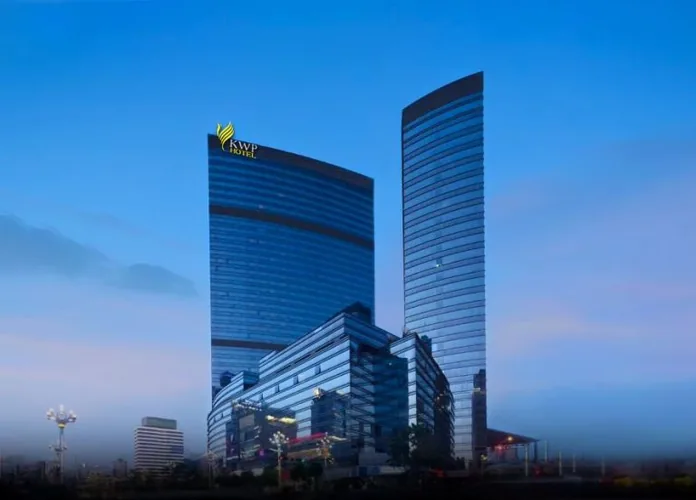
For two or three nights, a Leshan city hotel with convenient dining and a straightforward vehicle pickup can support both the temple outing and a separate Buddha day. Look at the exact entrance and room access, not only a description such as “near the scenic area”. A station-area room serves a different arrival or departure priority.
Ask the chosen property about passport reception, bed arrangement, lift access, breakfast and luggage storage. If quiet sleep is important, ask about the particular room’s position relative to traffic and evening businesses. A river-facing category does not establish a Buddha view, a balcony or silence.
Count the nights around the cultural visit
| Stay | Suggested sequence | Overnight count |
|---|---|---|
| 3 days / 2 nights | Arrive and settle; Wuyou, lunch and hotel return; depart. | Two Leshan nights. |
| 4 days / 3 nights | Arrive; Wuyou half-day; a separate selected Giant Buddha visit; depart. | Three Leshan nights. |
| 5 days / 4 nights | Chengdu arrival; transfer to Leshan; Wuyou day; return to Chengdu; depart. | Chengdu one, Leshan two, Chengdu one. |
The three-day outline protects one usable local day between travel dates. Keep arrival evening simple, especially after a flight or a longer rail journey. A late arrival does not need a compensating programme of night sightseeing.
With three Leshan nights, the Giant Buddha can occupy its own day. Decide on its actual viewing format and walking effort; Wuyou is not a substitute ticket for that visit. Giving the two places separate days also leaves room for meals and a return to the same room.
The five-day version includes a Chengdu night on each side of two Leshan nights. It still contains one full Leshan day, not two. Add another Leshan night if a separate full Buddha day is important, or change the programme explicitly rather than squeezing it into a transfer margin.
A continuation to Mount Emei needs a different accommodation sequence. The Emeishan and Leshan trip planner explains those regional choices. For a longer holiday, the Sichuan route planner helps decide whether a second region belongs in the available nights.
Walking, weather and services to settle
Explain difficulty with stairs, descending, prolonged standing, a pushchair or a wheelchair before accepting the route. Ask about the actual approach and places to pause. A vehicle waiting below cannot remove the walking between the public entrance and the halls.
Use shoes with grip and carry a manageable bag with water, weather protection and essential personal items. Wet steps and heat can change the effort of the same visit. If the managed approach is unsuitable in the conditions, choose a different open city activity or reschedule; do not look for an unmarked hillside shortcut.
Wuyou appears in international visitor information and inbound itineraries, which supports its general visitor context. That does not prove a successful booking through every passport or phone-number channel. Confirm the original document required, any applicable ticket category and the actual inspection or collection procedure for the date. Do not enter invented identity details into an unsuitable form.
| Element | Specify in the written proposal |
|---|---|
| Access and interpretation | Date, correct approach, original-document procedure, open visiting focus and agreed language. |
| Transport and belongings | Legal drop-off, collection point, waiting or return arrangement, luggage custody and final hotel or station. |
| Meals and rooms | Actual lunch venue or payment basis, dietary requirements, named hotel and correct number of nights. |
Price on request. Admission, local transport, guide or interpreter, vehicle waiting, meals, accommodation and insurance are separate unless expressly included in the accepted proposal. English-language information about a temple does not guarantee English-speaking staff at the gate or an accompanying interpreter.
If a hall is unavailable, agree whether the permitted exteriors and history explanation still meet the purpose of the visit. If the approach itself is unsuitable, a different programme may be needed. State any change or cancellation terms with the actual services being booked.
Questions before visiting Wuyou Temple
Is Wuyou Temple the same as Lingyun Temple?
No. Choose the named temple and approach when planning. Wuyou is the focus here; Lingyun belongs to the Giant Buddha hillside programme. Their proximity does not make their entrances, walking routes or admission arrangements interchangeable.
Can I visit Wuyou without taking a boat?
This outline is a land-based temple visit. Confirm the current legal approach and managed walking route. A cruise terminal with Wuyou in its name is a separate transport location; a sailing is not required by this suggested programme.
Can I enter Ma Yifu’s former rooms?
Do not assume access. Historical accounts identify places used by the academy, but they do not establish current permission to enter rooms or upper floors. Ask which public heritage points and interpretation are actually available.
Should I combine Wuyou with the Giant Buddha?
Only if the complete approaches, walking, lunch and return fit the party. A temple-focused half-day is a complete choice. For deeper visits to both, the four-day, three-night Leshan outline gives each its own day.
Plan a temple visit with time to look
Send a Verotrip travel consultant your dates, arrival and departure points, hotel preference, party size, walking limits, language and food needs through Plan My Trip. Say whether the architecture, Arhat Hall or Ma Yifu’s academy is the main interest. Request a plan that connects that focus to the actual entrance, lunch and complete return.
Header photograph: Wuyou Temple entrance, 6 October 2026, by ZhangXukun / Wikimedia Commons, CC BY-SA 4.0. Resized and converted to WebP; responsive crops share the same license. The photograph records that date, not current access or conditions.