Use Zhaojue for a few cultural questions within a living monastery: selected courts, a tree enclosing a stele and how history is preserved. Lunch and the hotel return complete the Chengdu half-day. Entering every hall need not be the goal.
Zhaojue Temple / 昭觉寺 is in northern Chengdu, beside Chengdu Zoo. It is a separate religious site, with its own visitor arrangements. Use the temple’s Chinese name and the confirmed public entrance for navigation; a zoo entrance, a metro station and the former Zhaojue coach station are different destinations.
Choose your focus before entering the courtyards
For architecture, follow the admitted court sequence and the way a gate frames the next space. Pause clear of worshippers. Add the tree-and-stele or Zhu De memorial material only when its relevant visitor area is available.
| Your interest | A useful focus | Keep flexible |
|---|---|---|
| Courtyards and buildings | A selective walk towards the main hall, looking at roofs, entrances and the spaces between them. | Individual interiors and side courtyards may have different access. |
| An unusual old-tree story | Look for the tree associated with the enclosed stele, from the permitted viewing area. | Do not expect an exposed inscription, close contact with the trunk or a fixed canopy appearance. |
| Modern historical memory | Ask about Side Hall and the reproduced Ying Shi Ren Jian plaque. | Confirm the particular display and distinguish a reproduction from the lost original. |
| A shorter cultural outing | One courtyard sequence, a brief explanation and a seated lunch. | Leave the zoo, a second monastery and a long shopping walk for another decision. |
A long history does not make every building ancient
The Japanese Consulate-General’s 2020 visitor introduction describes a Tang-period foundation, connections with Buddhist institutions in Japan and Southeast Asia, and buildings reconstructed from the 1980s after earlier destruction. This is useful context for what you see: the age of a religious institution and the age of its surviving buildings are separate questions.
Read the hall’s present use and signs before assigning it an age. Visitor doors, prayer areas, repaired wood and recent roofs may tell different stories. An impressive facade alone does not establish a surviving Tang building.
The consulate presents Zhaojue as a sightseeing place for its Japanese readership. That supports a general international-visitor context; it does not confirm today’s entry method for every passport. Check the current public entrance, any registration requirement and the original document needed for your visit. This guide does not carry the old note’s admission claim forward as a current price.
The tree and the stele: look for a story, not a readable stone
A 2018 Cover News historical feature describes the large huangjue tree in front of the main hall and a stone stele enclosed by its growth. The attraction is often called shu bao bei / 树包碑, meaning a tree embracing a stele. It offers a specific way to think about the monastery’s landscape: living growth can conceal an inscription that once made a place’s history visible.
From the permitted route, compare trunk, courtyard and hall. Do not pull bark, reach into the tree or climb protection to seek text. The enclosed-stele story promises no readable lettering, and a pause needs no physical contact.
The same feature records a tradition connecting the tree with a hanging vessel and an unusual raised column in the former hall. It also explains that the old hall was dismantled in the twentieth century. Treat that account as historical storytelling, not a checklist of surviving fittings to search for in the current building. We do not assign a precise tree age or claim a particular branch, leaf colour or exposed stone will be visible.
Side Hall and a plaque recreated from a photograph
An April 2026 account from Sichuan’s local-chronicles office explains Zhaojue’s connection with Zhu De and the later naming of Side Hall / 思德堂. It also makes a useful distinction about the plaque reading Ying Shi Ren Jian / 应世人间: the original went missing, and the temple later reproduced it using a photograph located in a 1936 magazine.
If the historical display is open, begin with the recreated plaque’s status. It preserves wording and appearance from an earlier gift without becoming the lost original. The account acknowledges conflicting refuge dates, so no exact Zhu De year is selected here.
Keep that history as an optional stop. A caption proves neither every room nor every document currently displayed. Confirm it if essential; otherwise courts and the tree can give the visit enough focus.
A half-day from your hotel, through lunch and back
This is a suggested rhythm for an unhurried visit, not a fixed departure or a promise of a timed temple programme. Start early enough within the confirmed visiting period to finish the chosen route comfortably. Leave the precise departure time until the hotel address, traffic and entrance arrangements are known.
| Stage | Suggested sequence | Protect this part of the plan |
|---|---|---|
| Hotel departure and arrival | Leave large cases in agreed storage, travel to the correct public entrance and identify the return meeting point. | The final walk from the drop-off is part of the transfer. |
| Courtyards and a chosen detail | Follow the available main route; add the tree story or the named historical display. | Allow worship and current restrictions to determine where you go. |
| Lunch and a seated rest | Use a confirmed dining option, or return towards the hotel for a suitable meal. | Do not depend on an unconfirmed temple dining session. |
| Finish and hotel return | Collect the party at the agreed road point and return to the same hotel. | Keep bag collection and any later departure separate and fully timed. |
Fewer spaces with good explanation can fill the cultural block, while independent lookers may prefer less. Set a reunion and shorter finish rather than requiring everyone to continue through courts during another companion’s discussion.
With late arrival or an unavailable main hall, shorten the visit and keep lunch. Do not press into closing, replace a restricted door with an unofficial entrance or assume neighbouring premises form another way in.
Lunch: a practical meal, with vegetarian food as a separate choice
Decide whether you want a vegetarian meal specifically or simply a comfortable lunch after the visit. If temple dining is important, establish whether visitors can eat there on your date, the serving period, menu, payment and seating. An old travel account or a photograph of a group meal does not reserve a place for your party.
A restaurant on the hotel return can offer a flexible meal if temple dining is unconfirmed. Shared rice dishes allow a seated pause; lighter noodles need broth, toppings and chilli discussed individually. Another snack circuit is not required.
A request for vegetarian food does not by itself explain eggs, dairy or a particular allergy. Show the actual ingredients you need to avoid and ask the kitchen about stock, sauces and preparation. Keep a different meal option when an answer is unclear. Food, drinks and any shopping should appear separately from the cultural visit in a quotation.
Use the temple entrance, not an old coach-station listing
Save 成都昭觉寺 and the entrance pin supplied for your date. The shared place name can lead to transport results that are not the temple gate. For public transport, check the current journey from your hotel, the useful exit and the entire final walk. A station name alone does not show how much walking remains or whether the approach is suitable with a wheelchair.
A 25 September 2025 Chengdu Release notice reported that the former Zhaojue coach station’s routes had moved to other terminals. Do not base this temple visit or an onward journey on an older departure listing for that station. For an intercity coach, use the terminal named on the current ticket; it is a separate journey from reaching the monastery.
With a car, agree a lawful stopping place, whether the vehicle waits and how to find the driver after lunch. Send the actual hotel entrance address. A one-way drop-off is different from a vehicle retained for the outing, and a northern-city stop does not automatically include an airport or railway-station transfer.
Keep one hotel base for three, four or five days
Three days / two nights: arrive and settle in on Day 1, use Day 2 for the Zhaojue visit, lunch and a relaxed remainder of the day, then depart on Day 3. Both nights are at the same Chengdu hotel. This suits travellers who deliberately want a modest cultural stay; it does not also promise every major first-visit attraction.
Four days / three nights: retain that arrival, temple day and departure, with one extra full day for a separately planned priority such as pandas or a museum. Keep all three nights in Chengdu. Give the additional visit its own admission and transport arrangements rather than compressing it into the temple afternoon.
Five days / four nights: use three full days between arrival and departure. One can centre on Zhaojue, another on your main city interest, and the third on another city day or one confirmed excursion. Sleep at the same base for all four nights. The Chengdu trip-planning guide helps compare these wider choices.
Choose the hotel around the whole stay. Tianfu Square or Chunxi Road may suit a broadly central programme; a northern location needs to work for more than this single outing. Confirm the specific property’s reception for your passport, room arrangement, lift access, noise and road pickup. Changing hotels solely to be closer to one temple usually adds another luggage movement to assess.
Walking, rain and respectful visiting
Expect a mixture of outdoor spaces and hall entrances, with possible thresholds, steps and uneven paving. Ask about the exact accessible route, toilets and places to sit if someone needs them. A short distance on a map does not remove standing time, and a traditional courtyard should not be assumed to have a continuous level route.
In rain, reduce exposed walking and take care on wet surfaces. The availability of halls does not make the whole monastery an indoor attraction. In poor conditions, move the outing to another day or choose a separately confirmed indoor visit. A dining room or a museum alternative still needs its own opening and access check.
Keep voices low, avoid obstructing doorways and let worshippers move freely. Ask before photographing people or interiors, follow local restrictions and put the camera away when permission is unclear. Do not arrange posed photographs around someone’s prayer. Buying incense, making an offering or joining a practice remains a personal choice.
Which other Chengdu temple fits your interests?
Use another temple as an alternative when its setting better suits the trip. The Wenshu Monastery guide develops a different monastery-and-neighbourhood half-day. The Daci Temple and Taikoo Li guide connects a religious visit with contemporary central-city lanes. Neither is an interchangeable entrance or an automatic addition to Zhaojue.
To include Zhaojue in a longer Chengdu holiday, request this cultural block when discussing the itinerary. The route, language support and complete hotel return need to be set out explicitly before it becomes part of your booking.
What a written proposal should include
| Item | Ask the proposal to identify | Keep separate |
|---|---|---|
| Temple visit | Date, public entrance, available areas and any actual document or payment process. | A historical visitor account is not an admission confirmation. |
| Interpretation and transport | Language, meeting point, visit scope, vehicle waiting and full hotel return. | An English-speaking companion is not automatically supplied by the monastery. |
| Food, rooms and extras | Meal venue or allowance, requested hotel nights and personal purchases. | Admission, meals, accommodation, insurance and offerings are included only if expressly agreed. |
Price on request. Send your dates, hotel, party size, walking needs, language and dietary requests. Ask what changes if the selected historical display is unavailable or the weather reduces the walk. The final written service list should distinguish the suggested route from the services actually confirmed for your party.
Questions before a Zhaojue visit
Is Zhaojue Temple part of Chengdu Zoo?
They are neighbouring places with different purposes and visitor arrangements. This plan uses the temple’s confirmed public entrance and returns from an agreed pickup point. It does not depend on an internal connecting gate or include a zoo visit.
Can I read the inscription inside the tree?
Do not expect to. The interest is the history of a stele enclosed by living growth, not a guarantee of visible lettering. Observe from the permitted area and leave the trunk, bark and surrounding protection untouched.
Is the Ying Shi Ren Jian plaque the original gift?
The local-chronicles account explains that the later plaque was reproduced using a photograph after the original went missing. If it is on view, read the current interpretation and keep that distinction when describing what you have seen.
Does the visit include lunch or a monk-led explanation?
Only a specifically confirmed meal or interpretation service is included. An ordinary temple visit does not reserve a dining session or a conversation with a monk. A travel consultant can discuss the assistance you need without promising the monastery’s staff or religious programme.
Plan a temple visit with a clear finish
Use Plan My Trip to tell Verotrip what draws you to Zhaojue: courtyards, the tree story or historical interpretation. Include the next flight or train if relevant. A useful proposal gives that interest time, keeps lunch workable and brings you back to your hotel without an unnecessary chain of extra stops.
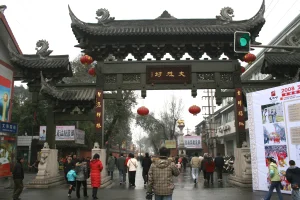
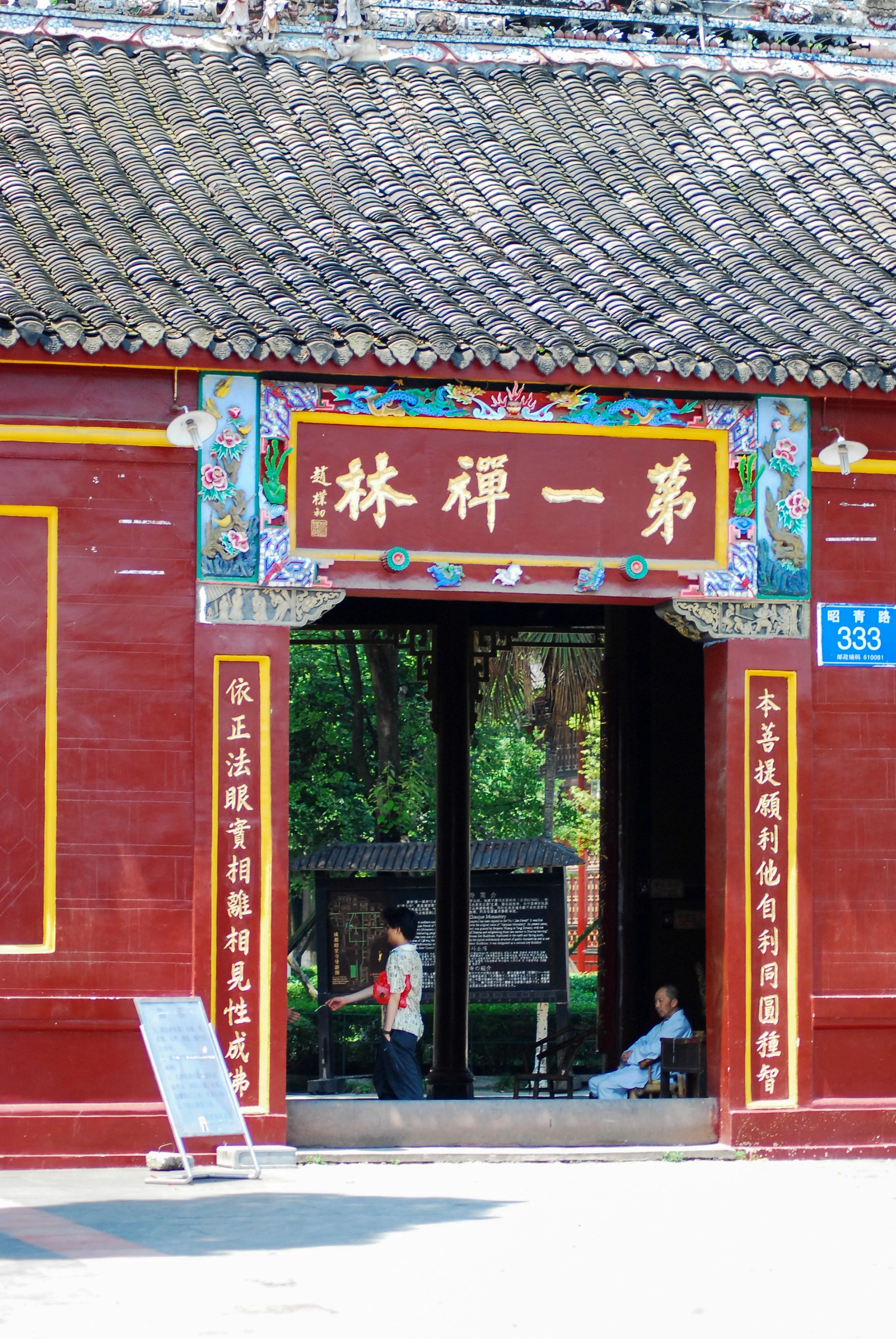
Header photograph: Zhaojue Temple gateway and the Di Yi Chan Lin plaque, photographed on 17 June 2011 by Shizhao / Wikimedia Commons, CC BY-SA 3.0. Resized and converted to WebP with responsive cropping; the adapted image is available under the same license. This historical photograph does not establish the current entrance arrangement or visitor conditions.