Give Wenshu Monastery a relaxed Chengdu half-day: a respectful visit through the areas open to visitors, followed by a meal or a short walk in the surrounding Wenshu neighbourhood. Choose it for Buddhist temple culture and a slower city period. If your main interest is Three Kingdoms history, a major museum collection or simply sitting over tea, a different Chengdu visit may serve you better.
Wenshu Monastery is 文殊院, usually written Wenshu Yuan in Chinese place names. Wenshu Fang, 文殊坊, refers to the surrounding historic-style commercial district. Keep the monastery visit and the neighbourhood’s shops, photographs and food stops as separate parts of the outing.
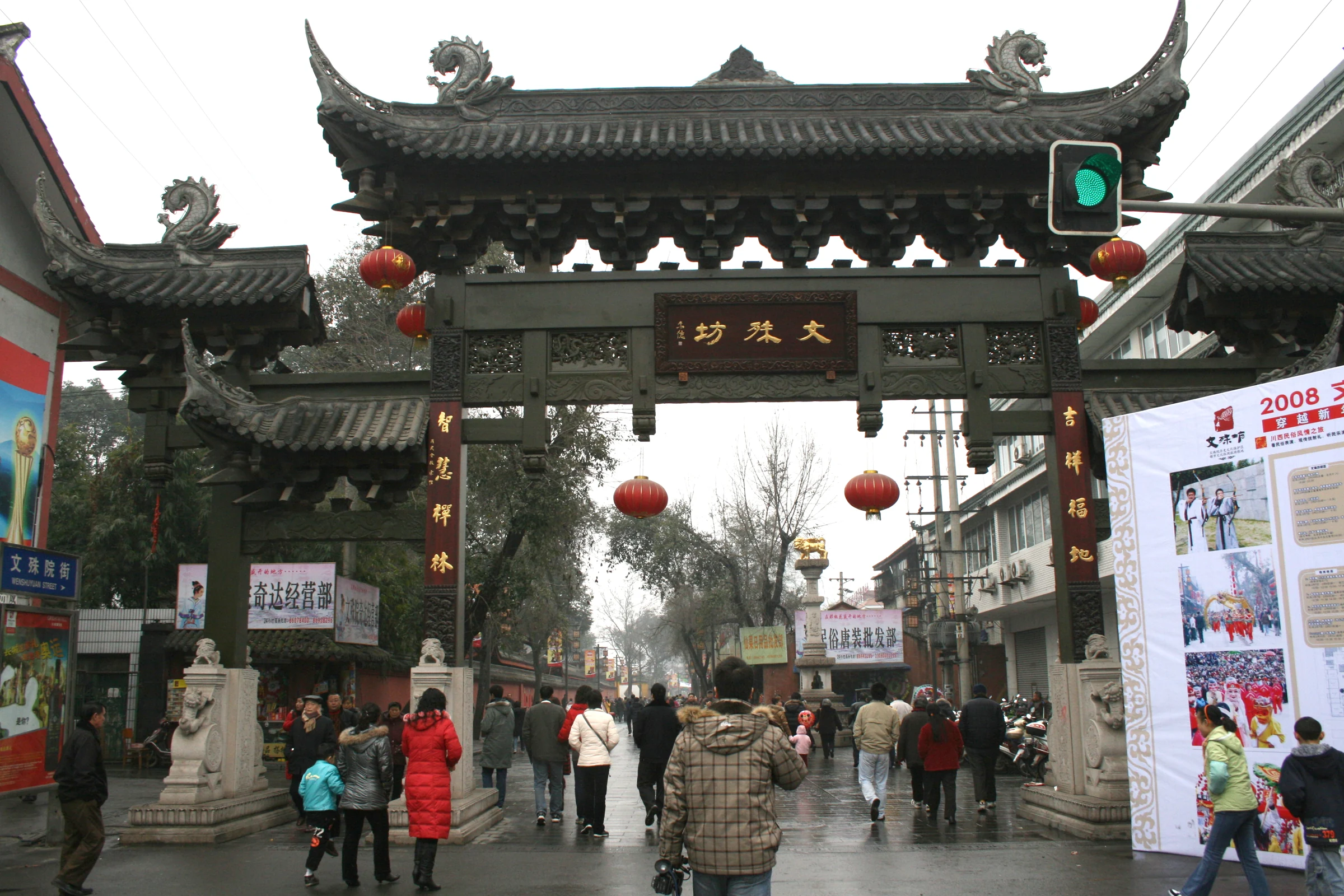
Checked 2 November 2026. The cover photograph shows the Wenshu Fang street archway on 10 February 2008. It is an archival neighbourhood view, not the monastery entrance, today’s street layout or a Vero Trip guest visit.
Choose the visit that interests your party
| Main interest | Visit to develop | What to leave flexible |
|---|---|---|
| A Buddhist temple and its cultural setting | Wenshu Monastery, with time to observe the open courtyards and halls | A meal or short Wenshu Fang walk afterwards |
| Three Kingdoms history | A focused Wuhou Shrine visit, with Jinli as an optional adjoining street period | A second temple or another distant neighbourhood |
| A seated tea experience | People’s Park and an ordinary tea order, or another chosen teahouse | The length of the walk before sitting down |
| A museum collection and city-history context | Chengdu Museum on a confirmed visiting date | Outdoor walking if rain or tired legs change the afternoon |
Wenshu works best when the whole group understands what kind of place it is. It is a religious setting with visitors, rather than a performance arranged for a tour. A companion who wants detailed Buddhist interpretation may prefer a knowledgeable guide; someone who wants architecture and a quiet walk can make a more selective visit.
The city’s English visitor introduction includes Wenshu among Chengdu’s cultural sights and highlights its Buddhist art and calligraphy. That establishes a worthwhile cultural focus, but not access to every collection room, a guaranteed ritual or a particular volunteer tour. Ask about an essential interest before building the day around it.
Start with the monastery, then the surrounding streets
At the visitor entrance, first check the posted route and any instructions for that day. Let the visit follow the sequence of open courtyards and halls rather than a checklist of every building. Pause outside a hall to notice its roof, timber details, inscriptions and how people use the space before deciding whether to enter.
Choose a few details to understand. With a guide, ask about the function of a particular hall, the place of an image or inscription in the temple, and the difference between an object used in worship and a museum exhibit. Without a guide, observe what the signs explain and keep uncertain identifications as questions. An elaborate object is not automatically ancient, and a closed door does not imply visitor access.
Move to Wenshu Fang when you are ready for conversation, a snack or shop browsing. The archway in the cover image belongs to that street setting. Do not use an old photograph of the archway as a map to the monastery’s current visitor gate. A photo stop in the commercial district also does not mean you have visited the monastery itself.
A modest sequence is more rewarding than repeatedly crossing the area for social-media photo locations. Pick one lane or a small group of shops, then sit down if that is what everyone wants. Shopping, a food order and a hosted cultural activity have their own opening arrangements and charges.
A half-day rhythm with room for a meal
| Stage | Suggested focus | Decision before moving on |
|---|---|---|
| Arrival | Find the actual visitor entrance and read the current notice | Keep any essential belongings with you and identify the later meeting point |
| Monastery period | Make a selective visit through the open courtyards and halls | Shorten the route if worship, crowding or walking needs require it |
| Meal or seated break | Choose an operating restaurant or tea stop after checking the menu | Decide whether you want a full lunch or only a drink and rest |
| Neighbourhood walk | Browse a limited part of Wenshu Fang if energy permits | Return to the hotel or begin the separately planned next activity |
Allow roughly two to three hours for the monastery and a short neighbourhood period, then add the time you actually want for lunch or tea. This is our planning allowance, not an official tour duration. A detailed guided visit, a long meal or a crowded festival day can change it substantially.
On a short city break, stop after this half-day if people are tired. On a fuller day, add one separate city objective with a proper transfer and break. Use the Chengdu trip-planning guide to decide whether that should be another cultural visit, neighbourhood time or no additional booking at all.
Respect worship and ask before photographing
Keep voices low in the monastery and leave space for people praying or moving between halls. Observe from the visitor areas without treating worshippers as part of a staged scene. Participation in prayer or incense offering should be a personal decision, with the venue’s instructions followed.
Check the signs before photographing inside a hall. If permission is unclear, ask or put the camera away. Do not use flash, a tripod or a posed portrait arrangement where staff or signs prohibit it. Ask before making a close photograph of an identifiable person, especially during worship.
Dress for a religious visit and the weather, with comfortable shoes for walking and thresholds. Keep food and drink for the places where they are permitted. If you want to make an offering, use the arrangements identified by the monastery rather than interpreting a street-side sales approach as an official requirement.
For children, choose a short core visit and explain beforehand why running, touching objects or interrupting worship would be inappropriate. A shorter attentive visit can be more enjoyable than expecting a young child to remain quiet through every hall.
Vegetarian food: order from the actual menu
If vegetarian food is part of your plan, decide whether you want a full restaurant meal or simply a light lunch near the monastery. Check the venue, service period and menu for the day. Do not assume a community meal, festival food distribution or a particular dining room is available to an unannounced sightseeing group.
Chinese vegetarian dishes can use names or shapes associated with meat. Ask what the dish is made from rather than deciding from its appearance alone. For a vegan order, specify eggs and milk as well as meat and fish. Mention any ingredients you need to avoid clearly, and ask the actual restaurant about sauces, stock and preparation.
| What you want to ask | Chinese phrase to show | What to clarify |
|---|---|---|
| Vegetarian food | 素食 | Which dishes fit the meal you want; do not assume every nearby restaurant is vegetarian |
| No meat or fish | 不要肉,也不要鱼 | Ask about stock and sauces as well as the main ingredients |
| No eggs or milk | 不要鸡蛋和牛奶 | Useful additional wording for a vegan request |
| A dish without chilli | 不要辣椒 | Confirm the dish and sauce; the request does not settle other dietary needs |
Keep the order modest at first and add dishes if needed. Ask whether a tea charge is per person, per pot or part of a set, and whether refills cost extra. A vegetarian meal, a tea order and a guided food experience are different purchases. None is included simply because a sightseeing outline mentions Wenshu.
Festivals and ordinary visiting days are different
Working religious places have their own calendar. A January 2026 Sichuan Online photographic report documented long queues for Wenshu’s Laba porridge distribution. It is evidence of that particular festival day, not a daily free-meal service or an event promised for your visit.
If a religious festival is important to the trip, check the dated monastery notice and develop the day around the actual visitor arrangements. For a quiet architectural visit, avoid assuming a festival morning will offer the same pace as an ordinary day. Let crowd controls, worship and staff directions determine which areas you can enter.
Check current daytime opening and any entry process before leaving the hotel. This guide does not quote an unverified daily timetable, fee or passport procedure. Carry your travel documents; if registration is requested, ask staff which process applies to your document. A general city sightseeing recommendation is not a reservation confirmation.
Hotel base, luggage and transport
Stay in the Wenshu neighbourhood if its street atmosphere suits several parts of the holiday, rather than moving hotels for one monastery visit. Compare that with Tianfu Square or Chunxi Road against the rest of your city plans. At the actual property, ask about room noise, stairs, lifts and where a car can stop.
For navigation, save 文殊院 in Chengdu’s Qingyang District and verify the visitor entrance rather than relying on a neighbourhood map pin. If using the metro, check the current route to Wenshu Monastery station and the final walk from the available exit. With a taxi or booked car, give the Chinese destination name and agree a legal stopping place.
Leave large cases at the hotel only with its agreement. A temple visit is easier with a small day bag, but storage at the monastery should not be assumed. If you must collect bags before a train or flight, include the return to the hotel and the correct station or airport in the schedule. The Tianfu and Shuangliu airport guide explains why the airport code matters.
For a private outing, specify whether the driver waits, where you meet after lunch and the finish location. A pickup at one gate and a return from another need agreement. Tell the planner about walking limits, steps or a need for accessible transport before choosing the route; a compact temple does not establish a step-free visit to every hall.
Rain, tired legs and another Chengdu day
Wenshu includes movement between outdoor and sheltered spaces. In rain, shorten the exposed street walk and allow a seated break rather than treating the whole visit as an indoor attraction. Wear shoes suitable for wet paving and keep the route modest when thresholds or standing become tiring.
If the monastery’s visitor areas are restricted, choose a different confirmed-open city visit instead of waiting indefinitely outside. A museum can be useful in poor weather, but it has its own opening day and reservation requirements. The Chengdu Museum and Sanxingdui comparison helps distinguish a city museum period from a separate Guanghan excursion.
For a four-night Chengdu stay, one possible rhythm is arrival and rest, a dedicated panda day, a Wenshu-led city day, another chosen cultural day, then departure. Keep all four nights at one suitable base. This five-day example provides three complete days between travel days; it does not require fitting pandas or the monastery into an uncertain arrival afternoon.
Costs and a wider itinerary
Separate any applicable admission arrangement from the meal, tea, interpretation, vehicle, parking and waiting. Religious offerings and personal shopping should remain personal choices. Ask for the guide language, meeting point and return scope in writing rather than assuming that a temple’s volunteers or staff provide private English interpretation.
The existing five-day Chengdu City and Panda itinerary includes Wenshu in its local Chengdu day and is a relevant wider outline to discuss. It also names People’s Park and Kuanzhai Alleys; adjust the amount of walking and time at each place to your interests. Price on request. The final written proposal determines confirmed services, meals and visits.
Frequently asked questions
Is Wenshu Fang the monastery?
No. Keep the monastery’s visitor entrance and religious spaces separate from the surrounding Wenshu Fang shopping and street setting. The cover photograph shows a neighbourhood archway.
Is Wenshu a good alternative to Wuhou Shrine?
Choose Wenshu for Buddhist temple culture and a slower neighbourhood outing. Choose Wuhou Shrine for a focused Three Kingdoms history visit. They serve different interests.
Does a Wenshu visit include a vegetarian lunch?
Only when a particular meal and venue are confirmed in the plan. Otherwise choose an operating restaurant, check the menu and pay according to the actual order.
Should I combine Wenshu with People’s Park?
It can work as a relaxed city day when you allow a transfer and a meal break. Reduce other stops if the main aim is an unhurried tea period; the People’s Park and Heming guide develops that separate experience.
Tell Vero Trip your dates, hotel area, party size, cultural interests, preferred language, walking needs and dietary requests through Plan My Trip. We can discuss a Wenshu half-day or a wider city sequence, with each requested service confirmed in the written proposal.
Cover photograph: Wenshu Fang street archway near Wenshu Monastery, 10 February 2008, by Gary Todd. Original photograph; source and licence record, CC0 1.0. Proportionally resized and converted to WebP, with no colour alteration. This historical photograph does not show the monastery entrance or current visitor arrangements.