For a first Chengdu noodle-shop meal, choose the kind of bowl before ordering a long list of snacks. Dandan noodles, chaoshou wontons and Zhong-style dumplings offer different textures and ways to eat. A small order, a clear question about the sauce or soup, and time to sit down are more useful than trying to taste everything before the next sightseeing stop.
This guide helps you read those names, compare the menu in front of you and build a meal into a Chengdu day. It is for an ordinary restaurant visit, not a cooking class, a guaranteed tasting menu or a list of shops with confirmed opening hours. Recipes, portions and service vary between establishments.
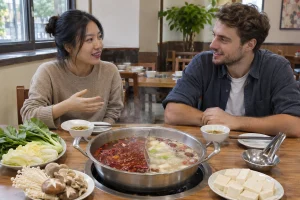
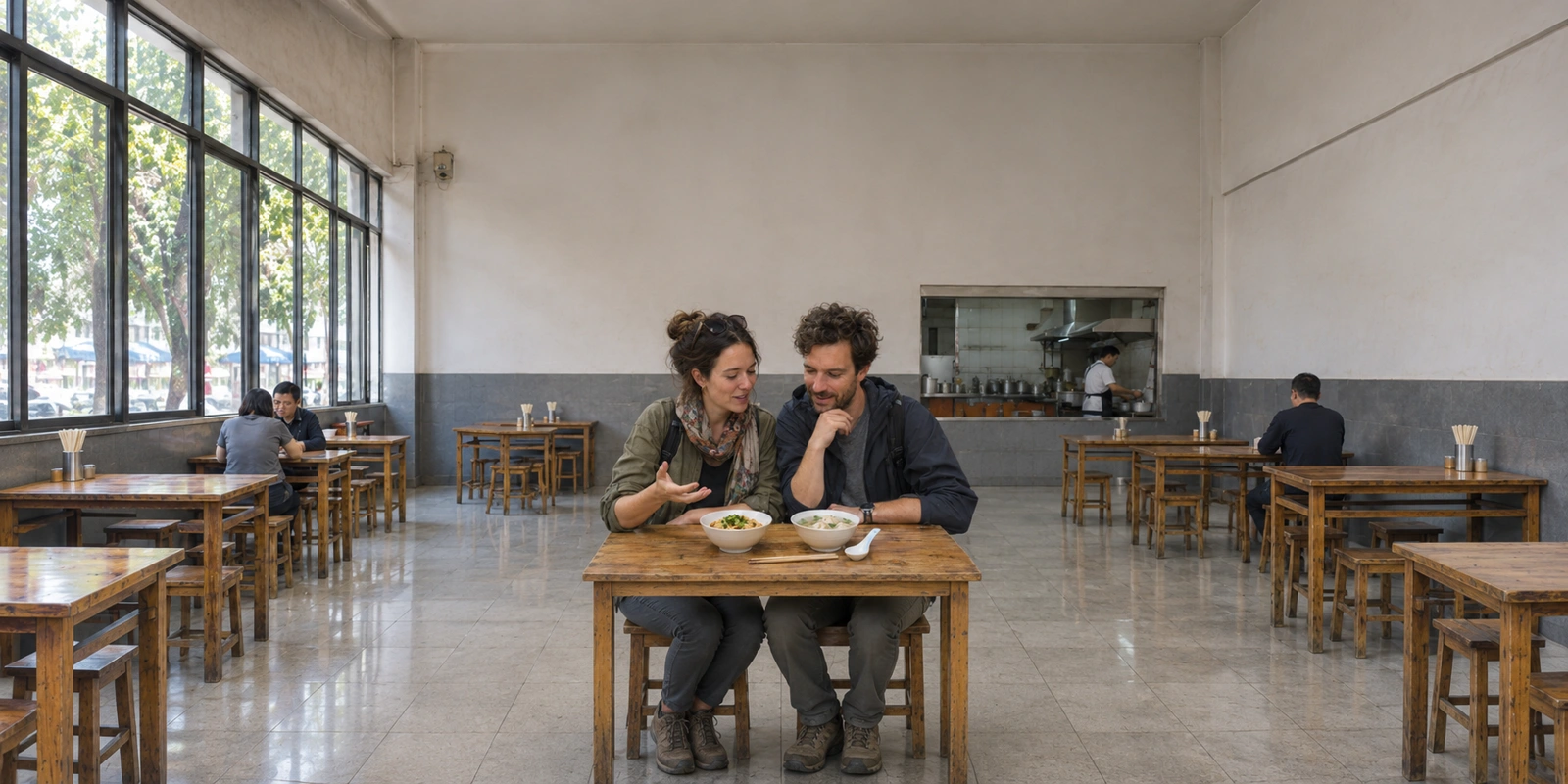
AI-generated illustration: two fictional adults considering noodles and wontons in a generic restaurant. It does not depict an actual Chengdu restaurant, an exact named recipe, a confirmed menu or included meal, real customers, a guide or an operated Verotrip departure.
Three names to recognise on a Chengdu menu
| Name to show | What it helps you choose | Question before ordering |
|---|---|---|
| Dandan mian / 担担面 | A thin-noodle choice with sauce. | What portion is offered, and can the seasoning be adjusted? |
| Chaoshou / 抄手, including Long chaoshou / 龙抄手 | Thin-wrapper wontons; select the actual serving style. | Which filling, which broth or sauce, and what quantity? |
| Zhong shuijiao / 钟水饺 | A pork-filled dumpling specialty with a sweet-salty-spicy profile. | Is that the version served here, and is a different preparation available? |
GoChengdu’s introduction to local dishes describes thin dandan noodles, thin-wrapper Long chaoshou, and pork-filled Zhong dumplings with a sweet, salty and spicy character. These are useful starting descriptions, not a specification every restaurant follows. Ask what is in the version you are about to order.
Chaoshou — 抄手 — is the local word you will encounter for wontons. Shuijiao — 水饺 — refers to boiled dumplings. A bowl with a similar English translation may therefore arrive with a different wrapper, filling, sauce and amount of soup. Save the Chinese dish name alongside an English description rather than searching only for “dumplings”.
If you also see tianshuimian / 甜水面, treat it as another named noodle choice rather than assuming the English phrase “sweet water” gives a complete ingredient list. GoChengdu’s international-student food account lists this dish along with dandan noodles and chaoshou. Ask the shop about its sauce, chilli and serving size before choosing it.
Soup, red oil and the request you actually mean
Separate three decisions: which dish you want, whether it comes in soup or with sauce, and how the shop can adjust the seasoning. Pointing at a clear-looking bowl in another person’s photograph does not establish what is in today’s broth. A red-oil version and a soup version are not necessarily the same order with a spoonful removed.
Useful menu words include 清汤 / qingtang, clear soup, and 红油 / hongyou, red chilli oil. If a menu offers these choices, ask the staff which belongs to your selected dish. A request for no chilli should be made before cooking or dressing the bowl; picking visible chilli off a finished dish does not undo the sauce underneath.
Chilli heat and Sichuan-pepper numbness are separate preferences. Say which one you want reduced, or ask about both. The word “mild” has no universal strength across shops. For a mixed-preference group, ordering separate bowls with the choices written down is often easier than sharing one heavily seasoned plate and hoping everyone enjoys it.
Choose a dish because its actual preparation suits you, not because a travel article calls a whole cuisine spicy or non-spicy. If the sauce is prepared in advance and cannot be adjusted, ask about another dish. Accepting a different bowl is usually a better meal decision than asking the kitchen to reconstruct a recipe it cannot offer.
Order enough for a meal without over-ordering
For one person, start by asking whether the noodle bowl or wonton portion is intended as a full meal or a snack. For two people who want to compare textures, consider one small noodle order and one dumpling or wonton order, with serving utensils if sharing. This is a suggested starting point, not a fixed quantity or a promise that every shop has small sizes.
Look at the stated portion and ask what it contains. A menu may distinguish small and large bowls, count dumplings, or use a local noodle-portion unit. A photograph of a deep bowl does not tell you how much food is below the surface. Compare the actual portion offered instead of assigning a universal weight to every Chengdu bowl.
Place the first order, eat at a comfortable pace and add something if needed. That leaves room for a drink or a later snack without turning the meal into a sequence of dishes nobody finishes. If the shop needs the full order at the counter, settle your choices first and keep the receipt or order number.
A combination snack set can be useful if the dishes interest you, but ask for the list, portion sizes and whether the amount is per person or for the table. A set is not automatically a better fit than two ordinary bowls. Do not choose it only because an old photograph shows more dishes than you expected for the price.
Six short questions to show at the counter
| Ask | Chinese to show | Purpose |
|---|---|---|
| Is there a small portion? | 有小份吗? | Find a size that suits a first order. |
| Is this intended for one person? | 这是一人份吗? | Compare a snack portion and a meal portion. |
| What is in the filling? | 这个馅里有什么? | Check the filled item rather than only its sauce. |
| Is there meat or bone in the soup? | 汤里有没有肉或骨头? | Ask about the liquid separately. |
| Can you leave out chilli and Sichuan pepper? | 不要辣椒和花椒,可以吗? | Name both preferences before preparation. |
| What is the total for all of this? | 这些一共多少钱? | Confirm the complete order before payment. |
Use these as conversation starters with the actual staff, not as a substitute for confirming an important dietary requirement. Show the dish name as well as the request, and give the person time to answer. If the answer is unclear, choose another option rather than interpreting a nod as confirmation of every ingredient and preparation method.
Fillings, stock, sauces and garnishes are separate questions. Removing a meat topping does not establish what went into the broth or sauce, and a clear soup is not a vegetarian statement. If you avoid pork, say so explicitly and check both the filling and liquid. This guide does not certify a restaurant as vegetarian, halal or suitable for a particular allergy.
Put the meal beside one local visit
Choose the neighbourhood for the day first, then find a currently operating shop whose menu suits you. A noodle meal need not become a cross-city restaurant hunt. With limited time, a comfortable seat near the next planned visit is more useful than a famous name on the far side of Chengdu.
For a Wenshu-area morning, allow a proper meal before or after the monastery and surrounding streets. The religious visit and the commercial restaurants outside are distinct. Do not assume that a nearby shop follows the monastery’s dietary practice, or that a temple visit includes a particular meal.
On a People’s Park or central-city day, use the same principle: one manageable cultural stop, a seated meal and time to reach the next appointment. Tea and a snack can be another pause, but should not turn into a compulsory second full meal. If you have a timed museum visit, protect the transfer rather than queuing for an unspecified wait at a busy counter.
For a wet day, favour a shop with indoor seating and an approach that works from your hotel or nearby visit. Not every queue is sheltered, and a stool outside is a different experience from a table inside. Share mobility needs when arranging the day; ask about steps, seating and the toilets you will actually use.
A comfortable meal sequence for different arrivals
| Your day | A practical meal choice | Protect this part |
|---|---|---|
| A relaxed local morning | One bowl or a small comparison order beside your chosen neighbourhood visit. | Actual opening and enough time to sit down. |
| Arrival day | A straightforward meal near the hotel after check-in. | Luggage and rest before a complicated food walk. |
| A busy sightseeing day | A preselected seated meal between one cultural visit and the next appointment. | Queues, travel time and the final hotel return. |
Before leaving the hotel, save its Chinese name and the correct return address. If you intend to eat after an evening activity, check that the selected kitchen is still accepting orders at the relevant time. Do not infer a restaurant’s last order from a general street’s nightlife reputation. A driver waiting period, restaurant queue and final hotel return are different parts of a booked arrangement.
Understand the bill and the service
Check the current menu for the dish and portion, then include any drink, extra topping, wrapping or other listed charge in your comparison. Ask for the complete total before paying. This guide does not quote a fixed Chengdu noodle price or assume that an old review, set-menu picture or promotional offer still applies.
Confirm whether you order and pay at a counter, use a table code, or speak with staff. If a digital menu is unclear or unavailable to you, ask for help or another menu format. A food shop’s presence on a map does not establish an English menu, card acceptance, an English-speaking server or a reservation held in your name.
Pay for your actual order and keep enough time to return comfortably. If you want a longer shared cooking-and-eating experience, plan it separately. Making noodles with a host involves a menu, participation, equipment and a booked time; it cannot be inferred from a restaurant selling the finished dish.
How a food itinerary differs from this meal guide
Our existing Chengdu old-town, food and opera itinerary mentions dan dan noodle making alongside tea, crafts and cultural visits. It is an activity-based proposal, not a promise that any restaurant bowl here is included or that a workshop has space on your date. The actual host, menu, language, timetable and full return must be agreed in the written plan.
Price on request for requested trip planning or arranged services. An ordinary meal you buy yourself is priced by the shop. A guide, interpreter, transport, restaurant booking, tasting set and cooking lesson are separate services; no one of them automatically includes the others. For a longer shared hotpot meal, compare our Chengdu hotpot guide on another day.
Tell Verotrip your Chengdu dates, hotel area, group size, dietary needs and whether you want an ordinary seated meal or a booked hands-on activity. We can discuss where it fits in the day, with realistic meal time and the return included in any agreed transport plan.
Questions about Chengdu noodles and dumplings
Are chaoshou and shuijiao the same dish?
No. Chaoshou are wontons, while shuijiao are boiled dumplings. The wrapper, filling and serving style matter, so use the actual Chinese dish name and ask what the selected version contains.
Can I order without chilli?
Ask before the dish is prepared, and mention Sichuan pepper separately if you want to avoid its numbing effect. Whether the request can be met depends on the recipe and prepared sauce. Choose another dish if adjustment is unavailable.
Is a noodle bowl a breakfast or a full lunch?
It can play different roles in a meal, but the portion and the shop’s service matter. Ask about the size and current serving period. Do not assume that every noodle shop opens early or serves the identical menu all day.
Does the food-and-opera itinerary include this restaurant meal?
Not on the basis of this guide. The itinerary is a separate proposal with activity and meal details to confirm. A named dish on this page establishes neither an included meal nor a confirmed workshop or English-speaking host.
Checked 5 November 2026. Dish descriptions use the linked city sources, with recipes and current service checked at the chosen establishment. Cover: original AI illustration of fictional people and a generic restaurant meal, not an actual Chengdu venue, confirmed recipe, customer or operated departure.