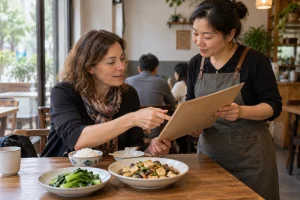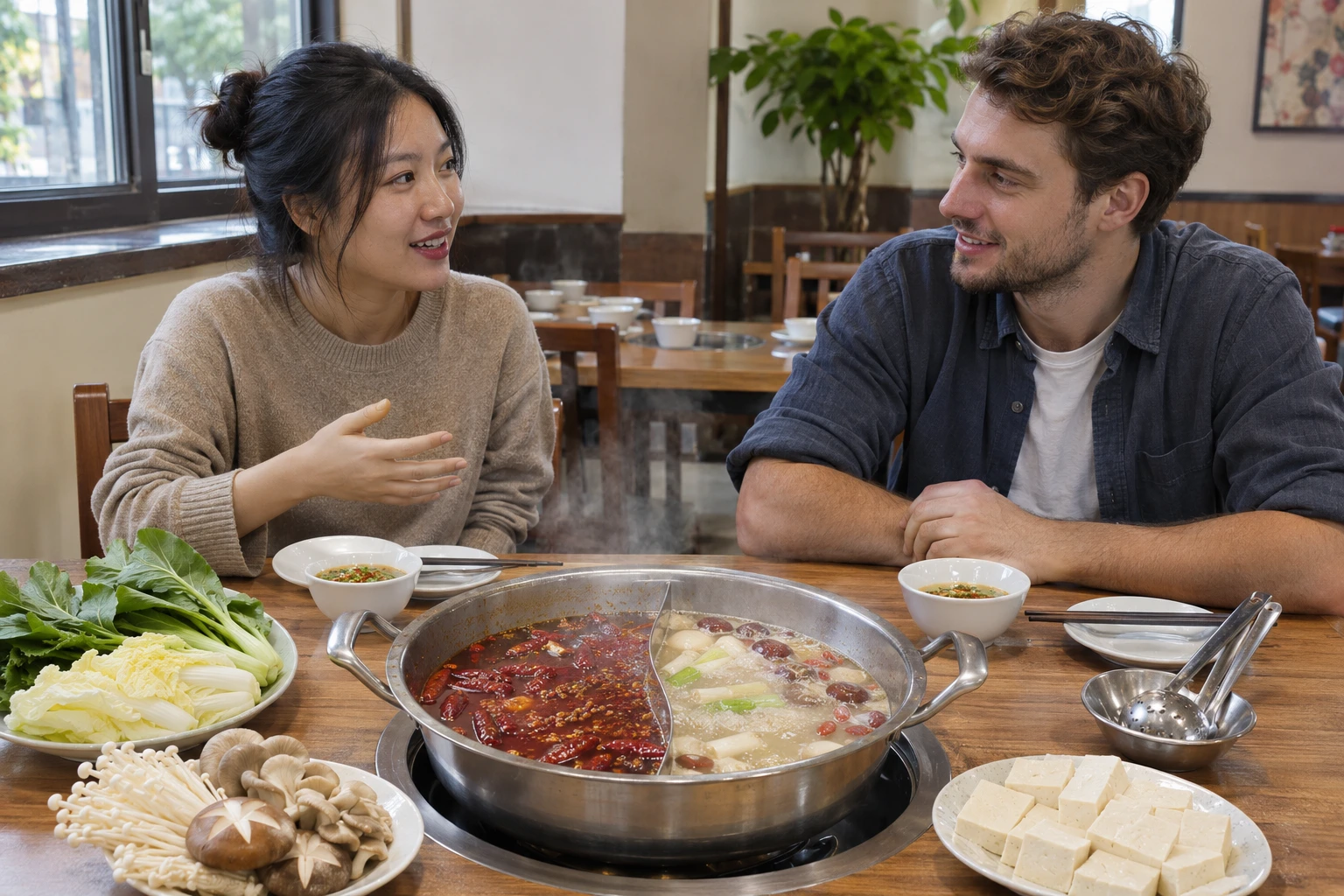
For a first Chengdu hotpot meal, choose the broth before ordering the dishes, start with a modest selection and leave the meal its own unhurried space. A divided pot can suit different spice preferences, but it does not settle ingredients, allergies or religious requirements. Confirm those with the actual restaurant before the broth reaches the table.
Hotpot (火锅) is a shared cooking experience: the pot, ordered ingredients, dipping sauces and table utensils each need a little attention. You do not need to order offal, select the hottest broth or copy the table next to you to enjoy it. A comfortable first meal is one everyone can understand and participate in.
Checked 5 November 2026. Lead image: AI-generated illustration of two fictional adults at an unbranded hotpot table. It does not depict an identified Chengdu restaurant, actual customers, a guide, a confirmed menu or a Vero Trip meal or departure.
Choose a broth the whole table can use
GoChengdu’s local hotpot introduction distinguishes a red chilli pot, a clear-soup pot and divided versions. It also describes beef-tallow and rapeseed-oil styles of red broth. These are useful starting terms, rather than a complete ingredient declaration for every restaurant.
| Choice to discuss | Reason to choose it | What still needs an answer |
|---|---|---|
| Red broth / 红锅 | The spicy, seasoned style is the meal you want. | Chilli level, Sichuan pepper, fat or oil and full ingredients. |
| Clear broth / 清汤锅 | You want a non-chilli option. | Actual stock, seasoning and suitability for individual dietary needs. |
| Divided pot / 鸳鸯锅 | The table wants two broth choices. | Which broths, separate tools and whether shared preparation is acceptable. |
Ask what the restaurant means by mild. Choosing a lower chilli level does not necessarily remove Sichuan pepper, and reducing one seasoning does not change the cooking fat or stock. If someone dislikes both the hot and numbing sensations, explain both instead of relying on a single translated word for spicy.
A split pot provides different compartments at the same table; it is not an assurance against cross-contact. Shared ladles, splashes and ingredients moved between compartments matter. If the restaurant cannot explain a workable arrangement for your needs, choose a different meal rather than treating the divider as a guarantee.
Order a first round, then add more
Begin with ingredients your party recognises: a protein you actually want, a few vegetables, mushrooms or tofu, and a starch if desired. Check the portion size on the current menu. A small photograph can represent a full plate, and a platter for several people can duplicate items already ordered separately.
For two diners, ask whether half-portions or a smaller pot are available before ordering several similar plates. For a larger group, agree who places the shared order so the same dish is not added repeatedly. Keep the first round limited enough to assess appetite; adding a dish later is more useful than filling every space on the table immediately.
Names can conceal unfamiliar cuts. If you do not want tripe, intestines, blood products or other offal, tell the server directly and ask what the pictured item is. You can build the meal around other choices. A claim that an ingredient is a local favourite is not a reason to order something nobody at your table wants.
Decide whether any cold dish, snack or dessert is part of the meal or a separate course. Ask whether it arrives ready to eat or needs cooking, and keep it apart from raw ingredients. If a menu offers an unfamiliar paste, dumpling or processed item, confirm its contents rather than assuming the picture identifies everything inside.
The dipping bowl is another ingredient decision
GoChengdu describes an oil-based dip with garlic and herbs, with other sauces offered as additions. Start simply and identify what goes into your own bowl. The seasoning counter is not a compulsory recipe, and a spoonful from an unlabelled jar is difficult to reverse once mixed.
Ask about the oil, prepared sauces and shared utensils when ingredients matter. A sauce described as vegetarian, mild or traditional still needs to be checked against your actual requirements. Do the same for sesame, soy, seafood-derived sauces and any other ingredient you avoid; do not infer the answer from colour or texture.
Keep your personal dipping bowl separate from the common serving tools. If you need help mixing it, explain the ingredients you want before someone fills the bowl for you. Ask whether access to the seasoning counter is charged per person, included with the pot or treated differently for children.
Cooking at the table: ask for help with the actual food
The Singapore Food Agency’s hotpot guidance stresses thorough cooking and keeping raw and cooked foods and utensils separate. Wash hands before eating, use distinct tools for raw ingredients and serving, and keep raw-food plates away from food ready to eat. Do not eat with the tongs or chopsticks used for raw meat.
Let the broth boil before cooking, avoid overcrowding the pot and allow food to cook thoroughly. Do not remove food for eating immediately after adding raw ingredients. Ask staff about the particular item and its thickness instead of applying one number of seconds to everything. Request assistance if nobody in the party is confident about cooking it.
Separate taste preferences from food-safety decisions. A dip does not make undercooked food ready to eat. Give very hot food time to become comfortable to handle, and keep children away from the vessel, burner and trailing cables. Ask staff to adjust the heat or refill the pot rather than handling unfamiliar equipment yourself.
Vegetarian, halal and allergy needs come first
Discuss the stock, cooking fat, sauces, utensils and preparation before agreeing to a table. Clear soup should prompt an ingredient question, not an assumption of vegetarian preparation. A table of vegetables does not settle what is in the broth, and a beef option alone does not establish halal sourcing or preparation.
For a food allergy, use FARE’s restaurant communication guidance: show the exact ingredient in writing and explain whether shared preparation or utensils are a concern. Have the person taking responsibility for the meal answer, rather than relying only on a menu icon or an automatic translation. If the restaurant cannot meet the requirement, choose a suitable alternative. This guide does not identify any branch as allergy-safe or religiously certified.
For a party with different needs, separately prepared meals or a different restaurant may work better than negotiating a shared pot after everyone has ordered. Our vegetarian ordering guide discusses the wider questions to ask when eating in China. Send dietary requirements before a planned food evening so the choices can be assessed early.
Useful Chinese for a short ordering conversation
Show the phrase, then ask staff to explain the actual option and price. These are conversation starters, not guarantees about the kitchen. If a question is important to whether you can eat, settle it before ordering rather than accepting a nod you cannot interpret.
| Show staff | Meaning | Follow-up that matters |
|---|---|---|
| 鸳鸯锅 | A divided pot. | Which two broths and what each contains. |
| 微辣 | Mild chilli level. | What mild means at this branch, and whether Sichuan pepper remains. |
| 不要辣椒和花椒 | No chilli or Sichuan pepper. | Whether the chosen broth can actually be made that way. |
| 清汤里有肉汤吗? | Does the clear soup contain meat stock? | What stock and cooking fat are used, rather than just its colour. |
| 有小份或半份吗? | Are small or half-portions available? | Actual size and price of the item you want. |
| 请给我们公筷和夹生食的夹子 | Please bring serving chopsticks and tongs for raw food. | Which tools are for raw ingredients, serving and personal eating. |
A paper menu or staff-assisted order can be easier if a QR menu requires a local account, phone number or payment method that does not work for you. Ask for help before sending an incomplete order. Keep the restaurant’s Chinese name and exact branch address saved for both arrival and the journey back.
Plan the bill by components, not an old per-person price
Check the broth charge, individual dishes, seasoning access, drinks, rice or noodles, and any service or other charge shown on the current menu. Establish whether a listed amount is per pot, per plate, by weight or per person. A set menu should identify its portions and anything the table expects to add.
If using a promotion, read the actual branch, valid dates, party size, redemption method and exclusions before depending on it. A national-chain name does not establish that every branch accepts the same offer or overseas payment method. Keep a practical way to settle the final bill and ask for the itemised amount before paying.
Price on request applies to a Vero Trip arrangement, not to a restaurant bill guessed from this guide. A hosted food evening should state the restaurant or selection process, meal allowance or specified menu, guiding language, meeting point and return arrangements. Admission to another attraction, drinks and additional dishes remain separate unless accepted in writing.
Give the meal a comfortable place in the day
For a central-city day, finish one cultural visit, return bags to the hotel if needed and choose dinner near the area where you actually want to spend the evening. A Wuhou Shrine and Jinli afternoon or a Chunxi Road area stay can lead to different restaurant locations. Pick the exact branch and transport connection instead of crossing the city simply to follow an undated list.
On another day, choose a short walk or tea break before an earlier meal. Avoid combining several substantial tastings with a large hotpot order immediately afterwards. Companions who do not want hotpot need a real alternative at the selected restaurant or a separately agreed meal; photographs of varied dishes do not establish the current menu.
After a long Leshan excursion, a late train arrival or an international flight, protect the rest and return journey first. Check that the kitchen can still accept an order at your arrival time, and avoid setting a full hotpot meal immediately before a fixed show or airport transfer. Restaurant opening hours and the last order are different questions.
The existing five-day Chengdu City and Panda proposal provides city days with room to discuss food preferences. Its Jianshe Road food-street stop and other neighbourhood visits do not establish that a hotpot dinner, particular restaurant or English-speaking meal host is included. Add a meal only through the dated written arrangements.
Questions before your first Chengdu hotpot
Do we have to choose a spicy pot?
No. Ask which non-chilli broth and divided-pot choices the restaurant actually offers. Explain any objection to Sichuan pepper separately, and check the stock and cooking fat when ingredients matter. Choose a different meal if the available options do not suit the party.
Can one person eat hotpot?
Ask about an individual pot, smaller portions or a set intended for one. Compare the actual pot and dish charges before ordering. A shared-table photograph does not mean the menu is economical for a solo diner.
Can we rely on an English menu?
An English menu can help identify dishes, but it does not establish the full ingredients, cooking method or availability of an English-speaking host. Use a short written list of important requirements and get the actual restaurant’s response before paying.
What should we send when planning a food evening?
Share the date, party size, hotel, spice preferences, specific dietary needs and any fixed evening plans through Vero Trip’s planning enquiry. The Chengdu planning guide helps place the meal within a balanced city stay and a complete return to your accommodation.