Do not plan a current Nepal-to-Laos holiday around an assumed road crossing through Gyirong and Tibet. Start by deciding whether Tibet, a Yunnan holiday, reaching Laos or keeping the same vehicle matters most. Those priorities lead to different journeys when the Nepal–China approach cannot support the proposed movement.
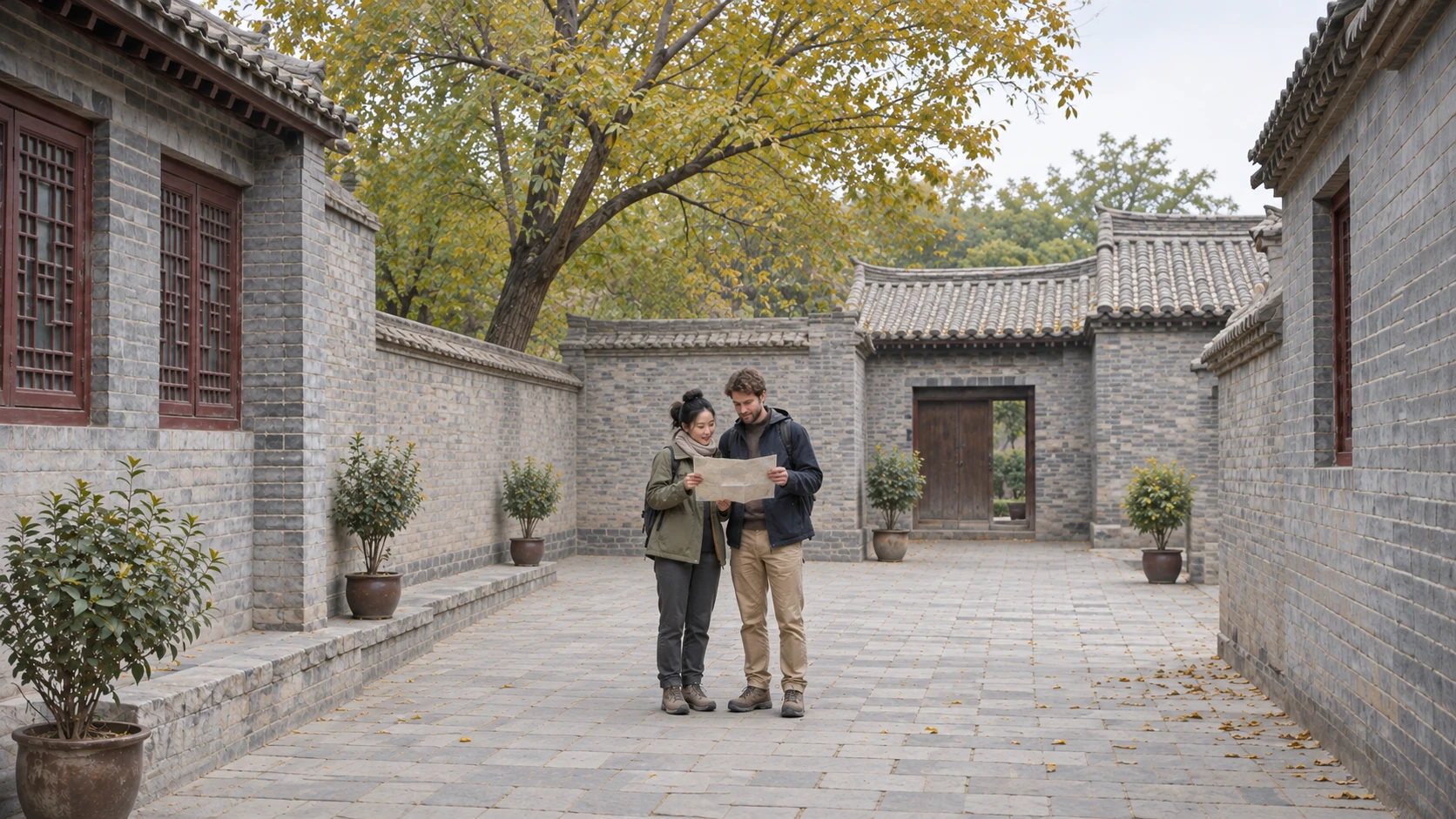
Lead image: AI-generated travel illustration showing two fictional adult travellers reading a map in a generic Chinese lane. It is not a photograph of a Nepal–Tibet–Laos journey, any border, actual customers or a Vero Trip departure.
A line from Kathmandu through Tibet and Yunnan to Laos is a geographical idea. It does not establish an accepted crossing, an approved Tibet programme or an available through-service. This guide compares a conditional future road project with separate regional visits that do not depend on that land entry. A particular foreign vehicle and its receiving arrangements have not been accepted here.
Updated 4 November 2026.
What the current Nepal–China approach information establishes
Canada’s China travel advice, updated 3 November 2026, continues to describe closures and access restrictions on the affected G216 approach between Gyirong town and the port. A reopening report from before the August disaster cannot establish today’s ordinary tourist passage.
The National Immigration Administration’s 2026 No. 5 notice suspended Shigatse electronic border-area permits from 28 August and instructed affected holders not to travel there. That notice concerns a specific electronic document; it is not proof that every foreign Tibet permission has the same status.
The US Nepal advisory issued 4 September 2026 separately advises against travel to the Rasuwagadhi, Timure and Syafrubesi border area because of flood damage and continuing hazards. Its area-specific highest warning does not apply to all Nepal. Check your own government’s advice, insurer and the responsible authorities for the actual journey.
None of these sources supplies a case-specific tourist vehicle approval. Do not replace Gyirong with another port from a freight, rescue or diverted-passenger report. A different crossing needs its own passenger, vehicle, road and receiving assessment before it becomes part of a holiday.
Choose the essential aim before rebuilding the journey
If reaching Laos is the priority, compare lawful passenger transport available for the actual passports and dates. Tibet need not become a compulsory transit. If Yunnan is the holiday, consider a separately accepted China arrival and regional stays before the confirmed Laos departure. Neither choice preserves a continuous drive out of Nepal.
If visiting Tibet matters most, first ask the receiving agency whether it can arrange the proposed arrival and permitted programme. A separate passenger connection through an accepted gateway changes the journey. Do not buy transport before the agency has explained the documents, their presentation and the actual meeting point.
| Essential aim | Choice to assess | What stays separate |
|---|---|---|
| Visit Tibet and southern Yunnan | Separate accepted arrival, Tibet visit and onward passenger connection. | Nepal road crossing and foreign vehicle movement. |
| Yunnan before Laos | Arrive in China independently and choose meaningful southern stays. | Tibet permission and any vehicle left in Nepal. |
| Reach Laos with limited time | Compare actual transport without a Tibet detour. | Transit-country documents, baggage and connection risk. |
| Keep a foreign car or motorcycle throughout | Postpone or redesign only around a fully accepted continuous movement. | Customs custody, driver documents and lawful exits in every country. |
A vehicle left in Nepal remains a separate responsibility even when its passengers fly onward. Resolve lawful storage, temporary-import obligations and eventual departure with the responsible parties. Passenger alternatives should not create a car or motorcycle stranded behind an unexamined customs deadline.
Make a Tibet visit a complete regional stay
Give the receiving agency each nationality, entry basis, arrival method and proposed places. Ask who applies for the relevant travel permission, what itinerary it covers, what documents you receive and when transport may be booked. A China visa, visa exemption or railway reservation alone does not establish a foreign visitor’s Tibet sightseeing arrangement.
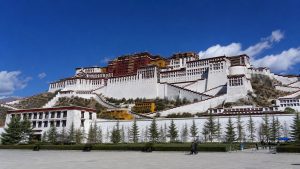
For a first enquiry, compare a Lhasa-based visit with the much larger project of a road journey through other Tibet regions. The Tibet planning guide helps choose regional priorities. Permission for a city stay does not automatically add Everest, Shigatse, a Nepal exit or an eastern Tibet road corridor.
Begin with an unhurried arrival and the actual room rather than a full sightseeing list. On subsequent days, choose a limited number of accepted city visits, leave time between them and keep a flexible day where the party needs rest or conditions change. Ask which major visits require appointments and how walking, stairs and vehicle collection work.
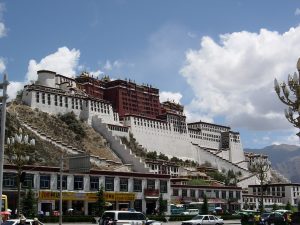
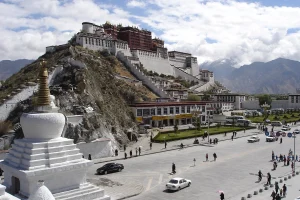
The existing four-day Lhasa city proposal is a domestic programme to enquire about, not a Nepal border transfer or a Tibet-to-Yunnan road service. Its native sequence has arrival on Day 1, Drepung and Sera on Day 2, Potala Palace and the Jokhang–Barkhor area on Day 3, then departure on Day 4. Current admission, actual visits and departure remain subject to the accepted written programme. Adding a fourth Lhasa night to a planning example does not silently extend a quoted four-day product.
A regional alternative: twelve China nights with Tibet optional
For travellers who want both Tibet and southern Yunnan, compare four Lhasa nights, two Kunming nights, two Pu’er nights and four Jinghong nights. This is a proposed allocation after an accepted Lhasa arrival, not a fixed continuous road itinerary from Nepal. It leaves distinct regional stays rather than turning every place into a transit stop.
The twelve nights exclude travel from Nepal, any extra gateway or connection night, and time in Laos. Use separately confirmed transport between Lhasa and Kunming; no direct flight or same-day connection is promised. If the available journey requires an additional overnight, add it rather than taking it from the rest or sightseeing already chosen.
| Base and proposed nights | Useful rhythm | Transfer and flexibility |
|---|---|---|
| Lhasa: four nights | Gentle arrival, selected accepted city visits and room for rest or change. | Actual approved arrival and departure; no assumed Nepal land entry. |
| Kunming: two nights | Arrival and recovery, then one local city day if connections allow. | Collect bags, reach the real hotel, and keep the next travel day separate. |
| Pu’er: two nights | Arrival stage and a full day for one confirmed tea estate or local visit. | Host availability, meal and transfer agreed before choosing the property. |
| Jinghong: four nights | Arrival, two focused local days, then rest or a weather/connection buffer. | Protect the confirmed Laos departure and actual station transfer. |
Use Kunming as a transition rather than an immediate dash south
After the Tibet stay, plan to collect all bags and reach the actual Kunming room. For the full city day, a modest Green Lake and surrounding-neighbourhood walk can be enough; choose an indoor visit instead when weather or energy calls for it. A missed connection should not force a late arrival followed by an early long excursion.
Choose the hotel around the departure you actually book, not an assumed train or airport. A central city room and an airport-area room solve different problems. If a connection changes the plan, compare the cost of a further Kunming night with losing the first useful Pu’er day.
Give Pu’er one purposeful full day
Two nights can separate the arrival from a focused tea-interest visit. Ask for one estate, host or community visit that has actually accepted the party, with the tasting, interpretation, walking and meal scope stated. Do not treat every plantation as an open visitor attraction or assume an English host will be present.
If that visit is unavailable, choose an agreed city activity or shorten the Pu’er stay before booking. Avoid a long drive to a replacement estate merely to keep a familiar tea photograph in the itinerary. Confirm where the bags remain and whether the next transfer is by booked train or a separate road service.
Keep Jinghong’s local days distinct from the Laos departure
Use one day for an accepted Nannuo Mountain tea-community visit and another for a city-based Manting Park and local-culture choice. Walking surfaces and slopes, host availability and the actual return point need assessment. In wet weather, retain a quieter city day or reschedule the hosted visit instead of moving onto an unapproved plantation track.
The two-day Xishuangbanna Nannuo and Dai-culture proposal is a matching domestic component. It does not include Nepal transport, Tibet permissions, an international railway ticket or Lao reception unless the accepted proposal separately says so. Keep the remaining Jinghong day flexible for rest, changes and departure preparation.
If Tibet cannot be arranged or is unsuitable, remove that regional block and rebuild around the actual China arrival. Do not redirect the party into an unverified eastern Tibet road corridor. If Lijiang, Dali or Shangri-La is essential instead, allow meaningful stays and the real intervening journeys; they are additions to assess, not stops automatically covered by these twelve nights.
Choose the Laos arrival channel before the final China hotel
The official Lao eVisa information lists Boten International Checkpoint and Boten Railway Station separately. Match passport eligibility, immigration documents and any eVisa to the actual arrival point. A passenger document does not establish admission for a Nepalese-registered or other foreign vehicle.
The Chinese transport ministry’s April 2026 railway report describes international passenger services linking China and Laos. It does not reserve a seat or establish the timetable, fare, luggage allowance or station procedure for your departure. Obtain those details from the actual booking and operator instructions.
For a passenger train, identify the departure station, when to report, the immigration process and the Lao arrival station. Jinghong city, Xishuangbanna station, Mohan station and a road checkpoint are different places. Include the real hotel-to-station transfer and keep travel documents, medication and valuables accessible during checks.
For a road movement, establish China vehicle exit and Lao reception together. Write down where each transport contract ends, who handles the bags, the authorised way the travellers cross and where the next driver meets them. One domestic car or guide should not be assumed to continue working across the frontier.
Protect the highland stay, luggage and the final connection
Starting in Kathmandu does not establish readiness for the sleeping places in Tibet. Discuss the actual ascent, nights and medical needs with a clinician before booking. The CDC altitude guidance explains that fitness does not eliminate altitude-illness risk. Symptoms and a suitable assistance or descent response must take precedence over a border or flight date.
Four Lhasa nights are a scheduling comparison, not a medical guarantee. Agree how rest, medical assistance or an earlier departure would work. Keep the highland permission, the changed transport and any vehicle responsibilities in the same contingency plan. No particular hotel oxygen equipment, clinician, evacuation or insurance benefit is confirmed by this outline.
Ask about heating, bathrooms, stairs, vehicle access and the walk from legal parking to the room. Give children’s ages, mobility needs, dietary requirements and luggage size before choosing accommodation and transfers. Driver support, English sightseeing interpretation and a hosted tea visit are separate services; specify each rather than relying on a general “private tour” label.
Pack for the different regions and keep a change of clothes, warm layers and essential medication in accessible luggage. A highland hotel departure and a warm southern-Yunnan afternoon can occur in the same overall holiday. Recheck the baggage rules for every flight or train; a vehicle’s storage space does not establish a railway allowance or through-checked bags.
| What changes | Practical response | Keep connected |
|---|---|---|
| Nepal–China land approach is unavailable | Postpone that section or use separately accepted passenger travel. | Vehicle custody, Tibet documents and downstream deposits. |
| Tibet permission or health suitability is unresolved | Remove Tibet and rebuild the regional holiday. | Actual China gateway, room nights and transport bookings. |
| Lhasa–Kunming transport requires another night | Add the connection night or reduce geographical scope. | Bag collection, transfer and next morning’s pace. |
| A tea-community visit is not accepted | Use an agreed city option or revise that base before paying. | Host, language, meal and return transfer. |
| The Laos departure changes | Rebook the actual service and retain a suitable China night if needed. | Permitted stay, station transfer, bags and Lao reception. |
Questions before arranging Nepal, Tibet, Yunnan and Laos
Is this an available Nepal-to-Laos road departure?
No. It explains current restrictions and choices. A continuous movement needs accepted passenger, driver, vehicle and receiving arrangements, as well as usable roads. An old itinerary or a regional sightseeing permission does not establish them.
Can a Nepal-based car or motorcycle follow the passenger alternative?
Not automatically. Flying passengers onward does not move their vehicle or discharge its obligations. Obtain a separate accepted customs, custody and exit solution before choosing the passenger journey.
Can the four-day Lhasa proposal include a fourth night?
Only if the amended written programme and permissions cover it. The twelve-night comparison deliberately proposes a different allocation; the existing product’s title does not include an unquoted extra night, transfer or extension.
Does the Jinghong tour include a Laos crossing?
No international service is established by its domestic two-day outline. Ask separately about the actual train or road service, tickets, border procedure, bags and Lao reception for the accepted date.
Request an itemised proposal for the journey you actually want
Price on request. Separate document work, transport, guide language, rooms, meals, admissions, hosted visits, international tickets, insurance and contingency costs. Identify deposits or vehicle securities separately from service fees, with cancellation and release conditions. Supplier descriptions, photos and historic schedules do not confirm Vero Trip’s services or availability.
Provide each nationality, dates, Nepal starting point, Laos destination and the regional stays that matter most through Vero Trip’s planning enquiry. If the same vehicle is essential, include its registration country, class, ownership authority and intended drivers. Use the agreed secure process for sensitive documents when needed.
The China overland comparison helps frame the different journey structures. Ask for a case-specific feasibility response before treating a route discussion as a reservation or border approval. Keep Nepal land access conditional while independently arranging only those regional visits and onward services that have actually been accepted.