Updated 27 October 2026.
Choose Yunnan’s UNESCO World Heritage sites by the journey you want, rather than trying to collect every listing. Lijiang suits a town-based cultural stay; Shilin offers a focused landscape outing from a Kunming itinerary. Honghe Hani terraces and Jingmai tea forests reward time in rural communities. Chengjiang focuses on early life and fossils, while the Three Parallel Rivers designation covers a much larger protected mountain landscape. These are different trips with different access needs.
Six World Heritage entries, six different travel decisions
The table links to the official UNESCO entries. A property can have several component areas, and some extend well beyond one visitor attraction. A place appearing in a regional tour description does not mean that every stop is inside the inscribed boundary, or that a single ticket covers the whole landscape.
Start with the experience that interests you: streets and architecture, rock formations, farming systems, tea culture, fossils or mountain landscapes. Then choose an appropriate base and enough usable time. The landscape’s heritage value and the practical arrangements for visiting it are separate questions.
| Official World Heritage entry | What you are choosing | Main planning consequence |
|---|---|---|
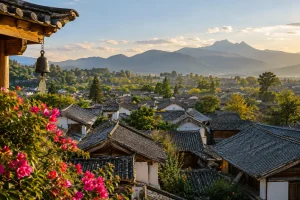
| Old Town of Lijiang | A cultural townscape including Dayan, Baisha and Shuhe | Choose a town base and selected walks; the three settlements are distinct. |
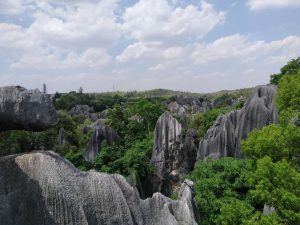
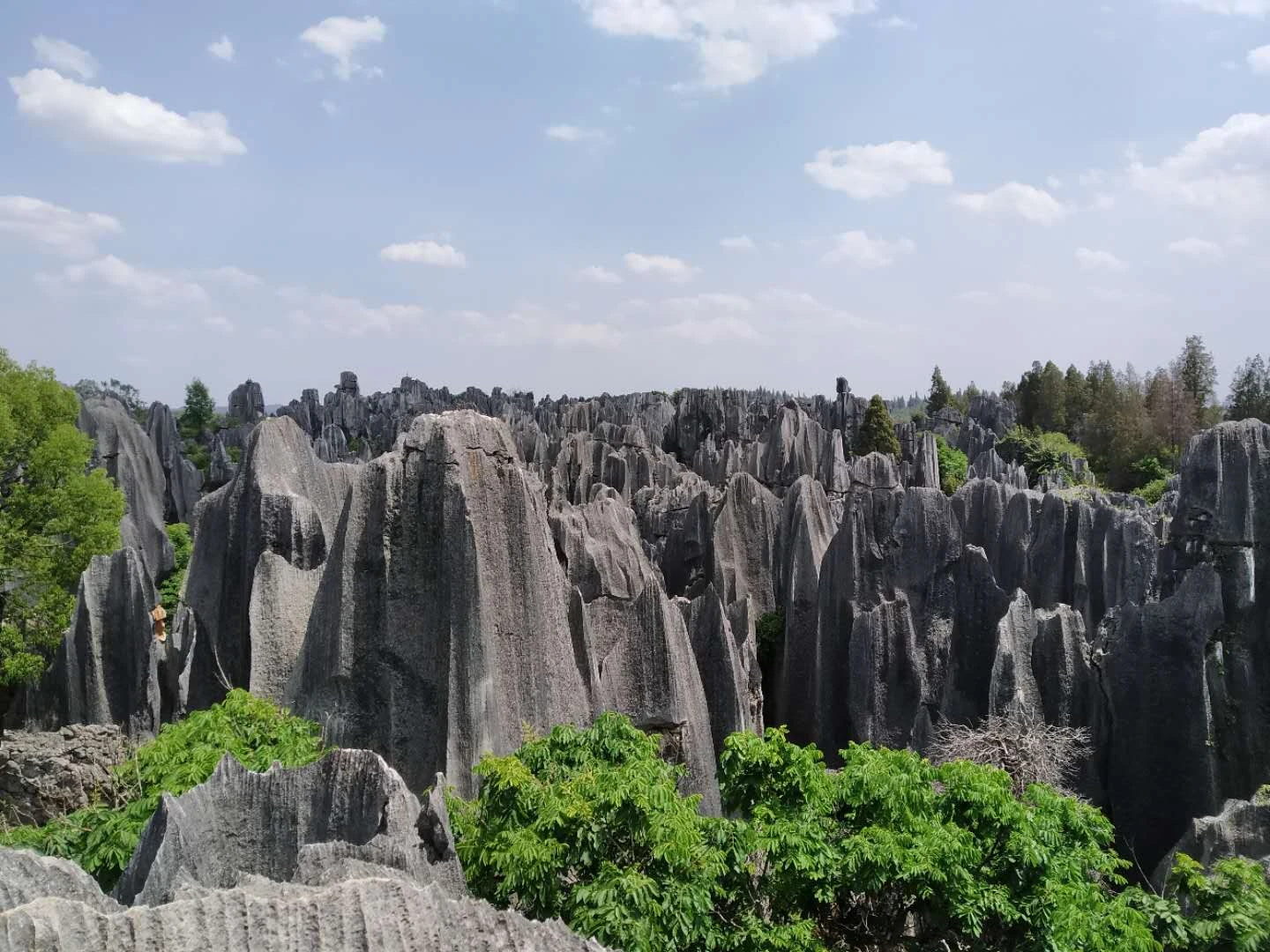
| South China Karst — Shilin component | Yunnan’s stone-forest landscape within a multi-province natural property | Plan the actual Shilin visitor area, not every South China Karst component. |
| Chengjiang Fossil Site | Evidence of an early Cambrian marine ecosystem | Choose interpretation and the appropriate visitor venue; do not assume fossil collecting is an activity. |
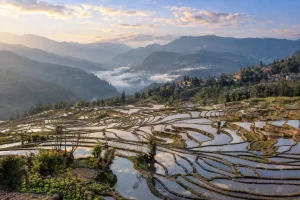
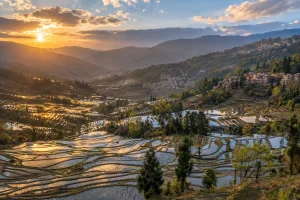
| Cultural Landscape of Honghe Hani Rice Terraces | A living system of forests, villages, water and rice fields | Give the terrace area an overnight plan instead of treating one photograph as the whole visit. |
| Cultural Landscape of Old Tea Forests of the Jingmai Mountain in Pu’er | Tea cultivation, forests, villages and community traditions | Plan the mountain base, walking and any hosted visit together. |
| Three Parallel Rivers of Yunnan Protected Areas | A serial natural property in mountainous northwestern Yunnan | Name the particular area and lawful visitor route; this is not one sightseeing entrance. |
Lijiang: choose a cultural stay rather than a list of shops
UNESCO’s description includes Dayan Old Town, Baisha and Shuhe. The waterways, streets, houses and cultural relationships matter together. A useful visit leaves time to notice the setting rather than reducing it to a single landmark or a sequence of purchases.
Choose accommodation around the walking and transfers you actually want. A Dayan stay can support a selected old-town walk; a Baisha outing is another decision. Keep a meal break and ask separately about a craft host, mural admission or an explanation in your preferred language. None is automatically included because you are staying in a heritage area.
Use the Lijiang stay and old-town guide for the detailed allocation of days. If you want to add mountains, keep that as a separate excursion with its own access, weather and physical demands. A comfortable town day does not establish that every nearby outdoor activity is suitable.
Shilin: a clear choice for a focused landscape day
Shilin is the Yunnan component of South China Karst. The wider inscription also includes components in other provincial-level regions, so visiting the Stone Forest does not mean visiting the whole serial property.
For a Kunming-based trip, decide which part of the Stone Forest you intend to visit and how much walking suits the party. An efficient plan gives the principal landscape its own time, includes a meal and settles transport back to the hotel or the next overnight stop. Do not add distant sightseeing simply because the itinerary still has an empty line.
The Stone Forest day-trip guide covers the practical choices. Confirm the current entrance, operating arrangements and any internal transport for your date; a railway arrival or road drop-off is not necessarily arrival at the start of your chosen walking route.
Chengjiang: choose it for fossils and interpretation
The Chengjiang Fossil Site records an early Cambrian marine community, including exceptional preservation of organisms. That makes it a different interest from a scenic rock walk. Choose it when understanding early life is a meaningful part of your journey.
Start by identifying the actual visitor venue and its current arrangements. Ask what interpretation is available in a language your party can follow and whether the intended displays suit the ages and interests of children. A building called a museum and an outdoor fossil locality offer different experiences; establish which one the plan means.
Do not expect access to research work, excavation areas or fossil collecting. Follow the visitor routes and staff instructions. If palaeontology is not a shared interest, discuss that before committing the whole party to an additional transfer. A well-chosen explanation can be more useful than adding a stop simply for its World Heritage label.
Honghe Hani terraces: stay for the living landscape
The heritage value lies in the relationship between forests, water, villages and farming, not just the shape of flooded fields. Viewpoints can introduce that landscape, but working terraces and village life deserve respect and time.
Choose an overnight base in relation to the views and walking you want. Ask about the actual hotel access, steps, room comfort and where meals will take place. For a family or anyone who prefers shorter walks, selected open viewpoints and rest stops can be more appropriate than a long descent through the fields.
Use the Yuanyang terrace planning guide for season and base decisions. Water reflections, rice growth, visibility and sunrise colour vary; no photograph establishes what you will find on your dates. Leave an alternative viewing opportunity or a suitable village visit rather than making the trip depend on one dawn.
Jingmai: the tea forest and village belong together
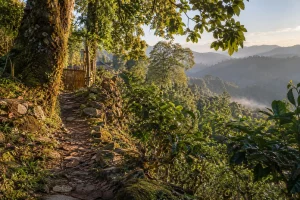
UNESCO describes a cultural landscape maintained through the tea-cultivation traditions of Blang and Dai communities, with old tea groves, forests and villages. A visit is more rewarding when it explains that relationship instead of treating the forest as a backdrop to a quick drink.
Book the final road stage and the mountain accommodation together. Decide whether you want a short forest walk, a village visit or a prearranged tasting, then establish the host, language and physical demands. A tasting does not automatically provide access to a working processing area or permission to pick leaves.
The Jingmai itinerary planner helps separate usable mountain time from arrival and departure. Keep purchases optional, ask before entering private areas and follow the host’s guidance around trees and village spaces. Ceremonies and community life are not performances to demand for a tour.
Three Parallel Rivers: first choose the specific area
This inscription is a group of protected areas in northwestern Yunnan. The Jinsha, Lancang and Nu river systems help explain its geography, but the property is not one park gate with a single visitor circuit. UNESCO also notes that large river sections lie outside the property boundary.
Ask a planner to identify the actual area, visitor entrance, overnight base and permitted route. A scenic drive beside a river does not establish that you have entered a protected component. Likewise, a well-known mountain name does not establish that a particular trail is open or appropriate for your party.
Build this part of the journey around realistic road stages, walking comfort and current local conditions. Request a less demanding alternative if the original route cannot operate. Do not use a broad heritage label as a substitute for the specific access and safety decisions required by a remote mountain outing.
Combine by region, not by the number of inscriptions
These are route frameworks to discuss, rather than a fixed programme or a claim that each option includes every component. Leave travel and recovery time in the plan. If two regions are important, compare the extra nights and transfers before booking transport.
| Your main interest | A coherent framework | What to leave for another trip |
|---|---|---|
| Rock scenery and rural cultural landscapes | Kunming and Shilin, then a separately paced Honghe extension through chosen overnight bases | A rushed dash from the terraces to northwestern mountain areas |
| Town heritage and a mountain extension | Lijiang, with a particular northwestern area added only after route and access checks | Assuming that all Three Parallel Rivers clusters fit into one excursion |
| Tea culture and village time | A dedicated Jingmai stay with its gateway and final road transfer settled | Adding it as a brief stop on an unrelated Lijiang or Honghe day |
| Early-life science | A Chengjiang interpretation visit fitted around the actual venue and your Kunming-area plans | Promising excavation access or attaching fossil collecting to ordinary admission |
For a first trip, selecting one principal heritage landscape and a contrasting town or cultural day can leave more room to understand both. If you are comparing a longer route, write down each overnight base and distinguish sightseeing days from transfer days. The same number of hotel nights can produce very different amounts of usable visiting time.
What to establish before paying
World Heritage status does not determine ticket prices, opening arrangements, accommodation standards or what a tour includes. Establish those with the actual operator for your dates. Save the Chinese venue name and map pin, especially when a broad English destination name can describe several places.
| Decision | Ask for a clear answer | Why it matters |
|---|---|---|
| Actual visitor access | Which entrance, venue or open route does the plan use? | An inscribed landscape can be much larger than the visitor area. |
| Walking and transport | Which surfaces, steps, road stages and vehicle meeting points are involved? | A short description can conceal the effort between stops. |
| Season and alternatives | What happens if visibility, weather or local access changes? | A meaningful alternative should fit your interests and the actual location. |
| Services and cost | Which admission, transport, guiding, rooms, meals or hosted activities appear in writing? | A place name in a route description is not an included-service list. |
Existing routes that match part of the choice
The ten-day Honghe and Stone Forest route includes both Stone Forest and Yuanyang, along with other southern Yunnan stops. Its value is the paced regional sequence; it does not cover all six World Heritage entries.
The four-day Jingmai tea-forest route provides a different framework, with mountain nights, a forest walk and village time. Compare it on its own terms rather than assuming it is an interchangeable extension to the Honghe itinerary. Current hosts, language, transport, admissions and other services should be specified in the written proposal.
Questions travellers ask
Can I see all of these on a short first visit?
Choose the regions that match your interests and available nights. The properties are dispersed and some are extensive serial landscapes, so a short visit is better planned around selected areas than a completion checklist.
Is a museum visit the same as entering every part of a natural property?
No. A museum or interpretation venue can explain a site without giving access to its protected field areas. Establish the exact visit, especially at Chengjiang.
Do the cultural landscapes require a long hike?
Not every useful visit needs a long walk, but the actual paths, accommodation access and chosen activities matter. Request a route that matches your comfort rather than relying on the word “cultural” to imply an easy day.
Plan a heritage journey with Vero Trip
Send Vero Trip your dates, arrival and departure points, usable nights, party size and the two experiences that matter most. Include walking comfort, luggage and dietary needs, and say whether you prefer town stays, rural nights, science interpretation or photography. Ask for a route with clear overnight bases, realistic transfers and stated alternatives. That is a more useful starting point than requesting every UNESCO site in the province.