

China is easy to travel once your phone is prepared, but the first 24 hours can be frustrating if mobile data, payment or navigation fails. This guide turns a popular RedNote preparation into a practical, English-language arrival plan for overseas visitors, with extra safeguards for the details that change most often.
China Travel Guide Series
Continue planning with these practical first-trip guides:
Jump to the Essentials
- Before you fly
- Alipay and WeChat Pay
- Maps and translation
- DiDi ride-hailing
- Food and local discovery
- China Railway 12306
- Visa and entry checks
- One-screen preparation
Essential China Travel Apps at a Glance
| App | Best for | Overseas setup | Payment / backup | Key caution |
|---|---|---|---|---|
| Alipay | QR payments, metro/bus codes, mini-programs and ride-hailing | Supports overseas phone numbers and eligible international cards | Use as the primary wallet; keep a card and RMB cash | Complete verification and test it before a time-sensitive purchase |
| Messaging hotels and guides; WeChat Pay | Overseas registration is available, but verification prompts vary | Useful second wallet when successfully activated | Do not share a password, PIN or one-time verification code | |
| Amap Global | Metro, bus, walking routes and live traffic | Use the English interface where available | No payment function required | Save Chinese place names and check the correct entrance or station exit |
| DiDi | Ride-hailing and airport/hotel transfers | Supports overseas phone numbers and eligible international cards | Card, Alipay or WeChat Pay options may be available | Check the pickup point, license plate, route and final fare |
| Dianping | Restaurant ratings, menus and local activities | Interface and registration options vary by version | Ordering and payment may redirect to a mini-program | Some merchant pages and customer comments remain in Chinese |
| China Railway 12306 | Official high-speed rail and train tickets | Register with the exact details from a valid foreign passport | Use the payment methods shown during checkout | Verify early and check the current ticket presale window |
1. Before You Fly: Build a Phone-and-Cash Safety Net
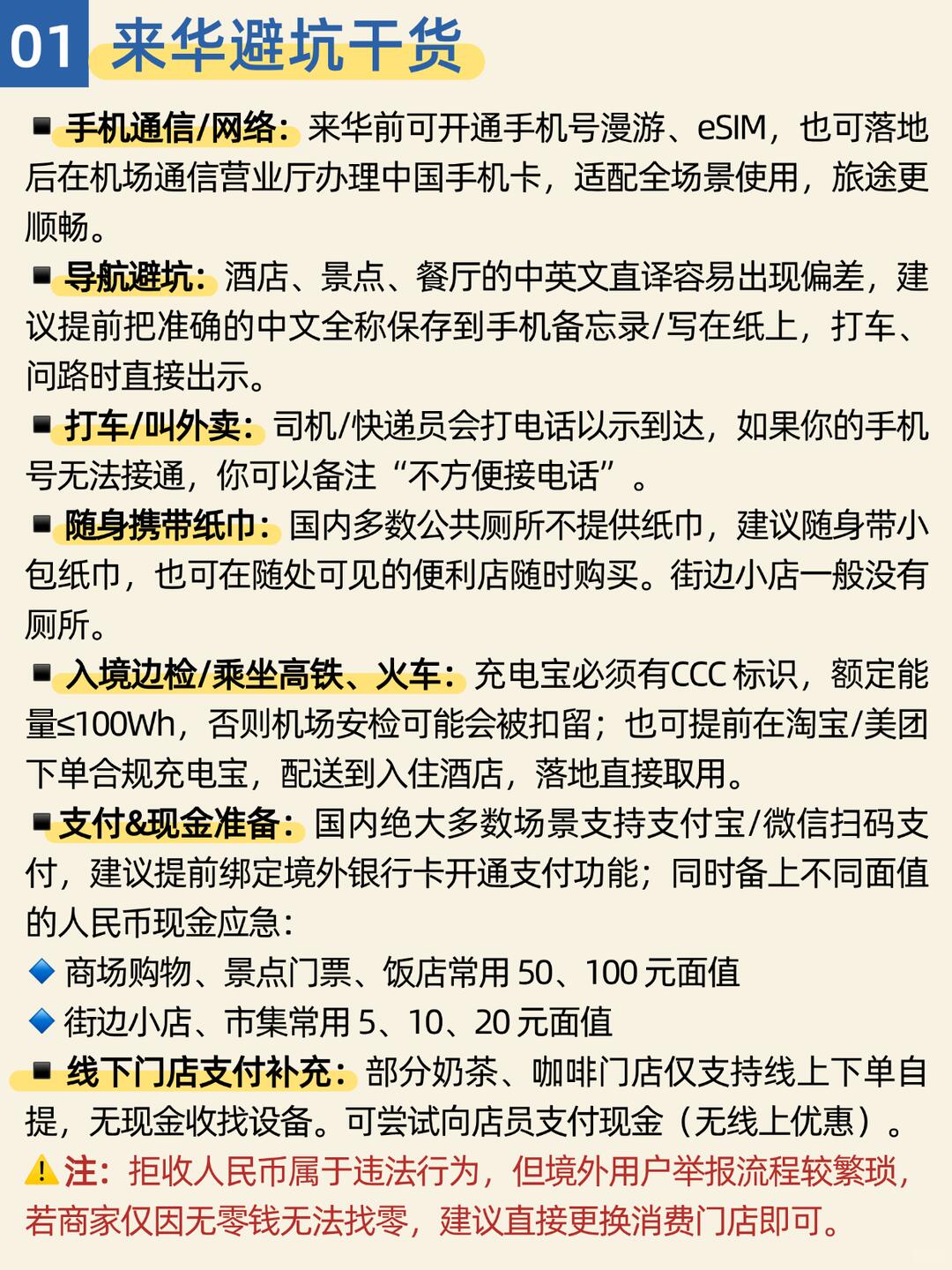
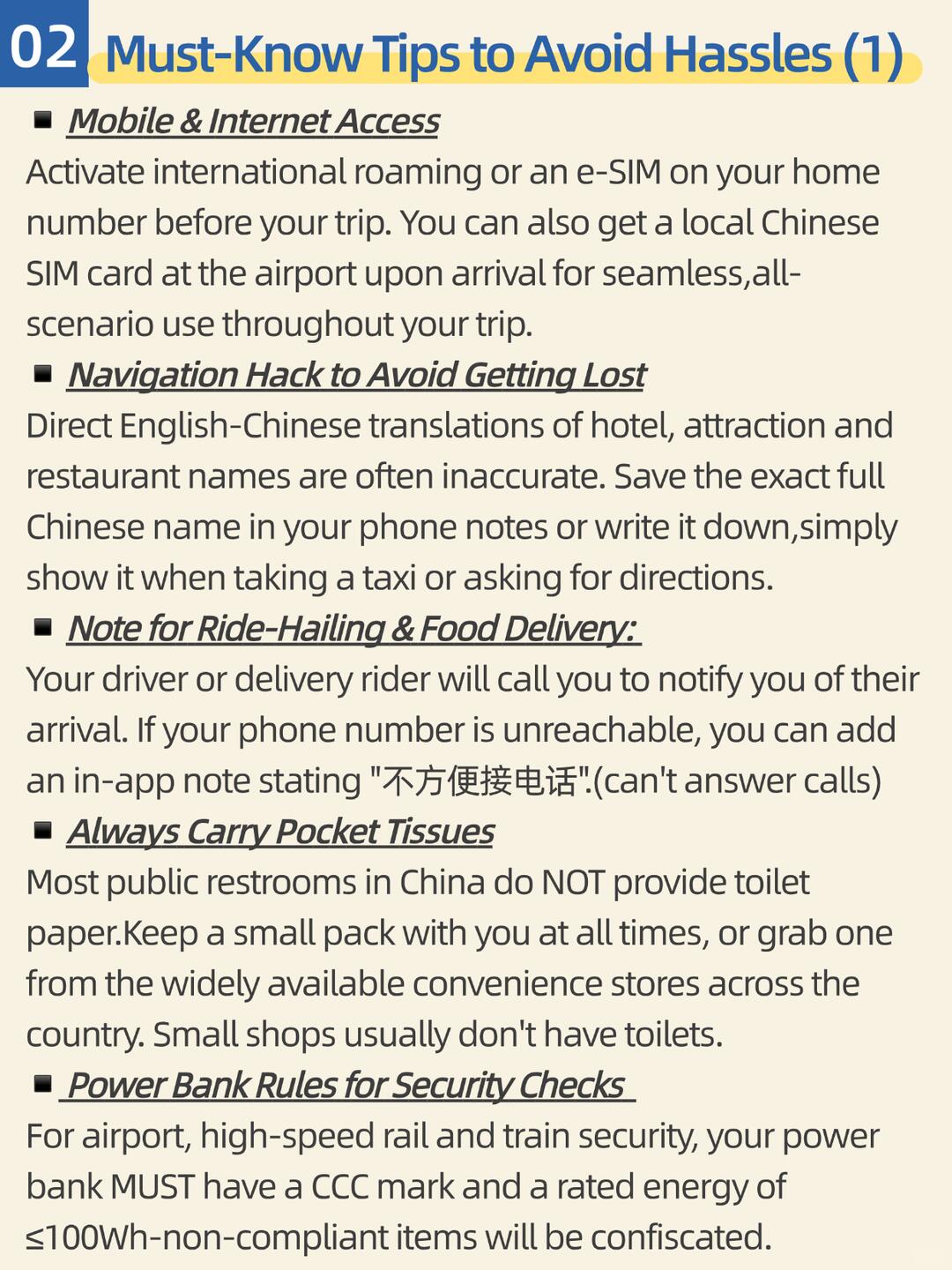
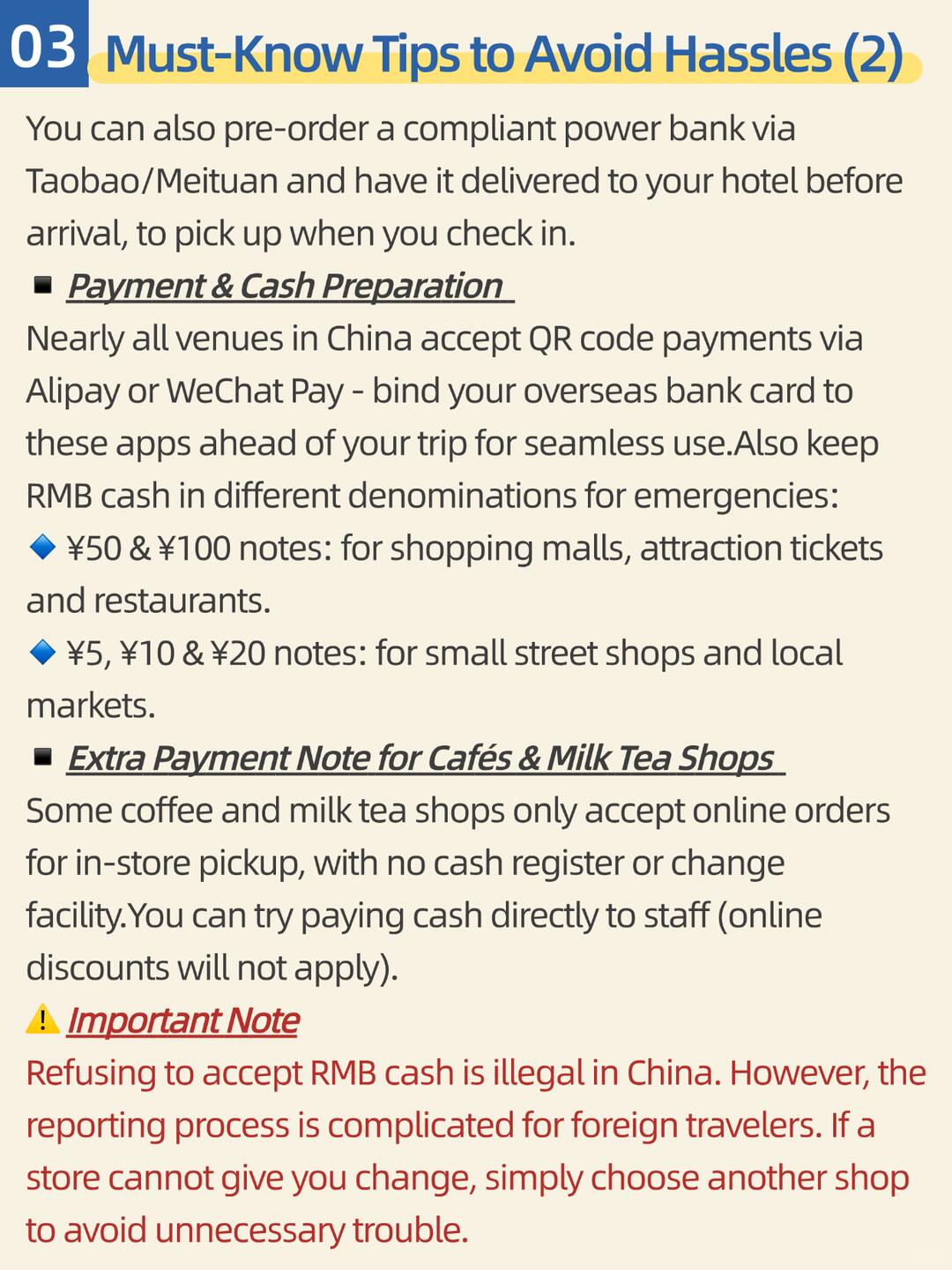
Mobile data: Activate international roaming or install a travel eSIM before departure, and confirm that it will work in mainland China. A local SIM can also be purchased after arrival, but pre-arranged data makes airport pickup, payment and hotel navigation much easier. Save addresses in Chinese: Keep your hotel name, full address and key attractions in Chinese in your notes or as screenshots. Direct English translations are not necessarily useful to a driver, and a pin placed in the wrong mapping system can be misleading. Carry small backups: Bring a physical international card stored separately and modest RMB cash in smaller notes. Cash is legal tender, but a small merchant may not have change. Use your wallet’s in-app scan function rather than scanning unfamiliar codes with the phone camera. Power bank warning: For domestic flights in China, the Civil Aviation Administration of China prohibits power banks without a clear 3C mark, with an illegible 3C mark, or from recalled models or batches. A clearly printed Wh rating is also important. Check your airline’s latest rule before flying within China; buying a compliant unit locally may be easier than losing one at security.
2. Alipay First, WeChat Pay as a Useful Backup
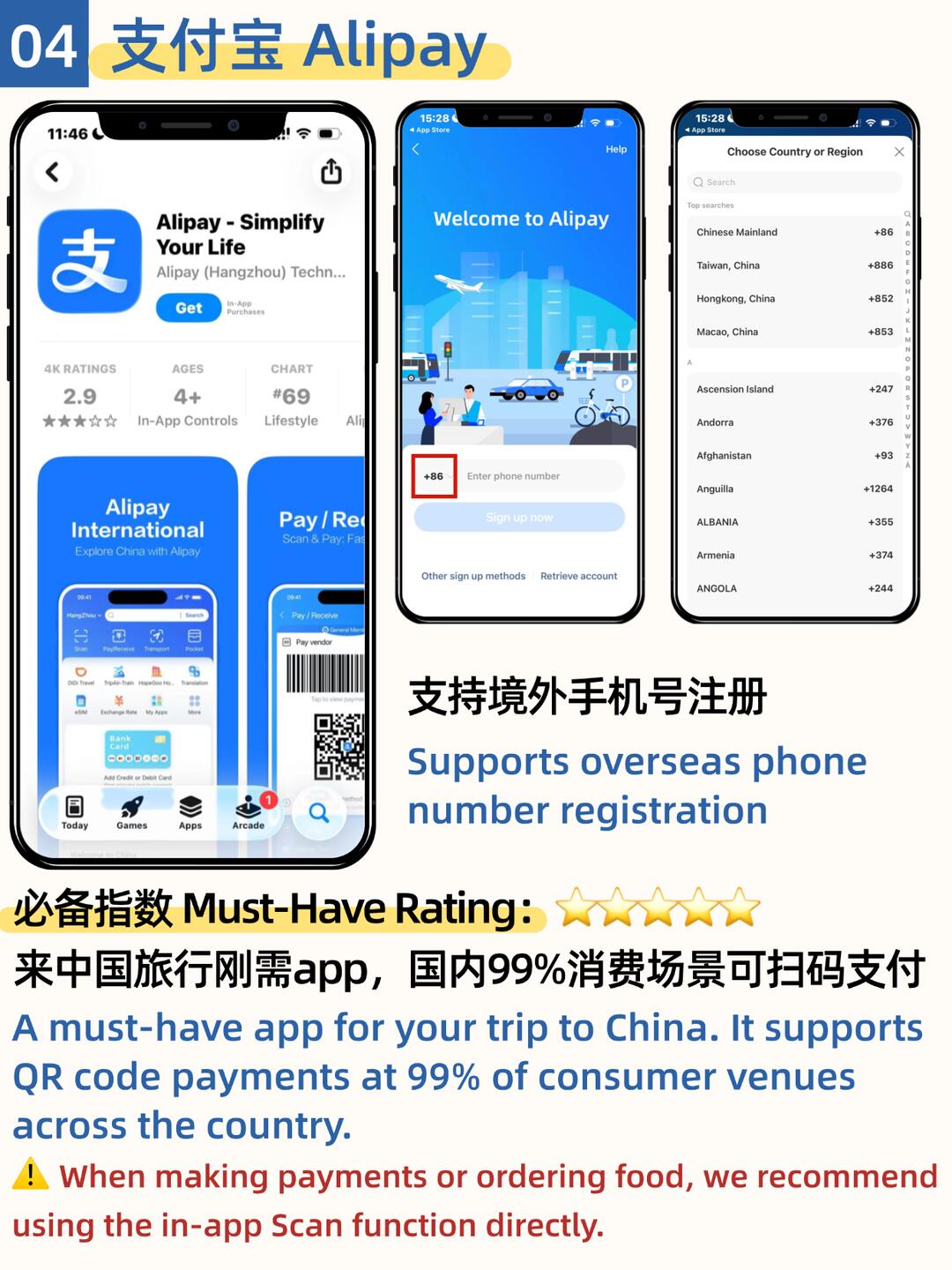
Alipay
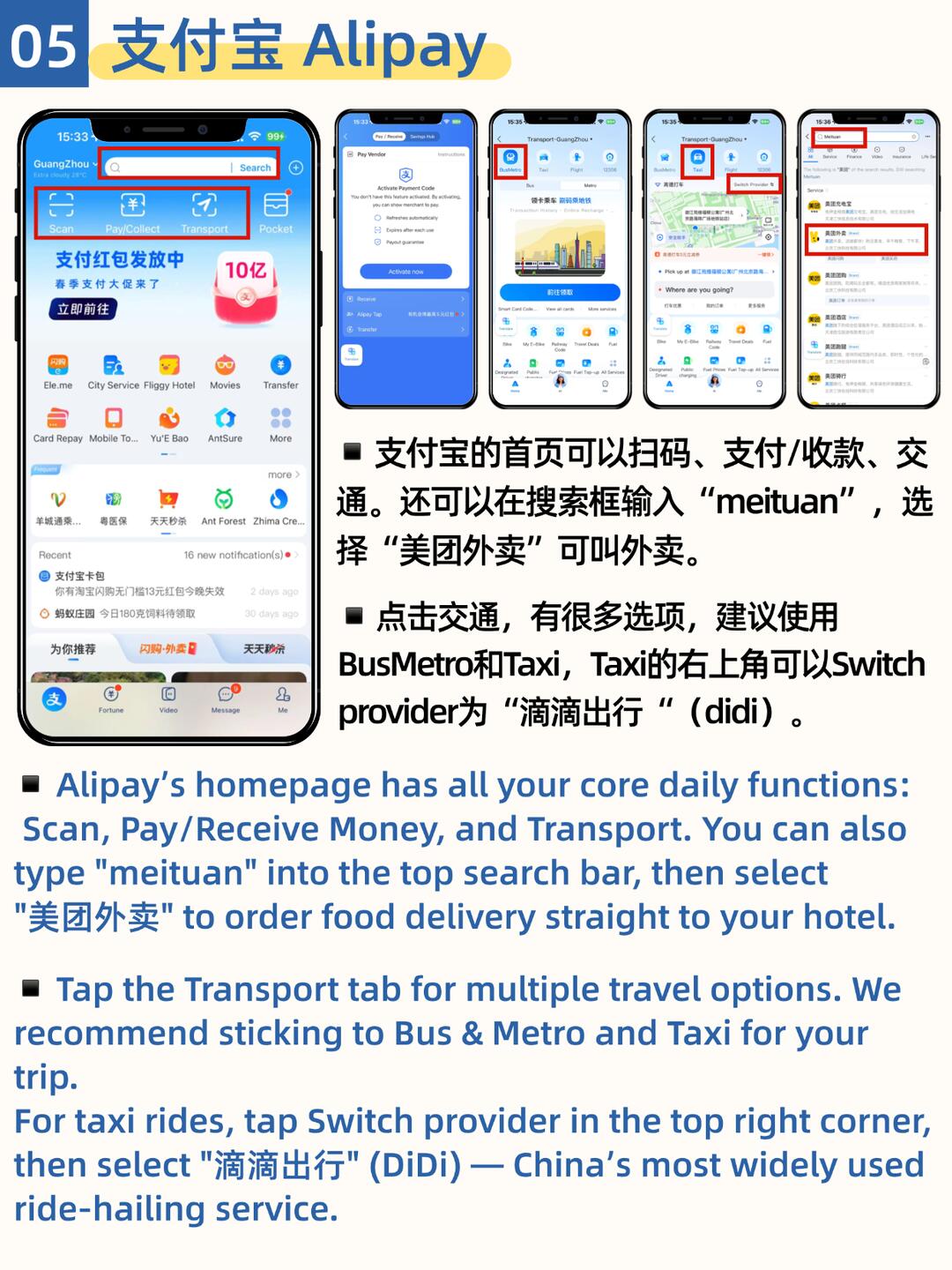
For many short-stay visitors, Alipay is the easiest first wallet to configure. It supports registration with overseas phone numbers, and eligible international cards can be linked in the app. Its home screen also brings together QR payment, transport codes, ride-hailing and useful mini-programs.
- Register and complete any requested identity checks before departure.
- Link an international card and make a small test payment when practical.
- Open Transport to check local metro and bus options; availability varies by city.
- For taxis, use the transport/ride-hailing entry or the dedicated DiDi app.
- Keep a physical card and RMB cash as backups because issuer confirmation, limits and merchant acceptance vary.
WeChat and WeChat Pay
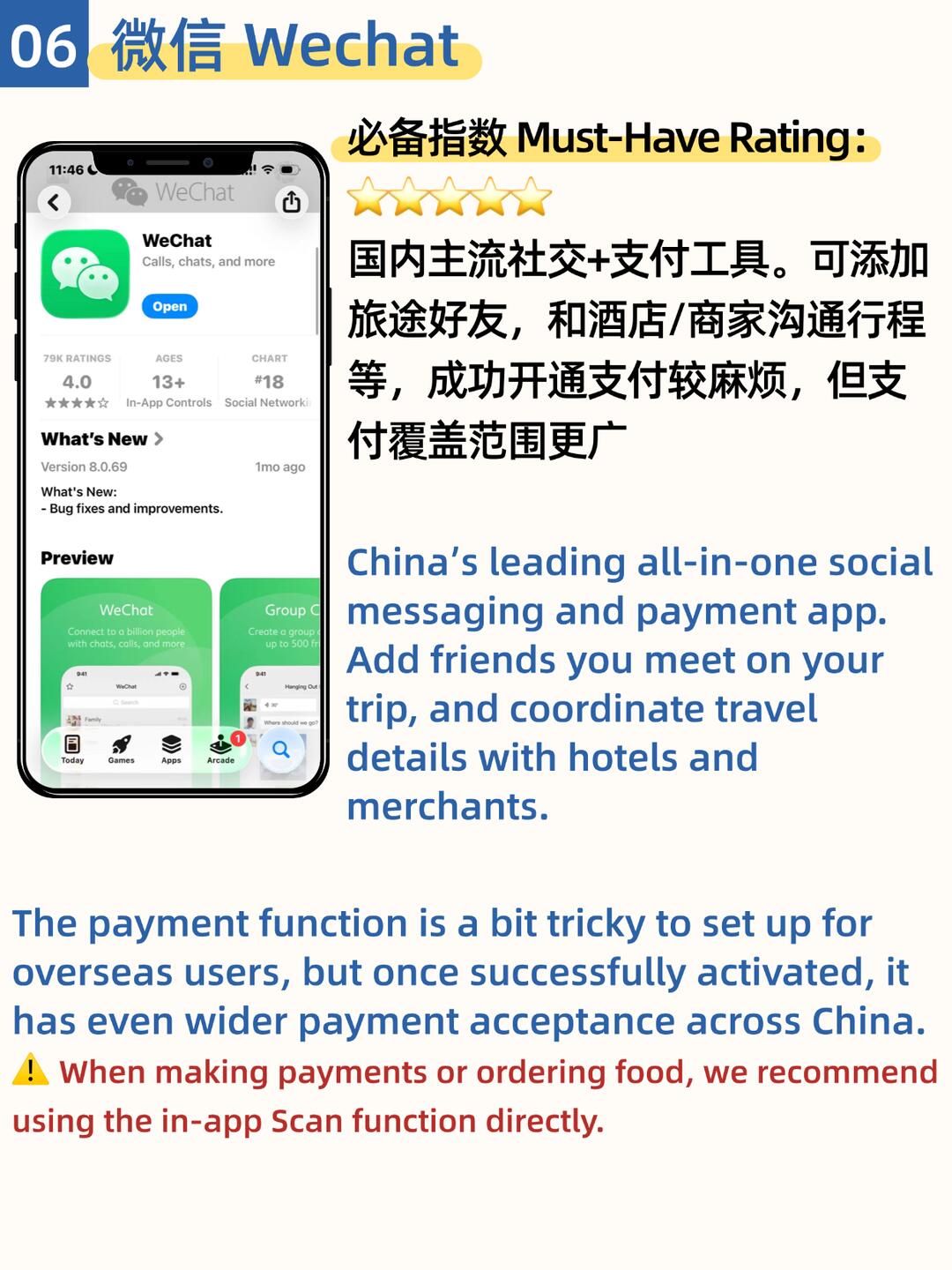
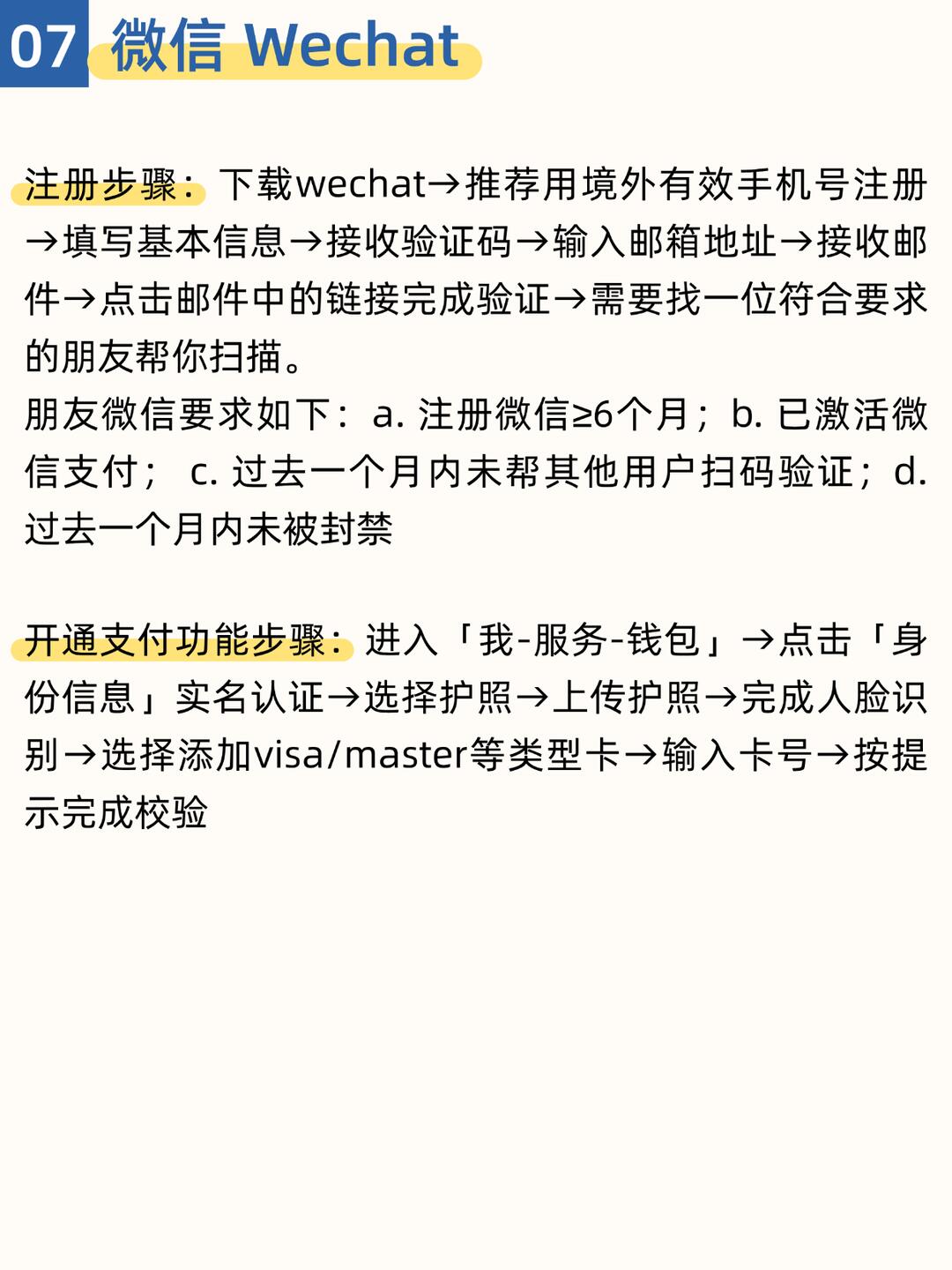
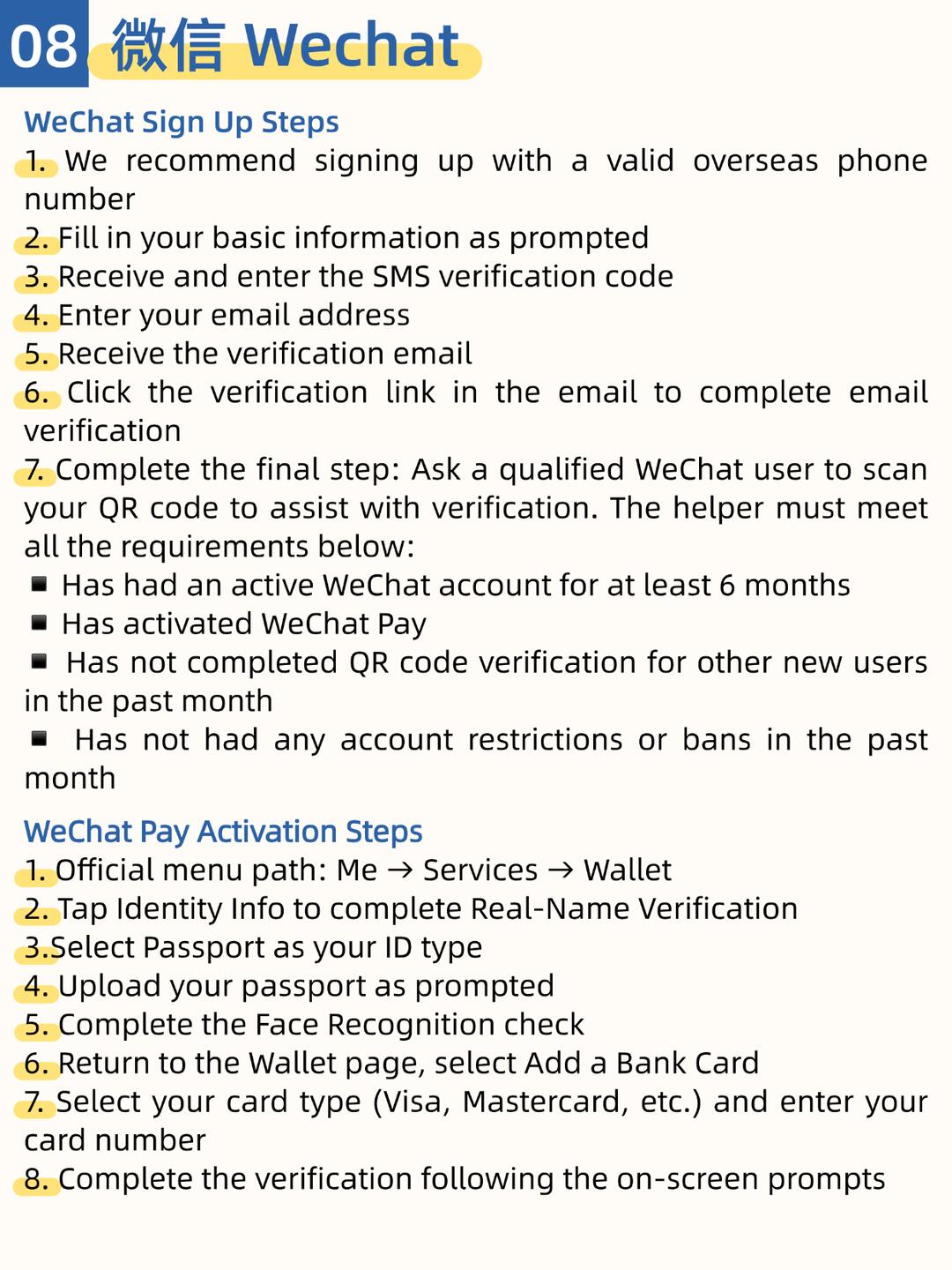
WeChat is China’s dominant messaging app and is valuable for communicating with hotels, guides and merchants. WeChat Pay can accept eligible international cards, but registration and verification prompts may be more involved and can change. Follow the current in-app instructions rather than an old screenshot. Do not send a password, PIN or one-time verification code to a stranger. If WeChat requests friend-assisted verification, use a person you genuinely know and follow only the official in-app flow.
3. Navigation: Use Amap Global and Save Chinese Place Names
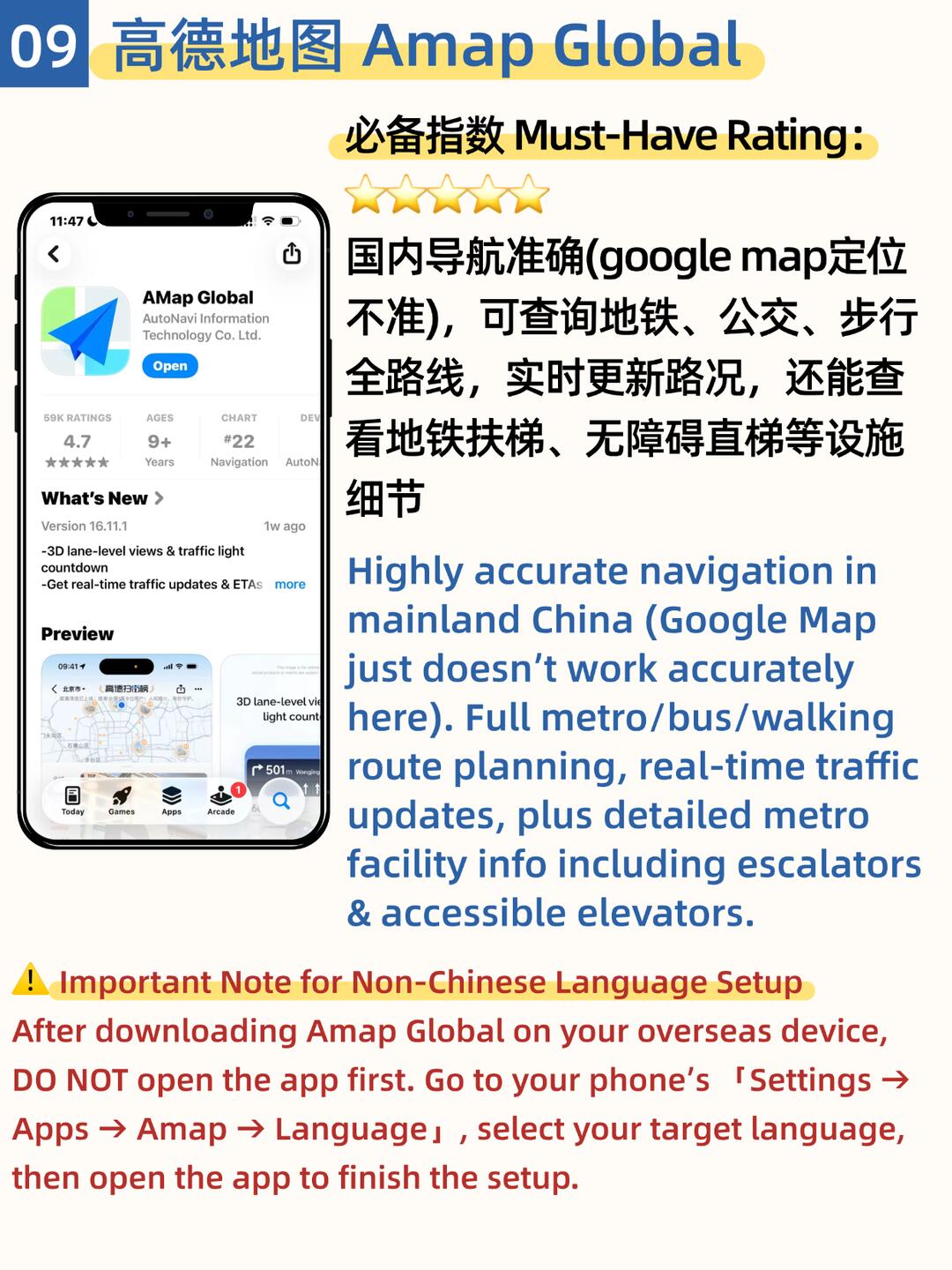
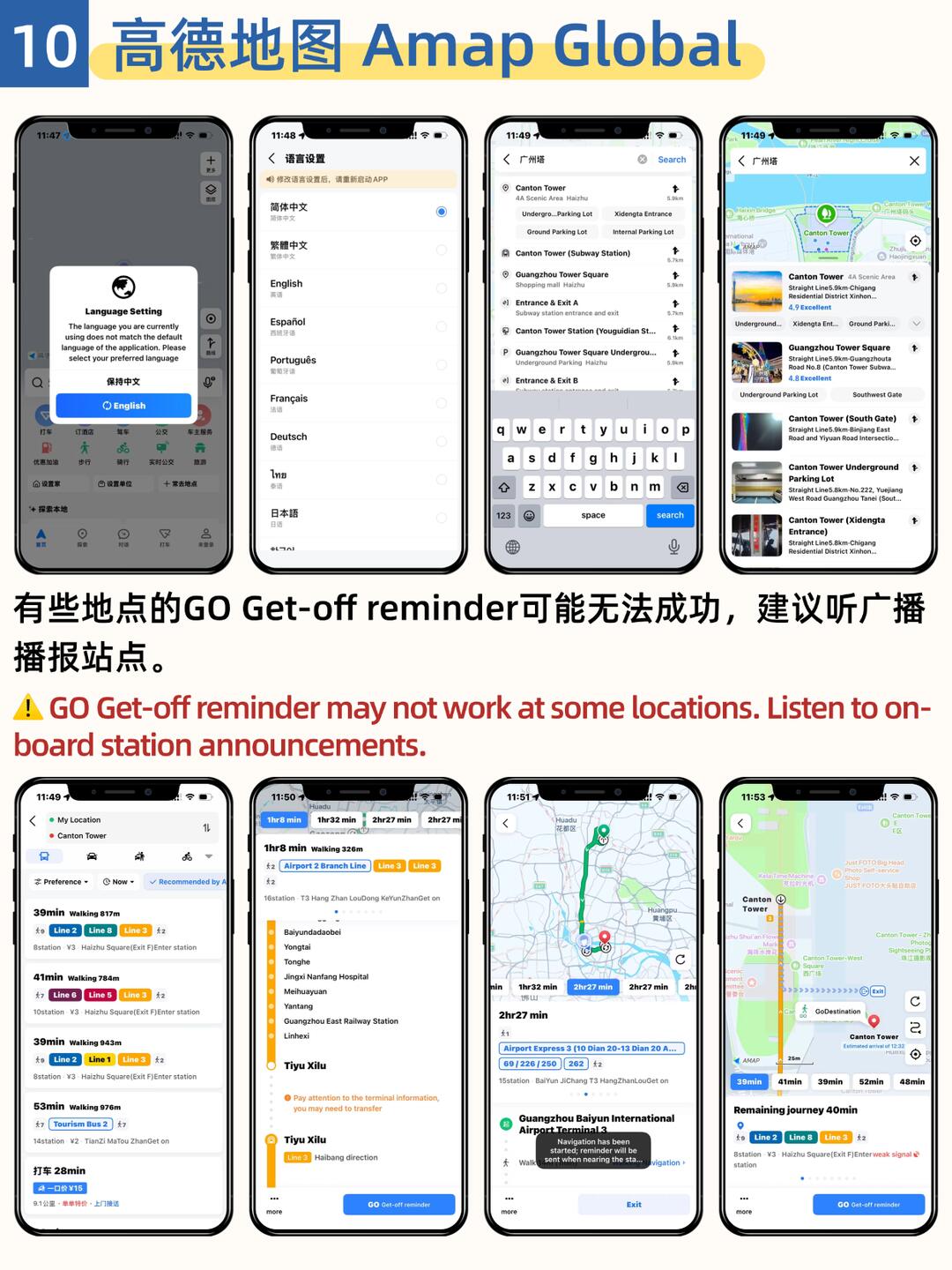
Google Maps data and positioning can be unreliable in mainland China. Amap Global (Gaode Maps) provides stronger local routing for metro, bus and walking journeys, live traffic and station details. Where an English interface is available, select it in the app or your phone’s per-app language settings before your trip. Do not depend on a single pin. Cross-check the Chinese venue name, district and nearby landmark. Station exit or get-off reminders may not work everywhere, so listen for announcements and watch the route progress.
4. DiDi Ride-Hailing: Set the Pickup Point Carefully
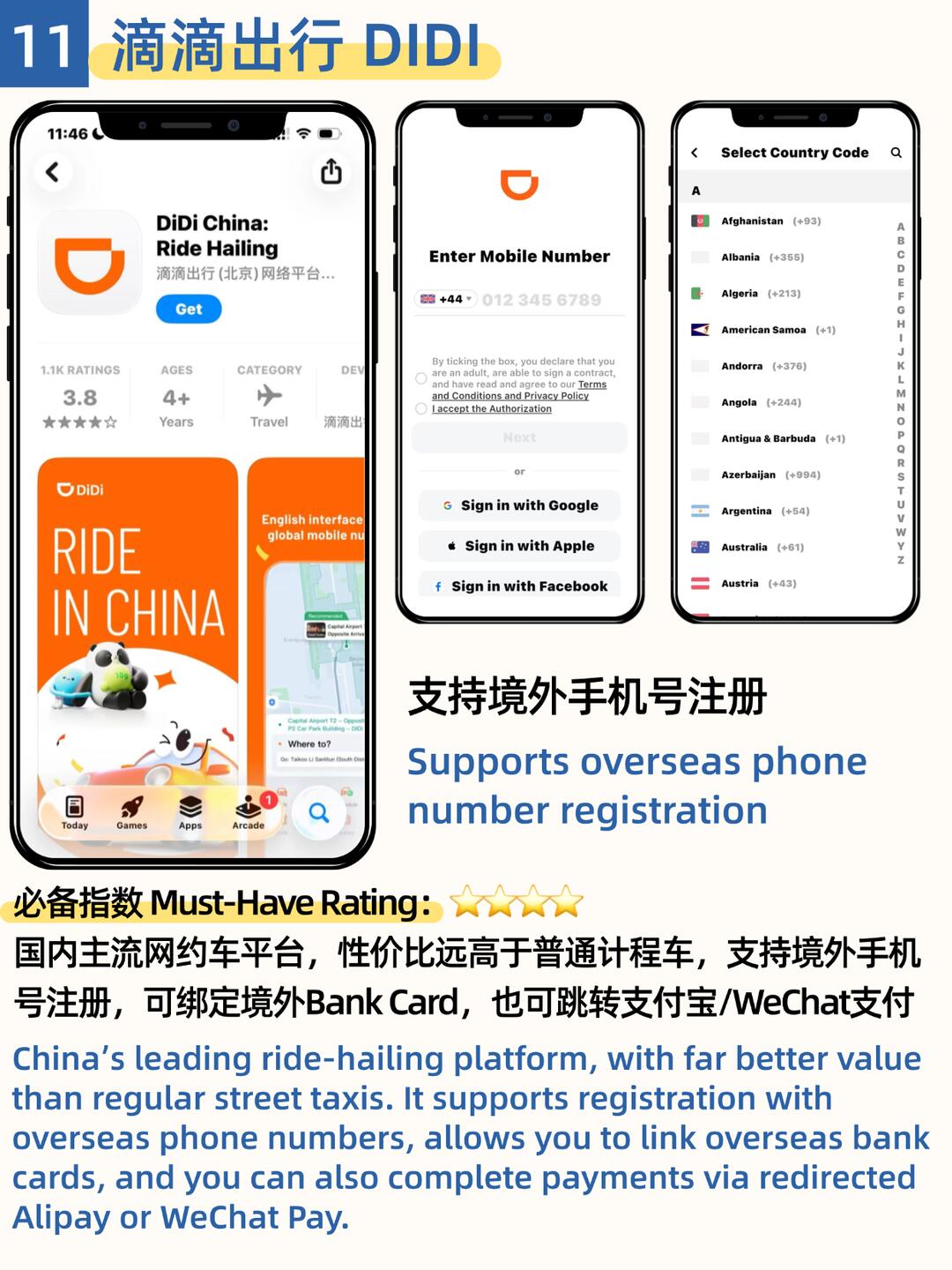
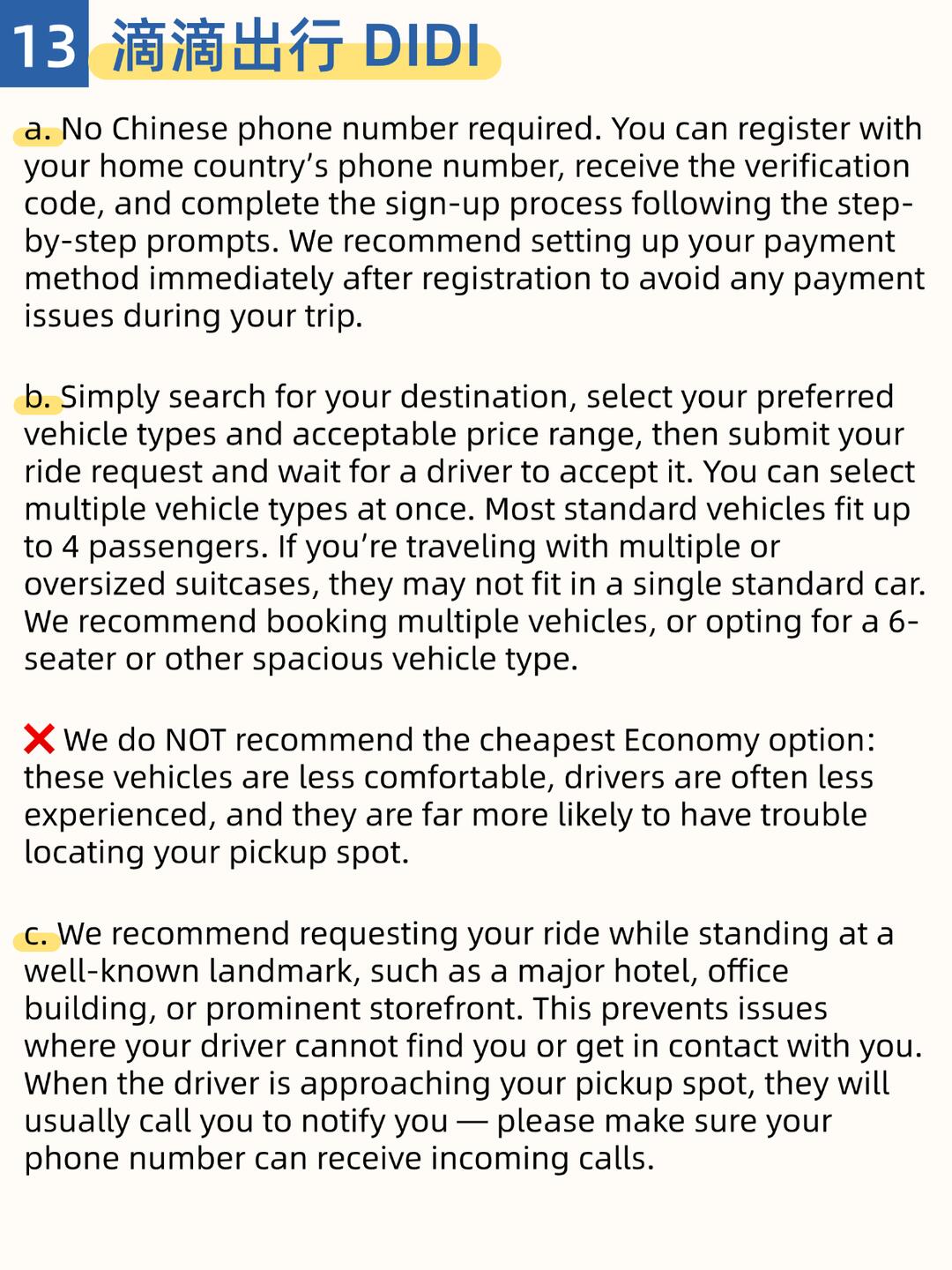
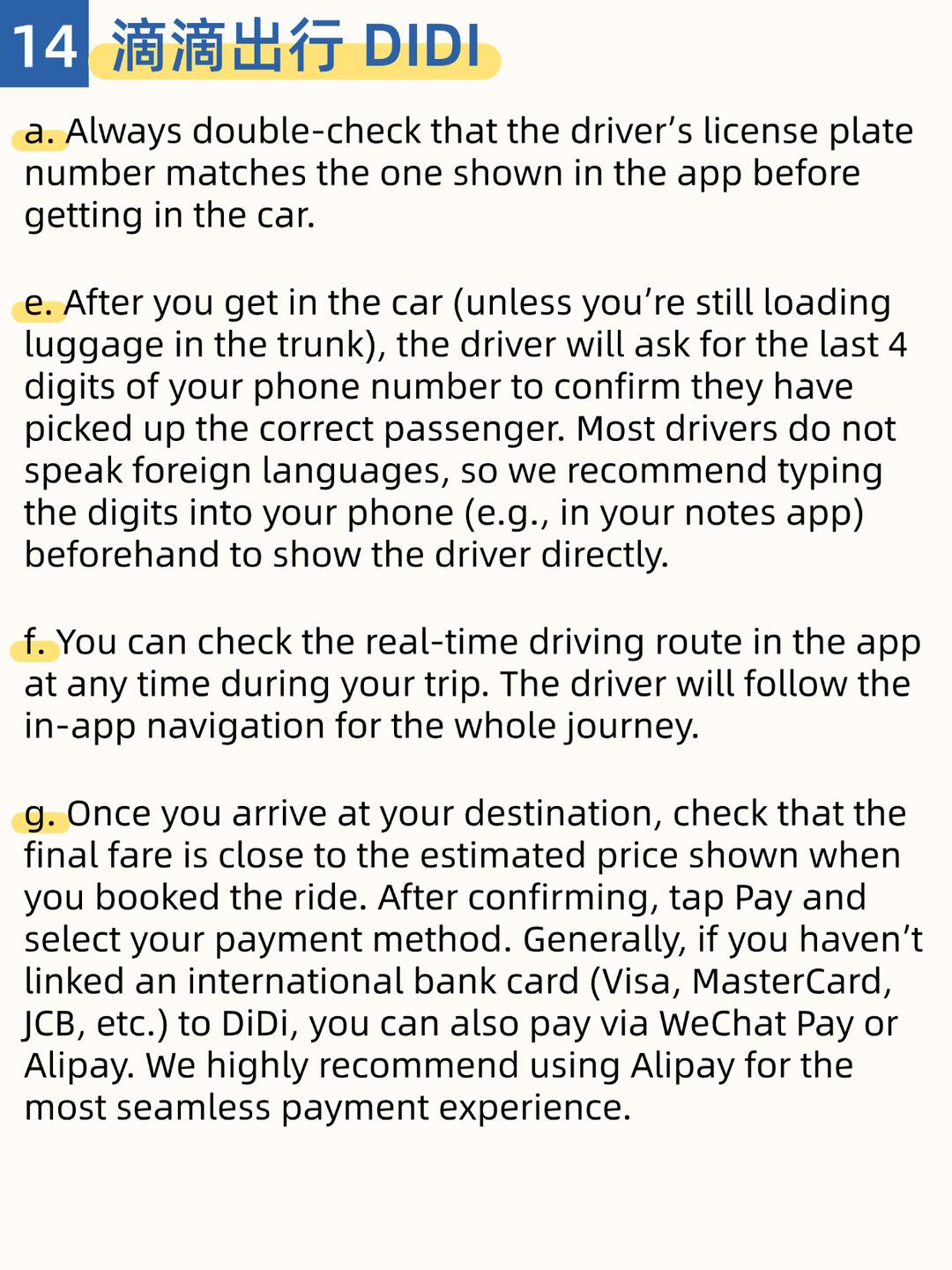
DiDi supports registration with overseas phone numbers and can accept eligible international cards or redirect to Alipay or WeChat Pay. It is often more convenient than hailing a taxi, particularly when you do not speak Chinese.
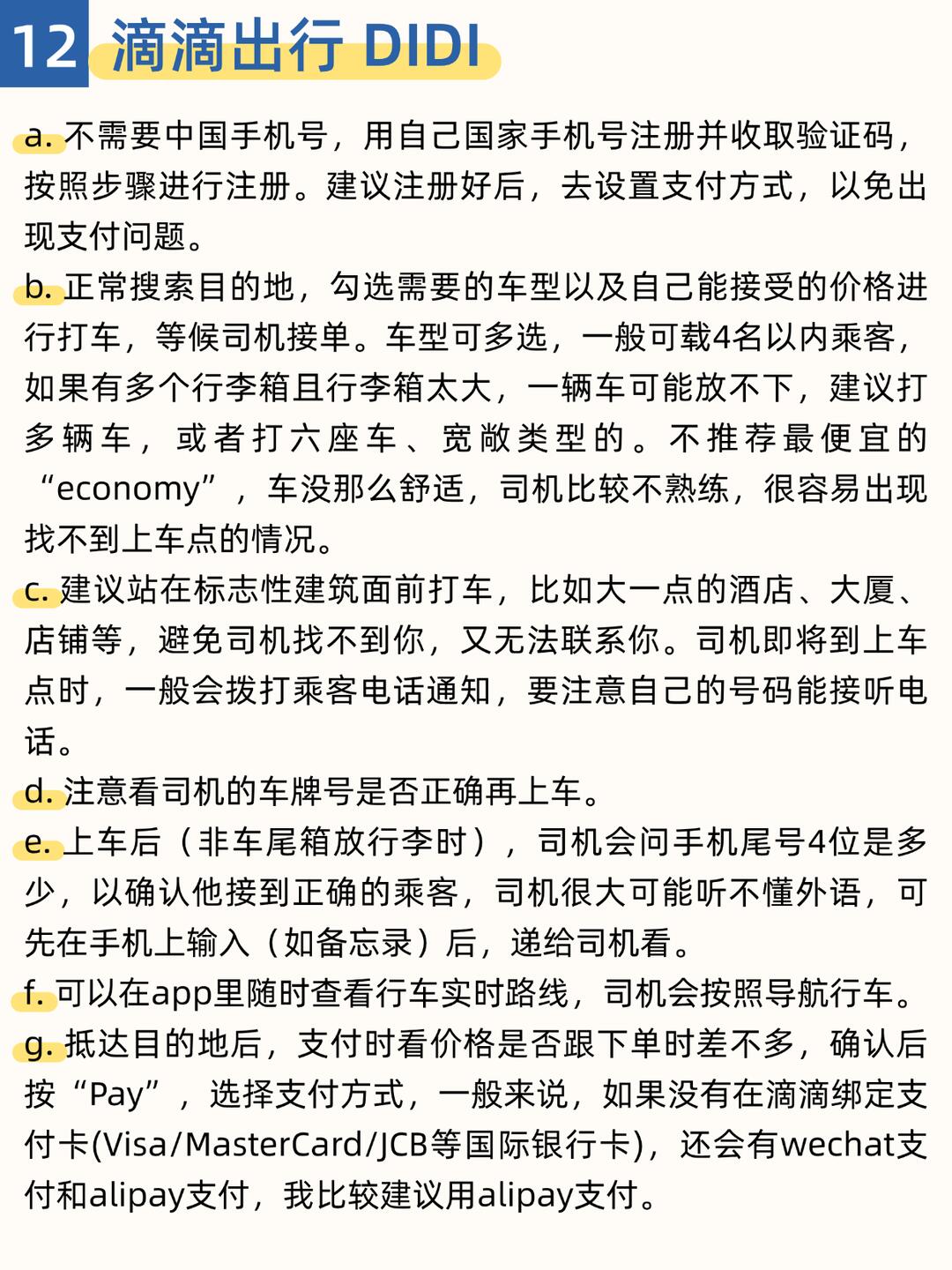
- Stand at a clear pickup point such as a hotel entrance, landmark or named gate.
- Enter the exact destination and confirm the vehicle type and estimated fare.
- Check the license-plate number before entering the vehicle.
- If the driver calls, use in-app translation or save a short Chinese message explaining that you cannot take voice calls.
- Watch the route in the app and confirm the final fare before paying.
If four travelers have large luggage, book a larger vehicle or more than one car. The lowest-priced category may have longer waits and smaller cars.
5. Dianping for Food and Local Discovery
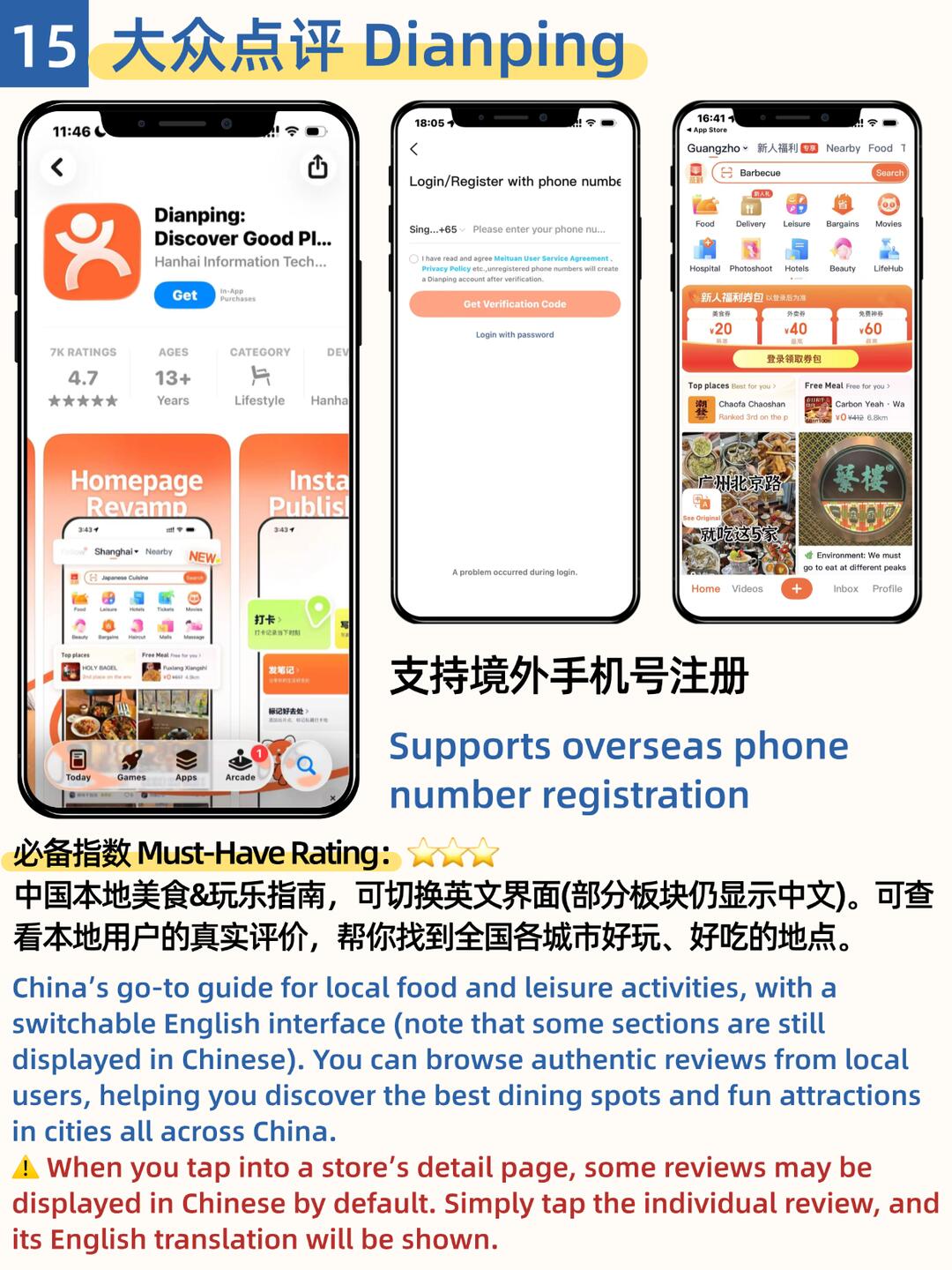
Dianping is useful for restaurant ratings, opening hours, menus and local activities. Some interface elements may be available in English, while customer comments and merchant pages can remain in Chinese. Use in-app translation or your phone’s screenshot translation. For a café or restaurant that accepts orders only through a mini-program, ask staff for help. If the flow requires a Chinese phone number you do not have, request a counter order or use another venue. Do not let a single app failure derail a meal.
6. China Railway 12306: Register Early and Use Your Passport
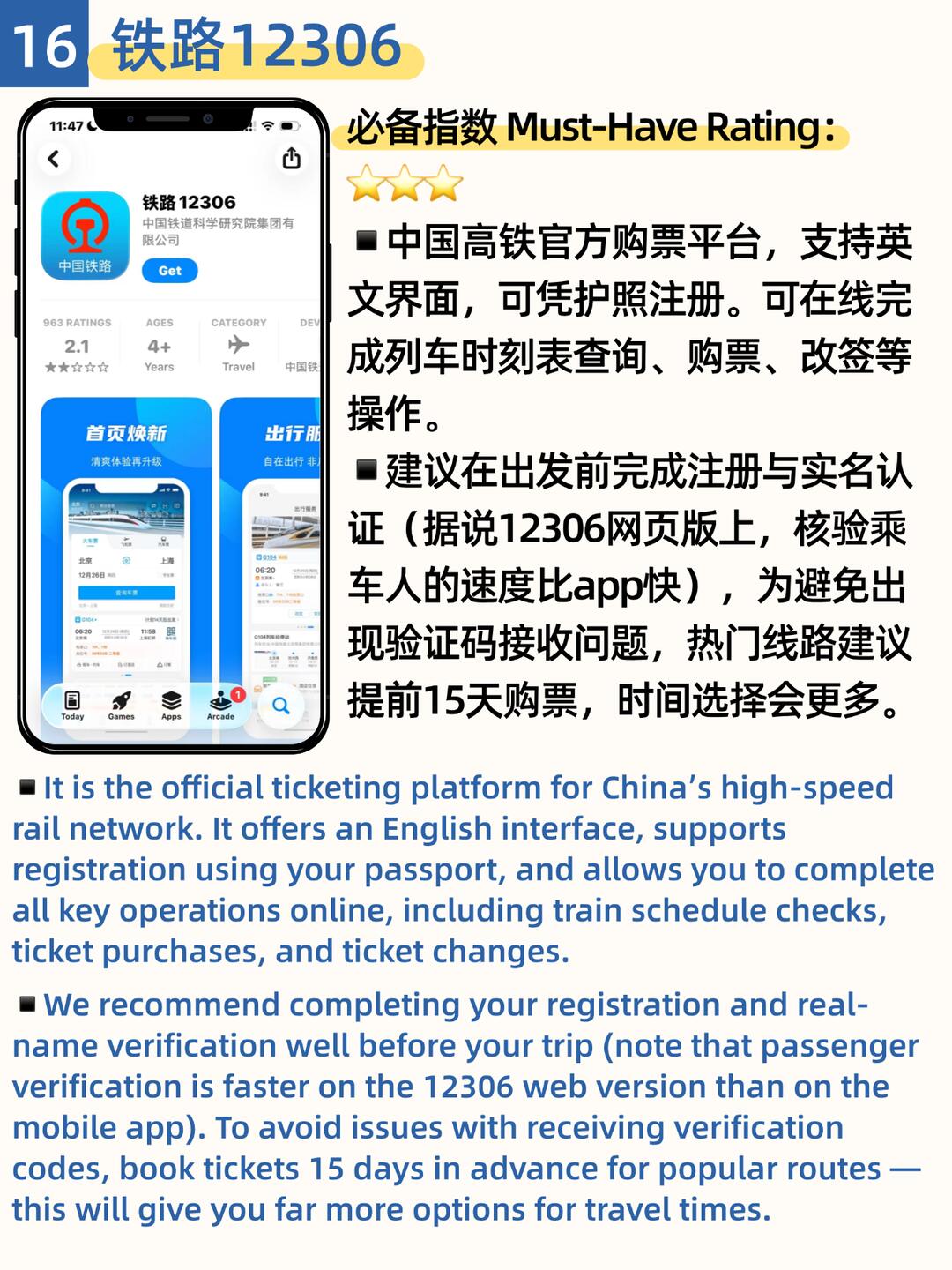
12306 is the official China Railway ticketing platform. Its English website accepts valid foreign passports for registration, and foreign passengers can purchase real-name tickets with a passport. Complete registration and identity verification well before a popular travel date.
- Enter your name and passport details exactly as shown in the passport.
- Keep the same passport with you for station entry and boarding.
- Check the live presale window—do not assume it is necessarily a fixed number of days.
- Book early for holidays and high-demand routes, but use only official channels or clearly identified authorized agents.
7. Visa and Entry Rules: Check Your Passport, Purpose and Route
China’s entry policy differs by nationality, passport type, purpose, arrival port and itinerary. Some travelers qualify for a 30-day unilateral or mutual visa exemption; others may qualify for 24-hour or 240-hour visa-free transit; many still need a visa.
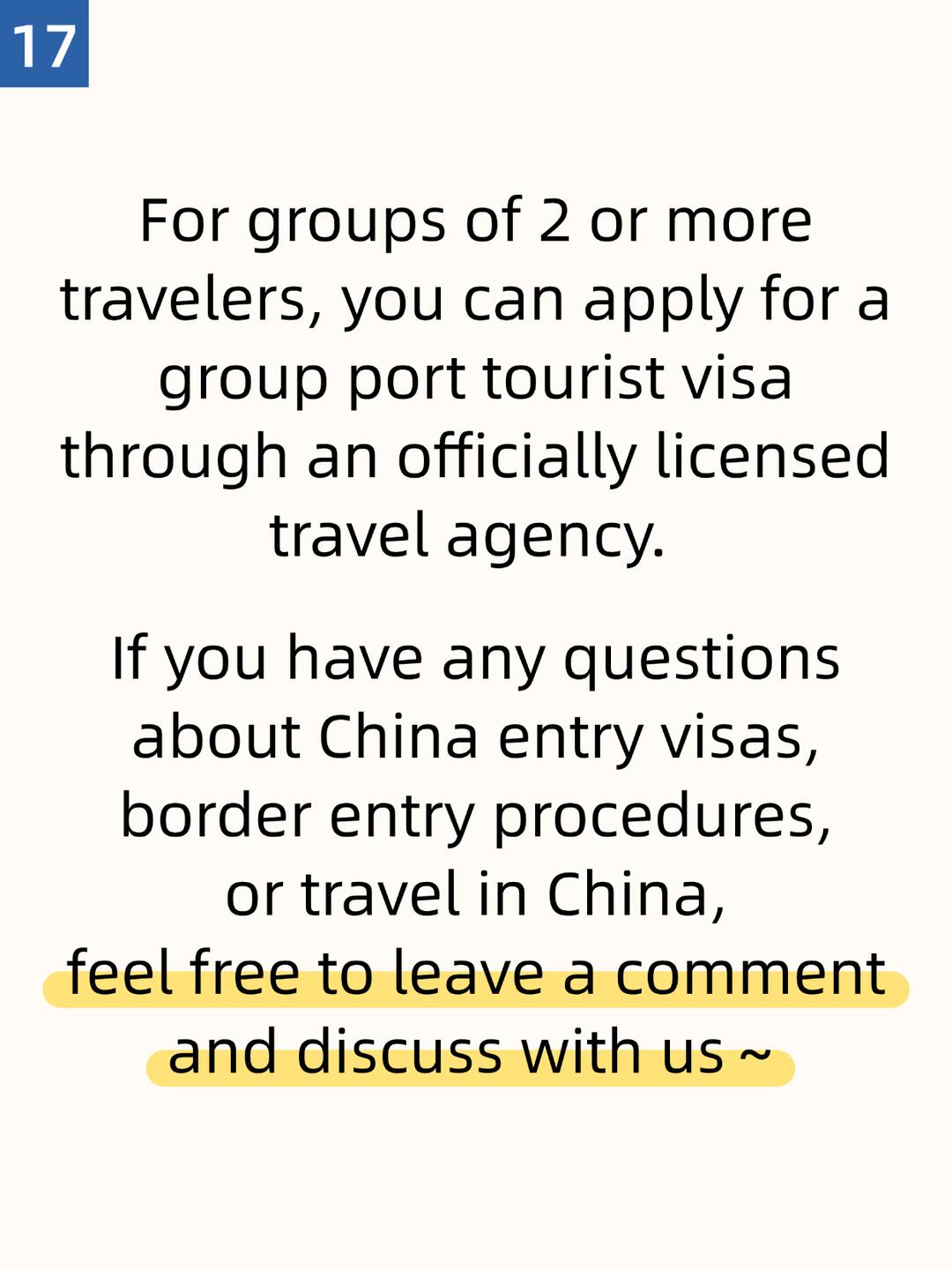
Tour-group port-visa arrangements exist in limited circumstances and locations, but they are not a universal substitute for an individual tourist visa. If an agency offers one, confirm its license, the applicable port, group requirements, permitted route and written confirmation process.
Practical Preparation for a First China Trip
- Entry: Passport valid, visa or visa-free eligibility confirmed, onward tickets saved.
- Data: Roaming or eSIM activated; hotel address stored offline in Chinese.
- Payment: Alipay configured and tested; second card and small RMB cash packed separately.
- Navigation: Amap Global installed; key destinations saved in Chinese.
- Transport: DiDi and 12306 registered; exact passport spelling checked.
- Daily carry: Tissues, charging cable and a compliant clearly labelled power bank.
- Safety: Do not share passwords, PINs or one-time codes; check car plates and final fares.
Official Resources and Updates
- Visit China — official government entry and visitor guidance
- National Immigration Administration — visa-free transit policies
- Official payment service guide for overseas visitors
- China Railway 12306 English website
- CAAC notice on power banks for domestic flights
Visual Source
The visual walkthroughs above were retrieved from the RedNote post “First trip to China? These tips are must-knows” by Yuelai-Lane | We are the Lanes. This guide independently reorganizes, translates and verifies the practical advice; policies and app screens may change.
Key Takeaways
- Prepare mobile data, payments and Chinese-language addresses before landing.
- Use Alipay as a primary wallet and keep card plus RMB cash backups.
- Amap Global, DiDi, Dianping and 12306 cover the most common travel tasks.
- Visa-free transit, power-bank and app rules change—verify them with official sources.
- A few offline backups solve most first-day problems.
Local Planner Notes
Do not depend on one phone, one payment method or one English place name. Save hotel and station addresses in Chinese, keep a small cash backup and place essential documents somewhere available without mobile data.
Frequently Asked Questions
How much time should I allow for preparing for a first trip to China?
Complete the essential phone, payment and transport setup before departure, then leave the arrival day light.
Who is this plan most suitable for?
It suits first-time international visitors who want practical systems ready before sightseeing begins.
Does the season change the plan?
Apps and entry procedures can change at any time, so official information should guide final preparation.
What should be arranged before the trip?
Prepare mobile data, two payment options, maps, ride-hailing, train registration, power access and Chinese address copies.
Can this be included in a private itinerary?
A smooth first day starts with an easy gateway hotel and no tight onward connection.
Related Planning
Turn the Idea Into a Workable Route
Share your dates, arrival and departure cities, preferred pace and the experience that matters most through Plan My Trip. VeroTrip can compare the practical route options and prepare a written proposal with confirmed inclusions and limitations.