4-Day Wuhan Geology, Nature & Green Skills Study Tour
Overview
Quick answer: A four-day Wuhan field program that connects rocks and fossils, seasonal farm work, flower ecology and the living river environment.
Your Route Map
Route at a Glance
| Duration | 4 days / 3 nights |
|---|---|
| Route | Wuhan – China University of Geosciences – Countryside – Yangtze River |
| Format | Private, date-specific educational program |
| Best for | Upper-primary and secondary-school groups that learn best through collecting observations, making models and supervised outdoor tasks. |
| Working language | English, with local interpretation where required |
Why This Route Works
The route alternates museum evidence with outdoor practice. Students first learn how scientists read rocks and fossils, then compare managed farmland, planted flower habitats and the urban Yangtze River without overloading a single day.
Learning and Visit Highlights
- Investigate minerals and fossils at the Yifu Museum
- Complete a seasonal farm task
- Study flower structure and pollination at Huabohui
- Observe river engineering and ecology from an agreed Yangtze program
Daily Program
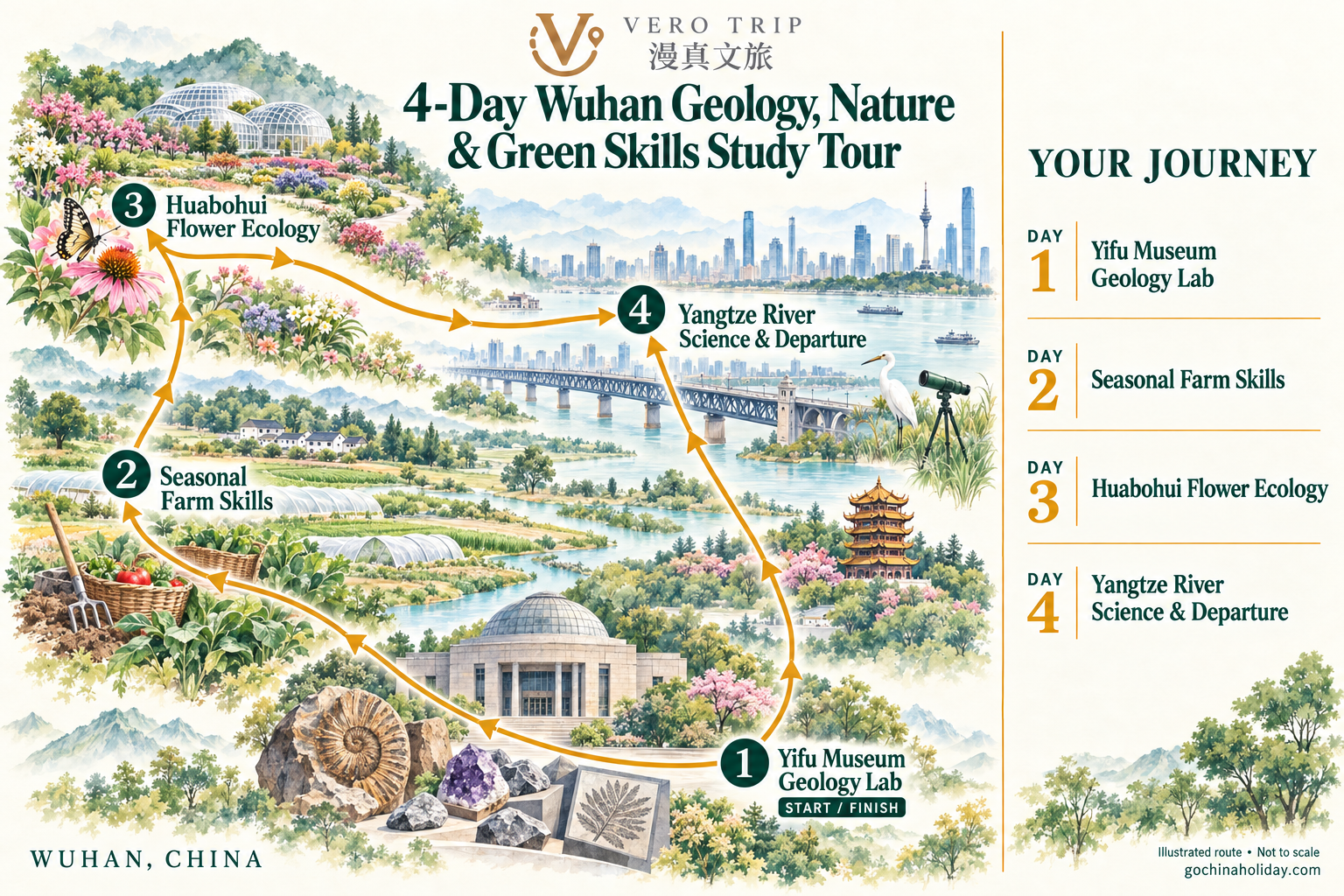
- Day 1: Yifu Museum Geology Lab
- Day 2: Seasonal Farm Skills
- Day 3: Huabohui Flower Ecology
- Day 4: Yangtze River Science and Departure
How Company, School and Community Access Works
Visits are arranged for the specific group and date. The final proposal names the host, visitor route, discussion topic, group size, photography rules and any age or identification requirement. If a requested host cannot receive the group, we discuss a relevant alternative before the itinerary is issued.
Pace, Transport and Supervision
Each full day uses one main visit or two compatible half-day sessions. Road, rail and meal time are included in the working schedule. Student groups must provide participant ages, staff ratios, accessibility needs, allergies and emergency contacts before services are finalized.
What Is Included
- Private ground transport listed in the final program
- English-speaking local coordination and subject specialists as confirmed
- Admission and scheduled learning activities named in the final quotation
- Selected accommodation with breakfast for multi-day programs
What Is Not Included
- International and domestic flights or trains unless specifically quoted
- China entry documents, travel insurance and personal purchases
- Meals, talks, workshops or site access not named in the final quotation
- Optional activities and schedule changes requested during the trip
Frequently Asked Questions
Can students keep mineral samples?
Only materials supplied for the course may be taken away. Museum specimens and protected natural materials remain in place.
What happens if farm work is affected by rain?
The host switches to a covered task, soil or crop lesson, or another seasonal activity. The program does not promise a specific harvest.
Is the Yangtze activity a sightseeing cruise?
It has a guided learning focus. The exact vessel or shore program depends on operating dates and school-group arrangements.
Are meals suitable for school groups?
Menus can be set for group service and common dietary needs. Allergies and religious requirements should be provided in writing.
Can this become a two-day program?
Yes. The geology and nature components can be combined into a shorter route, but travel time limits the number of hands-on sessions.
Plan This Program
Send the travel window, participant ages or professional roles, group size, learning goals and preferred accommodation through Plan My Trip. Compare related programs in China Educational Study Tours.
Daily Itinerary
Visit the Yifu Museum at China University of Geosciences for a guided mineral, fossil and Earth-history session. A supervised identification task teaches students to describe evidence before naming a specimen.
Learning focus: Investigate minerals and fossils at the Yifu Museum.
Travel to a suitable educational farm for a task matched to the season, such as planting, soil preparation, harvesting or compost observation. Hygiene, tools and weather limits are agreed with the host.
Learning focus: Complete a seasonal farm task.
Use the flower park as a field site for plant structure, color, pollination and landscape design. Students complete a small observation or leaf-rubbing activity without picking protected displays.
Learning focus: Study flower structure and pollination at Huabohui.
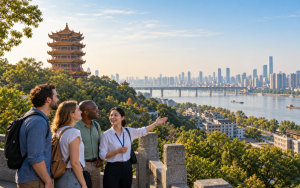
Join a confirmed river cruise or shore-based learning session to examine shipping, bridges, water quality and river-city relationships, then transfer to the station or airport.
Learning focus: Observe river engineering and ecology from an agreed Yangtze program.