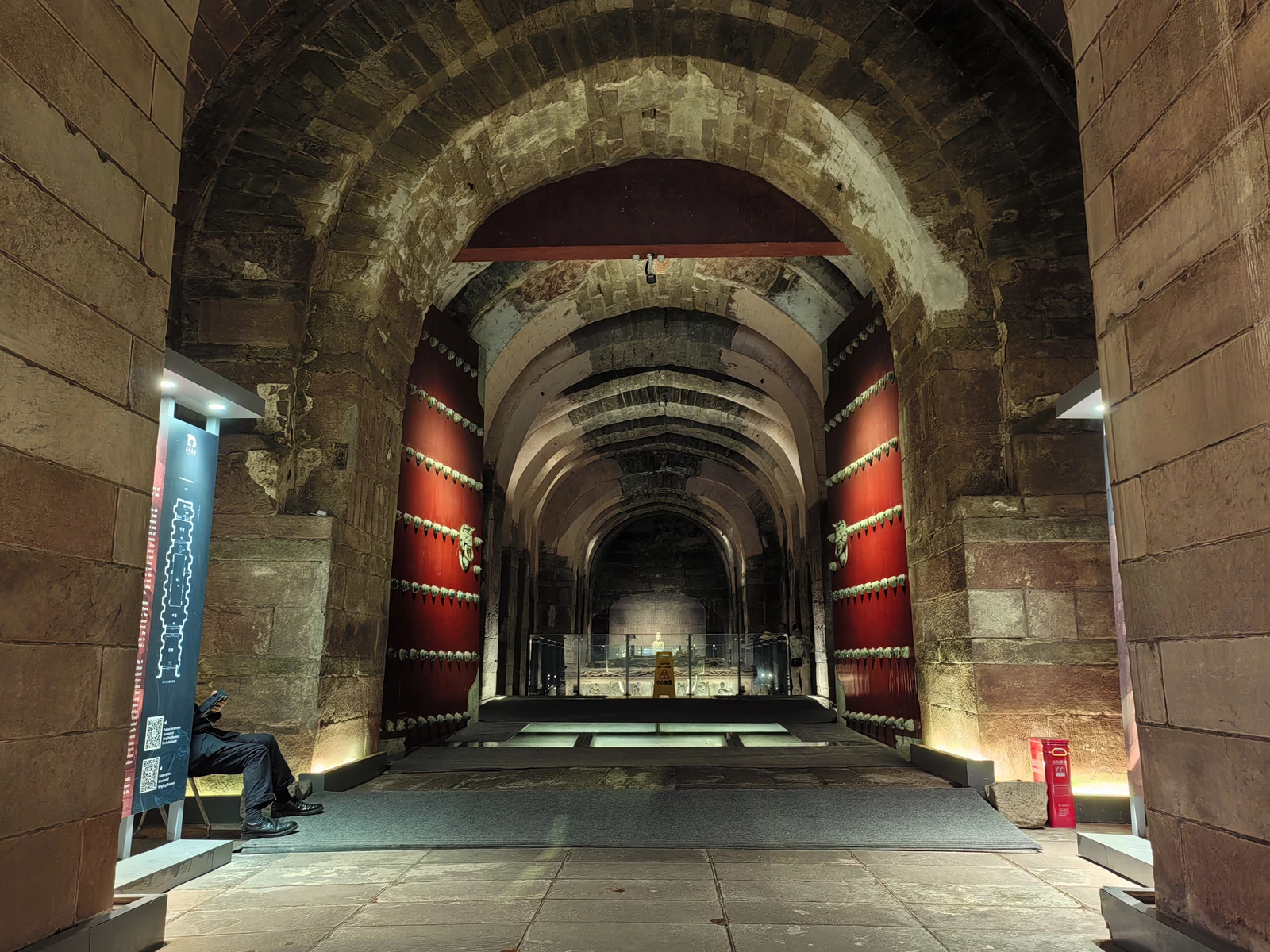
Make Yongling’s carved musicians the centre of a Chengdu cultural half-day, with one exhibition, lunch and the hotel return. Sculpture, music and the period between Tang and Song give different ways into the burial story. The visit needs no live performance for the figures to have meaning.
The museum’s Chinese name is Chengdu Yongling Bowuguan (成都永陵博物馆). Save that full name when arranging transport: this is the Chengdu site associated with Wang Jian and Former Shu. The tomb, modern exhibition spaces and park surroundings offer different kinds of looking, and their access arrangements should be checked separately for your date.
This guide concentrates on the tomb’s artistic story and a manageable city outing. For the wider choice of neighbourhoods, regional excursions and arrival connections, start with our Chengdu travel planner. Give Yongling its own useful block rather than squeezing it between several larger museums.
A royal tomb from the age after the Tang
Wang Jian founded Former Shu, one of the regional states associated with the Five Dynasties and Ten Kingdoms period. Yongling preserves his burial setting. The Hong Kong Education Bureau’s study of the tomb explains its unusual construction: the chamber structure rises above ground beneath a covering mound, with a sequence of three chambers. Think of a protected built monument, rather than an underground adventure route.
The same study explains how inscriptions and burial objects helped establish the tomb’s identity. A royal eulogy is also an official expression of praise, so it tells you something about how a ruler was commemorated. It is useful to distinguish that commemorative voice from a modern historical account.
Before an admitted chamber, distinguish the original burial structure from later presentation on its visitor plan and labels. Things beside an old tomb need not be the same age. Keep to barriers and the designated route even when a detail seems within reach.
Look closely at the twenty-four musicians and dancers
The best starting point is the group commonly called the Twenty-Four Musicians. A Chengdu Museum account of Yongling’s carvings describes twenty-two musicians and two dancers on the coffin platform. The figures form a carved performance scene; they are not twenty-four separate modern statues placed there for visitors.
Choose a few players and compare instrument holding, hand position and turned bodies, then the dancers. A label or prepared interpreter can make the small contrasts legible without identifying every instrument immediately.
A March 2026 Guangming Daily report connects the ensemble with court music and the movement of instruments through cultural exchange. That gives the carvings a wider story than one ruler’s burial: they preserve evidence of musical practice and artistic connections. The stone scene itself remains silent; a modern recording or demonstration is a separate interpretation.
Do not confuse these stone reliefs with ceramic musician figures from other Shu-period tombs. Chengdu Museum’s article discusses more than one archaeological group. Similar instruments or costumes do not make the objects interchangeable, and a photograph of a different museum display does not establish what is currently on view at Yongling.
For children, find two ways of holding instruments and compare one dancer’s pose. Keep sketches where allowed and the view open for others. A few details remembered are enough, rather than twenty-four names learned.
Choose your focus before entering the museum
| Interest | A useful viewing task | Leave flexible |
|---|---|---|
| Music and movement | Compare the stone musicians’ instruments, hand positions and the two dancers. | The viewing distance, available interpretation and any separately scheduled demonstration. |
| Royal identity | Connect the burial setting, labels and the seated figure associated with Wang Jian. | Access to individual chambers and the objects actually displayed on your date. |
| Decorative design | Use a current exhibition to compare patterns, materials and labelled reproductions. | The exhibition programme, original objects, replicas and permitted photography. |
| A slower city outing | Combine one main museum interest with a short park pause and a seated lunch. | Weather, resting places and how much walking feels comfortable. |
If the seated figure associated with Wang Jian is viewable, give dress and posture as royal representation a separate pause. Archaeological interpretation supports the image without guaranteeing an exact likeness of his living face.
A music-led visitor can stay longer with the ensemble; political-history interests may spend more with explanation. Equal time for every label is unnecessary, especially when standing is more tiring than moving.
Separate original sculpture, replicas and modern performances
Use a modern display to explain protected details, reading original, reproduction, reconstruction or enlarged illustration carefully. A useful replica permits closer comparison without becoming ancient material.
For example, a September 2026 Chengdu television announcement described a planned exhibition about Five Dynasties patterns, explicitly identifying several objects as replicas and some dress elements as reconstructions. That dated announcement is an example of how to read the display language, not confirmation that the entire proposed programme is open on your visit.
The March 2026 report also discusses modern instrument reconstruction and stage productions inspired by the musicians. A touring show, a museum event and ordinary museum admission are different arrangements. If a live programme matters to you, establish its exact venue, date, ticket and language before building the day around it. This half-day plan works without a performance.
For a broader collection visit on another day, compare our Sichuan Museum guide. Its Han-period art and Zhang Daqian interests are a different reason to visit. Yongling is most useful when you want to stay with one burial monument and its sculptural story.
A complete half-day with lunch and a hotel return
Use the following as a planning sequence, not published opening hours or a fixed-duration package. Start from your actual hotel after breakfast, with the day’s museum access checked. A relaxed visit needs enough time for the final approach, standing inside the displays and a proper seated break.
| Stage | Suggested sequence | What needs arranging |
|---|---|---|
| Arrival | Leave the main case at agreed hotel storage and travel to the correct museum entrance. | The current entrance, legal drop-off or public-transport approach and document procedure. |
| Main visit | Begin with the tomb’s story and stone musicians, then choose one available exhibition. | The areas open that day, interpretation language and any mobility limits. |
| Lunch and rest | Finish the museum visit before choosing a nearby seated meal. | Food requirements, suitable seating and the practical walk or transfer to the venue. |
| Return | Meet at the agreed finishing point and return to the same hotel. | Vehicle waiting if used, luggage collection and any separate onward connection. |
Save the full Chinese museum name and the agreed meeting point on your phone. A map pin in the middle of the site is not necessarily a vehicle pickup. If arranging a car, specify whether it waits, returns at a set time or provides two separate transfers. Establish a contact method in case the legal pickup position changes.
Keep arrival lighter: reach the room or agreed storage first, then decide if the actual entry window leaves time. Food and rest may suit a delayed connection better. Do not rush an essential terminal transfer to preserve a museum visit.
A departure-day visit needs the reverse discipline: account for collecting luggage, reaching the correct station or airport and its check-in requirements before allocating museum time. Chengdu’s transport terminals are not interchangeable. Keep the final destination explicit in the written plan.
Lunch, tea and a sensible second stop
Choose a meal that suits the group after time on their feet. A noodle bowl, dumplings or a simple rice-and-vegetable meal can be more practical than a long tasting itinerary. Look at the current menu and ask about chilli, broth, sauces and portion sizes. Mild seasoning, vegetarian preparation and allergy-safe preparation are different requests.
For strict dietary needs, use a clear written requirement and a venue that can discuss preparation. Museum restaurant availability and tea replacing lunch are not assumed. The seated meal can be the point to decide whether another outing is still wanted.
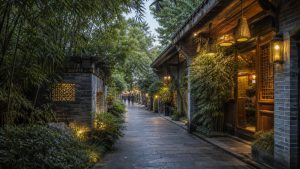
If the group wants a street walk afterwards, consider Kuanzhai Alleys as a separate optional block. It offers adapted courtyards, lanes and present-day businesses, rather than more tomb archaeology. Check the actual transfer or walking route and shorten the lane visit if the museum has already used the group’s standing energy.
For a museum-focused trip, use our Chengdu Museum and Sanxingdui comparison to choose a different day’s priority. Adding another major collection immediately after Yongling can reduce both visits to hurried highlights. One well-chosen cultural subject followed by lunch often makes the clearer half-day.
Keep one Chengdu base for three, four or five days
Three days / two nights: arrive and settle into your Chengdu hotel on Day 1; use Day 2 for Yongling, lunch and a flexible city afternoon; depart on Day 3. Both nights stay at the same base. This gives the museum a usable morning without making arrival and departure days carry the main sightseeing.
Four days / three nights: retain the arrival, Yongling day and departure, then give the additional full day to one separate priority, such as another museum or a pre-arranged regional excursion. All three nights remain in Chengdu. The extra day should add a different interest rather than repeat the same museum themes.
Five days / four nights: allow three usable days between arrival and departure. One can centre on Yongling, one on a separately planned excursion and one on another city interest or rest. Keep all four nights at one hotel unless your actual transport bookings give a good reason to change bases.
A hotel in the western part of central Chengdu may suit this outing, while another central location may work better for the whole stay. Compare the actual entrance, vehicle access, lift, room noise, breakfast options and luggage walk. Ask the named hotel to confirm reception arrangements for your passport and the room requested. The museum’s location alone is not a reason to move hotels for one night.
Documents, walking comfort and weather
International visitor accounts of Yongling exist, including a Japanese historian’s first-person visit in 2009. This is historical visitor context, not a current ticket rule. A 2024 Chengdu tourism briefing also discussed foreign permanent resident identity cards at Yongling. That document is different from an ordinary passport, so its supported channels should not be assumed to cover every visitor.
Before committing to the visit, confirm the current process for your original passport, the chosen date and the specific areas you want to enter. Establish whether booking, ticket collection or an on-site check is required and what payment method is accepted. If that process cannot be confirmed, use a confirmed alternative instead of relying on an old admission price or a historical visitor card.
A modest site can still involve queues, thresholds, low-light viewing and sustained standing. Tell your travel consultant about walking distance and standing tolerance separately. For a wheelchair or pushchair, confirm the actual route into each requested area, resting opportunities and accessible facilities; do not infer complete step-free access from the surrounding park.
Wear shoes with grip and carry a light layer. Rain can make the outdoor approach and park less attractive, even when an indoor exhibition is operating. Shorten the outdoor portion in poor weather and retain the lunch break. An indoor museum is not automatically a full bad-weather replacement if the particular chamber or exhibition you want is closed.
Follow the photography and lighting rules displayed on the day. Do not touch carvings, cross barriers or assume that a photograph published years ago proves permission today. If English interpretation matters, arrange a named service and its scope; an English webpage does not promise an English-speaking staff member will be available.
What to agree in a written proposal
| Item | Specify in writing | Keep separate unless listed |
|---|---|---|
| Museum access | Date, original-document channel, areas requested and current charges. | Special exhibitions, events and live performances. |
| Transport | Hotel pickup, legal meeting point, waiting, luggage and full hotel return. | Airport or station transfers and unplanned extensions. |
| Interpretation | Language, accompanying person, duration and main artistic interest. | A driver’s role and any specialist music demonstration. |
| Meals and accommodation | Meal arrangement, dietary needs, hotel name, room and number of nights. | Tea purchases, personal spending, insurance and other unlisted services. |
Price on request. This is a suggested cultural visit, with services confirmed only through the dated written proposal. A museum name does not establish that tickets, transport, meals, a hotel or English assistance are included. Ask for the complete return as clearly as the outward transfer.
Questions before a Yongling visit
Is Yongling the same as Chengdu Museum?
No. Yongling centres on Wang Jian’s burial monument and its associated artistic history. Chengdu Museum offers a broader city collection. Choose the institution whose main subject interests you and give it its own visiting time.
Will I hear the ancient instruments being played?
The stone ensemble is a carved image of musicians and dancers. Modern performances and demonstrations require a separately confirmed programme. Ordinary admission should not be treated as a concert booking.
Can I visit every chamber and see every famous object?
Check the current visitor route and exhibition list before the visit. Conservation, programme changes and access arrangements can affect what is available. A museum collection description is not a guarantee that each object is on display that day.
Does a half-day include lunch and the hotel return?
The suggested sequence reserves space for both. Whether a meal, vehicle or accompanying guide is actually supplied depends on your written arrangement. Specify the hotel finish and any luggage collection rather than leaving the day to end at the museum gate.
Plan a museum visit with a clear finish
Tell your Verotrip travel consultant whether music, sculpture or the history of Former Shu is the main interest. Use Plan My Trip to share your date, hotel, passport-channel needs, language, walking comfort and dietary requirements. A useful proposal protects time for looking closely, gives lunch a sensible place and brings you back to your Chengdu base.
Header photograph: the vaulted front chamber of Wang Jian’s Yongling tomb in Chengdu, photographed on 12 May 2025 by Yumeto / Wikimedia Commons, CC BY-SA 4.0. Resized and converted to WebP, with responsive cropping; the adapted image is available under the same license. The photograph records the site on that date.