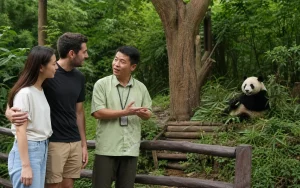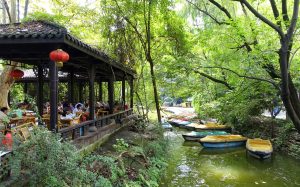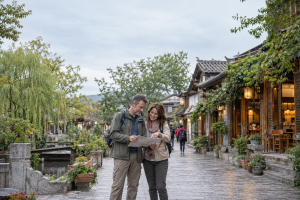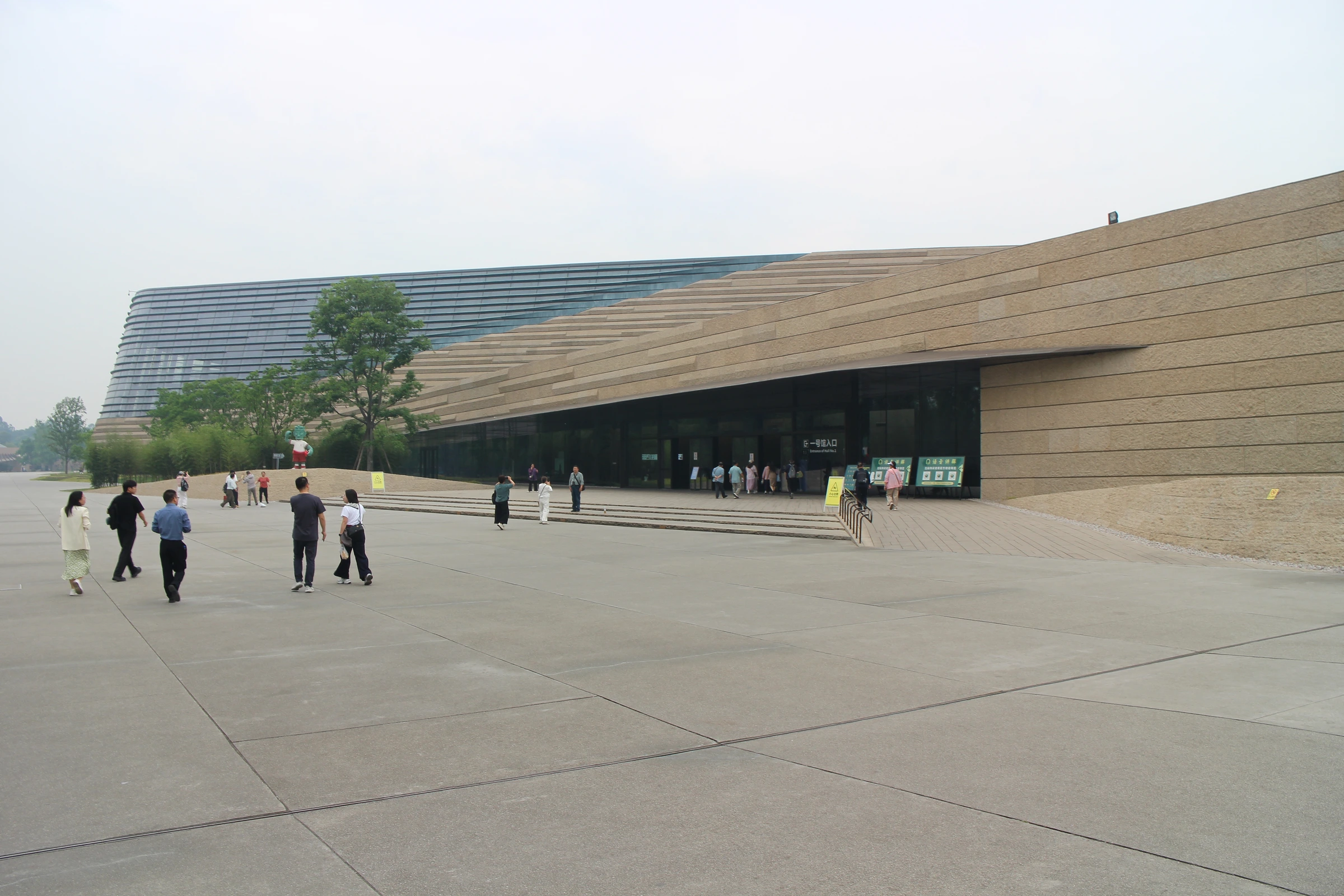
Give Sanxingdui Museum a full day from Chengdu if ancient Shu archaeology is a priority. Reserve the museum before fixing transport, allow a substantial gallery visit with a seated break, and agree your return. The museum is in Guanghan, outside central Chengdu. Combining it with pandas is possible in some itineraries, but gives both visits less breathing space.
For a first visit, concentrate on the main exhibition building. Choose a few objects to study carefully instead of treating every room as a photograph stop. A restoration-hall visit can be an addition if time, access and energy allow. This is a museum outing; the excavations are not an ordinary visitor stop.
Updated 1 November 2026. The photographs show the museum on 12 May 2026; they do not establish today’s displays, crowds or a Vero Trip guest visit.
Reserve with the passport you will carry
The museum’s official visitor page provides an inbound-visitor booking route. Its foreign-visitor FAQ says to reserve in advance through official channels, then bring the original booking document to the ticket centre for exchange. Use your passport details consistently and retain the confirmation.
The page lists a 20:00 Beijing-time ticket release and a five-day advance window. Follow the selected date’s current instructions, including any holiday arrangements. Submitting an enquiry or form is not a confirmed reservation, and availability can change before payment or confirmation is complete.
The museum also warns that it has not authorised other institutions or individuals to sell admission and explanation tickets. Start from its own website or official account. If a travel package contains the museum, ask how the actual reservation will be confirmed and which services are covered.
Prepare each traveller’s full name, document type and number, the intended visit date, and any documents required for a concession. Check the issued booking before arranging a non-refundable transfer. Carry the original passport rather than relying on a photograph of it, and allow time for the ticket centre and security before the booked session.
For children and students, ask which concession applies to their nationality, age and documents. Do not assume that a headline about free admission includes every passport. If the desired session is unavailable, move the museum day or choose another confirmed city activity. Arriving at the gate without a booking is not a reliable substitute.
Choose transport around the museum session
A central Chengdu hotel can remain your base. Compare the full journey from hotel to gallery and back, including the station or bus stop, waiting, the final approach and security. A short railway journey does not remove the transfer at either end.
| Option | How it works | Who should consider it |
|---|---|---|
| Direct tourism bus | Reach the confirmed Chengdu boarding stop, take the museum service, then use its agreed return | Independent visitors who want fewer transfers and can follow the operator’s return arrangements. |
| Rail to Guanghan North | Book the actual train, then arrange the local connection from Guanghan North to the museum | Travellers comfortable with station procedures and a separate onward transfer. |
| Car with driver | Agree the Chengdu pickup, museum drop-off, waiting or return arrangement, and final destination | Families, travellers with mobility needs, or parties who value a straightforward collection point. |
Use the bus operator’s actual boarding and return details
In a 30 August 2026 interview with Chengdu Public Transport Group, Chengdu Daily described the museum direct bus and official purchase through the Chengdu Public Transport app or mini-program, or the vehicle’s official QR code. The report identifies the Chunxi Road boarding area beneath the climbing-panda landmark.
Find the Sanxingdui service in that operator channel and read the selected product’s map pin, date and return conditions. The published menu name may not match every later screen. Check whether you are buying a single journey or a return, and save the order where you can retrieve it without mobile data.
Do not let a roadside offer replace the vehicle and departure you intended to use. Reach the signed boarding point with time to identify the bus. At the museum, locate the return stop before going into the galleries and set a leaving reminder that includes the walk back.
For rail, keep the final connection separate
The museum describes an intercity-rail approach through Guanghan North, 广汉北站, followed by local transport. Check the railway’s current journey options for your date and the exact Chengdu departure station. Do not book solely because the train ride appears shorter than a bus journey.
Plan the museum-to-station leg before choosing the return train. You need time to leave the building, retrieve bags if stored, find transport and complete station procedures. A booked train is a deadline, not a reason to rush the final gallery. Avoid relying on an unconfirmed last local bus or an instant taxi pickup.
For a driver, specify the collection point and waiting scope
Give the driver your museum session and hotel address. Agree whether the vehicle waits, returns later or has another assignment, and how you will find each other after the visit. A drop-off pin and a pickup pin may need separate instructions. Keep the driver’s contact and the vehicle details accessible offline.
A driver is not automatically an English-speaking museum guide. Ask for the guiding language and service separately. If you are travelling onward after the museum, include your luggage and the new destination in the quotation; a return-to-Chengdu price does not establish that onward transfer.
Give the objects a story, then choose your focus
Use the current floor plan to follow the discovery story, the ancient city and its ritual objects. The main exhibition’s themes are “Century of Dreams”, “Majestic Royal Capital”, and “Heaven, Earth, Humans and Gods”. Keep the museum’s current room names and signs as your guide rather than an old social-media floor-number list.
Start by understanding where the objects were found and how the settlement developed. Then compare a small group of objects in detail. This gives the large bronzes a context and leaves a child or a tired adult something specific to look for.
| Your interest | A useful focus | How to keep the visit comfortable |
|---|---|---|
| A first ancient-Shu visit | Discovery history, the standing bronze figure and selected masks or ritual objects | Follow the main story and take a break before deciding on another section. |
| Bronze craftsmanship | Compare the figure’s robe and hands with the branches, birds and construction of a bronze tree | Read a few labels carefully; allow other visitors room at the cases. |
| Family visit or limited standing tolerance | Choose several objects together and one question for each | Shorten the object list, use available rest points and keep the return simple. |
Look closely at the standing bronze figure
The museum’s collection description of the standing figure highlights its crown, layered clothing, patterned robe, hollow curved hands and pedestal. Look for those details before stepping back to consider the whole figure. The labels distinguish what survives from the interpretation of its role.
Use your guide or audio explanation to understand a selected group of objects, then pause for your own observation. If one case is crowded, move to another nearby display and return when practical. A photograph taken above a crowd is not always the most satisfying way to spend your visit.
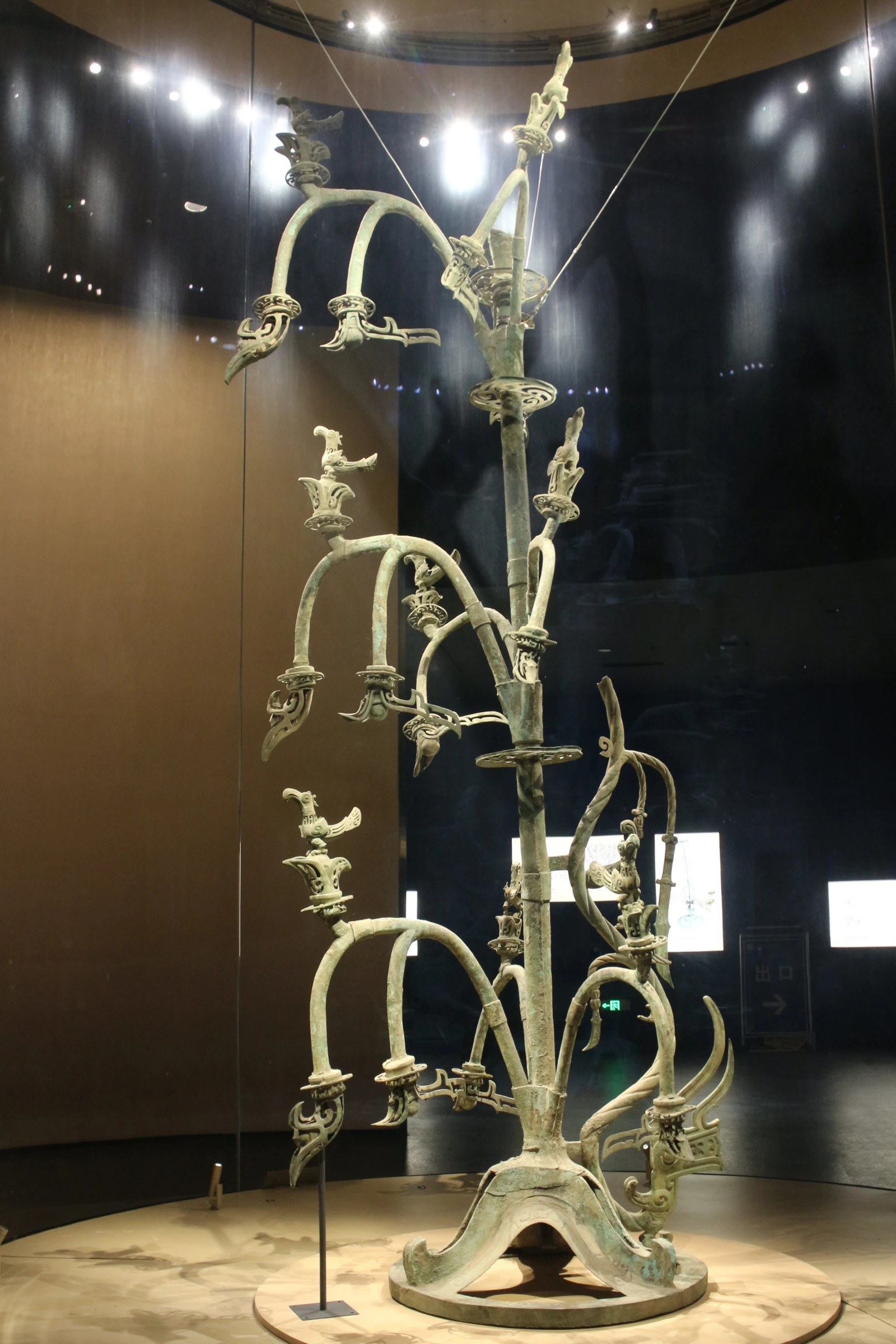
Leave the restoration hall as a separate decision
Finish your main exhibition priorities before adding the restoration hall. Its access and opening arrangements are separate from the main building’s. A visit does not promise that a conservator will be working on a particular object, or that a demonstration will occur while you are there.
If the party is already tired, a shorter main-hall visit with a proper meal may be preferable. The museum’s FAQ says the excavation site is not open for ordinary visits. Do not follow a map pin or an online photograph into an archaeological working area.
Keep pandas and the museum on separate days when possible
A four-day, three-night Chengdu stay gives the museum its own day without another hotel change. The following is a planning example, with three nights in the same Chengdu base. It is not a package inclusion list or a guaranteed departure.
| Day | Main purpose | Overnight and return |
|---|---|---|
| 1 | Arrive in Chengdu, check in and choose a modest local outing if time allows | Chengdu night1; no distant timed visit after a late arrival. |
| 2 | Choose a city-cultural day or a separately reserved panda visit, followed by a lighter afternoon | Chengdu night2; preserve energy for the museum day. |
| 3 | Travel to Guanghan, visit Sanxingdui with a meal/rest break, then return | Chengdu night3; agree the transport return before entering. |
| 4 | Check out and make the planned airport or station transfer | Departure; no fourth hotel night assumed. |
Swap Days 2 and 3 if the museum booking requires it. If you only have one full sightseeing day, decide which experience matters most. A combined panda-and-museum day adds another transfer and another reservation, and usually leaves less time for the exhibits. It should be a deliberate choice rather than a default relaxed itinerary.
Choose a hotel by the morning departure and evening return you actually plan to use. Chunxi Road may suit the direct-bus approach; a property with straightforward vehicle access may suit a driver. A hotel at an airport changes both journeys. Compare the wider Chengdu trip planner before choosing a base.
Allow for bags, standing, weather and interpretation
Leave large suitcases at your hotel when returning to the same room. If checking out, arrange storage and the collection time before leaving. Museum storage, where available, still has size, security and collection conditions; a suitcase is not automatically accepted because a visitor centre exists.
The gallery day involves standing and moving between displays. Tell a planner about limits on standing, steps or walking, and ask about the actual route and assistance required. The museum lists mobility equipment for hire, but that does not reserve a wheelchair or establish that every part of your visit is accessible.
Carry water and a light layer for the indoor visit, and plan a meal break around the booked entry. Ask where eating is permitted and what is available that day. Special diets need a specific arrangement; a museum café or a vegetarian option does not establish halal certification or allergy controls.
Rain can affect the outdoor approach, waiting areas and transport even when the galleries remain open. Keep a compact umbrella or suitable outer layer and allow a slower walk. Hot weather can also make the transfers and queueing tiring. Reduce the add-ons before reducing the main museum visit or the return buffer.
Check which language an explanation service or device provides, when it starts, and what it covers. A listed foreign-language option is not a reserved English slot. Follow the current photography signs: the museum prohibits flash and selfie sticks, and some displays may prohibit photography entirely. Keep other visitors’ view clear.
Compare the complete cost and the services booked
| Budget item | Check the actual scope | Common misunderstanding |
|---|---|---|
| Museum admission | Date, session, passport details and any eligible concession | A submitted request is not the confirmed admission. |
| Return transport | Both directions, boarding or pickup points, waiting and any onward journey | A museum ticket does not include the Chengdu transfer. |
| Interpretation | Language, guide or device, duration, booking and any deposit | A road driver is not automatically the museum guide. |
| Meals and extra services | Food, luggage arrangements, extra hall or activity, and cancellation conditions | An itinerary mention does not make every item included. |
Use the price and conditions attached to your own date and documents. Extended sessions depend on the museum’s announcements; a summer screenshot does not establish November evening admission. Leave time for the actual session’s closing arrangements rather than designing the day around an assumed late exit.
Questions before you choose the day
Can I visit on the day I land in Chengdu?
Only consider it if the confirmed arrival, transfer and booked entry leave a comfortable margin. A delayed flight can consume that margin. With an evening arrival or an uncertain connection, keep the museum for another day and stay near your planned Chengdu base.
Do I need to stay overnight in Guanghan?
A Chengdu-based day works for many visitors. A Guanghan stay may suit a specialised interest or an onward route, but adds a hotel and luggage decision. It is not necessary simply to see the main museum exhibition.
Can a guide guarantee that I will see a particular object?
No. Ask whether an essential object is currently displayed before committing to a specialist visit. Conservation, loans and exhibition changes can affect availability. The photographs and collection catalogue describe objects, not a guarantee that each one is in its usual case on your date.
Compare an existing Chengdu itinerary
The existing five-day Chengdu, pandas and Sanxingdui private itinerary has four hotel nights and combines pandas with the museum on one day. Its selected extra day trip is agreed before booking. It is a busier alternative to giving Sanxingdui a separate day in the example above.
Ask for the actual dated plan before choosing: transport, guiding language, museum admission, hotels, meals and the optional excursion must be identified in writing. Price on request. For a wider journey, use the Sichuan planning guide to decide what to combine.
Send Vero Trip your dates, party size and ages, passport nationalities, Chengdu hotel area, arrival and departure details, museum interests and walking needs. Tell us whether you prefer a separate museum day or the combined panda itinerary. Use Plan My Trip to discuss the route and the services needed for your dates.