For a first Ruili trip, allow two nights in one city base, choose one main outing such as Moli’s forest-and-waterfall visit, and leave an evening for food. Add a third night if you want a separate border-culture visit after its admission and route arrangements are clear. Keep arrival and departure journeys apart from the main sightseeing day.
Ruili, 瑞丽, is in Yunnan’s Dehong region beside Myanmar. This guide describes a stay on the Chinese side. Visiting a border-themed attraction, seeing a national gate and formally crossing into another country are different activities. A holiday in Ruili does not require an international crossing.
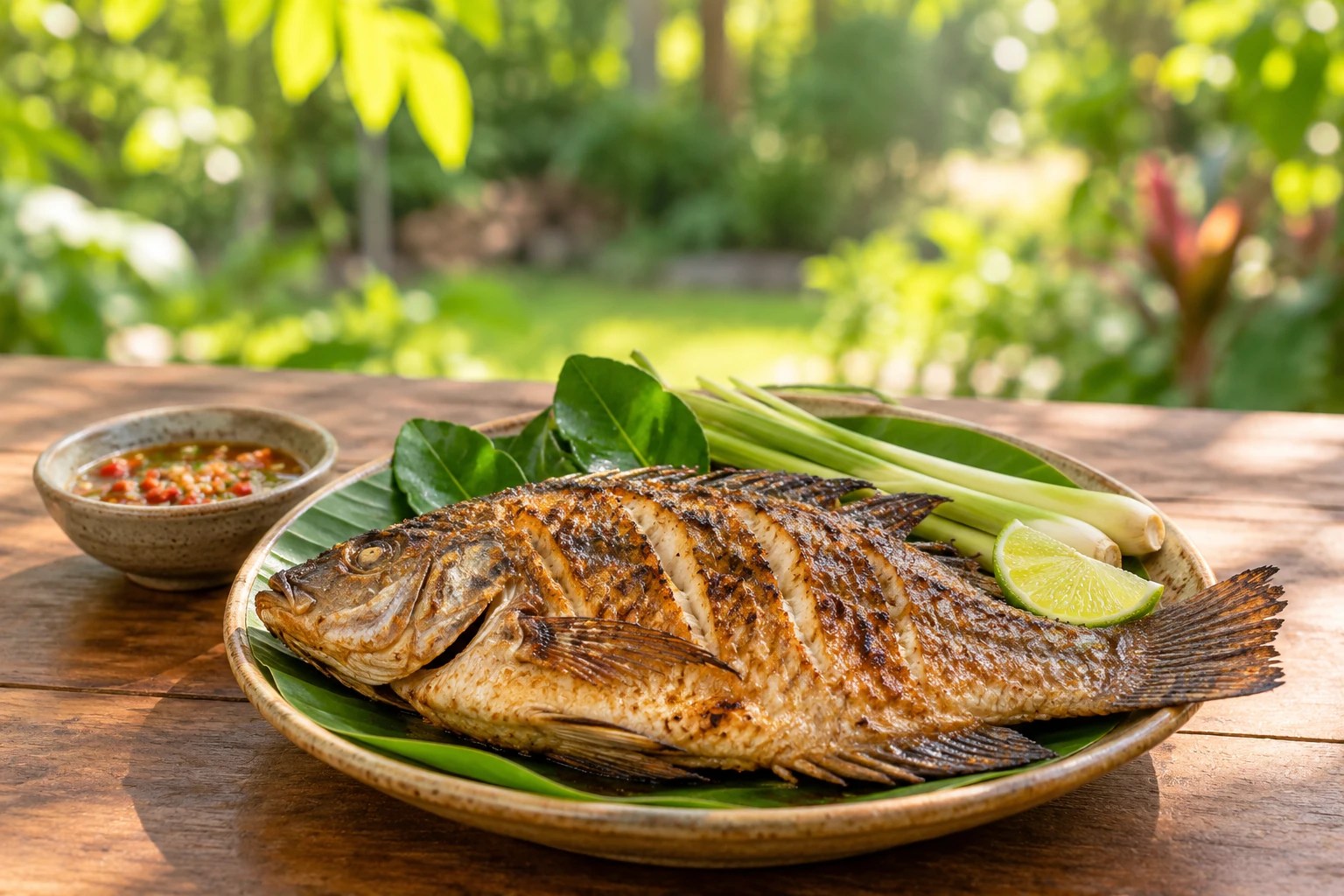
Updated 29 October 2026. The featured image is an original illustration of grilled fish with herbs. It does not show a Ruili restaurant, an exact menu portion or a meal included in a Vero Trip booking.
Choose the experience before filling the itinerary
Ruili suits travellers interested in a combination of local food, a forest outing and the cultural setting of a border city. It is a deliberate addition to a western Yunnan route, not a necessary stop between every pair of better-known towns. Choose what interests you most and give each visit a realistic transport window.
| Experience | Choose it for | Resolve before committing |
|---|---|---|
| Moli Rainforest Scenic Area / 莫里热带雨林景区 | A valley walk through vegetation towards a waterfall. | Available path, steps, walking length, opening arrangements and the return vehicle. |
| One Village, Two Countries / 一寨两国 | Understanding the border-village setting around Yinjing. | Foreign-passport admission, permitted visitor area and any required arrangements for your party. |
| Jiegao / 姐告 | An interest in the border-city setting or a specifically arranged cultural visit. | The exact destination and access; a gate photograph is not international entry permission. |
| Ruili Ancient City / 瑞丽古城 | An evening focused on a visitor entertainment venue and its programme. | The current dated programme, admission, return transport and whether the sound level suits you. |
Moli: make the forest walk the main outing
The Moli attraction operator’s introduction describes a river-valley route with vegetation, rock features and a waterfall. It also cautions that the path towards the waterfall can be slippery and asks visitors to observe the protected area’s rules. Use the managed visitor route and leave plant collecting or an informal forest detour out of the day.
Ask for the route that will actually be available, including the out-and-back distance and the point where you can shorten the walk. Published descriptions use different walking figures; do not treat one number as the distance every visitor must complete. A shaded path can still involve wet surfaces, steps and a tiring return.
A July 2026 Ruili tourism introduction also presents Moli as a forest-and-waterfall outing. Its summer timetable and student promotion belong to that publication; confirm the current booking conditions for your date and document type rather than assuming the same offer applies.
Wear shoes with grip and carry water, rain protection and a light day bag. Establish where the driver will wait and how to return if one person stops early. For children or older travellers, agree a shorter option before starting. Follow barriers at the water and waterfall; a photograph of someone standing in a stream does not make that an authorised activity.
Border culture without confusing it with border crossing
A People’s Daily report from May 2025 describes Yinjing, 银井, on the Chinese side and Mangxiu, 芒秀, on the Myanmar side of the border-village setting. It discusses community life and cross-border education. That history helps explain the place; it does not establish a visitor’s right to cross, enter a school or photograph residents without consent.
For any border-adjacent outing, send the receiving party the exact attraction, travel date and passport nationality. Ask about admission, permitted areas and any required authorisation before paying for a non-refundable transfer. Follow signs and staff instructions, including photography limits around inspection or controlled areas.
The National Immigration Administration’s travel-permit guide explains arrangements for foreigners visiting areas not open to foreigners and distinguishes routes that do and do not pass through restricted areas. It does not give every Ruili attraction one blanket admission rule. Ask the relevant local exit-entry authority about your exact proposed route when clarification is needed.
Keep the plan within China. Do not use a resident’s local crossing story, a swing photograph or a travel post saying “one step into another country” as entry permission. If a proposed border visit cannot be arranged for your party, choose a confirmed city activity instead; there is no need to force it into the trip.
Food to try: make one meal an experience
Ruili’s municipal media food introduction names paoluda, egg pancakes, Dai-style barbecue and sapie among its local food interests. Start with a few dishes and time to ask what is in them, rather than ordering an unfamiliar banquet just to cover every speciality.
The January 2026 municipal food report distinguishes bitter and lemon-style sapie and describes grilled fish with aromatic herbs. Recipes and serving combinations vary by cook. Lemon in a dish’s name does not establish that its sauce is vegetarian, and a grilled main dish does not settle every dietary requirement.
| What to look for | How to approach it | What to ask |
|---|---|---|
| Sapie / 撒撇 or 撒苤 | A dipping-sauce-centred dish; compare lemon and bitter styles. | Ingredients in the dip and accompaniments, whether meat is raw or cooked, and whether chilli can be reduced. |
| Dai-style grilled fish / 傣味烤鱼 | A shared main dish with herbs and an option to keep a strong dip separate. | Fish size, cooking method, bones and the ingredients in sauces or marinades. |
| Paoluda / 泡鲁达 | A sweet drink or dessert to sample separately from the main meal. | Milk, coconut, cereal or other additions in that shop’s version; ask rather than assuming it suits an allergy. |
| Egg pancake / 鸡蛋粑粑 | A snack rather than a reason to skip a proper meal. | Filling, oil, sweetness and whether the portion is intended for sharing. |
For allergies, halal or vegetarian needs, describe the ingredients and preparation you require before the visit. Ask about stocks, sauces, alcohol and shared cooking equipment where relevant. Keep a suitable backup snack if a meal needs a separate arrangement. Declining a dish is preferable to relying on its appearance or a translation that only names the main ingredient.
Use any old restaurant list as a starting lead, not a promise of current opening, price or quality. Check the specific branch and arrange your return after dinner. For a quieter evening, a seated meal and one dessert stop may be more enjoyable than crossing the city between several popular venues.
Night activities: check the date on the programme
Dehong tourism’s July 2026 night-visit announcement advertised a summer programme at Ruili Ancient City with themed performances and event dates. It also made activities subject to weather and actual arrangements. Those July and August dates have passed; they are not a current weekly schedule.
Choose the venue for the programme offered on your date. Ask about the show location, any separate ticket, seating or standing, duration and the final vehicle pickup. “Ancient City” is the venue’s name; decide whether an organised entertainment evening is what you want rather than assuming the name describes every street’s age or atmosphere.
Ruili’s cultural activities also take place on particular occasions. A local tourism account of China Tourism Day in May 2026 describes Dai and Jingpo presentations at Jiegao. It is a record of that event, not a promise of daily performances there.
Where to stay in Ruili
For a first stay, choose a city hotel with meals you can reach easily and a clear vehicle pickup point. Keep two nights in the same room if the main outing is Moli. The convenience of a quiet dinner and an uncomplicated morning departure can matter more than a room close to a distant sightseeing pin.
Check room position, traffic or music nearby, cooling, bathroom layout, lift or steps, and where the vehicle can stop with luggage. Ask the property about foreign-guest registration for your documents. A central address does not guarantee quiet, and a scenic name does not identify the distance to the restaurant or room.
A property nearer a specific visitor area can work when that visit is the reason for the journey. Confirm its actual location, meals, evening access and transfer first. Do not assume proximity to a border attraction grants access outside its visitor hours.
A three-day, two-night Ruili outline
This is a planning example, not a fixed departure or an included-service list. It protects one full local day and keeps the final onward journey separate.
| Day | Suggested focus | What to keep flexible |
|---|---|---|
| 1 — arrive in Ruili | Settle into one city hotel, then choose a simple local meal. | A late arrival can go straight to dinner and rest; no compulsory paid show. |
| 2 — one main outing | Visit Moli on the confirmed route, return for a break and choose food or a dated evening programme. | Shorten the walk for weather or fatigue and keep the evening optional. |
| 3 — depart | Have breakfast and leave for your booked onward connection or next overnight base. | Allow the full road transfer and a departure margin instead of adding a distant final attraction. |
Add a third night for a separate border-culture day if the receiving arrangements are suitable. Keep that visit distinct from the Moli outing. With only one night, choose a smaller city-and-food stay or one confirmed main visit; do not compress a long arrival, forest walk, border excursion and evening show into the same day.
Getting there and fitting Ruili into western Yunnan
Compare the complete journey to your hotel. If your arrival ticket is to Mangshi, the onward road transfer to Ruili is another part of the plan. Obtain the actual meeting point, luggage capacity, breaks, cost and intended arrival window. Do not use a flight arrival time as the start of a fixed Ruili activity.
For public transport, confirm the current terminal, departure, final Ruili stop and hotel connection. For a vehicle with a driver, establish waiting, parking, return and any guiding language separately. Save the hotel’s Chinese name and entrance pin offline, and arrange the return vehicle before starting an out-of-town visit.
Our western Yunnan road-trip guide treats Ruili as a deliberate detour within a much longer journey. The Dali-to-Xishuangbanna road plan via Tengchong follows a different route; Ruili needs extra days rather than being quietly added to its transfer stages.
Common planning questions
Do I need to cross into Myanmar to enjoy Ruili?
No. Plan a Chinese-side stay around confirmed visitor sites and meals. Formal international entry is a separate matter; neither an attraction name nor a border photograph provides that permission.
Is Moli suitable for a short, easy walk?
Choose only after checking the current route, steps and shortened option. The operator warns about slippery surfaces. A shorter visit may work better than making the waterfall compulsory for every member of the group.
Can I rely on the summer show timetable?
Use the venue’s dated programme for your travel day. An old announcement can explain the type of entertainment, but it cannot confirm today’s performance, ticket or finish time.
Plan your Ruili stay with Vero Trip
Send Vero Trip your Ruili travel dates and priorities, arrival and departure points, available nights, party size, passport nationalities, walking needs and meal requirements. Say whether Moli, food or a specifically arranged border-culture visit is the main reason for the stay.
Request a written proposal identifying the receiving arrangements, hotels, transport, guiding, admissions, meals and change terms. Price is on request for the dated arrangements; only the services itemised in the accepted proposal are included. Keep optional border visits and entertainment separate until their details are settled.
The featured grilled fish and herbs are an original food illustration, not a restaurant photograph, an exact local recipe, a promised portion or an included meal.
Related Journeys to Compare
These existing routes offer starting points for the region or travel interests discussed above. Read the full daily itinerary to see what is included. A visit described in this guide, a specialist session or an international border crossing is added only when confirmed in your own programme.