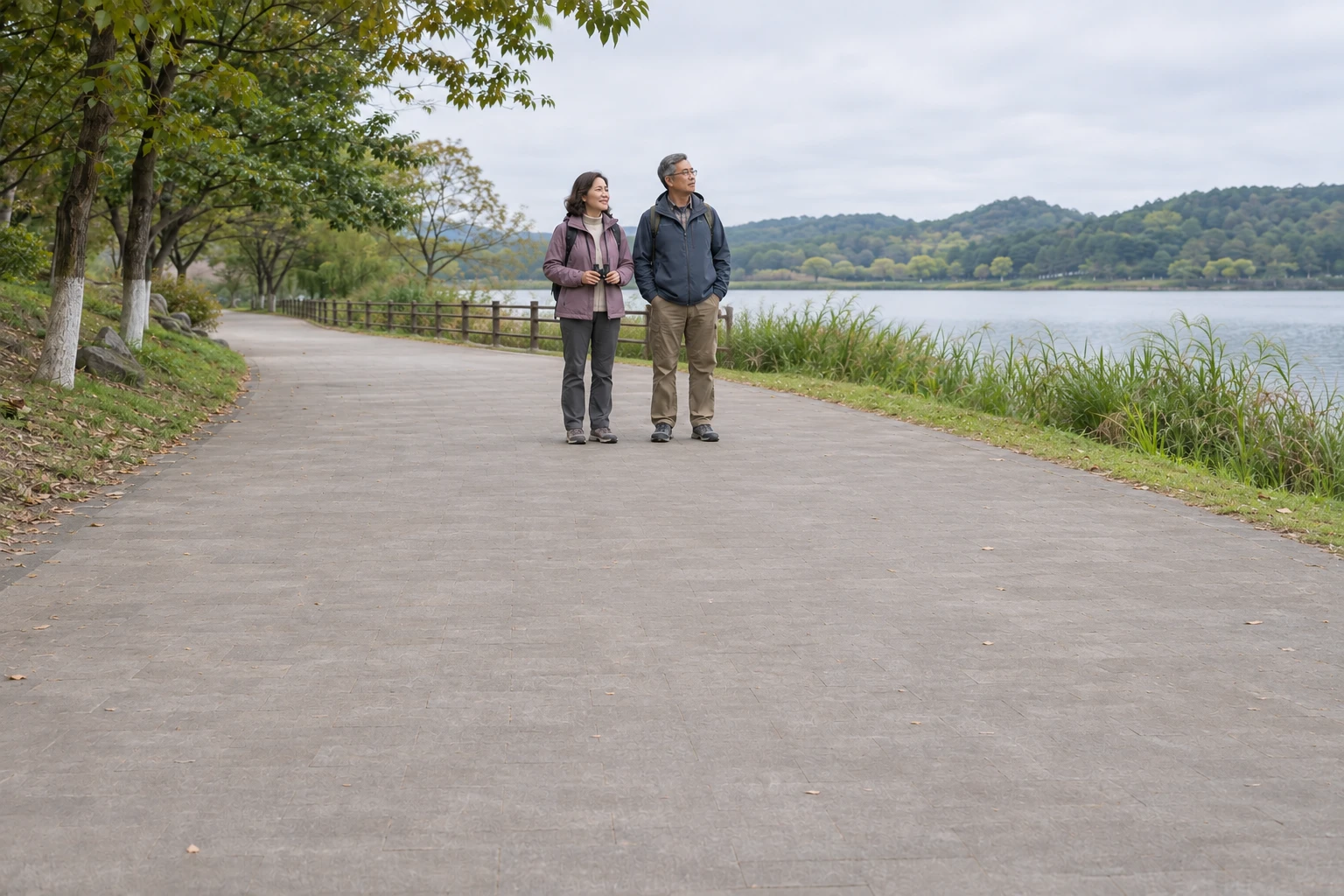
Give Qinglong Lake an open-water and bird-observation half-day from Chengdu. Start at one confirmed public approach and turn before the return feels tiring. Lunch and the complete hotel journey belong alongside the shore walk, without a requirement to finish every lakeside path.
成都青龙湖湿地公园 is in the Shiling area of Longquanyi District, east of central Chengdu. Save that full name: it is different from Xinglong Lake in Tianfu New Area and from parks called Qinglong Lake in Beijing, Chongqing or Zigong. This guide focuses on Chengdu’s public lakeside landscape, rather than a long-distance cycle ride or a ticketed indoor attraction.
Information as of 11 November 2026. Published bird records, seasonal photographs and festival reports explain why the park interests people; they do not describe everything visible or operating today. Choose a route that remains worthwhile without a particular bird, autumn colour, boat or organised activity.
The choice at a glance
| Interest | Main block | Keep optional |
|---|---|---|
| Open water and a short walk | One public shore section, a pause and a return to the same approach. | A full circuit or another distant lake. |
| Bird observation | Quiet watching from an appropriate public shore position. | Specialist guiding or a promised rare species. |
| Dam-side landscape | An accessible part near the first dam if the current route suits. | Recreating a seasonal photograph or adding every park phase. |
For the shortest version, choose one out-and-back and a good observation pause. A birder may stand quietly longer and walk less; a companion may favour movement on a modest shore section. Neither preference requires the whole lake circuit.
Look at the lake before choosing a longer route
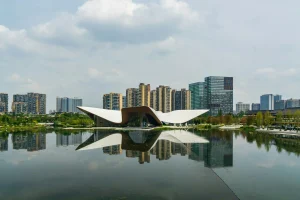
The Tianfu Greenway operator’s project profile places Qinglong Lake in the Shiling scenic area and describes its first-phase landscape through water, birds and planting. The shore includes bends, bays and smaller water areas. That makes the view change as you move, even when you remain within one selected part of the park.
Stop where the public path gives an open view and compare broad water, sheltered inlet and planted edge. A quieter corner can contrast with a busy promenade. A named photograph spot is not necessary for that changing scale to be interesting.
Find the return on today’s map before extending. A lake’s dimensions do not measure its public footpath, and a drawn line establishes no continuous open circuit. Use a recognisable turnaround, especially with children or someone tired by standing.
The operator’s first-phase description is useful landscape context. It does not establish that all phases, bridges, islands and connecting paths can be combined into one visit. Treat a barrier or staff direction as the limit of your route, then retrace your steps or use a signed public diversion.
Watch birds from a public shore position
Qinglong Lake has a long-established place in Chengdu’s birdwatching information. A 2019 bilingual GoChengdu guide, shared by Chengdu Release, identifies it as a stopping and wintering area for migratory waterbirds. More recent local coverage continues to describe the wetland as bird habitat. That is a reason to bring curiosity, rather than a guarantee of a rare-species encounter.
Start birdwatching with behaviour: floating, standing at an edge or moving among trees. Observe shape before deciding a name. Binoculars can make distant watching rewarding; a phone image may serve as a memory without reliable identification.
One sustained observation can beat repeatedly pursuing the next supposed hotspot. Pause safely outside the movement line, lower voices and let the scene develop. Ordinary ducks or changing light can be enough, even if birds remain distant.
Keep the visit on permitted public paths and viewing areas. Do not enter reeds, follow a narrow track towards a nest, approach an island or launch a boat to get closer. Avoid feeding, calling birds with recordings or asking someone to make them fly for a picture. A photograph should not determine how close a visitor tries to get.
A specialist birding day requires a different conversation: the guide’s knowledge, language, equipment and the amount of quiet standing all matter. An ordinary driver or city companion is not automatically a bird specialist, and a general park visit does not include binocular hire or a guided species list.
Use the first dam as a possible focus, with seasonal expectations
A Sichuan Online report published on 5 October 2026 records visitors around the park’s first dam, 1号坝, looking at colourful golden-rain-tree fruit. It provides a useful named landscape feature to discuss when choosing your arrival area. Confirm the open approach and its connection with your return before making it the centre of the walk.
The report’s fruit colour, holiday crowds and photographers belong to early October. They promise nothing for November or a later year. Without the colour, tree form and the relationship to water may still justify a pause.
Choose an accessible dam-side landscape pause or quieter permitted shore watching, according to what the party wants now. Extra distance to recreate an old photograph is not required. Water, birds or a short break between city bookings can each be a clear purpose.
A first-dam visit is not permission to enter service areas, walk on every embankment or follow the water edge off the public route. Keep the present signs and conditions ahead of an old social-media location pin. No exact walking distance or full-park completion time is assumed here.
Build the half-day from arrival to lunch and return
Arrive with one subject agreed, then check public entry, notices and the return. Walk a selected section and pause before deciding whether more adds value. Turn while the tired companion still has energy for the way back.
Put a seated lunch after the main outdoor block, either at a suitable place operating near your finishing area or back in the city. The choice should fit dietary needs, available seating and the route you have actually taken. This guide does not establish a reserved lakeside restaurant, a particular menu or an included meal.
Bring drinking water and a modest snack when appropriate, but do not make finding a park cafe essential to the visit. Agree a real rest for anyone who cannot stand for long. Bird observation often involves less distance and more standing than a traveller expects from the word walk.
After lunch, complete the journey to the named hotel or agreed city address. Keep any further sightseeing optional. A half-day is a suggested plan that includes travel and a meal; it is not an official timed circuit or a promise that a car, guide and restaurant remain available for an unlimited period.
Reach the selected shore from the right Chengdu approach
The October 2026 local report identifies Metro Line 4 to Chengdu University Station, 成都大学站, with Exit B as an approach to the park. Check the current station signs and map for the exact shore section you want. This does not mean every entrance, viewing point or dam is immediately beside that exit.
Compare the whole journey from your hotel: interchange, the usable exit, crossings and the last walk to the park. The station name is a transport landmark, not an instruction to enter the university campus. An outing to the public lake does not establish campus access.
For a taxi or arranged vehicle, save 青龙湖湿地公园, 龙泉驿区, the chosen public approach and a current map pin. Request a legal roadside stopping place. An approximate pin in the middle of a large park is not a vehicle gate, and a car should not be expected to enter a pedestrian or cycle route.
Agree the collection point as carefully as the drop-off. A short out-and-back can keep both near the same arrival area; a one-way finish requires a different collection instruction. Specify whether a driver waits or returns later, and include the final road-to-hotel journey and any remaining walk with the party’s belongings.
Leave suitcases at accommodation under a confirmed storage arrangement. Carry a small daypack and keep the hotel address available offline. On a checkout day, allow for collecting bags and the separate onward transfer. The park is not assumed to provide a cloakroom or secure large-bag storage.
Keep a Chengdu base and count the nights
| Stay | Full days between travel dates | How to place the lake |
|---|---|---|
| 3 days / 2 nights | One. | Make the lake the main interest or retain the city priority first. |
| 4 days / 3 nights | Two. | One priority outing and one city day with a selected lake half-day. |
| 5 days / 4 nights | Three. | Separate pandas, culture and a lake block or a separately planned excursion. |
A central base near a useful station can serve a wider Chengdu stay, even though Qinglong Lake is an eastern outing. Choose accommodation against the whole trip rather than moving hotel for one park visit. Compare the actual room, lifts, bed arrangement, heating or cooling and final approach with bags, and confirm passport registration with the property.
On a short first visit, make the lake your deliberate choice. If pandas or a cultural visit are the principal reason for coming, give that priority its proper day first. With a longer stay, a less structured lake half-day can create space between bookings. The Chengdu planning guide compares usable days and city bases.
For travellers who want bicycle hire and a permitted riding section, use the separate Chengdu greenway guide. This shore-walking plan does not book a bicycle, solve its deposit or establish a return location. It also does not combine Qinglong Lake with the southern lakes into a casual single outing.
If your interest is poetry and a more central western-city park, compare Huanhuaxi Park. For labelled plant collections, consider Chengdu Botanical Garden. Each has a different subject and location; one chosen outdoor block is usually more useful than collecting all three.
Walking comfort, weather and shared paths
Allow for outdoor walking, standing, uneven or wet paving and the possibility of steps at a particular approach. Tell the planner about a wheelchair, pushchair or limited standing tolerance before the route is fixed. Ask about the actual surfaces, kerbs, toilets, rest opportunities and return to the road; the complete lakeside outing is not certified step-free.
Where walking and cycling meet, stay aware of moving users and avoid stopping across the path for a photograph. Move to a suitable public place before checking a map or using binoculars. A broad section can become busy or narrow at a junction, so the character of the first few minutes does not establish the whole route.
Wind and rain can make an exposed shore less comfortable than a sheltered city street. In light rain, shorten the walk and protect the seated meal and return. In storms, poor visibility or uncomfortable heat, move or omit the outdoor block. A museum is an alternative only after its own opening and admission have been confirmed.
Keep daylight as the default for an unfamiliar route. A sunset photograph does not establish present lighting or evening collection arrangements. Do not extend the walk solely because an old listing suggests a late closing time, and do not depend on flowers, coloured leaves, clear water or birds returning at a particular hour.
Passports, costs and the written day plan
| Part | Written detail |
|---|---|
| Public route and access | Date, exact approach, open shore section, turning point and any separately booked service. |
| Movement and belongings | Actual hotel, pickup, waiting or collection, bag responsibility and the complete return. |
| Language and cost | General orientation or specialist bird interpretation, meal basis, paid extras and room nights. |
The available visitor information describes a public park landscape, but does not establish one current opening schedule, fee or booking rule for every entrance and separately operated activity. Check the actual date and public approach before setting out. Carry the original passport required for any independently reserved service; a general English visitor introduction is not a test of every payment, registration or document channel.
A September 2026 city report records a family birdwatching and conservation activity at Qinglong Lake, with volunteers and equipment instruction. That was a dated event. It does not establish a daily English session, free binoculars or a workshop included in an ordinary visit. Boat services, classes, equipment and other paid activities require their own named operator and confirmation.
Price on request for a Verotrip arrangement. The proposal should identify the public route, transport and waiting, complete return, accompanying language, meal basis, any selected paid service and accommodation if requested. An enquiry does not reserve a departure, guide, vehicle or room. The core shore walk can be planned without a boat or organised class.
Frequently asked questions
Is Qinglong Lake the same as Xinglong Lake?
No. This guide concerns Qinglong Lake in Chengdu’s Longquanyi District, around the Shiling area. Xinglong Lake is a different destination in Tianfu New Area. Save the full Chinese name and chosen approach before arranging transport.
Must I complete a circuit to enjoy the park?
No. A selected shore section with a clear turning point can provide a worthwhile visit. Check the open path and return before extending it. Neither a network map nor the lake’s dimensions establishes a continuous public circuit.
Will I see rare birds or autumn colour?
Neither is guaranteed. Bird records describe habitat and observations over time, while coloured-tree photographs show particular dates. Watch from public paths, avoid disturbing wildlife and choose a visit that still works as a lake walk.
Does this half-day include a boat, guide and lunch?
Only services itemised in the accepted written proposal are included. The suggested sequence protects a shore walk, seated meal and complete return. Boats, specialist interpretation, equipment, transport and food each need their own stated arrangement.
Plan a lakeside visit with a complete return
Tell Verotrip your date, Chengdu hotel, party size, walking and standing limits, and whether open water or bird observation matters most. Include language, dietary and luggage needs and any onward departure. Request a focused route with room to pause, sit down for lunch and get all the way back.