Travel from Pakistan to Tajikistan through China only after both border receptions and the intervening China route have been agreed for your passports and vehicle. The geographical connection enters China at Khunjerab from Sost and leaves through Karasu–Qolma towards Tajikistan’s Gorno-Badakhshan region. Two nearby border names do not create a same-day transit entitlement.
The important decision is whether this short-looking connection can become a lawful, practical journey with suitable overnight arrangements. Resolve China entry and vehicle admission, the approved roads and stops, the Tajik receiving arrangements and separate GBAO permission before leaving Pakistan. If any essential element cannot be established, compare another complete onward route while changes are still manageable.
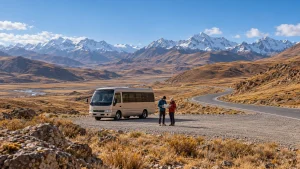
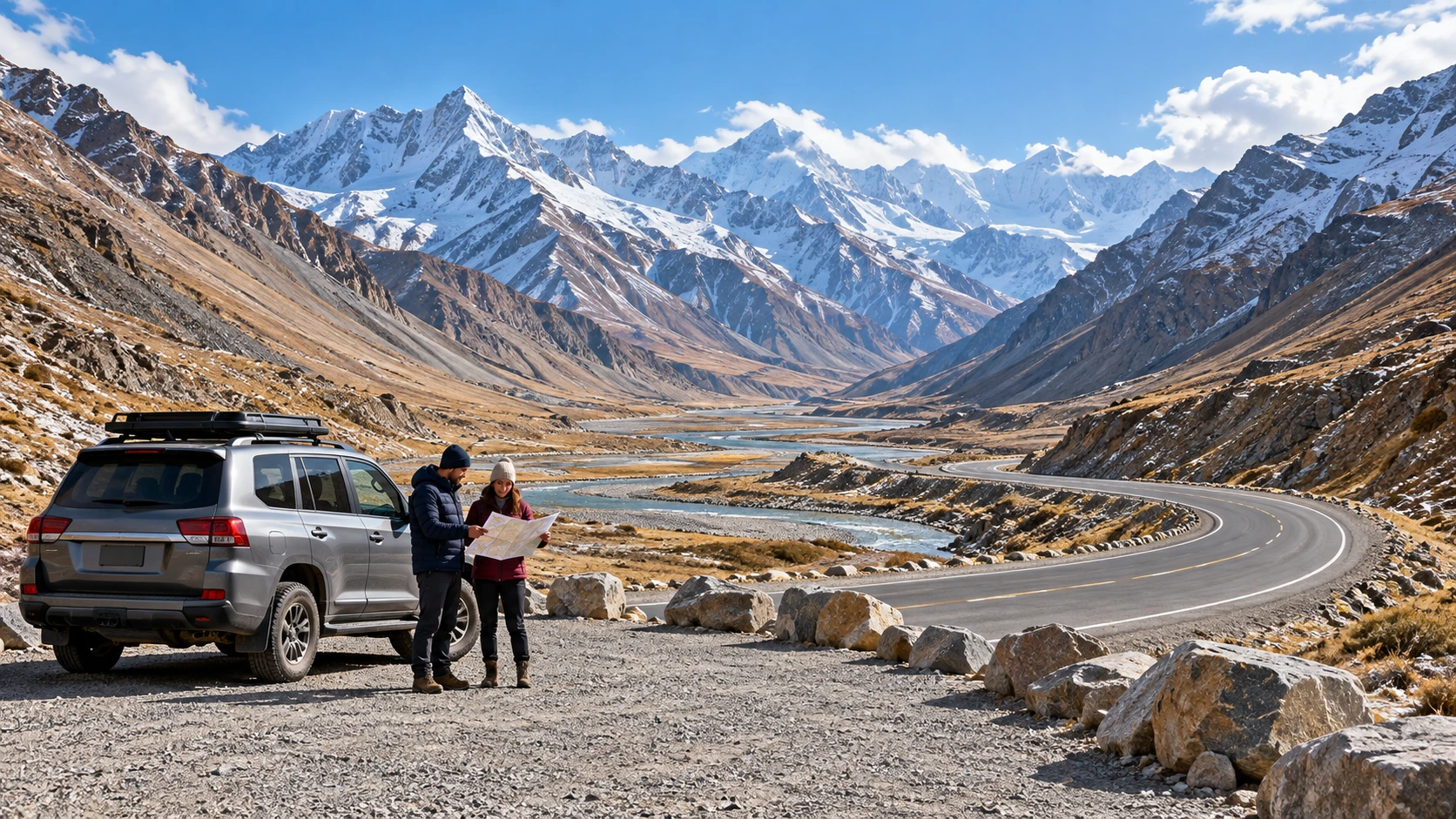
Updated 24 October 2026. The opening image is an illustration of a generic mountain travel stop, not a border, actual customer journey or approved stopping place.
Understand the two crossings and the space between them
The Xinjiang transport authority’s road-port inventory pairs Khunjerab with Sost and Karasu with Qolma. English spellings vary: Khunjerab may appear as Hongqilafu, Karasu as Kalasu, Qolma as Kulma, and Taxkorgan as Tashkurgan. Save Chinese names, exact reporting pins and receiving contacts alongside the English route.
| Stage | What it connects | What must be agreed |
|---|---|---|
| Pakistan departure at Sost / Khunjerab | Your previous Pakistan journey and the China arrival. | Passenger departure, vehicle discharge, current operation and China reception. |
| China approach and overnight sector | The accepted road and stops in the Taxkorgan area, with any required administrative detour. | Vehicle/driving documents, route, lawful accommodation and border-area requirements. |
| Karasu–Qolma exit / entry | China departure and Tajik arrival in GBAO. | Both sides’ reporting, vehicle acceptance, regional permission and onward receiving plan. |
| Tajik onward journey | The first overnight and the actual destination beyond the frontier. | Access, insurance, road conditions and a suitable highland itinerary. |
Ask where the actual passenger inspection, vehicle processing, meeting point and physical frontier are located. These need not be a single place. Save the instructions offline and give every member of the party the contact and meeting arrangements if people and the vehicle follow different procedures.
Kashgar may be a useful administrative or sightseeing addition when the actual arrangements require it. It should not be silently included as though it were the shortest connection between the two ports. Ask whether the plan needs that journey, what it achieves and what nights it adds. Conversely, do not delete it simply to shorten a map line if a required appointment or reception is there.
The Karasu agreement is a framework, not individual admission
The 2011 China–Tajikistan port agreement describes Karasu–Qolma as an international road passenger-and-cargo crossing allowing third-country people and transport under the parties’ applicable rules. It places the Tajik side in the Murghob district of Gorno-Badakhshan. This is relevant to planning a third-country journey, but it is not acceptance of a particular passport, vehicle or travel date.
Use current instructions from the receiving parties for operating days, holidays, weather restrictions and reporting times. Do not revive an older agreement’s seasonal description or assume that an international or year-round classification means admission at any hour. Ask how temporary suspension would be communicated before you begin the China section.
A freight or scheduled international transport notice does not automatically describe an independently travelling campervan or motorcycle. State the vehicle class and registration country explicitly. The answer for a locally registered commercial vehicle may not settle your case.
Prepare passenger, driver and vehicle files separately
Begin with every traveller’s nationality, passport validity and actual entry basis for China and Tajikistan. Do not label the trip “transit” and assume that ordinary transit visa exemptions cover an independent road journey. The National Immigration Administration’s transit guidance attaches specific conditions to its transit arrangements; ask the competent authority about the actual land itinerary.
| File | Resolve before departure | Keep evidence of |
|---|---|---|
| Travellers | Actual nationality, China and Tajik entry basis, permitted dates and route. | Each applicable approval and required original document. |
| China vehicle admission | Vehicle class/registration, ownership authority, customs method, temporary road papers and insurance. | Entry record and the agreed discharge at Karasu. |
| Drivers | The correct Chinese permission for the vehicle and applicable onward requirements. | Named accepted drivers and licence categories. |
| Tajik vehicle reception | Temporary admission, ownership/authority, insurance and onward obligations. | The named receiving customs/vehicle party and current instructions. |
| GBAO | Regional permission separate from visa exemption or a visa. | Actual accepted permission and what happens if access is suspended. |
The Chinese temporary-entry vehicle checklist describes registration, customs evidence, insurance and relevant receiving-plan categories. Its Beijing application details are not a Khunjerab appointment. Ask the entry team what originals, translations and inspections apply locally, who is responsible, and how departure at another port will close the admission record.
If bringing someone else’s vehicle, disclose that before requesting a price. Ask how ownership authority is documented and whether the actual vehicle and each driver can be accepted. Do not assume a document used on the Pakistan side substitutes for Chinese road documents or Tajik customs admission.
If your vehicle entered Pakistan temporarily, settle its lawful departure and retain the discharge evidence. Pakistan’s FBR SRO 1965 of 2024 describes temporary tourist-vehicle admission and re-export obligations. Ask Pakistan Customs which current procedure applies to the existing record. Planning the next country does not close the previous country’s file.
Tajik entry and GBAO are different decisions
Use the Tajik foreign ministry’s consular guidance to establish the applicable entry basis and separate regional permission. A person who does not require a visa may still need GBAO permission. Ask how to obtain it for your actual nationality and China-side arrival instead of assuming an e-visa application solves every case.
The U.S. State Department’s 4 September 2026 advisory advises reconsidering travel to GBAO and notes that special permission can be suspended at short notice. Read your own government’s advice as well and check the implications for insurance. Do not generalise nationality-specific visa or registration details from another government’s guidance.
Have the receiving party explain the first Tajik stop, vehicle temporary-import procedure, road insurance, fuel and communications, and any further regional access. Confirm whether an escort or other arrangement is required for the actual road and date. A border handover should connect to a workable onward journey, not leave you with only an entry stamp and a distant hotel name.
Do not force the highlands into an arbitrary day count
Request the real overnight sequence before deciding the total number of days. A brief China sector still involves two frontiers, vehicle paperwork, possible waiting, high-country roads and the first Tajik night. The time spent legally resting or waiting is part of the trip, even when the road distance looks modest.
Give a qualified clinician the proposed sleeping altitudes and your previous nights in Pakistan. The CDC’s altitude guidance emphasises gradual sleeping ascent and warns that fitness does not remove altitude-illness risk. Do not move to a higher sleeping altitude with symptoms. If symptoms worsen despite rest, descend and obtain appropriate medical help.
Ask the receiving parties for the elevation and location of each actual accommodation, a practical stopping alternative and a way to change direction if necessary. A theoretical map village is not a lawful hotel or medical fallback. Neither a border appointment nor a non-refundable room should determine whether an unwell traveller continues higher.
Specify vehicle recovery, communication and medical-help responsibilities on both sides of the handover. Check what the insurance actually covers for the roads and regions in the plan. An oxygen cylinder, high-clearance car or an experienced driver does not replace a suitable ascent and emergency plan.
Keep border transit separate from extra sightseeing
The Xinjiang border-management regulation distinguishes entry/exit passage through a border-management area from other visits there. Ask about the exact approach and stops. A scenic side road or village visit can require a separate decision even when the through crossing is accepted.
The May 2026 Khunjerab controlled-area notice describes inspection and approach boundaries. It does not authorise independent sightseeing or photography inside the controlled area. Follow the receiving team’s lawful reporting instructions and any restrictions at the location.
If you want a Kashgar visit as well, allocate the actual extra travel and local nights and compare the Kashgar planning guide. Adding an urban stay may improve the holiday, but it should be an explicit choice with the necessary route changes, rather than a promise that every transit automatically includes it.
Agree the response if one side changes
A problem at either end can affect the whole connection. Discuss the fallback before entering China, while the people and vehicle still have a clear lawful place to wait or return. Do not rely on being allowed to reverse a completed exit or remain indefinitely in a controlled border area.
| Change | First response | Keep lawful and practical |
|---|---|---|
| Tajik or GBAO access changes before China entry | Postpone or redesign while still in Pakistan. | Pakistan stay/vehicle conditions, bookings and any alternative country admission. |
| The exit is delayed after China entry | Use the agreed legal waiting place and receiving contacts. | China stay, vehicle document validity, rooms and reporting instructions. |
| A traveller develops altitude symptoms | Stop further sleeping ascent and follow appropriate clinical advice. | Practical descent, medical assistance and changed border arrangements. |
| The vehicle breaks down | Ask the responsible customs and vehicle parties to arrange the legal solution. | Custody, recovery, admission discharge and the travellers’ separate onward plan. |
A different port changes the passenger entry basis, vehicle file, receiving team and road itinerary. Have the responsible parties arrange an acceptable revision before travelling to it. A newly available passenger flight is not a solution for a vehicle that remains under temporary-admission obligations.
Make the handover comfortable and understandable
Keep documents, warm layers, drinking water, essential medication and a manageable food supply accessible. Ask separately what food or animal products may cross the border. An accepted vehicle does not establish permission for every item packed inside it.
For a family, agree who supervises children and bags while the driver completes vehicle formalities. For halal, allergy or prayer needs, request actual meal and rest arrangements along the proposed sectors. A regional food description or a scheduled border meeting does not establish a suitable meal, private room or washing facility.
Confirm who provides English interpretation for immigration, customs, the China road section and the Tajik handover. A remote planning contact and an accompanying guide are different services. Keep direct numbers and a procedure for delays outside office hours, including who authorises extra costs.
Request a feasibility response before a quotation becomes a booking
Send travel dates, all nationalities and entry documents, vehicle registration country, class and dimensions, ownership and driver-licence details through Vero Trip’s planning enquiry. Include previous and proposed sleeping locations, the onward Tajik destination, party ages, bags and language needs. Agree a secure channel before sending document scans.
Ask for a written response covering both border receptions, the exact China road and overnight plan, customs discharge, driving documents, insurance, GBAO arrangements and disruption terms. The China overland comparison helps frame the connection. This guide provides planning questions and official context; it does not confirm a through service or reserve a passage.
Related Journeys to Compare
These existing routes offer starting points for the region or travel interests discussed above. Read the full daily itinerary to see what is included. A visit described in this guide, a specialist session or an international border crossing is added only when confirmed in your own programme.