Choose Kunming’s Golden Temple for a bronze architectural landmark within a wooded hillside setting. Make the Taihe Palace heritage area the focus, then add garden walking only if your group still has time and energy. It is a separate outing in northeastern Kunming, rather than a temple you can casually include in a walk around Green Lake.
A satisfying visit has three parts: an approach you can manage, time to examine the building, and a return route agreed before you start. The name “Golden Temple” describes its celebrated metal hall; it does not mean that the building is made of solid gold. Save 金殿名胜区 for the scenic area and 太和宫 for the heritage complex.
Look closely at the bronze hall, not just its roofline
The scenic area’s account, reported by Yunnan Net in February 2026, traces Taihe Palace’s origins to 1602. Treat that as the beginning of the historic complex, rather than assuming that every building, gate or garden dates from the same year.
The most rewarding question is how metal takes the form of a timber building. In a Kunming Daily report based on the scenic area’s explanation, the hall is described as an assembled bronze structure with joints, a double-eaved roof and raised “longevity” characters on its walls. This gives you a more useful viewing task than simply checking off a famous monument.
First, stand back where the visitor route allows. Follow the outline from the base to the columns, eaves and upper roof. Then look more closely at a visible joint or decorative panel without touching it. Ask which features imitate a timber structure and which reveal the different material. Light and surface colour may vary; a photograph taken in strong sunshine is not a promise of a golden glow on your visit.
The character 寿 means longevity. If a decorated wall is visible from the permitted route, try finding variations in that character with children or a guide. There is no need to count every example or enter an area closed to visitors. Keep interpretation anchored to the sign or guide’s explanation rather than inventing a story for an unfamiliar motif.
The Daoist Culture Centre’s account identifies Taihe as a Daoist complex and dates the surviving bronze hall to a Qing-period rebuilding in 1671. This separates the site’s Ming origins from the later hall. Give people using the space room, follow photography notices, and ask before photographing a person at prayer. A cultural visit does not require joining a ritual, buying an offering or paying for a blessing.
Choose the approach before choosing extra sights
The hill setting is part of the appeal and part of the effort. Reporters walking the 2026 temple-fair route describe steps through First, Second and Third Heavenly Gates—一天门、二天门、三天门—towards Taihe Palace. That is a useful warning against describing every visit as a flat park stroll.
Confirm which entrance and open path suit your needs on the day. An online map pin in the middle of the scenic area does not identify a usable drop-off or show the effort between a gate and the hall. If you must avoid stairs, ask about the actual route to the heritage area, including any unavoidable sections and the way back. Do not assume an alternative road or vehicle removes every step.
| Visit style | What to prioritize | What makes it workable |
|---|---|---|
| Architecture first | A suitable approach, Taihe Palace and a close look at the bronze hall. | Keep optional garden loops for after the principal visit. |
| Heritage and woodland | The main building, a rest, then a selected open garden or wooded path. | Check walking length and the return exit before extending the route. |
| Mixed walking abilities | A shared visit that everyone can reach comfortably. | Confirm steps and seating; choose another outing if required access cannot be established. |
For a focused visit, set aside a half-day in your city plan, with roughly two to three hours of sightseeing as a starting allowance. This is an editorial planning estimate, not a minimum stay or an official route duration. Transfer time, queues, rest stops and your selected entrance can change the total substantially.
Keep the bell tower optional rather than making it an obligation. The 2026 report places it within the fair’s activities, but those activities do not establish daily bell-ringing access or permission to climb every level. Follow the current visitor route and turn back while you still have enough energy for the descent.
Separate camellia season from festival promises
Camellias are an important part of this landscape. Kunming’s English city information page identifies January–March as the usual peak period. Use that as seasonal context, not a guarantee for a particular day, cultivar or path. Ask for a recent garden update if flowers are the main reason for coming.
The February 2026 venue announcement advertised a temple-fair programme from February 13 to March 8, with the traditional ninth day of the first lunar month as an important occasion. That programme has ended. Its performances, food stalls and costumed activities should not be treated as everyday facilities or promised for a future holiday.
For a quiet architecture visit, a major fair day may be less suitable than an ordinary day. For someone interested in the fair itself, crowds and slower movement are part of the planning. The 2026 on-site reporting describes crowded stairs and queues around activities; it does not tell you what next year’s calendar or crowd level will be.
If travelling outside the camellia peak, make your decision on heritage and the wooded setting. This avoids paying for a long transfer solely because a winter flower photograph looked attractive. Other seasonal plantings may be present, but choose based on a current update instead of expecting every garden image online to describe the same month.
Check admission and the exact entrance for your date
Before travelling, consult the scenic area’s current visitor notice or official WeChat account, 昆明市金殿名胜区. Confirm opening and last-entry times, any reservation or registration requirement, the documents accepted, and whether the heritage areas you want are accessible. A past festival announcement or an old ticket listing cannot settle all four questions.
Bring your original passport and resolve any booking form that offers only Chinese identity-card fields before committing to transport. Do not enter an invented number. If a companion books for the group, check that the arrangement covers each traveller and that you understand what to show at entry.
Foreign visitors have been documented at Golden Temple in Kunming Daily’s on-site reporting. That supports its role as a public visitor attraction, while leaving today’s document procedure to be checked with the venue. It does not establish that every current online screen accepts a foreign passport.
| Item | What to establish | Keep separate |
|---|---|---|
| Venue access | Current admission, registration, document and open-area rules. | A general park visit does not include every activity or adjoining attraction. |
| Getting there | A usable entrance, onward walk and return meeting point. | A car arrangement does not automatically include internal scenic transport. |
| Optional services | Any guide, meal, experience or other item you actually request. | Ask for an itemized proposal; do not infer inclusions from a route name. |
Make the return journey part of the plan
Use a current map for the journey from your accommodation to the agreed entrance. Compare the full public-transport journey, including the last walk, with a taxi or requested vehicle. The Kunming metro guide helps you check routes, but a station name alone does not mean the hall is beside the station exit.
Save the meeting point in Chinese and a map pin before leaving the vehicle. If you intend to leave through another gate, agree that change first. Allow for phone reception, battery life and the walk from the final sightseeing point to the road; arranging a pickup only after everyone is tired can complicate the afternoon.
Do not assume a map connection to the Horticultural Expo Garden means a through-ticket, an open connecting path or a running cable car. Treat any adjoining attraction as a separate decision requiring current access and transport confirmation. A single well-paced Golden Temple visit is already a complete outing.
For an onward flight or train, agree a sightseeing finish that protects the connection, including baggage collection if needed. Keep large luggage at your accommodation where practical. Do not assume a visitor gate has storage suitable for suitcases.
Build a comfortable day around the hill
Wear shoes with grip, carry water and take a layer for shaded pauses. Wet paving and steps can slow the descent even if the grounds remain open. If weather becomes unsuitable, shorten the garden section or change the outing; shelter around a building does not make the whole route indoors.
For families, make the building a small observation game: compare a roof shape, find a repeated character, then choose a rest. Set an agreed boundary for children around stairs, walls and planted beds. Give older relatives a say before adding the next path rather than testing their limits on the return.
Plan a meal separately, with dietary needs and the return route in mind. Festival food photographs do not establish everyday opening or ingredients. Photograph architecture from permitted paths, let others pass, and leave flowers and historic surfaces untouched.
Questions before fitting it into your Kunming stay
Golden Temple or Yuantong Temple?
Choose Golden Temple for the bronze-hall focus and a hillside outing. Yuantong Temple offers a different Buddhist setting closer to central-city sightseeing. Choose by interest and available time, not by assuming the two names describe interchangeable experiences.
Can Green Lake and Golden Temple fit on one day?
They require a transfer and separate walking allowances. With only one usable sightseeing day, select a main focus and keep the second outing optional. Compare the Kunming parks and gardens choices if location or walking effort matters more than visiting both.
Is there a slower itinerary with both settings?
The existing two-day Green Lake and Golden Temple itinerary separates them across two days with one Kunming overnight stop. Price is on request. Hotel arrangements, transport, guiding language, admission and meals must be specified in your written proposal; the route description does not itself include those services.
Send your dates, hotel area, party size, walking limits and any fixed departure through Plan My Trip. Vero Trip can use those details to discuss a focused heritage outing, a longer garden visit or an alternative that better fits your group.
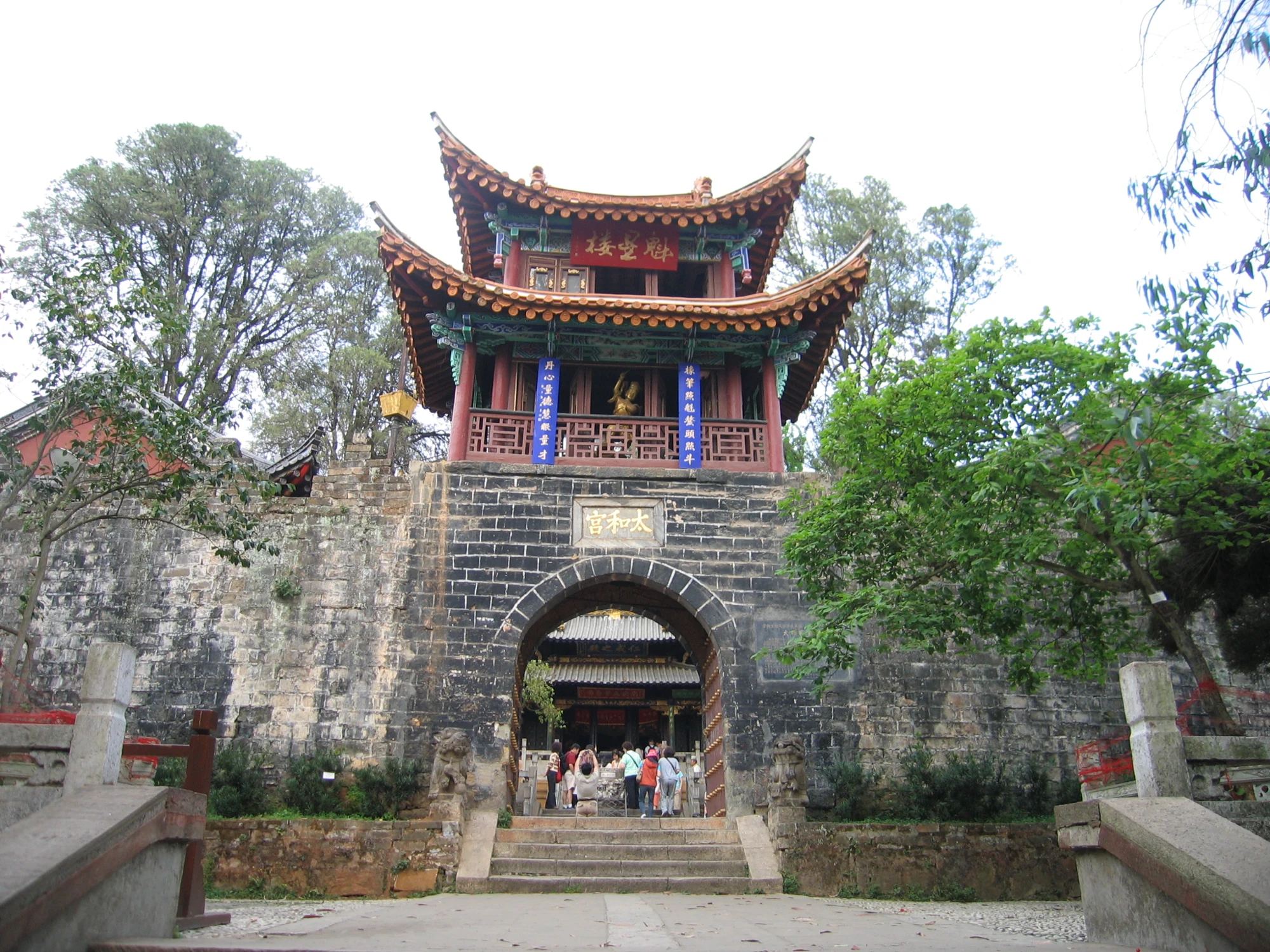
The featured archival photograph shows a gateway in the Golden Temple scenic area, not the bronze hall itself or today’s visitor conditions. Photo: ChinaTravelSavvy.Com – China Travel Guide (Chinatravelsavvy). Original photograph, CC BY-SA 3.0. Resized and converted to WebP; the adapted image is shared under the same license.