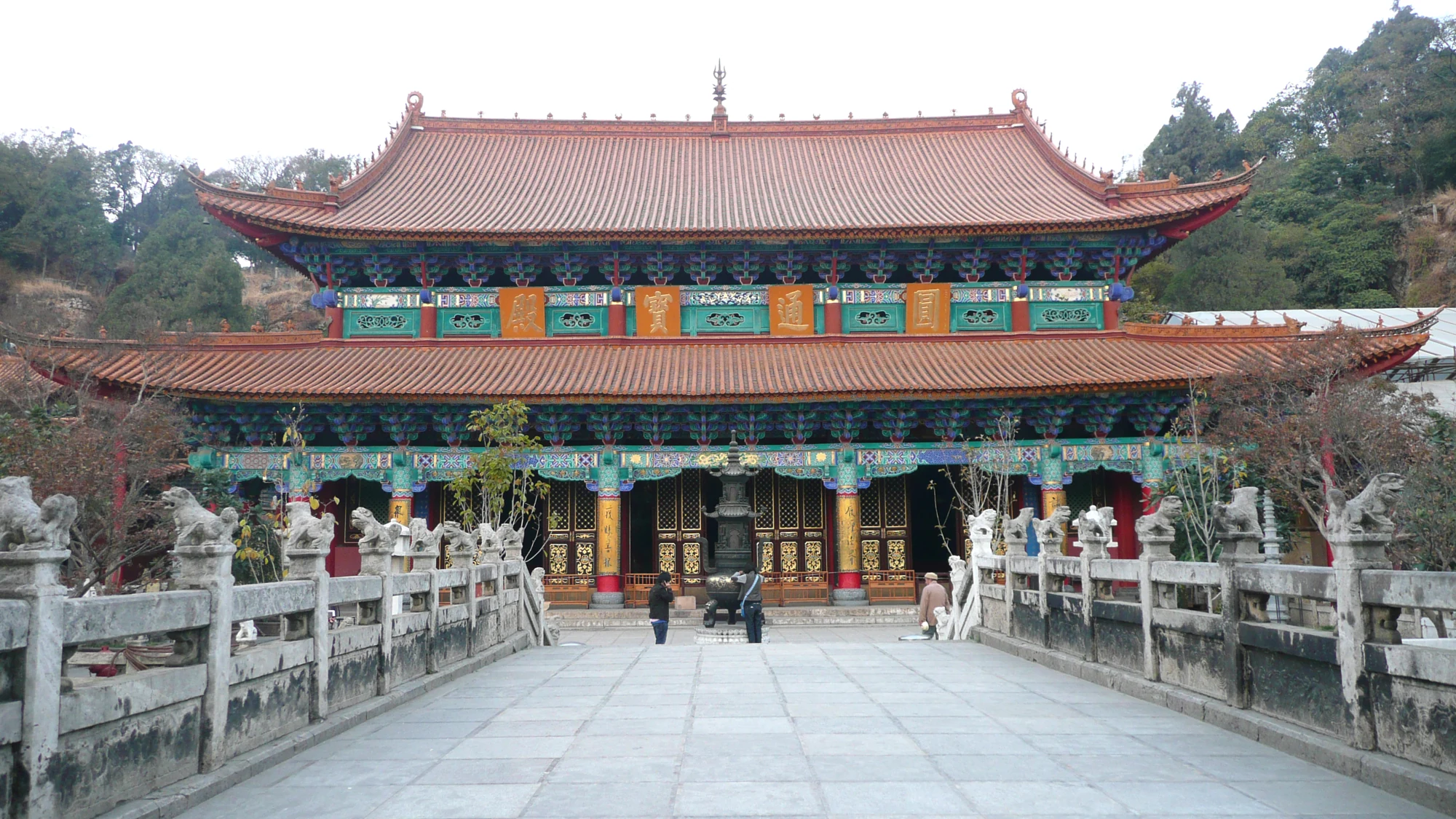
Visit Yuantong Temple for its waterside courtyards, Buddhist architecture and unusual approach down from the entrance towards the main complex. It makes a focused cultural visit in central Kunming, followed by a meal or a selected Green Lake walk. Save the exact name 圆通寺: the temple, Yuantong Mountain and Kunming Zoo are different visits. Plan around the open visitor route and the people worshipping there, rather than a checklist of every hall.
The featured photograph is an archival view of Yuantong Temple. It does not establish today’s access, ceremonies or visitor conditions.
What makes this temple worth your time?
Yuantong combines a working religious setting with a compact architectural visit. Water, bridges, a pavilion and halls give you several things to observe without a long drive outside the city. Choose it if you enjoy looking closely at buildings and how people use them. A visitor interested mainly in animals, a mountain hike or a large botanical garden should choose that activity separately.
A Buddhist account of the temple’s history traces its origins to the Nanzhao period and describes rebuilding in the Yuan dynasty, followed by later repairs and additions. The useful idea is continuity through change: this is not a collection of buildings all erected at one moment. Ask which period a particular feature belongs to instead of assuming that “ancient temple” dates every roof and statue.
The temple and the Yunnan Buddhist Association also identify its religious role in their published joint statement. Approach it as a place of worship with an architectural visitor route. Quiet observation can be rewarding without joining a ceremony or purchasing an offering.
Read the architecture as you follow the open route
Start with the change in level. The approach descends into the complex rather than forming a simple climb from gate to main hall. A firsthand report interviewing Buddhist Association officials describes evidence for this historic downhill layout. Notice the view into the grounds, then consider the return: going down comfortably does not remove the need to come back up.
Look for the Yuantong Shengjing archway / 圆通胜境坊. Its frame helps organise the approach. Stand where permitted and look at the relationship between the gateway, the route ahead and the buildings beyond. Treat carved stone and decorative features as architecture to observe, not surfaces to climb or lean equipment against.
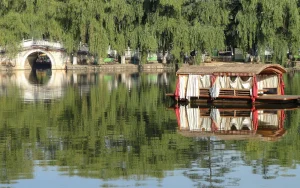
Pause around the pond and Octagonal Pavilion / 八角亭. Look at how the pavilion and bridges break the water into different views. Compare a wider courtyard view with a closer look at rooflines from an unobstructed position. The bridges also carry other visitors and worshippers; move aside before stopping for photographs.
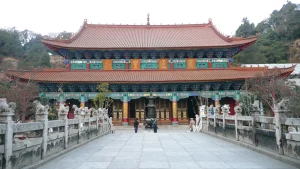
Continue towards Yuantong Hall / 圆通宝殿. Read the current signs and observe from the area open to visitors. Roof forms, painted details and the relationship between hall and water can be appreciated from outside. Indoor access and photography are separate questions, so ask before crossing a threshold with a camera ready.
If the route is open, compare the Copper Buddha Hall / 铜佛殿. Buddhist accounts describe its Thai-style architecture alongside the wider complex’s Chinese and Tibetan Buddhist elements. This offers a useful question for a guide: how do these different traditions appear in the buildings and images? Seeing more than one tradition does not make all rituals or visitor rules identical.
| Feature to notice | A useful observation | Visitor boundary |
|---|---|---|
| Descending approach | How the view changes as you enter | Keep energy for the return and watch footing. |
| Archway and rooflines | How buildings frame the route | Stay on the accepted path. |
| Pond, pavilion and bridges | How water organises the courtyard | Keep crossings clear and children close. |
| Halls and different styles | Compare details with signs or a guide | Enter or photograph only where permitted. |
This is an observation sequence, not a promise that every building will be open. Shorten it around worship, works, weather or your party’s comfort. A historical mention of a rear path or hill connection does not establish a usable visitor exit today.
Find the temple entrance, not a similarly named attraction
Save Kunming Yuantong Temple / 昆明圆通寺 and its entrance on Yuantong Street / 圆通街. Ask your hotel to confirm the pin before setting out. “Yuantong” alone can lead to the zoo or mountain area, and another city may also have a temple with the same name. The precise venue matters more than an approximate neighbourhood label.
If using the metro, compare the current route with the final street walk to the temple entrance. A station name mentioning a nearby district is not evidence that it opens directly into the temple. Use the Kunming metro guide for riding and payment preparation, then save the last walking section separately.
A taxi can reduce the approach, but the driver still needs a permitted stopping point. Show the Chinese name and agree a pickup point if returning by car. With mobility needs, ask about steps between the drop-off and the grounds before choosing the transport. Avoid assuming that a vehicle can wait at the gate.
Admission, foreign visitors and what to check that day
Check the current opening notice, admission charge, document requirements and any areas temporarily closed before making a special journey. Keep your passport available when sightseeing, but do not treat that advice as a claim that this temple always checks it. Available payment methods and any concessions need confirmation at the venue.
Ordinary overseas sightseeing visits have been documented: a reporter accompanying Thai visitors observed tourist groups visiting the temple. That establishes a history of foreign tourism, not a guarantee of access to every hall or a particular ceremony. Follow the same current visitor instructions displayed for your visit.
Compare the whole outing’s cost: admission, travel to and from the temple, a meal and any separately arranged guide. Donations, incense and personal purchases are separate decisions. Do not infer an English tour, meal or ritual service from a basic admission ticket.
Photographs and worship can share the space respectfully
Dress modestly for a religious visit and follow the instructions posted at each area. Keep conversation quiet near worshippers. If a ceremony is taking place, stay back from its working space rather than moving through it for a better angle. You can enjoy the architecture without participating.
Ask before photographing people, monks, altars or the inside of a hall. Permission to photograph the courtyard does not extend automatically to everything within it. If a sign or staff direction prohibits a photograph, put the camera away and observe instead. Avoid flash, posed groups or tripods where these disturb worship or block circulation.
Incense and offerings follow the temple’s own arrangements. Ask staff if you are unsure about a purchase or procedure, and keep any flame within the designated area. A suggestion from an unsolicited seller is not an admission requirement. Do not touch sacred images or turn a prayer area into a backdrop for a staged scene.
Choose a short visit or a slower cultural half-day
For a quick architectural look, concentrate on the open approach, water court and main-hall setting, then leave for a seated break. For a slower visit, allow roughly one to two hours on site to read, observe and ask questions, with transport and food added separately. That is a suggested planning allowance, not an official required duration.
| Your day | Suggested sequence | Where to simplify |
|---|---|---|
| Short cultural stop | Confirmed entrance → selected open courtyard route → meal or rest | Leave extra halls and another attraction optional. |
| Slower city half-day | Temple observation → seated lunch → selected Green Lake area | Shorten the park walk before sacrificing the break. |
| Arrival or departure day | Hotel and luggage arrangements → optional temple visit → transport buffer | Drop sightseeing if the connection becomes uncertain. |
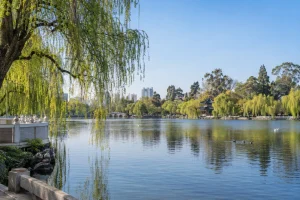
Green Lake / 翠湖 provides a change from religious architecture to open-air city life. Choose a park entrance and a short walk that suits the weather and energy remaining. It does not need to become a complete circuit. Our Kunming parks guide compares that choice with outings farther away.
Keep Stone Forest, a substantial Western Hills outing and the provincial museum for separately considered days. A temple-and-park half-day is valuable precisely because it leaves space to stop. Use the Kunming stay planner when fitting it into a longer visit.
Meals, children and access needs
Arrange lunch around an actual restaurant you can use. Do not make the day dependent on old reports of cheap temple meals, a serving time or unrestricted dining access. If vegetarian food is important, ask about ingredients and preparation. A Buddhist or vegetarian label does not establish halal preparation or suitability for every allergy.
With children, give the visit one simple task, such as spotting the pavilion’s shape or comparing roofs from an allowed area. Keep them beside you around water, steps and worshippers, then change activity before they tire. For a wheelchair, stroller or limited walking tolerance, request a specific answer about slopes, thresholds, surfaces, seating and the usable return route.
Carry a small day bag and shoes with grip. Rain can make outdoor surfaces awkward; the temple is not a fully indoor substitute for a wet-weather day. Leave suitcases at an agreed hotel storage point rather than relying on unconfirmed temple lockers. Keep a separate allowance for the airport or railway transfer.
The zoo, spring flowers and temple are separate decisions
Do not use pictures of Yuantong Mountain’s blossom season as a promise of flowers inside the temple. A 2026 seasonal report places the celebrated blossom outing at Kunming Zoo. Its spring setting is different from the religious visit described here, and bloom timing changes.
If you want both, confirm separate entrances, tickets and travel between them. Do not assume an internal shortcut or a combined ticket from an old proposal. Choose the zoo deliberately for that experience, rather than accidentally extending a short temple visit into a different outing.
Match the visit to the right itinerary
The existing Yuantong Temple and Green Lake cultural day follows the focused city approach. The eight-day classic Yunnan small-group route also lists the temple, but its Kunming programme includes Stone Forest and Green Lake, making that a busier day. Compare their pace before choosing.
Use Plan My Trip to share your date, hotel area, available time, interests and walking needs. A written proposal should identify the actual guiding language, transport, admission and meals included, along with price and availability. A route description alone does not reserve a guide or confirm a departure.
Questions before you go
Can I visit without joining a ritual?
Plan an architectural and cultural visit along the accepted visitor route. Respect any worship in progress and ask staff about access rather than assuming every hall is a sightseeing space.
Is the downhill layout easy for everyone?
No single description settles accessibility. Check both the way in and the return, including thresholds and steps, for the person who needs the shortest or simplest route.
Should I choose a guide or explore independently?
Independent observation suits a short visit. For detailed religious or historical interpretation, request an appropriately informed guide and agree the language, duration and scope before booking.