Jizhao Nunnery (寂照庵) suits a Dali day built around a small Buddhist place, planted courtyards and an uphill approach, with time to return comfortably. Choose it for the temple-and-garden setting. Treat vegetarian lunch as an optional arrangement to confirm separately, and keep any higher Cangshan walk out of the plan until its route is confirmed open.
A sensible outline is to reach the Gantong approach, follow the currently permitted visitor path to Jizhao, spend time in the public courtyards, then return to your agreed collection point. Allow a flexible half-day block from your accommodation, including transport and a possible meal. This is our planning suggestion, not a measured walking time or an opening-hours promise.
What makes Jizhao different
A 2021 report by Yunnan Tourism and Culture Times describes Jizhao on Cangshan, approached uphill from Gantong Temple on a stone path. It records the collaboration between abbess Miaohui and designer Gao Ludong in renovating the nunnery, with potted plants and succulents shaping the courtyard setting. The same report describes visitors eating vegetarian food and the abbess discouraging incense burning. These are useful cultural context, rather than confirmation of today’s meal service or access arrangements.
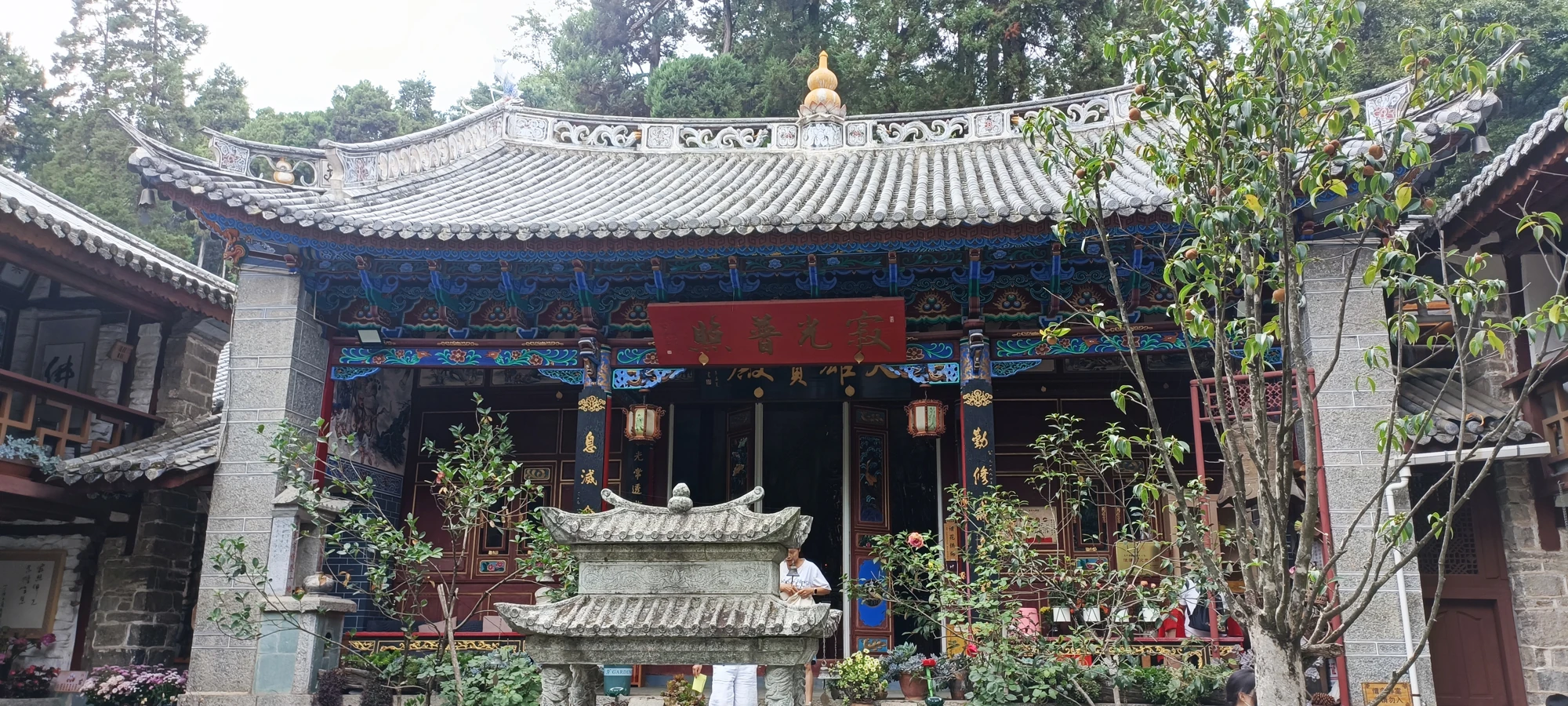
Look at the relationship between the main hall, the pots and the smaller spaces between buildings. A garden visit can be rewarding without seeing a particular flower in bloom. The photograph on this page shows a real planted courtyard and hall in July 2022; it does not promise identical planting, decorations or visitor access on your date.
Remember that a nunnery is a place where Buddhist nuns live and practise. Arrive ready to share space with worshippers and residents. A photograph of an inviting doorway is not an invitation to enter a private room, and a pause in a courtyard does not include a conversation, teaching session or ceremony.
Choose the visit that fits your day
| Choice | What to prioritise | What changes the plan |
|---|---|---|
| Temple and garden | The permitted approach, public courtyards and a return by the agreed route. | Walking comfort, weather and which spaces are open. |
| Visit with possible lunch | The same cultural visit, with extra time if visitor meals are available. | Current serving arrangements, queue and dietary suitability. |
| Jizhao and old town | A mountain-side block followed by a meal or a compact town walk. | The return transfer, remaining energy and luggage collection. |
| A separate Cangshan outing | A specifically chosen cableway or authorised mountain route. | Its own entrance, ticket, operating conditions and return arrangements. |
If the garden is your main interest, avoid making lunch the deadline that drives the whole outing. If the meal matters most, establish whether it is being served before you leave town. If walking is the priority, compare a proper mountain route with this smaller cultural visit instead of treating them as interchangeable experiences.
A practical approach through the Gantong area
Before leaving your hotel
Save both names in Chinese: Jizhao Nunnery, 寂照庵, and Gantong Temple, 感通寺. Explain that your destination is the nunnery and ask where a vehicle can currently drop you for the permitted approach. A broad pin for Cangshan can send you to the wrong starting point. Use your actual hotel address when discussing transport; old-town accommodation and a distant lakeside hotel require different connections.
Ask about the uphill section and the descent in practical terms. Useful questions are whether there are steps, whether surfaces are wet, where you can rest and whether the route suits the least confident walker. Do not assume a vehicle can take you to the courtyard door or that an advertised short walk is step-free.
At the approach
Check the visitor signs and any current instructions before continuing. Confirm the return meeting point while everyone is together. Keep the driver’s contact and a screenshot of the location, because “near Gantong” may not identify the same stopping place to both parties. Agree what happens if you return earlier or a meal queue delays you.
Use the open signed approach at a pace that allows a comfortable descent. Stop to let faster walkers pass rather than spreading across a narrow section. If conditions or the gradient are unsuitable, turn back while the group still has energy; a reserved afternoon in town makes that decision easier.
Inside the public visitor areas
Begin with a quiet look around before choosing where to sit or photograph. Keep entrances and passageways clear. Ask before photographing people, entering halls or using a tripod, and follow any restrictions on images of religious objects. Leave plants, pots and furniture where they are.
Do not plan on every garden corner being available. A smaller visit can still have a clear focus: the hall’s exterior, the arrangement of plants and a pause in a permitted seating area. Leave when the visit feels complete rather than waiting for a crowded viewpoint to become an empty private set.
Do not assume there is an onward walking loop
The lower nunnery visit and a walk higher toward Qingbixi are different decisions. On 2 May 2026, Yangtse Evening Post/Ziniu News reporter Guo Yipeng checked a closure notice with the Cangshan tourism operator. The report states that the Gantong–Qingbixi hiking path had closed from 30 April after signs of black-bear activity, with reopening to be announced separately. We have not verified a subsequent reopening notice. Do not use an older itinerary as evidence that this connection is available.
Plan to return by the permitted approach. Do not turn the outing into a walk through to Qingbixi or the Jade Belt Road without a current, route-specific opening confirmation from the responsible operator. A ticket for a cableway does not make an unrelated path available, and following another visitor past a barrier is not an alternative access arrangement.
Dali’s government notice dated 24 August 2025 prohibits entry to the reserve’s core zone, tourism in its buffer zone, and disregard of signs or management in unopened areas. For this visit, the practical implication is simple: use authorised visitor areas and follow current instructions. Keep informal forest shortcuts, stream routes and mushroom collecting out of the day.
If you also want a cableway experience, use the Cangshan cable-car comparison to decide which outing you mean. Give that activity its own operating and timing checks. A lower garden visit should not become the fallback entrance to a higher route that is closed.
Vegetarian lunch: arrange it as an option
Jizhao’s association with vegetarian food is well established, but a historical meal account does not establish a current price, serving time, free-meal date or reservation system. Confirm whether visitors can eat on your date, where to ask, how payment works and whether you need to join a queue. Carry a suitable snack and retain a town lunch option so an unavailable meal does not leave the group hungry.
For an allergy or strict dietary requirement, ask about the actual ingredients and shared preparation. Vegetarian food is not automatically suitable for every allergy, and an English explanation or separate dish should not be assumed. If you cannot obtain a clear answer, choose a meal you can assess elsewhere and keep Jizhao as the cultural visit.
Follow the host’s serving and clearing instructions and take modest portions. Avoid food waste as a matter of respect, without repeating social-media stories about punishments as visitor policy. A lunch stop is not a buffet entitlement, a guaranteed menu or a Vero Trip inclusion unless your accepted written proposal specifically identifies it.
Costs and arrangements to separate
| Item | What to establish | Keep separate from |
|---|---|---|
| Road transport | Pickup address, permitted drop-off, waiting or return collection and total fare. | Any walking assistance or guiding inside the site. |
| Visitor access | Current route, notices and any applicable entry arrangement. | A ticket for a different Cangshan attraction. |
| Food or tea | Availability, payment, ingredients and the process visitors should follow. | A reservation or meal inclusion you have not received. |
| Extra mountain activity | The named route, operating access and return plan. | The nunnery visit and its lower approach. |
When comparing a quoted day, ask for each relevant service to be stated clearly. A description that mentions a temple, a meal and Cangshan does not explain which admissions, transport or guiding hours it includes. Your hotel, group size and walking needs should be settled before a total price is agreed.
Walking comfort and the rest of Dali
Wear shoes with grip, carry water and rain protection, and keep your hands available on uneven sections. Travel light; leave large luggage at accommodation with storage agreed in advance. If anyone needs step-free access or has difficulty descending, get an answer for this particular approach before deciding to go.
Allow weather to change the choice. Wet stone, poor visibility or instructions to stop are reasons to shorten or cancel the walk, even if the courtyard photographs look inviting. Avoid arriving so late that you are relying on a rushed descent. Keep enough time for the return drive and any onward transport that has a fixed departure.
A compact old-town walk can follow if the group is comfortable. Another option is to keep a more substantial cultural visit for a different day; compare the walking choices in the Three Pagodas and Chongsheng Temple guide. Trying to add a complete lake circuit after the nunnery changes a gentle outing into a long transport day.
Questions before you go
Do I need a cable-car ticket for Jizhao?
The historical Gantong approach is described as a walk. Do not buy a cable-car product solely because a map places it near the nunnery. Confirm the permitted approach for your date and buy any separate mountain ride only for the activity you actually choose.
Can I go just for the garden without practising Buddhism?
Approach the public visitor areas respectfully, following the same rules around quiet, photography and private spaces. A cultural interest does not require participation in a ceremony, and donations or purchases should not be confused with booking a service.
Is the vegetarian meal guaranteed?
No. Check availability and arrangements separately, and have another lunch plan. We have not published an unverified current price or serving time.
Can I continue uphill after the visit?
Do not build that into this route. The dated 2026 path closure makes old through-walking advice unreliable, and a later reopening has not been established here. Use current instructions for the exact path; return by the permitted approach if there is no clear confirmation.
Can Vero Trip include Jizhao in a Dali stay?
Send your date, hotel area, party size, walking limits and whether lunch is a priority through Plan My Trip. Price on request. The written proposal should identify any confirmed vehicle, guiding language, admission and meal arrangement. A suggested stop does not itself confirm those services.
Sources and image
Reviewed on 31 October 2026: Yunnan Tourism and Culture Times: Jizhao’s setting and renovation, 24 November 2021; Yangtse Evening Post/Ziniu News: operator-confirmed path closure, 2 May 2026; and Dali municipal government’s Cangshan management notice, 24 August 2025. These dated sources do not confirm today’s opening, meal service or a later path reopening.
Jizhao Nunnery’s main hall and planted courtyard, photographed on 25 July 2022. Photo: Kcx36, original file, CC BY-SA 4.0. Proportionally resized and converted to WebP; this adapted image is shared under the same license. An archival courtyard view, not a current access or flower display guarantee, and not a Vero Trip customer or tour record.
Related Journeys to Compare
These existing routes offer starting points for the region or travel interests discussed above. Read the full daily itinerary to see what is included. A visit described in this guide, a specialist session or an international border crossing is added only when confirmed in your own programme.