Updated 31 October 2026.
Give Dali’s Three Pagodas and Chongsheng Temple a dedicated half-day if you want both the landmark towers and a considered temple visit. Choose a shorter pagoda-and-pond outing if walking is the main constraint. The important decision is how far into the wider complex to continue, with enough energy and time to return. A distant photograph, a walk around the towers and an exploration of the temple halls are three different plans.
The attraction is northwest of Dali Old Town. Stay on the open visitor routes and check the day’s entry arrangements before travelling. This guide suggests a pace and explains what to look for; it does not promise every hall, vehicle stop or viewing area will be available.
Read the skyline: three towers from different periods
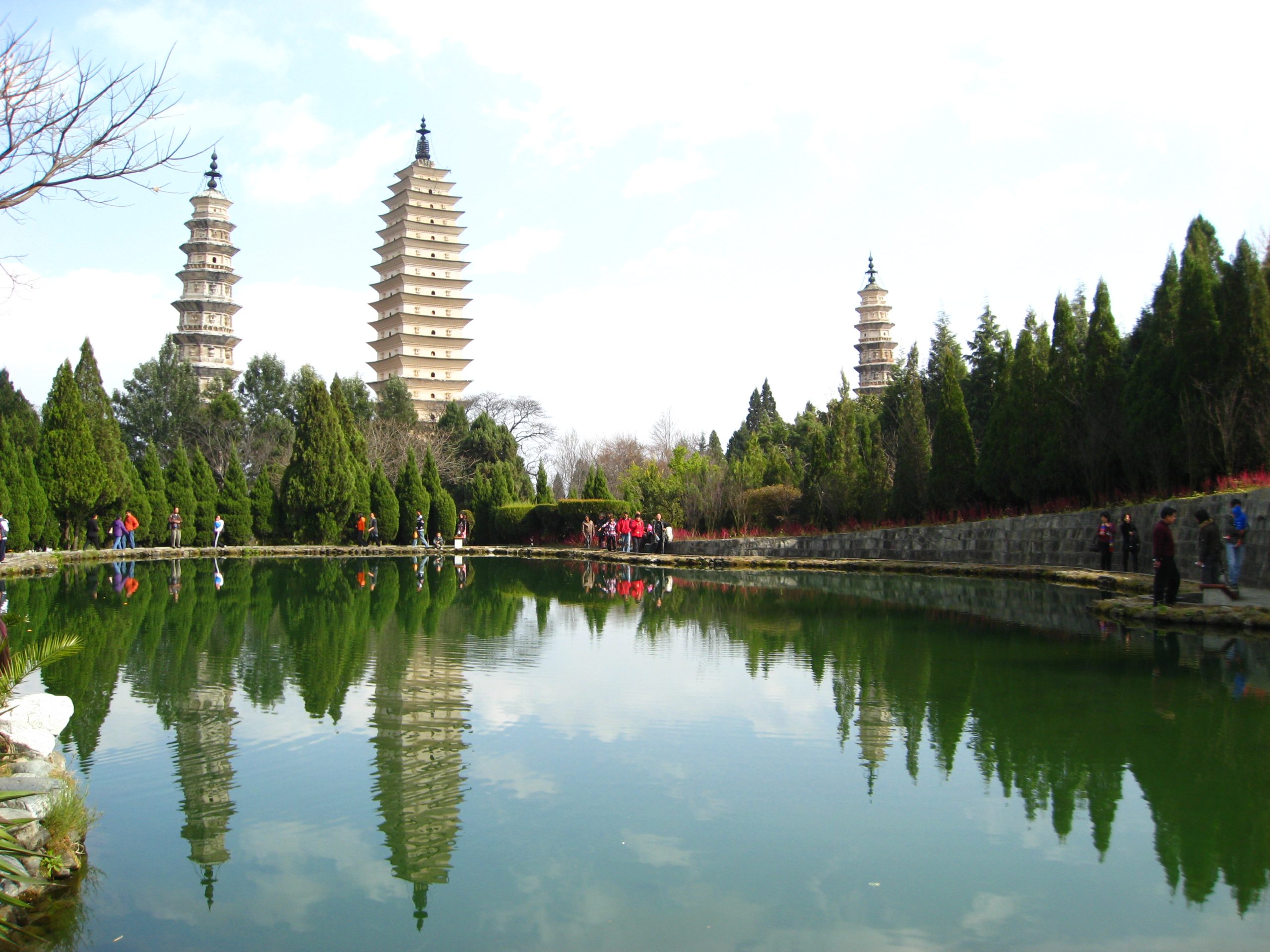
The central tower is Qianxun Pagoda (千寻塔). China Daily’s architectural account dates it to 833–840, during the Nanzhao kingdom: a brick structure with a square plan and 16 storeys. The two smaller towers belong to the later Dali kingdom period, dated 1108–1172, and have octagonal plans and 10 storeys. Their differing forms make a better starting point than treating the group as three identical monuments. See the architectural description of Qianxun and its neighbours.
From a permitted viewpoint, compare the central tower’s straight edges and closely spaced eaves with the smaller towers’ changing faces. With children, ask which silhouette they would recognise in a drawing. Observe from outside the barriers; the visit should not depend on entering or climbing a pagoda.
The temple is a different historical layer
The ancient towers survived the loss of the former temple. The operator’s history of destruction and reconstruction records completion of the large Chongsheng Temple rebuilding project in April 2005. It also describes the recast Nanzhao Jianji Bell, the recreated Rain Copper Guanyin and the reflection pool. The halls are meaningful parts of the visit, but the whole visible ensemble is not an untouched medieval monastery.
On the reconstructed temple axis, names to recognise include the mountain gate, Daxiong Hall (大雄宝殿), Acuoye Guanyin Pavilion (阿嵯耶观音阁) and Wanghai Tower (望海楼). Use the entrance map to select the buildings that interest you. The operator describes a terraced layout: continuing through successive halls means a different walking commitment from staying near the pagodas.
A useful visit has one or two questions to explore: how the pagodas’ architecture differs, how the rebuilt halls frame the landscape, or how Guanyin is represented. Ask an arranged guide to focus on those themes rather than rushing through a list of buildings. Follow current signs for interiors and photography.
Choose the amount of walking before the route
| Visit style | Make these the priorities | Leave flexible |
|---|---|---|
| Pagodas and a reflection stop | Tower forms, their setting and one open waterside viewpoint | Additional halls and time waiting for photographs |
| Pagodas plus selected temple halls | The historic monuments, then a chosen section of the reconstructed axis | The furthest buildings if the group tires |
| Architecture and photography | Fewer viewpoints, time to look closely and a weather alternative | A perfectly still reflection or clear mountain backdrop |
| Limited walking | A route agreed around actual distances, steps and rest opportunities | Any section whose access cannot be confirmed |
Our planning suggestion is a half-day block including the approach, entry process, sightseeing, breaks and return to your next meeting point. This is a time allowance, not a measured walking duration. A short visit can use less time; a group interested in many halls may want longer. Keep a fixed train or flight connection outside the sightseeing margin.
Choose a turnaround point before starting the longer section. Check where everyone will meet if one person returns early. Carry water, sun protection, a light layer and shoes with grip. Food and rest belong in the plan even when they are not included services.
Internal sightseeing vehicles: check the stops and remaining walk
The operator’s sightseeing-vehicle information, published in 2020, describes links between the entrance, temple gate, Daxiong Hall and Three Pagodas platform, with walking between some stops. Treat it as an explanation of the transport concept, and confirm the current route, direction and boarding arrangements at the site.
Before buying an extra ticket, ask staff to mark the proposed stops and the sections you must walk. Check whether the ticket covers the return you need, whether boarding requires steps, and how to get back if the service stops before your visit ends. A vehicle can reduce distance without creating a fully step-free temple route. Describe mobility needs precisely instead of accepting “easy” as an access assessment.
Reflection photographs without spending the day waiting
The operator lists Juying Pool (聚影池) among its visitor features. Decide whether a reflection stop fits the route you have chosen and ask which viewing areas are open. A still surface, uncluttered foreground and visible backdrop do not always occur together. If wind disturbs the water, photograph the towers and trees directly, or concentrate on their different profiles.
Set a limit on waiting that the whole group accepts. Keep pond edges, paths and worship spaces clear; do not cross a barrier or stand on fragile landscaping for a different angle. An old photograph cannot establish today’s water, weather or crowd conditions. If photography matters more than a comprehensive temple walk, choose fewer halls and retain time to pause.
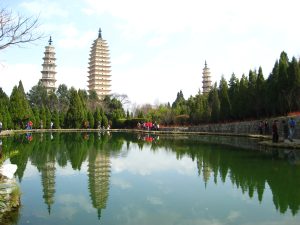
Featured image: the Three Pagodas and a reflecting pond, photographed on 27 January 2009 by JLDragon. Original photograph and public-domain release. This archival image does not show today’s conditions or a Vero Trip group.
Admission, passports and the full cost of the outing
Check the attraction’s official website and current notices or visitor centre for your date. Before paying, confirm the named admission product, entry point, hours and last entry, and whether the areas you want are included. This guide does not quote a current ticket price or a passport discount.
For an overseas passport, ask which official booking or ticket-counter process accepts your document and what to bring. Use the same traveller details on the booking and identity document. An online form requiring a Chinese identity number is a reason to ask for the official alternative, rather than enter another person’s details. For a child or older traveller, confirm eligibility and documentary requirements before assuming a concession applies.
| Cost component | Establish before booking | Keep in your budget |
|---|---|---|
| Attraction admission | Date, accepted document, included areas and change conditions | The confirmed total for your party |
| Internal vehicle | Current stops, direction and usable return | A separate extra unless explicitly bundled |
| Guide or interpretation | Language, duration, meeting point and focus | Admission and vehicle costs unless listed together |
| Hotel transfers and lunch | Exact addresses, pickup arrangement and meal plan | Return travel, food and any luggage arrangements |
Save the booking confirmation and agreed meeting details where you can access them without relying on a fresh mobile connection. Check cancellation conditions separately for attraction entry, a private vehicle and any guiding; one booking’s terms do not automatically cover the others.
Getting there and building a comfortable Dali day
Show your driver 崇圣寺三塔文化旅游区 and the agreed visitor-entrance pin. Dali Old Town, Xiaguan and hotels elsewhere around Erhai are different starting points. Check the approach from your actual address, then agree a return location that both parties can find. A general “Dali pickup” description is insufficient for planning the day.
If arriving by train, decide whether to drop luggage at your hotel first. Going directly to the attraction needs a specific bag plan; a vehicle booking alone does not establish luggage storage or supervision. If using public transport, check the current stop, service and return locally. Avoid relying on an old route number or timetable for a departure-day connection.
A practical sequence is the selected pagoda-and-temple visit, lunch and a seated break, then one compact old-town walk. The existing Three Pagodas and Old Town cultural day follows this pattern as a suggested enquiry route. Its written proposal needs to identify any guide, transport, admission and meals you actually request.
Use the Dali stay planner to balance your remaining days. A Cangshan cableway outing has its own weather and walking decisions, while an Erhai sightseeing-bus day needs a shore and return plan. Combining all three into one day leaves little room for any of them.
Questions before you choose
Are the pagodas and temple equally old?
No. The towers belong to the Nanzhao and Dali kingdom periods; the extensive temple reconstruction was completed in 2005. Appreciate the surviving monuments and the rebuilt religious setting as different layers.
Can I have a worthwhile visit without reaching every hall?
Yes. Prioritise the pagodas and selected open viewpoints, then add a manageable temple section if energy allows. Confirm the route’s access rather than buying extras first.
Is a Three Pagodas visit included in every Dali itinerary?
No. It should be named. The existing eight-day Yunnan private itinerary lists the Three Pagodas and Dali Ancient Town on day 3. Compare the full circuit and the services in your dated proposal.
What should I send Vero Trip?
Share your dates, party size, hotel address, comfortable walking level and whether your priority is history, photography or a light cultural day. Include any onward connection. Request a Dali plan with the route and each service stated in writing; prices and arrangements depend on that confirmed proposal.