Choose Ximatan for the higher mountain visitor area, Gantong for a lower Qingbixi-side outing, or Zhonghe for a separately planned visit around its mountain approach. The useful comparison is the elevation, walking and descent you want—not which ticket promises the most scenery. Pick one main route, check its operating sections on the day and leave room for weather changes. A cable-car ride reduces the climb but still leaves a mountain visit to plan.
Three names to distinguish before booking
Save the names Ximatan / 洗马潭索道, Gantong / 感通索道 and Zhonghe / 中和索道. They are separate approaches to Cangshan. A general booking labelled “Cangshan” needs more detail: which lower station, which sections, where you walk and how you descend.
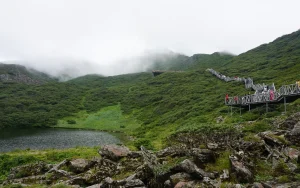
The Dali Tourism Group’s operator introduction describes Ximatan’s lower, middle and upper stations, with the high visitor area around 3,900 metres. The lower departure is west of the Tianlong Babu film-city area, while the middle station serves the Qilongnüchi area. Reaching the middle section and reaching the upper area are different outings.
For Gantong, the operator’s technical description published by Dali city government places the lower station beside Gantong Temple and the upper station in the Qingbixi area, at about 2,550 metres. That difference in height helps explain why it should be compared separately from a full Ximatan ascent.
| Route | Best reason to consider it | The important limitation |
|---|---|---|
| Ximatan / 洗马潭 | You specifically want the higher mountain landscape and can plan for the elevation. | Confirm whether the upper section operates, then assess the walking beyond the station. |
| Gantong / 感通 | You prefer the lower Qingbixi-side setting and a selected mountain walk. | Lower elevation still leaves steps, paths and a return journey to assess. |
| Zhonghe / 中和 | Your visit is centred on the Zhonghe area or a confirmed walking route using this approach. | Verify its operation, actual ride arrangement, open path and descent before choosing it. |
Ximatan: make the upper area a deliberate choice
Ximatan makes sense when seeing the higher visitor landscape is the main purpose of the day. Ask whether your ticket covers the full route or a lower section, and which area you can reach under the day’s operating conditions. A 26 October 2026 report using material from the ropeway operator confirms the three-station arrangement and the height difference; it is not a guarantee that every section will run on your date.
Plan the walk after leaving the cabin as carefully as the ride. Ask staff about the currently open boardwalks, steps, turning points and return access. You do not have to complete every viewing section to have a worthwhile visit. Agree in advance that members of your party can shorten the walk rather than making the farthest viewpoint compulsory.
Upper-station elevation is not a fitness badge. The CDC’s altitude guidance explains that altitude illness can affect travellers and recommends gradual adjustment. Seek medical advice beforehand if your health or itinerary raises concerns. If symptoms develop, stop ascending and seek help; worsening symptoms while resting call for descent. Do not rely on an assumed oxygen service to make a high visit suitable.
Gantong: choose a walking plan, not just a lower ticket
Gantong is useful to compare when your interest is a lower mountain setting rather than the highest accessible visitor area. Decide how much walking your group actually wants. A short, staff-confirmed out-and-back route with a familiar descent can suit a modest outing better than an ambitious crossing between cable cars.
Ask which Qingbixi-side paths are open and where the walk turns around. Include steps, time for rests and the walk back to the station. A wide path name such as Jade Belt Road does not tell you the length, surfaces or exit of your chosen section.
Gantong Temple and other foothill interests may be relevant to the wider visit, but they need their own time and access checks. Do not assume a cable-car ticket includes temple activities, a meal or transport between different entrances. A simple mountain outing followed by lunch in town may be the more comfortable plan.
Zhonghe: confirm the approach and the finish
Zhonghe is a distinct option to investigate for the Zhonghe area. Choose it around a named visit and an actual descent plan rather than treating it as a cheaper version of the Ximatan upper route. Ask the operator about current boarding arrangements, the ride format, the walk from its upper access and the service you will use to return.
This is particularly important if one traveller is uncomfortable with exposed heights or has difficulty boarding. Obtain details for the actual equipment and day; a photograph from another route is not enough to judge suitability. If the walk is the main interest, establish the route first and then select the access that supports it.
Keep walks inside the open visitor routes
Cangshan’s managed visitor paths should be distinguished from unapproved mountain routes. A January 2026 report quoting local enforcement staff directs visitors toward established routes and open areas, following enforcement against entry to closed sections. Stay with the current signs and staff instructions rather than a social-media track that leads past a barrier.
A ride up one cable car and down another can involve much more than buying two tickets. Before planning a traverse, confirm the complete connecting path, its current access, walking distance, last usable descent and vehicle pickup. If any part remains unclear, choose a shorter return by the same operating route. Do not attempt an off-trail shortcut to recover time.
Tickets, costs and weather: compare the whole outing
Compare the current total for the same product. A mountain-admission component, a cable-car section and a ground transfer may be sold separately or combined. No fixed fare is quoted here: the product must match the route and sections you intend to use. Ask how overseas passport details are entered and what document is needed to validate your booking.
Check operation again before leaving the hotel. Weather can affect a single section as well as a whole service, and a forecast of clear skies in Dali does not settle mountain wind or visibility. The government-published Gantong document specifically describes weather-related interruption. Ask about the conditions attached to your actual ticket instead of assuming a particular refund, replacement outing or free vehicle.
| Before paying | Question to settle | What it changes |
|---|---|---|
| Named route and sections | Does this cover the exact ascent and descent we want? | Which station you reach and where the walk starts |
| Open visitor paths | Which route is currently open, and where will we turn around? | Distance, steps, time and who the walk suits |
| Final descent | What time must we be back at the correct station? | Your latest turnaround and the space for rests |
| Weather disruption | What do the terms say if a booked section cannot operate? | Whether to accept another route, postpone or follow a different plan |
| Transfers and access | Where are we dropped off and collected, and what boarding help is available? | Walking before the ride and the handover after it |
Build a realistic mountain day from Dali
For the higher landscape: keep the full Ximatan visit as the day’s main activity. Start with the operation check, travel to the named lower station, then allow for ticket validation, queues, riding and an adjustable upper walk. Leave a generous return margin. A relaxed meal afterward is a better companion than a fixed afternoon appointment far away.
For a modest mountain walk: select an operating access and a short open route, agree the turning point and return through the same familiar station. Use the remaining time for a meal or an old-town visit if the party still wants one. The amount of walking should follow the group’s comfort rather than the maximum time on a ticket.
If the preferred section is unavailable: first decide whether an available lower route offers something your group actually wants. You can also keep the day in Dali and move the mountain to another day when the booking terms and itinerary permit it. Avoid waiting indefinitely for a high section with an onward train to catch.
Put a full Erhai outing on a separate day. A high ascent, a long mountain traverse and a complete lake circuit compete for the same time and energy. Our Dali travel guide helps organise the stay, while the Erhai sightseeing-bus guide covers the separate lake-transport decision.
Clothing, food, luggage and the return to your hotel
Carry warm layers, a wind-resistant outer layer, weather protection and shoes with grip appropriate to the selected walk. Check the mountain forecast, not only the old-town temperature. Keep the daypack light, with water, a modest snack, essential documents and enough phone power to contact your pickup.
Eat before the outing and leave room for a proper meal afterward. Do not base a long walk on an assumed café, temple lunch or shop being open at precisely the right point. Ask about toilet locations and the actual return walk before heading away from a station.
Leave suitcases at an agreed hotel or storage point. If you are travelling onward after checkout, include collection and repacking in the schedule. Save the lower station and pickup point in Chinese; a vehicle waiting at another cable-car entrance can create a substantial detour.
For limited mobility or a child who may tire, ask about station access, boarding, steps and the shortest enjoyable visitor route. Staying near a mountain entrance does not establish step-free rooms or easy carriage boarding. Choose accommodation around the whole Dali stay and confirm the practical access you need.
Questions before you choose
Does a Cangshan ticket include all three cable cars?
Ask for the named services and sections in your purchase. Do not infer several rides or ground connections from a general mountain picture or package title.
Is a middle-station ticket the same as visiting Ximatan’s upper area?
No. Check the final station and included sections. Make sure the available journey matches the landscape and elevation you intend to visit before paying.
Can I book a guided Jade Belt walk instead of a high ascent?
The existing Cangshan Jade Belt Trail day itinerary is a walking option rather than a summit climb. Confirm the currently open section, its length, cableway access, descent and guiding arrangements in the written proposal. The route may need shortening; it is not an automatic substitute for any cancelled cable-car ticket.
Where should I compare other walking options?
Read hiking choices in Yunnan to distinguish a short visitor walk from a longer mountain day. For a Cangshan plan, send Vero Trip your Dali dates, preferred walking time, experience at elevation, hotel area and onward travel. State whether the priority is a high viewpoint, a forest-side walk or an unhurried mountain outing so the proposed access and services fit that choice.