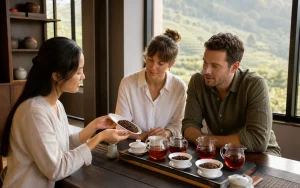
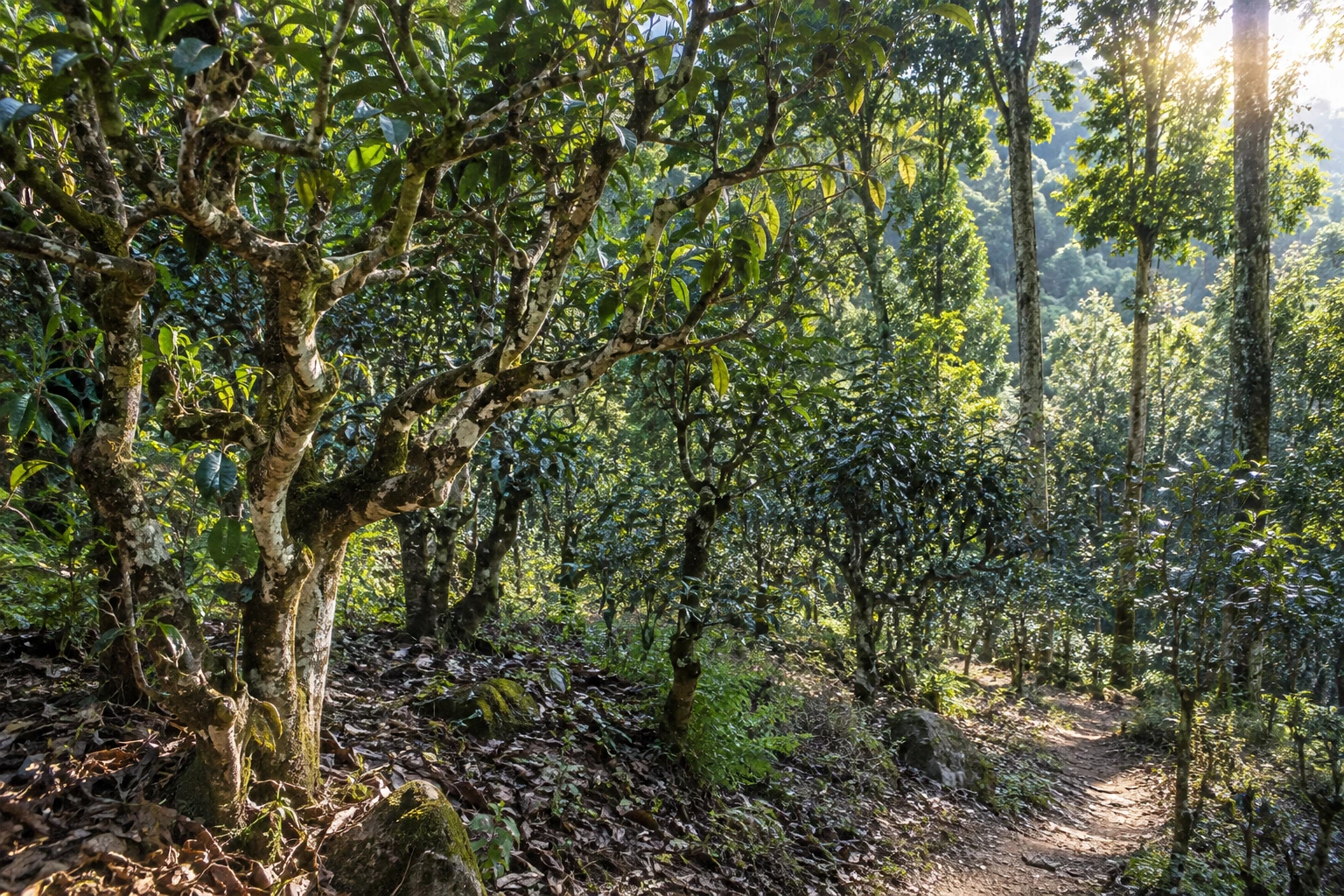
Updated 7 October 2026. Cover and tea-travel scenes are illustrations.
Visiting Jingmai’s tea forests is most rewarding when you book a walk and a tasting as two distinct experiences. A public forest path does not give permission to pick leaves, and a tea shop visit does not automatically include a workshop. Decide what you want to learn before choosing a host. You can enjoy the landscape outside harvest season if you are happy to taste finished tea and discuss how it is made.
Choose an experience you will actually enjoy
| Your priority | Ask for | Do not assume |
|---|---|---|
| Understand the landscape | A guided walk on an established, open tea-forest path | Access to any grove visible from the road |
| Taste and compare | Named samples, brewing explanation and your preferred language | Every sample is from the same village or ancient tree |
| Try making tea | A specific supervised activity and its duration | A full production process from leaf to finished cake in one short visit |
| Meet a producer | An agreed appointment and permission to photograph | A household or working workshop accepts unannounced visitors |
Keep the first visit simple: one forest outing, a meal and one tea conversation can fill a satisfying day. Several brief shop stops often leave less time to understand the tea. When booking, ask whether the host will explain the actual leaf being served or give a general introduction. Both can be useful, but they meet different expectations.
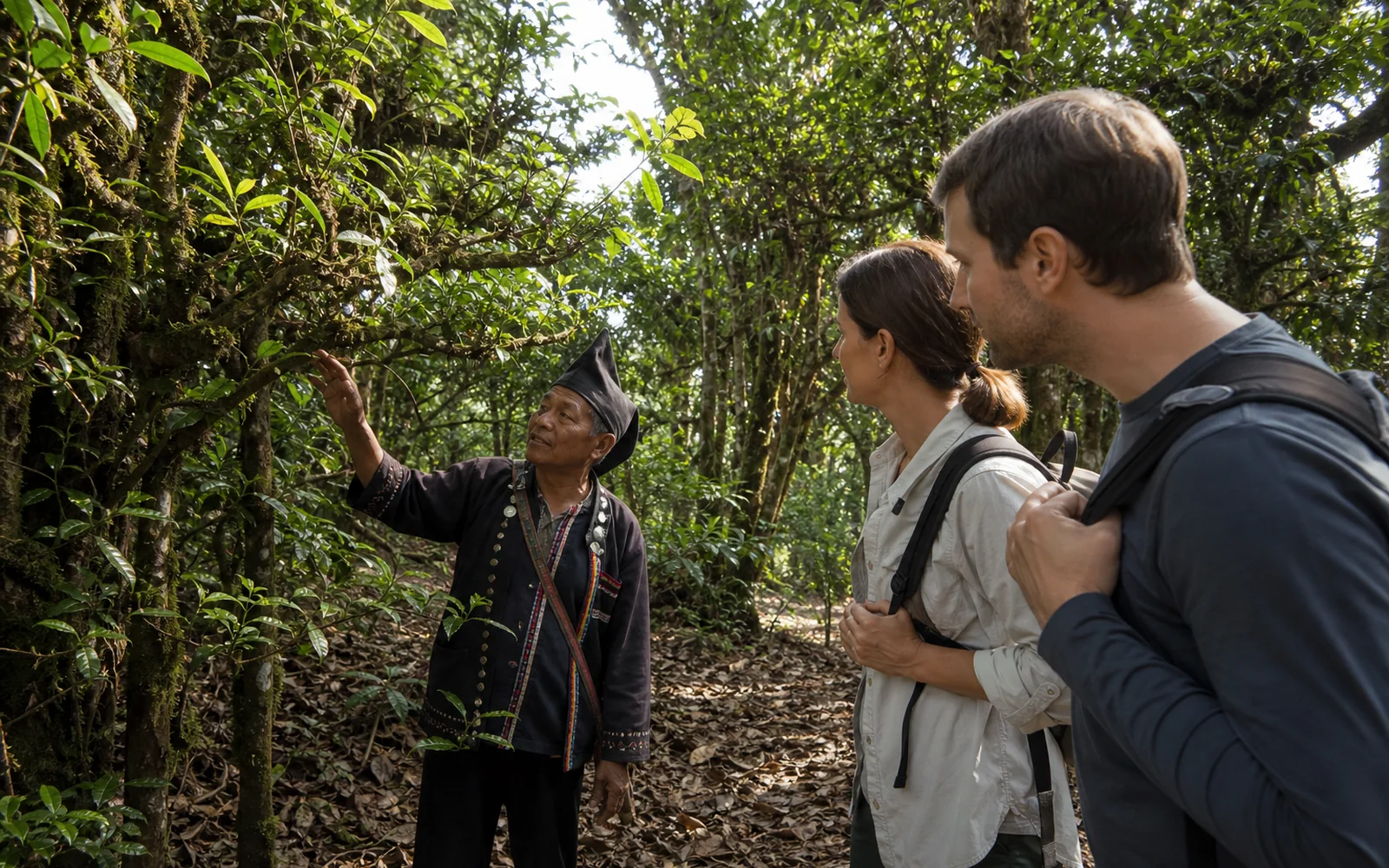
What makes a forest visit different from a tea garden photo stop?
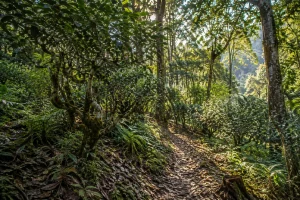
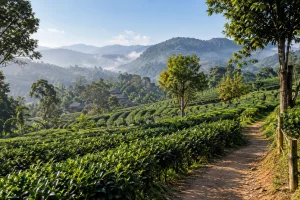
Jingmai’s heritage landscape combines tea cultivation with surrounding forest and villages. Look at how the plants, shade and paths relate to each other. You do not need to touch an old trunk or step away from a visitor path to understand that relationship. A guide can help identify what you are looking at and where visitors may walk.
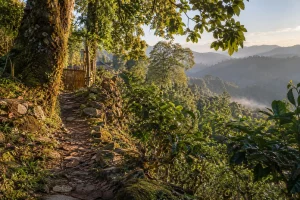
Wear footwear with grip and carry a rain layer. Ask the guide about steps, slippery sections, toilets and a shorter turning point before setting out. A “gentle walk” can still mean uneven surfaces. If someone in your party cannot manage those conditions, request a village tea session with easy vehicle access and a short public viewpoint visit instead.
Picking, processing and cake pressing: confirm the exact activity
| Activity | What controls it | Useful alternative |
|---|---|---|
| Leaf picking | Season, suitable leaf, host permission and permitted garden | Observe plants and compare prepared leaf samples |
| Live processing | The producer’s actual work schedule | A clear explanation using equipment and finished tea |
| Tea-cake pressing | Booked materials, supervision and time for the result | A tasting of the stages or products the host can show |
| Private-home tasting | A willing host and agreed visit time | An established tea room with the right language support |
Do not pick leaves from heritage groves on your own. A host may offer a separate permitted garden activity; ask where it takes place and what is allowed. If you are promised hands-on work, ask how long it lasts, whether it is safe for children, and whether any take-home item can be packed immediately. Agricultural work cannot be made available simply by choosing a date from a tourism calendar.
Questions that make a tasting more useful
Ask for the village or area, harvest season, processing style and storage information of each sample. Write down what you enjoyed and the brewing method used. If comparing tea, ask whether differences in water, leaf quantity or infusion time also changed. Treat descriptions as a starting point for conversation, not a guaranteed flavor for an entire mountain.
Buying is optional. A pleasant visit does not oblige you to purchase an expensive cake, and a famous place name is not independent authentication. Request a clear label, weight, price and receipt for anything you choose. If you need commercial sourcing or laboratory assessment, explain that separately; an introductory visitor tour is not a quality-certification service.
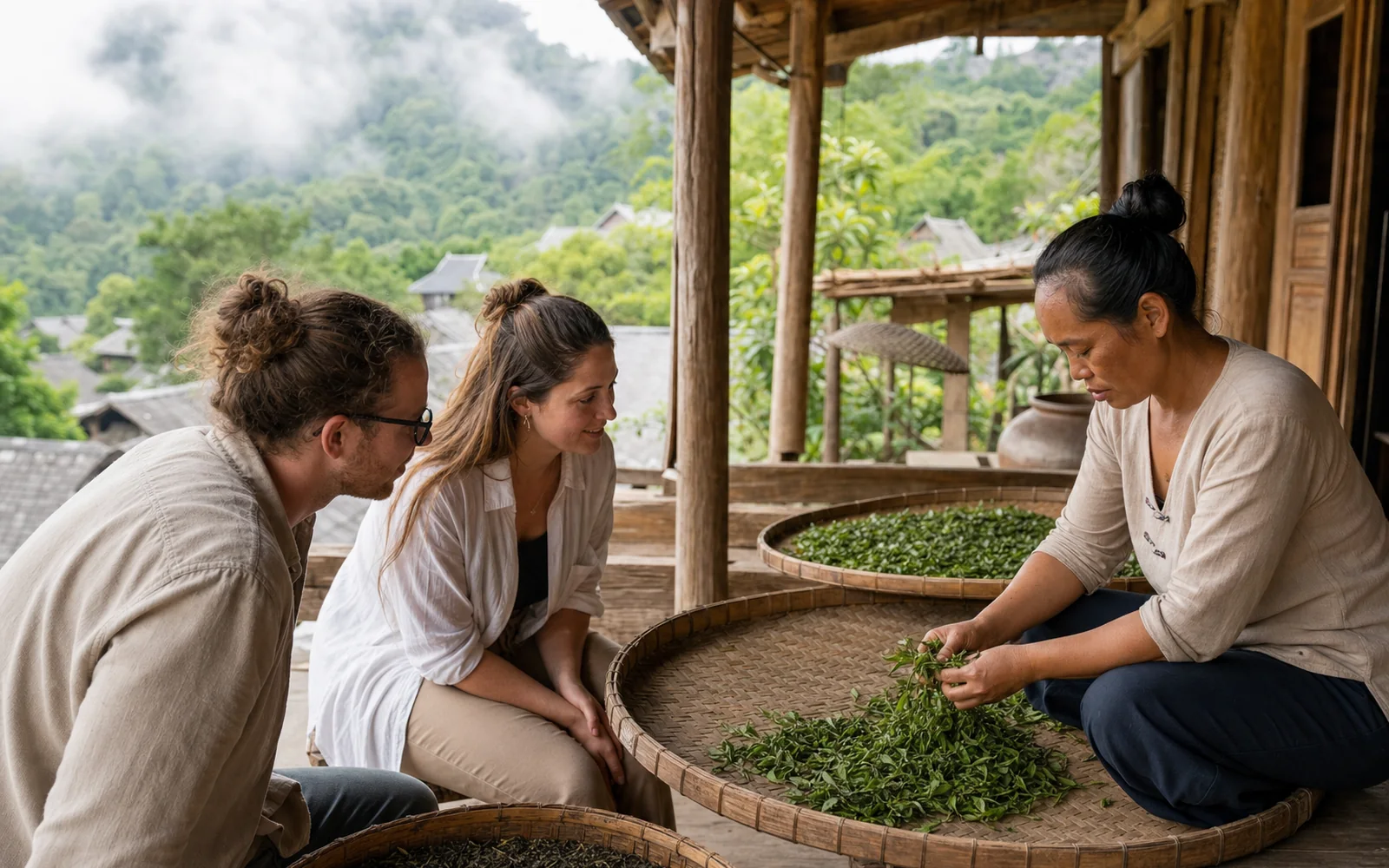
Village etiquette and photography
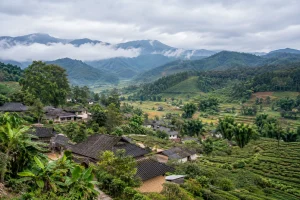
Wengji and Nuogan are living villages, not sets. Keep cameras away from private interiors unless invited, ask before portraits and let residents pass on narrow lanes. Ritual places and ceremonies follow local rules; do not assume a performance will be arranged for visitors. Pay an agreed fee for a hosted activity and clarify whether tea purchases are separate.
For photography, use permitted ground viewpoints. The heritage authority’s April 2026 notice applies year-round controls across the heritage area and prohibits unauthorized drone flights. A travel booking is not flight permission. Follow the official drone notice and any current site instructions.
Arrange the return before you start
Confirm the village pickup point, driver contact, luggage arrangements and where the day ends. Do not assume an app will provide a car between villages at the moment you need it. Read the Jingmai gateway and transport guide before attaching a tea visit to a flight or train journey. For the overnight base, compare Wengji and Nuogan.
Can children or non-tea drinkers join?
Yes, if the plan emphasizes a manageable walk, landscape and village context rather than several long tastings. Children can listen and observe without drinking caffeinated tea. Ask about seating, toilet access, meal timing and a place to rest. A non-tea drinker should have a meaningful alternative, such as a short public-lane walk, rather than waiting through an entire specialist session.
Build your route with VeroTrip
Share your tea knowledge, preferred activity, language, walking comfort and the place where you will already be staying. Send your dates and preferences. We can shape a written proposal around available hosts and transport. The quotation lists the services, dates, booking terms and alternatives you accept before payment.
Further reading
Matching routes
1-Day Jingmai Tea Forest and Village Tour · 4-Day Jingmai Tea Forest Walking Tour