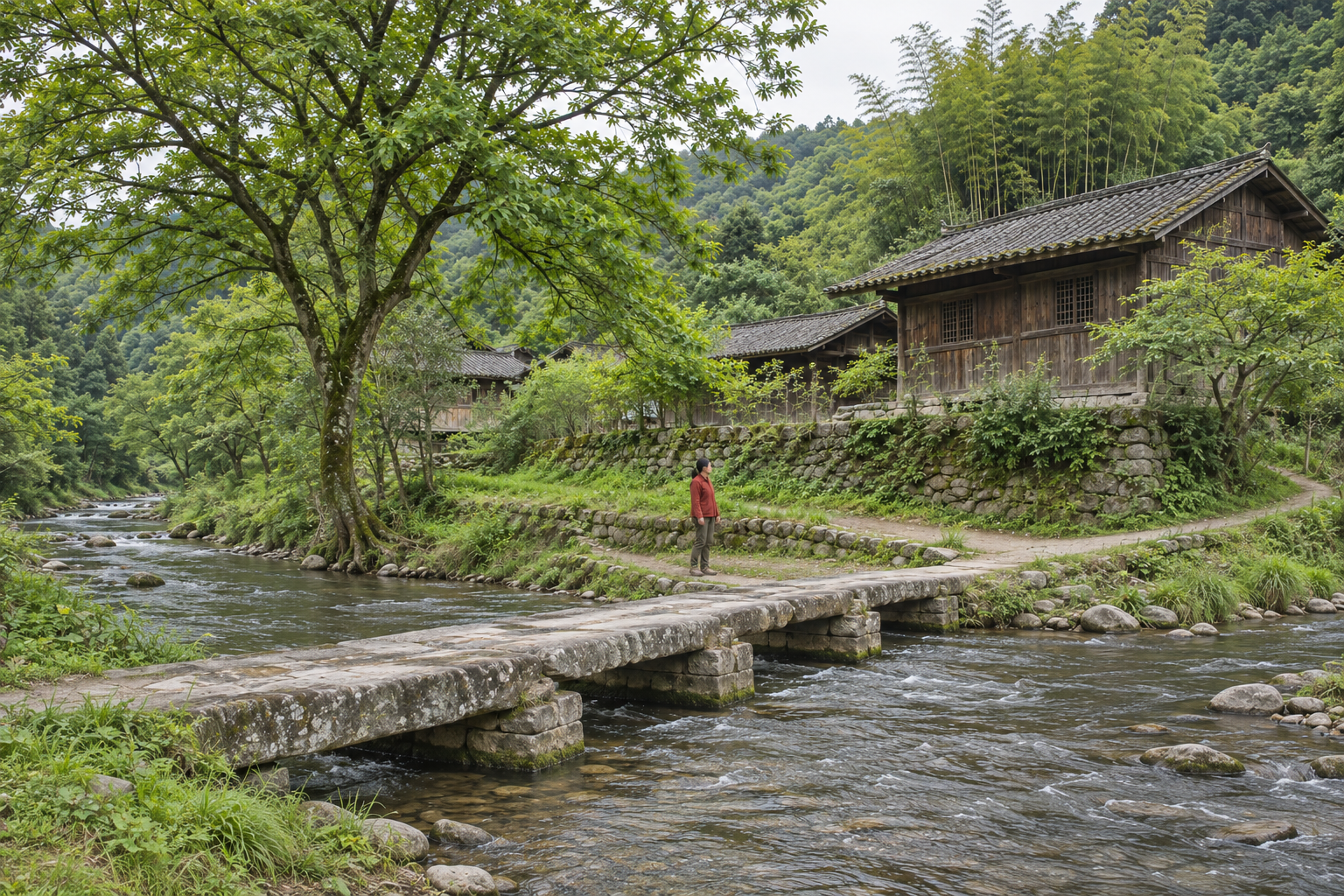
Jiaguan (夹关) is a small town in Qionglai, west of central Chengdu, where the Baimo River runs between rows of timber-fronted houses. Come for the difference between a bridge that passes just above the water and a masonry arch that leaves more space for the river below. After a bowl of local pork-filled rice dumplings, order a cup of Qionglai dark tea or make a separate stop among the tea gardens. A short walk and a proper lunch are enough for a satisfying visit.
For a first trip, request a road day from your Chengdu hotel or start closer in Qionglai. Give Jiaguan most of the sightseeing time. Keep the tea gardens optional and agree where the car will meet you for the full return. If the river is high, a dry walk on one bank followed by lunch still makes sense.
Read the bridges from the Baimo River bank
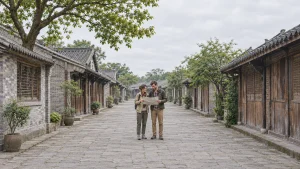
The historic trade stop makes sense when you look across the water. The buildings facing the river have timber balconies, tiled roofs and supports that bring rooms close to the bank. Across the same stretch, different bridges solve the problem of getting from one side to the other. Take time to see how each deck sits against the river instead of trying to cross every bridge.
Start from a dry, open riverside street. From the bank you can look for Yongshou Bridge (永寿桥) and Qingyuan Bridge (庆元桥), both described in local reporting as low crossings. At Wanfu Bridge (万福桥), look at the masonry arch from an open approach. The arch is a useful contrast with the low bridges, and a view from shore is plenty if the approach is busy. If the walking lane is open, a covered bridge offers another angle in light rain. Follow the day’s signs and keep to the pedestrian route.
The route works as an out-and-back. Turn back at the first wet stretch, take steps slowly and keep away from the water’s edge. Low decks can be affected by rises in the river. If there is a closure, high water or slippery footing, stay on the upper street and leave the crossing out. For a traveler who has difficulty with steps, ask the driver to meet at the same side of the river.
| Where to look | Why stop | Walking choice |
|---|---|---|
| Yongshou and Qingyuan | Low decks show the river and bridge at nearly the same level. | Look from the bank when surfaces are wet or a crossing is restricted. |
| Wanfu Bridge | A stone arch gives a different profile from the low crossings. | See the curve from an open approach or stay on the bank. |
| Covered crossing or upper street | A sheltered break or a shorter way back to the car. | Check steps, signs and whether the path back is open. |
Order lunch before choosing a tea stop
Jiaguan’s savory rou tangyuan (肉汤圆) are glutinous-rice dumplings with a meat filling, served in a bowl. They are worth asking for at lunch, especially if you know tangyuan only as a sweet dessert. Other local specialties include guojiang ji (过江鸡), a chicken dish, and tender douhua (嫩豆花), soft bean curd that can be eaten with rice. Ask which dishes the kitchen has that day. If you eat meat but prefer a mild meal, ask how the chicken is seasoned and request any chili dip on the side.
For vegetarian meals or allergies, confirm the stock, filling, seasonings and shared utensils. A plate that looks like plain tofu may come with a separate sauce or meat-based seasoning. Leave a sit-down lunch break before a longer drive, and carry a written Chinese description of any dietary requirements. If you arrive after lunch service, allow for a meal back in Qionglai instead of relying on a particular riverside kitchen.
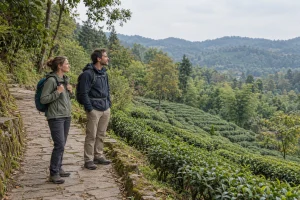
For the simplest tea stop, ask for Qionglai heicha (邛崃黑茶). Heicha means dark tea, a different category from the black tea usually ordered in English. You can ask to see the dry leaf and try a small cup before deciding whether to buy any. Ask which tea was grown nearby and which is simply served there. If you are interested in fields or production, the Tianfu Dark Tea Park area around Jiaguan and Xiongying Village gives you a more focused afternoon. Use a public viewpoint or a host’s agreed meeting point. Working rows, indoor processing areas, picking and classes require their own arrangements, and a short visit can simply be a tasting.
For another day, the Mengding Mountain tea walk offers a separate Ya’an-area interpretation of Sichuan tea country. Save it for its own outing if you would rather spend your Jiaguan afternoon at the river.
Plan a road day with a complete return
Ask for pickup at the entrance of your Chengdu or Qionglai hotel and give your driver the Chinese place name, 邛崃市夹关镇. Confirm a legal drop-off with enough room for the group to gather. From a Qionglai rail arrival, join your car at the actual station and agreed exit; allow room between the scheduled arrival, meeting and lunch. On the way back, decide whether you need the same hotel, a different address or the correct departure station. A narrow old lane is an unreliable final pickup point, so save a map pin on a road where the driver can stop.
Keep large luggage at your hotel on a return day. If you are transferring with bags, give the driver the number and size in advance, and ask how bags will be looked after while you walk. Wear shoes with grip and allow time to rest between the river and a tea visit. In steady rain or on a high-water day, use public upper streets and indoor lunch or tea where available. In more severe weather, keep a city day open instead.
| Stage | Suggested plan | Confirm |
|---|---|---|
| Morning | Meet at the hotel or actual Qionglai station, then drive to the town and walk one bank. | Pickup point, station exit if relevant and walking conditions. |
| Midday and early afternoon | Sit down for a local lunch. Add one tea tasting or a short agreed field visit. | Dietary needs, public or hosted access, tea stop and its fees. |
| Return | Meet at the agreed accessible road and drive all the way to your last stop. | Vehicle waits, bags, final hotel or station and departure buffer. |
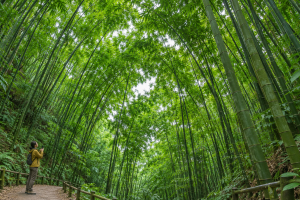
Pingle Ancient Town is a separate riverside stop in Qionglai. It is a good choice if the market streets and historic crossings there are more important to you than Jiaguan’s low bridges and tea country. The Western Sichuan Bamboo Sea gorge walk is better kept to another day if you want time for the full walking experience. Use the Qionglai Tiantai Mountain guide when deciding what a separate mountain day would involve.
Choose a Chengdu or Qionglai base
Stay in Chengdu if Jiaguan is the only westbound outing on your trip. Pick a hotel with a straightforward pickup entrance so the car can leave cleanly and return to the same place. Stay in Qionglai city if you want two unhurried days split between Jiaguan and Pingle or if your onward rail plan suits that base. A countryside guesthouse only makes sense if it fits your arrival and meal times. Ask the specific property to confirm reception hours, passport registration, stairs, dinner arrangements and the last stretch from vehicle to door.
For a short trip, a rainy morning is a good reason to change the order. Keep two possible days if the river is the priority. If you are traveling with an older person or a child, treat lunch as a pause rather than a transfer deadline. The river and tea activities can be shortened independently, with the same return point.
| Length | Hotel nights | Day-by-day rhythm |
|---|---|---|
| 3 days / 2 nights | Chengdu × 2 | Arrive Day 1. Day 2 Jiaguan with lunch and return to the same hotel. Check out and leave Day 3. |
| 4 days / 3 nights | Qionglai × 3 | Travel to base Day 1. Day 2 Jiaguan and tea. Day 3 Pingle or a Qionglai city day. Check out and transfer Day 4. |
| 5 days / 4 nights | Chengdu × 2, Qionglai × 2 | Arrive Day 1. Chengdu Day 2. Transfer to Qionglai Day 3. Day 4 Jiaguan and hotel return. Leave Day 5. |
What to include in a Verotrip inquiry
Price on request. Tell a Verotrip travel consultant your dates, hotel or train details, party size, luggage and how far everyone wants to walk. Mention whether you want a public town walk, a tea tasting or a hosted visit and tell us which language you need. Ask for written terms for the vehicle, waiting and full return, the walking plan, any activity or passport requirements, meals, lodging and changes for rain. Ask the named host how it takes international bookings and whether it needs your original passport on the day.
The public town walk and a bookable activity have different logistics. International visitors have been documented visiting Jiaguan during an organized tea festival. If you want to pick tea, visit a workshop or reserve a room, check how that operator handles your party before you route the day around it.
Questions about visiting Jiaguan
Can I visit Jiaguan as a day trip from Chengdu?
Yes. A road day gives time for a public riverside walk, lunch and a cup of tea. Plan pickup and full return in advance. Add a hosted tea stop only when the date, place and travel time fit.
Do I need to cross the low bridges to see the town?
A one-bank walk is enough to see the relationship between bridges, water and old houses. If an approach is closed, wet or busy, view it from a dry public street and return the same way.
Can I pick tea or see how dark tea is made?
Ask the specific host about the date and format. Picking depends on the growing season and the tea garden’s own arrangements. A tasting or a public field view is an easier option if workshop access is uncertain.
Should I stay in Jiaguan or Qionglai city?
Qionglai city is a practical base if you are combining several stops or need an easier onward transfer. Choose a Jiaguan-area guesthouse when you want a countryside evening and have confirmed registration, dinner, baggage handling and the final segment of the drive.