Updated 22 October 2026
Plan two full days for a first Hangzhou visit, or three if you want West Lake, Lingyin and a meaningful tea or craft experience without rushing. Stay in one useful base, choose a section of the lake rather than a compulsory circuit, and secure Lingyin’s reservation before building the day around it. For a short stay, the eastern lake and central city are sensible hotel areas to compare; a western or village property works when its quieter setting is the main reason for choosing it.
Hangzhou (杭州) is more than a stop for one West Lake photograph. The city, surrounding hills, tea areas and temple approaches have different transport and walking demands. A useful plan gives each chosen place time and leaves something for another visit.
Choose usable days rather than a longer attraction list
A day trip from Shanghai can introduce the lake, but its useful visiting time begins after the station-to-lake transfer and ends before the return journey. If tea culture, a workshop or a quieter evening matters, an overnight can be more valuable than adding another stop to the day trip.
| Usable time | A workable focus | What to remove |
|---|---|---|
| One full day | One lake section and a seated meal, with an optional suitable boat visit. | A full lake circuit plus Lingyin, tea villages and a distant wetland. |
| Two full days | A lake-and-city day, then booked Lingyin or tea culture. | Several major districts in every half day. |
| Three full days | The lake, a temple area and a separate tea / craft / museum interest. | Another long intercity excursion unless it replaces a city day. |
| Four or more full days | Slower neighbourhood time or one thoughtfully chosen regional extension. | A different hotel each night merely to add place names. |
Three hotel nights often allow two full days between arrival and departure. A third full day normally needs another night or unusually helpful service times. Use the actual booking before deciding that a four-day title means four days of sightseeing.
Choose the main interests early: lake scenery and cultural history, a Buddhist temple visit, tea, gardens, craft, or the wider city. A first-time visitor does not have to do all of them. Remove a distant extra before cutting every stop into a brief photograph.
Understand West Lake as a cultural landscape
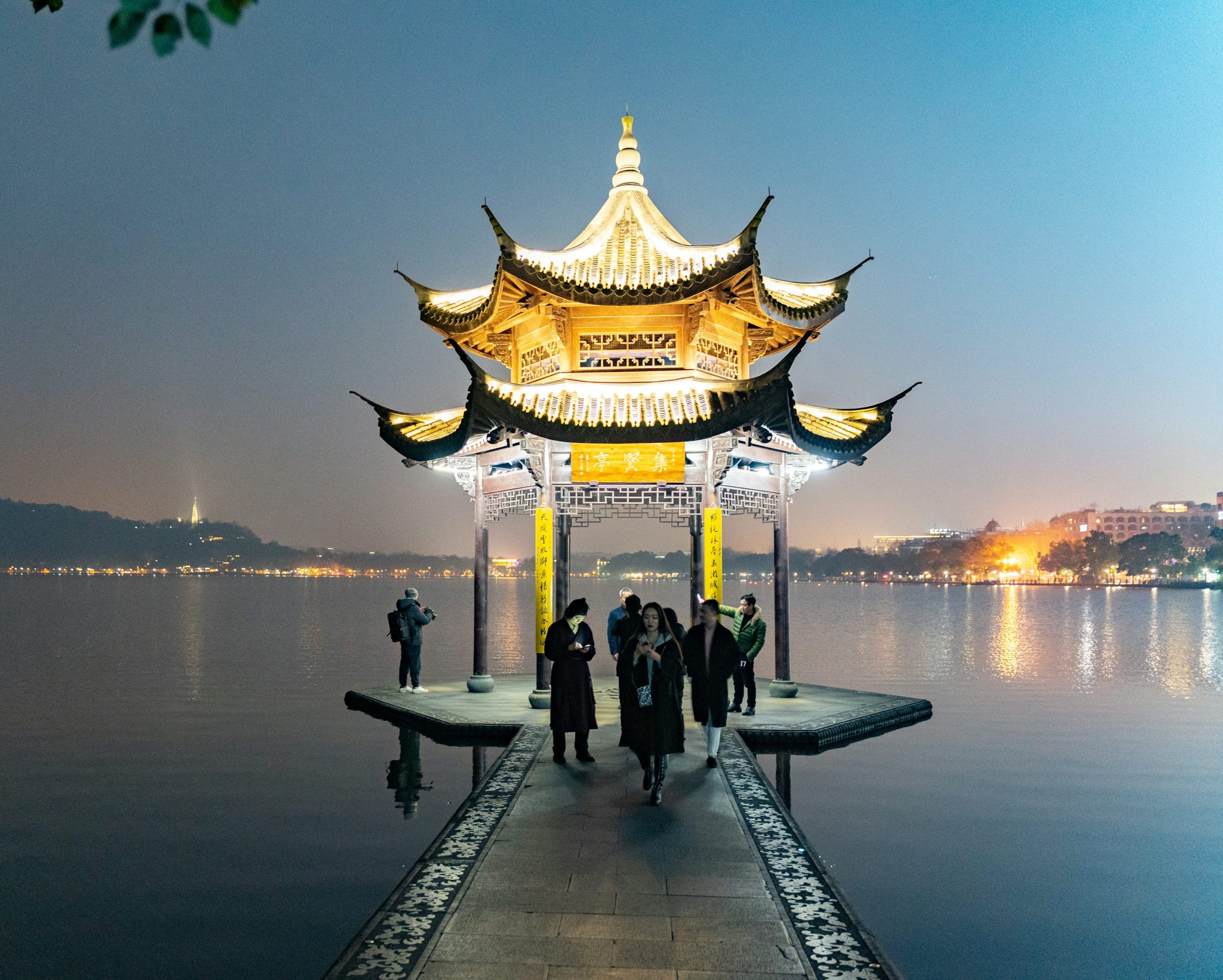
The UNESCO account of West Lake explains a landscape shaped by causeways, islands, gardens, temples and carefully composed views. Spend time noticing how the hills, water and built elements relate. Completing a circuit is not the only way to appreciate it.
Choose one starting area and one finish. The eastern lake can combine a first view with city meals; a western or southern section can support gardens and a different walking experience. Include how you will reach the start, where to sit, and how to return to the hotel.
Do not equate the distance between two place labels with the effort of the whole day. Station passages, waiting, bridges and the final hotel walk also count. A long causeway can be enjoyable for someone who wants sustained walking and less suitable for a traveller who needs frequent seated breaks.
One recently read family-oriented account preferred a quieter western-lake route over a tiring full walk from the metro. Its comments also described crowds at a nearby park. Use that contrast to choose a shorter loop, rather than promising that every western section is empty or suitable for every child.
Choose a hotel for the lake and city time you want
A hotel near Hubin or the eastern lake can make a first stay convenient for restaurants and independent city travel. Another traveller may prefer to wake in a quieter western setting and organise transport for fewer outings. Neither choice needs to satisfy every district at once.
| Area to compare | Why it might suit | Check the actual approach |
|---|---|---|
| Eastern lake / Hubin | A first stay combining the lake, city meals and metro connections. | The street and usable station exit; lake-facing is different from a view over rooftops. |
| Wulin / central city | City restaurants, metro travel and a broader urban stay. | The complete journey to the part of the lake you want. |
| Western / southern lake area | A quieter property and time around nearby gardens or hills. | Bus or vehicle access, evening meals, luggage and seasonal controls. |
| Longjing / village setting | A stay where tea-country time is the main purpose. | Host arrangements, steps, food, late arrival and transport back to the station. |
| Departure-station area | An early service or a protected overnight connection. | The correct station and the reason to trade away a lakeside evening. |
Check the actual Chinese address, room category, bed arrangement and the walk from the usable metro exit. Ask whether a vehicle reaches reception or stops elsewhere. With a wheelchair, pushchair or heavy bags, confirm lifts, thresholds and the last part of the approach.
A village guesthouse should be chosen because its setting and host arrangement suit the holiday. Confirm arrival time, meals, room access and how you leave for the station. A quiet room outside the main city can require more planning for independent evenings.
Keep one base for a short visit. A hotel move solely to sleep on another side of the lake uses packing and check-in time that might otherwise become a proper tea visit or an unhurried evening meal.
Book Lingyin–Feilai Peak using the current system
Feilai Peak’s reservation area includes Lingyin Temple (灵隐寺), Yongfu Temple and Taoguang Temple. The site’s published visitor instructions introduced free entry with real-name, timed reservations from December 2025 and allow non-mainland visitors to book with passports. Use the official 杭州灵隐飞来峰 mini-program in WeChat or Alipay and retain the successful booking.
The scenic authority’s January 2026 update changed an important part of that older notice: from 1 February, ordinary on-site registration is no longer offered. The system uses online reservations and online waitlisting. Do not travel there expecting the old spare-capacity registration window to solve an unavailable booking.
Reservations can be made up to seven days ahead. If the intended slot is full, the published waitlist deadline is 20:00 on the day before entry. Joining a waitlist is not the same as receiving a place. Check the result and take the original valid identity document with the booking confirmation.
If the passport or identity process fails, contact the scenic service on the official channel before fixing transport. Do not use a reseller’s promise of entry or assume another person’s account and document can replace your own. Follow the current cancellation conditions when plans change.
At the temple, allow for steps, standing and other visitors. Choose how much of the wider temple area to explore; a booking does not establish that every uphill extension suits your party. Respect prayer, signs about photography and staff directions rather than staging a visit around a pose.
Choose a boat for its actual route
A small hand-rowed or sculled boat, a larger sightseeing vessel and a service with an island stop are different experiences. Before buying, ask the exact departure pier, route, duration, charging basis, island access if wanted and return point. A generic West Lake boat label is not enough to compare them.
Recent comments asked specifically where to take a smaller boat instead of a large enclosed one. That is a useful preference to state. A photograph of a boat does not prove the current service, and a posted per-hour rate does not establish the complete price, minimum time or permitted passenger count for your booking.
A June 2026 report carrying the water-management authority’s explanation states that passengers on hand-rowed and sculled boats must wear the required lifejacket throughout the trip. Follow the operator’s equipment and boarding instructions; photographic preferences are not a reason to remove it.
Use a boat to replace part of the walking day, not automatically to add another activity. Confirm where you land before leaving bags or arranging pickup. If wind or rain stops service, a shorter shore programme can preserve the day without inventing another departure.
Give Longjing tea a purpose beyond shopping
Decide whether you want an exhibition, a seated tasting, time in a tea-growing village or a booked session with a willing host. These can complement each other, but a cup of tea does not automatically include picking, processing or an interpreted visit.
For the China National Tea Museum, check the selected campus and its current visitor notice. Shuangfeng (双峰) and Longjing (龙井) are different addresses. A museum visit, a special workshop and an independent village tasting have different arrangements; one admission rule does not reserve every activity.
Ask a host what is actually taking place on your date. A production demonstration outside the main harvest is different from joining a live seasonal process. If picking is important, have the host confirm the activity, conditions, permitted participation and what happens if it cannot take place.
Agree the fee, tea or snacks included, language, walking, duration and whether purchases are optional. A good cultural conversation need not end with a large purchase. Ask permission before entering working areas or photographing people, and do not treat another author’s images as permission to enter a field.
The China food and culture planning guide explains these experience formats. Keep the Hangzhou tea visit local and purposeful instead of adding a producer solely because it appears on a long national list.
Keep craft and restful travel separate from medical care
An oil-paper umbrella session, a museum, a temple visit or a quiet tea afternoon can add variety to the lake. Confirm whether a craft activity is something you make or a demonstration, which materials are included and whether the finished object needs later collection.
A cultural slow-travel day is not medical treatment. If a separate appointment is requested, the actual licensed provider, language, consent, fees and booking terms need their own arrangement. Do not infer a health outcome from a tea, meditation or traditional-culture label.
The Hangzhou slow-travel collection separates these choices. Choose the cultural activity you would enjoy on its own, and give a host enough time rather than combining several unrelated sessions into one afternoon.
| Visit | Before you commit | Useful alternative |
|---|---|---|
| Lingyin–Feilai Peak | Successful official booking or confirmed online waitlist place, matching passport and current notice. | Another available cultural or lakeside visit if a place is not secured. |
| Lake boat | Exact pier, route, vessel, island stop if wanted, charging basis and return point. | A shorter shore walk if service changes. |
| Tea museum / village host | Correct campus or address, current opening and the actual tasting or workshop appointment. | An exhibition or seated tasting rather than a promised live harvest. |
| Craft session | Host, making versus demonstration, language, materials and collection. | Another confirmed indoor activity, not an unannounced drop-in. |
Plan transport around the actual station and seasonal controls
Hangzhou (杭州站 / 城站), Hangzhou East (杭州东站) and Hangzhou West (杭州西站) are different railway stations. Copy the exact name from the ticket into the pickup instructions. Xiaoshan Airport is another arrival point, with its own terminal and final city transfer.
Use the complete journey when comparing a train with a car. A short Shanghai–Hangzhou running time excludes both hotel-to-station journeys, security, boarding and luggage collection at the next hotel. The Shanghai planning guide helps decide whether Hangzhou deserves an overnight in the wider holiday.
The September 2026 scenic transport notice describes autumn weekend and holiday controls around West Lake, including additional restrictions in Lingyin and part of Nanshan Road. It also describes taxi and ride-hailing transfer arrangements. An ordinary vehicle reservation does not guarantee access to every attraction entrance.
Compare metro plus the current scenic bus or shuttle with a vehicle journey, and confirm the permitted pickup point with the driver. Keep time for waiting and the final walk. Do not assume that a road visible on the map allows a convenient roadside stop.
For limited mobility or larger luggage, ask about the complete transfer and the usable step-free route. A claim that everyone can rely on shared bicycles ignores different abilities and app access. Walking, cycling, scenic vehicles and a booked car should be chosen for the people travelling.
Use autumn recommendations without promising the same leaves
A recently read autumn photography post anticipated late-November colour, while its comments asked whether late October would work and noted that two photo labels were reversed. Its images were not inspected for this guide. It is a source of questions about season and crowding, not a current colour report or a route map.
Another visitor described heat and mosquitoes during an October park afternoon; comments offered differing interpretations of the photographs and asked about ongoing landscaping. Keep shade, rainwear, appropriate insect protection and a shorter walk available. Do not turn one person’s discomfort into a permanent description of the whole city.
A two-day suggested itinerary began at a leisurely hour but then linked several gardens, temples, old streets and a night market. Its comments asked about the boat in a photo. Choose the parts that matter instead of assuming a slow starting time makes a dense route gentle.
For a flower, red-leaf or photography priority, check current local reports near departure. The best light in another author’s list is not a booked space or a reason to block a public path. A lakeside visit can still be worthwhile when the scene differs from the photograph.
Protect meals, rest and a useful bad-weather day
Choose a seated meal near the day’s actual area. A restaurant list does not establish a booking, current menu or dietary suitability. Explain allergies, vegetarian ingredients, halal preparation and prayer timing before venues and transport are fixed.
For children or older relatives, count the walk through stations and queues as well as the scenic section. Ask where you can sit, which part can finish early and how everyone returns if the group splits. Keep an accessible bag with essentials rather than relying on reaching the hotel immediately.
Use a suitable museum, craft appointment or hotel rest when ordinary rain makes the longer outdoor walk unattractive. Check that the indoor option is open and available. During official severe-weather closures, follow instructions; do not replace a closed trail with an unassessed hillside route.
The temple’s current notice page records temporary closures and reopenings during the 2026 summer storms. Those notices demonstrate that access can change; they are not a prediction or a permanent closure for your trip.
A four-day example with one hotel
This framework leaves two full days between arrival and departure. Choose the actual lake segment, bookings and host first. With a third full day, separate temple time from tea or craft rather than extending every evening.
| Day | Main plan | Keep the day usable |
|---|---|---|
| 1 | Arrive, check in and take a short local walk if time permits. | No fixed temple or workshop slot after an uncertain arrival. |
| 2 | Choose one lake section, one cultural stop and a relaxed meal. | An optional boat replaces some walking; check the return pier. |
| 3 | Use the booked Lingyin slot and one nearby interest, or give tea culture its own day. | Do not add every temple, hillside and tea village to the same afternoon. |
| 4 | Breakfast, collect bags and depart. | Leave the correct station transfer and service check-in margin. |
For a focused shorter trip, compare the published two-day Hangzhou umbrella and Longjing outline from Shanghai. Its craft and tea activities need dated host arrangements, and the return transfer takes part of Day2. A general outline is not proof of a workshop place or a live harvest.
Use the Hangzhou destination page for the wider setting. Send Vero Trip your dates, nationalities, train or flight, party size, ages, room preference, walking needs, food and prayer requirements, and the experience that matters most. Request the actual hotel, local transfers, guide language, admissions, host appointments and change conditions in the written plan.
The three-city Jiangnan planning guide compares Shanghai and Suzhou connections, the complete return journey and whether a water-town overnight is worth another hotel change.