Updated 22 October 2026
Plan a food and culture trip in China around one or two regions, a few meaningful activities and enough ordinary meal time between them. For a short first visit, one city with a market walk, a hands-on session and a cultural day is a better starting framework than trying to eat every famous dish across the country. Choose the region for what you want to learn, then check the actual host, menu, language and participation.
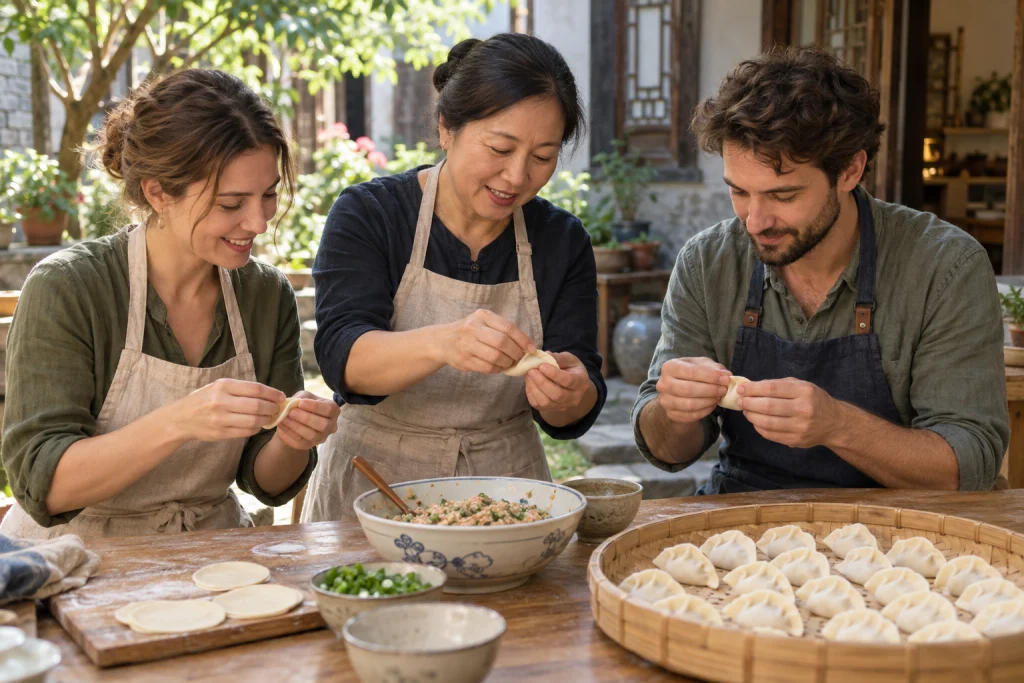
The main image is an illustration of an imagined dumpling workshop. It does not show a particular cooking school, real Verotrip guests or a confirmed class. The tea-work photograph later in this guide is a real historical image; it does not identify a bookable host.
Choose the trip before choosing a long restaurant list
Start with a question you would enjoy exploring. Would you rather learn to shape dough, understand Sichuan spices, compare tea preparation, or spend time in the neighbourhood where a food belongs? The answer helps choose both the place and the kind of visit.
The existing China regional-food guide provides dish ideas and ordering context. Use this planning guide to decide where to spend your days, which experiences need appointments and how to connect food with the rest of a holiday.
| Starting idea | A useful focus | Keep this distinction |
|---|---|---|
| Beijing | A city stay with a booked dumpling or other cooking session and neighbourhood culture. | The cuisine taught by a school can be from another region; the class address does not identify the recipe origin. |
| Chengdu / Sichuan | Ingredients, a Sichuan cooking session, tea and city culture. | A market-and-cooking programme takes more time than a brief tasting or restaurant meal. |
| Xi’an | Noodle making, a local meal and the historical city. | A Muslim-quarter location, wheat dish or lamb name does not itself establish every dietary requirement. |
| Yunnan | A market-focused city visit or a separate tea-and-coffee stay. | A café, tea room and producer appointment are different experiences and locations. |
| Chaozhou / Shantou or another food-focused region | Local meals linked to a particular town and cultural setting. | Choose usable days in each base instead of changing cities between every meal. |
These are starting choices rather than a ranking of cuisines or a fixed national route. You can learn a regional technique in a city outside its place of origin, but describe that choice accurately. A Beijing school teaching Sichuan food can be a useful lesson without being a visit to Sichuan’s producers.
For a longer holiday, combine places you already want to visit and connect them sensibly. Do not add a flight solely to reproduce a restaurant post. Arrival, unpacking and the next transfer can remove the very market and meal time that motivated the extension.
Separate a market walk, a tasting and a cooking lesson
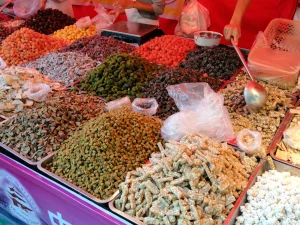
A market is a working place. A guided walk can explain ingredients and buying habits, while a tasting concentrates on selected food. A cooking session asks you to spend time learning and doing. They may be combined, but one does not automatically include the others.
| Format | What it can add | What to ask |
|---|---|---|
| Market walk | Ingredient names, shopping habits and local context. | Which market, opening of the relevant stalls, walking, tastings and a seated break? |
| Food walk or seated tasting | A guided introduction to selected dishes. | Which portions, drinks, seating, walking and dietary arrangements are included? |
| Hands-on cooking | A technique you practise and a meal from the session. | Which dishes, personal participation, language, equipment, age rules and recipes? |
| Tea or producer visit | A conversation about growing, processing or serving. | Who hosts, what is operating on the date, what is optional and is purchase expected? |
| Craft or cultural workshop | A different way to understand local materials and everyday life. | Do you make something, watch a demonstration, or visit an exhibition? |
For example, Chilli Cool’s own Chengdu class description combines a market visit, tea, cooking and a meal, and excludes hotel transfer. It also distinguishes an accompanying child place from active cooking. Ask the operator to confirm the full duration and the role of each traveller; its page gives differing summary and schedule lengths.
The Hutong’s Beijing class page describes cooking followed by a shared meal and distinguishes public sessions from private arrangements. Those are useful formats to compare. Check the actual date, menu, instructor language, price and conditions directly; a general page is not a place held in a particular class.
These independent operators illustrate the questions to ask. Their programmes are not automatically part of a Verotrip itinerary. A proposal should identify the actual provider and services when a session is included.
Use a few usable days in each base
Count full visiting periods rather than the dates in a tour title. A late train into a city may leave time for dinner but not a market visit. A departure morning may allow breakfast near the hotel while leaving no time for an outlying producer.
For a first three-night city stay, one substantial food activity and two cultural or neighbourhood days can leave enough choice. Add a second hands-on experience if it teaches something different. Two long cooking lessons are worthwhile for someone who wants technique, while another traveller may prefer one lesson and an unhurried tea conversation.
A recent Chaozhou and Shantou post proposed moving between two cities, linking old streets, landmarks and a lengthy food list. The useful planning question is how much time remains to sit, eat and understand each place after the transfer. Its advertised rail and taxi times are not a dated transport quotation or a reason to combine every stop.
Keep one hotel when the intended experiences are realistically reached from it. Change base when the second place deserves its own time, rather than solely to sleep closer to one fashionable restaurant. Save the Chinese address and final walking approach for the actual venue.
Book participation and language as carefully as the menu
Ask whether each person works at a station, shares ingredients with the group or watches a demonstration. A photograph of someone holding a bowl does not show how much of the preparation they performed. An accompanying ticket can suit a child or non-cook, but it should be chosen knowingly.
For children, describe ages and the tasks they can comfortably do. Ask about the provider’s rules for tools, heat, supervision, counter height and accompanying adults. A family-friendly description does not mean every child joins every step or that a guide supplies childcare.
For older travellers or anyone uncomfortable standing, ask about chairs, stairs, toilets and the time spent walking through the market. A cooking class can be indoors while still involving a long standing session. A short ingredient introduction and seated demonstration may be a better choice.
Confirm the working language of the instructor and the actual interpreter arrangement. A bilingual booking page or an English-speaking driver does not establish who explains the cooking technique. Ask whether recipes or take-home notes are provided in a language you can use.
| Decision | What to put in writing | Why it matters |
|---|---|---|
| Participation | Each traveller cooks, shares a station or only accompanies. | The same ticket title may cover different roles. |
| Food needs | Exact ingredients avoided, kitchen practice and the provider’s answer. | A vegetarian option is not an allergy or halal guarantee. |
| Language and format | Instructor language, interpreter, group size and the actual activity. | An English website does not establish an English-led session on your date. |
| Full time and meeting place | Arrival instructions, market, lesson, meal, collection and return. | The lesson duration may exclude a market walk or the journey back. |
| Costs and changes | Included food/drinks, extra purchases, minimum charge and cancellation terms. | Public, private and accompanying places can have different conditions. |
Discuss ingredients before the kitchen is chosen
Send a clear list of ingredients you avoid before booking the activity. Distinguish a flavour preference from an allergy, intolerance or religious requirement. Ask the actual kitchen how it handles the request, including sauces, stock, cooking fat, shared equipment and preparation.
The Shanghai government’s published language resource explains why asking for no visible meat may leave other ingredients unresolved, and includes ways to ask about oils. Use a written Chinese explanation for your own requirements rather than relying only on a picture menu or the phrase not spicy.
A vegetarian class option does not establish separation from allergens or halal suitability. Ask about the specific dishes and kitchen practice. If the provider cannot meet the stated requirements, choose a different format or venue instead of treating a reassuring general label as confirmation.
Keep a simple meal option for transfer days and for someone who decides not to taste an unfamiliar item. A cultural trip can include observing and asking questions without requiring every participant to eat every sample. Do not turn a tasting challenge into the measure of whether a person has experienced the place.
Learn from personal reports without copying their recommendations
A recently read visitor described arriving near Jiuzhaigou late and enjoying a warming meal after the journey. Their reactions to the meat, tea and bread differed within the same meal. The useful lesson is to protect an appropriate arrival dinner, not to promise that another party will like the same dishes or that the venue serves all arrivals that late.
Food posts also include illustrated summaries and cultural explainers. A western Sichuan post’s route was in an unread hand-drawn image, and a Xi’an food post expressly labelled its scene as an illustration. Those posts did not establish a completed independent food tour. Treat a suggested custom as a question to discuss at the actual shop, rather than a rule every restaurant must follow.
In the Kunming café material already read for our tea-and-coffee planning, two authors gave opposing assessments of the same place. Comments elsewhere described busy parking and people queuing for photographs, while another visitor found the drink choice unsuitable. Different priorities can produce different experiences without establishing a universal best or worst café.
Decide whether you want a view, a particular drink, a quiet seat or a conversation about production. Check the menu, access and current conditions against that purpose. The number of likes on a post does not measure how well a venue will fit your party.
Give tea and producer visits their own purpose
A tea room can offer a seated tasting; a working producer can add context about plants, processing and local life. The national intangible-heritage account of traditional tea practices includes growing, making, drinking and sharing. Choose which part interests you before requesting a plantation visit.
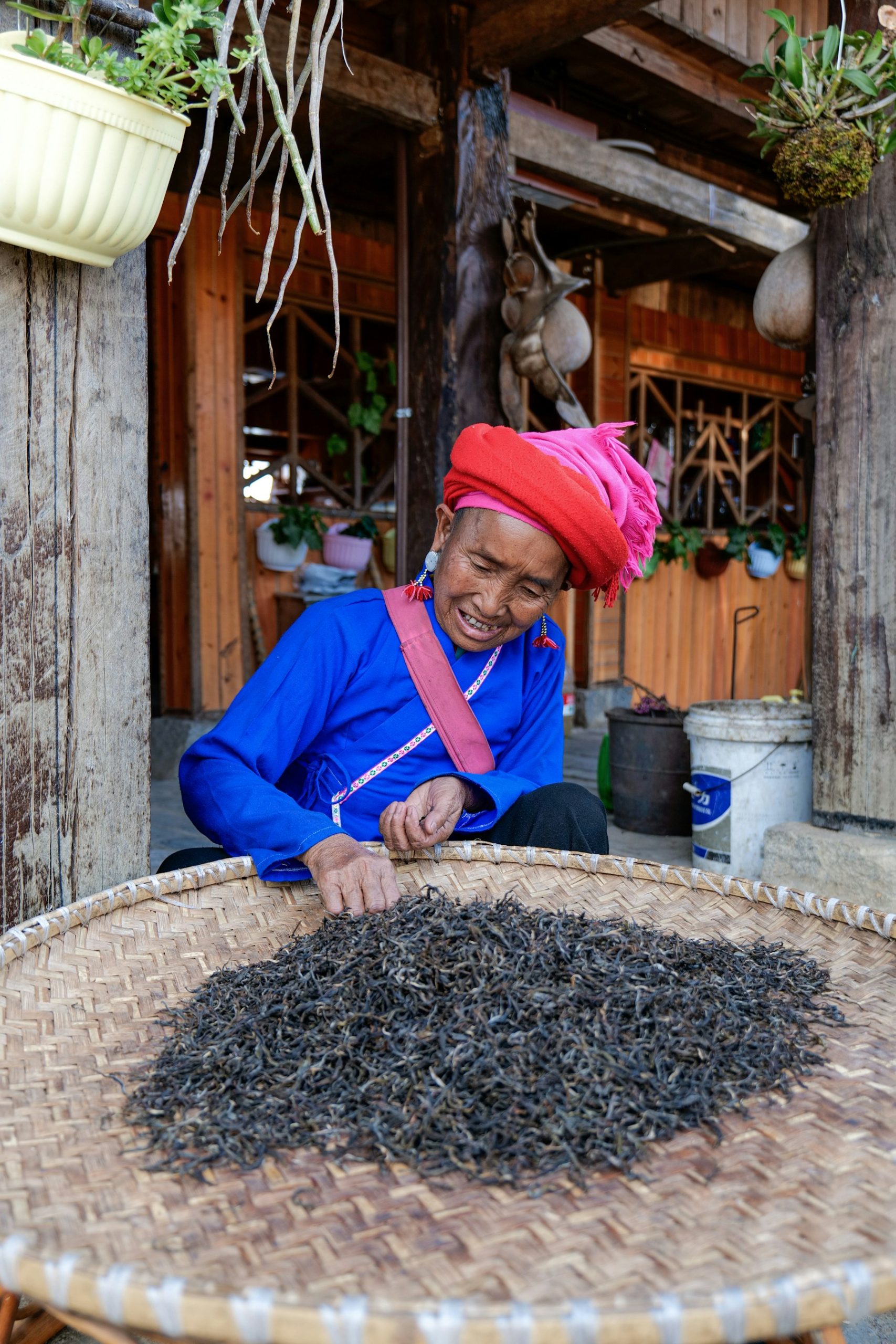
Ask who will host, where you meet, how much walking is involved and what will actually be taking place. A demonstration may be arranged when production is quiet, but it is different from watching a live seasonal process. Harvesting, pan-firing and a tasting should be listed separately rather than hidden inside one vague farm-visit label.
For a Yunnan focus, the Yunnan food, market, tea and coffee guide separates a Kunming market morning from southern tea areas. Keep that geographical choice clear. A city café does not need a plantation detour, and a producer-focused stay deserves enough time for appointments and transfers.
Ask whether a tasting fee stands on its own and whether purchases are optional. A host’s time and materials can carry a legitimate activity fee; that is different from an undisclosed obligation to buy. Agree the price and included samples before sitting down.
Connect food with living culture respectfully
Plan one cultural anchor around the food activity: a museum, historic neighbourhood, craft workshop or an interpreted visit suited to the region. It should have its own reason for being in the day, rather than functioning only as a backdrop between meals.
A neighbourhood and a household are different settings. Arrange a willing host before entering a home or working space, and ask before close portraits or filming people preparing food. Buying a tasting does not confer permission to photograph everyone nearby or publish their portraits.
For a craft session, distinguish making an object from seeing a demonstration. Ask what you take away, whether finishing is needed and how collection or delivery works. A rainy-day workshop substitute still needs an available host, an appropriate language arrangement and enough time to reach the venue.
A tea custom, temple meal or family recipe belongs to particular people and places. Ask the host how to participate, and accept that a practice may not be offered to visitors on every date. A respectful conversation can be more useful than trying to stage a supposedly authentic scene for a photograph.
Keep the day comfortable around eating
Do not book a large tasting walk immediately before a cooking-class meal just to increase the number of activities. Leave a pause, a seated break and an ordinary lighter meal where that suits the party. Tell the organiser whether you prefer tasting portions or a complete lunch.
Reserve time to wash up, collect belongings and return from the venue. A lesson scheduled before a train departure needs the full meeting, market, cooking and eating sequence, not merely the advertised hands-on minutes. Choose another session when the connection would make the meal hurried.
For rain or heat, keep a shorter market option and a confirmed indoor alternative. Do not assume all outdoor tasting stalls operate in bad weather or that an indoor class includes transport from the hotel. The changed programme should still meet the food needs and mobility requirements that shaped the original booking.
A five-day example without changing cities for every meal
This is a planning framework for four nights in one city, such as Beijing or Chengdu. It does not combine their different regional activities into a confirmed package. Choose the actual cultural admissions and class before fixing the final order.
| Day | Main purpose | Keep the balance |
|---|---|---|
| 1 | Arrive and have a simple meal near the hotel. | Protect rest; a late arrival is not a full food-walk day. |
| 2 | One cultural anchor and a small neighbourhood meal or tea stop. | Arrange the cultural admission separately where needed. |
| 3 | A booked market-and-cooking session, including its meal. | Keep the next activity light and leave the complete session time free. |
| 4 | A different cultural visit and one deliberately chosen food or craft experience. | Use an alternative format rather than repeating another long tasting walk. |
| 5 | Breakfast, bags and departure. | Choose a meal that fits the actual station or airport transfer. |
With more time, add a second base because it offers a different cultural setting and a workable connection. With fewer days, keep one hands-on session and one cultural day. Remove a distant producer visit before cutting every meal and conversation short.
Compare the published outline with the dated proposal
The food and culture collection groups published routes to discuss. Some broader sightseeing routes include local food or village time without being dedicated tasting programmes. Read the individual day and meal scope rather than assuming every route in the collection contains a cooking class.
For a focused example, the Hangzhou Longjing and cooking outline links local sightseeing with tea and a cooking activity. Seasonal picking, the host and the exact session need a dated arrangement. A published outline is a starting point for comparison, not proof of availability on your travel day.
Send Verotrip your dates, nationalities, arrival and departure cities, party size, children’s ages, preferred regions, cooking experience, walking needs and food or prayer requirements. State whether the priority is eating, learning a technique, tea, craft or meeting a willing host. Ask for the named experiences, participation, language, meals, transport, extra costs and change conditions in the written proposal.
For a Cantonese city stay, use the Guangzhou planning guide to group old-city food and shopping separately from the modern riverside. It covers usable days, hotel streets, passport museum booking and meal breaks around the route.