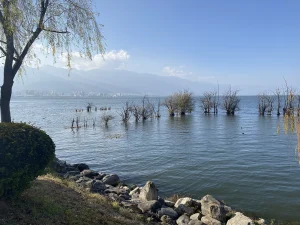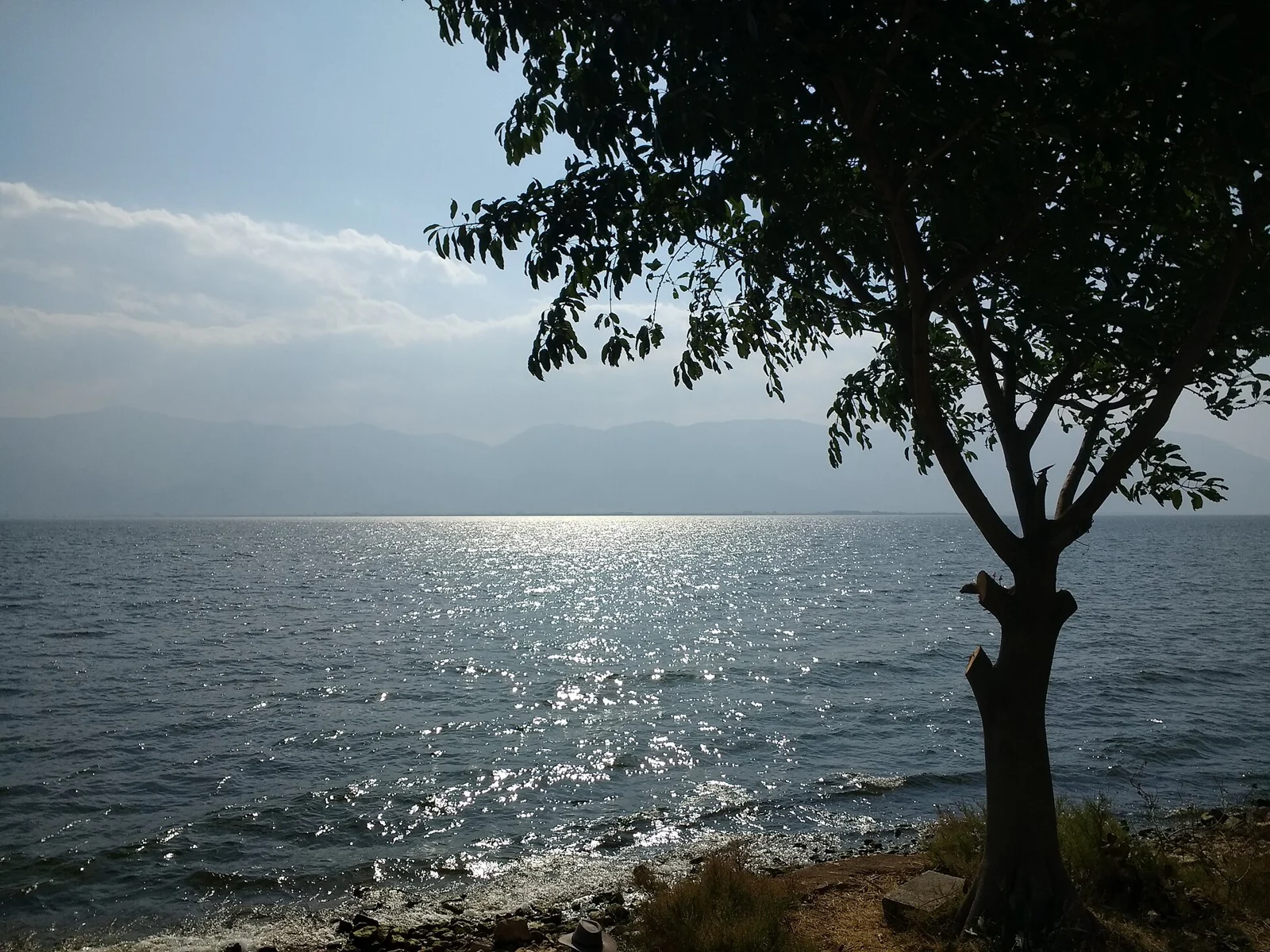
The Erhai Lake sightseeing bus is most useful for a few planned stops with a confirmed return, rather than an attempt to visit the entire lake in one day. Choose the western or eastern route first, then check your ticket’s boarding, reservation and validity rules. The larger road-going bus, ecological-corridor vehicles and lake cruises are separate services. A pass described as “around Erhai” does not automatically cover every connection between them.
The featured photograph shows Erhai Lake’s regional setting. It does not show a particular bus, boarding stop or today’s conditions.
Choose the shore before choosing the pass
The operator’s published bus introduction describes a network of roughly 130 kilometres, with Dali Old Town and Shuanglang as its main endpoints. That is the scale of a transport network, not a promise that its attractions fit into one leisurely day. Riding past places and exploring them are different uses of your time.
The operator’s reference route map groups Xizhou and the S-Bay stop on the western service, and places including Wenbi, Little Putuo and the Ideal Town/Jinsuo Island stop on the eastern service. This reference is dated January 2025. Use it to understand the geography, then confirm the actual stops, direction and departures offered for your travel date.
| Your priority | A useful starting choice | What to confirm |
|---|---|---|
| Xizhou and a village lunch | A western-route day focused on Xizhou | Town stop, walking approach and usable return |
| East-shore architecture or viewpoints | One main eastern-route destination | Exact stop, hillside walk and separate admissions |
| Shuanglang as the main visit | A confirmed journey there and back | Boarding point in both directions and time in town |
| A short lakeside walk | Transport to one corridor entrance | Distance to the water and the return pickup |
For a first visit from the old-town area, a Xizhou-focused day is an easier plan to assess than several towns on both shores. If you are already staying in Shuanglang or on the east shore, start from that address instead. A ticket’s most advertised departure point may be inconvenient for your hotel.
Distinguish the bus from corridor transport and boats
The sightseeing bus follows road routes around the lake. It should not be treated as a vehicle that carries you along every waterside path. China Tourism Group’s ecological-corridor description identifies a managed western section with its own sightseeing vehicles and cycle options. Those local services solve a different problem: moving within the lakeside visitor area.
Plan the last stretch from the bus stop to the actual lake entrance. Follow the permitted access arrangements there rather than asking a driver to enter a closed path. A Dali city management notice specifically addresses unauthorised motor and electric-vehicle entry. Use current entrance signs for the allowed vehicle and walking arrangements.
A cruise is another separate choice, with a pier, sailing and arrival point to establish. If time on the water is your priority, use the Erhai cruise planning guide before adding bus legs around it. A bus stop near an island or pier does not establish that your ticket includes a boat, landing admission or return sailing.
Check the product before paying or activating it
Ask whether the offer is a single journey, a return or a multi-ride pass. Establish the routes it covers, when validity begins, whether each leg needs a reservation and what happens when a departure is full. Keep the product name and instructions, rather than only a screenshot of a promotional price.
The operator’s January 2025 guide describes purchasing a product, activating it and reserving a departure before boarding. Activation starts the validity period in that published workflow. Check the current instructions for the product you buy before activating it early. A paid order, an activated pass and a reserved seat may represent different steps.
Product benefits can change. The distribution centre’s June 2026 announcement discusses themed buses and pass-linked extras, with advance reservations. Treat it as evidence of different product arrangements, not a guarantee that a particular themed vehicle, transfer, venue or benefit is available today.
For an overseas visitor, check whether the booking process accepts your phone number, document and payment method. If an online step does not work, ask the operator’s service point about a supported purchase and reservation route before travelling to a remote stop. Do not assume a friend completing payment has also completed every passenger’s reservation.
Know what the day will actually cost
Compare the current ticket with the journeys you intend to use. A multi-ride product may make sense across several outings; a shorter visit needs its own comparison. Include hotel-to-stop transport and the return, rather than treating the pass price as the entire budget.
Keep meals, drinks, separate site admissions, corridor rides, cycle hire and boat journeys outside the budget unless the exact product lists them as included. Ask for the children’s ticket conditions for your party and any cancellation or change terms before payment. Historic prices and age rules from an old bus article are not a current quotation.
A private-car comparison should name the passenger count, luggage, stop list, waiting and finishing point. Vehicle access restrictions still apply. Paying more for flexibility does not mean a car can enter a pedestrian lakeside area, and a transport quote does not automatically provide a guide or site tickets.
Find the stop and reserve a usable return
Save the exact boarding pin, its Chinese name and the side of the road for your direction. Dali Old Town / 大理古城 is an area; the bus service centre / 大理古城环洱海服务中心 is a specific meeting point. Leave time to get there from the hotel and find the correct vehicle.
For each planned stop, save the next boarding point before leaving the bus. The return may use another side of the road or a different meeting area. Check the current reporting instructions, reservation confirmation and operator contact. A red double-decker or a photograph of a themed bus is not sufficient identification.
Work backwards from the return departure you can actually use. Add the walk from your last attraction, time to locate the stop and a margin for delays. Then decide how long you can stay. Do this before making Shuanglang or an east-shore village the final stop, rather than finding the last service after dinner.
Three realistic ways to use a lake day
A village day centred on Xizhou
Travel to the confirmed Xizhou stop, walk a manageable section of the town and leave room for a seated lunch. Explore the courtyards and lanes that interest you, paying separately for any venue requiring admission. Add a nearby outdoor pause only if the walking approach and next transport fit comfortably.
Return before the day depends on a single final departure. If your main interest is Bai architecture and food, extra time in Xizhou can be more rewarding than adding Shuanglang merely to tick off another name. Do not assume a village walk, workshop or snack tasting comes with the bus ticket.
An eastern-shore outing with one main destination
Choose the place you most want to visit and check the path from its actual stop. For example, an Ideal Town visit involves a different on-site decision from a Wenbi pause or an extended stay in Shuanglang. Read the Ideal Town visitor guide if that is your main objective.
Plan lunch and a return around that destination. Add one secondary pause only when a bookable onward leg leaves enough time. Avoid designing an afternoon around several paid viewpoints and a guaranteed sunset: transport, weather and the final walk can change how the day works.
A short corridor walk with less travelling
If the lake itself matters more than covering distance, choose one open entrance and a short out-and-back walk. Establish a comfortable turnaround and return to the same known pickup area. Use an authorised local service only after checking its route and separate ticket conditions.
Our short Erhai cycling guide covers the alternative of a selected ride. Walking, cycling and sightseeing from the road are different experiences. You do not need to buy a full-day bus product to justify an unhurried afternoon beside the water.
Food, hotels, luggage and comfortable pacing
Place a meal within the main stop instead of reserving every gap for travel. If dietary requirements limit your choices, identify a suitable place before you leave the hotel and keep time for ordering. Snacks on board are not a substitute for a planned lunch, and eating arrangements follow the vehicle’s rules.
Leave large suitcases at your hotel when possible. For a hotel-moving day, ask about luggage acceptance, storage and the walk to the new property before relying on the bus. A room advertised as lakeside can still sit above a road or inside lanes that vehicles cannot reach. The Dali stay-and-sightseeing guide helps match the base to your days.
For children or limited walking tolerance, choose fewer boardings and confirm steps, luggage space and assistance needs. Bring weather layers, sun protection, water and a charged phone. A rain shower or slower walk is easier to accommodate when the plan has one main destination and a known return.
When a coordinated itinerary suits you better
The existing four-day Dali and Erhai food itinerary combines a Dali base, market time and a Xizhou village day. It is an alternative for travellers who want the visits and transfers coordinated. It is not a sightseeing-bus pass, and bus travel should not be assumed to be included. Your dated proposal confirms the actual transport, guiding, meals and admissions.
Frequently asked questions
Can I wave the bus down anywhere?
Use the designated stop and boarding procedure for the reserved service. Do not transfer the rules of a local corridor vehicle to a road-going sightseeing bus.
Does a pass guarantee space on every departure?
Check its reservation and availability conditions. Do not equate multi-ride validity with a confirmed seat on the particular return you need.
Should I combine a full lake circuit and Cangshan?
Give a substantial mountain outing its own day. A short selected lake visit may fit another plan, but two full sightseeing days cannot be created by joining their transport tickets.
How can Vero Trip help with the plan?
Share your hotel address, travel date, party size, main stops and walking preferences through Plan My Trip. Say whether you want independent bus advice or a coordinated itinerary, so the written proposal can specify the appropriate services and price.