Choose your first Chinese dessert by texture: tanghulu for a crisp sugar shell and fruit, wandouhuang for a small pea cake, tangyuan for a chewy filled rice ball, or a sweet soup for a seated pause. Start with one or two available where you are already travelling. You can explore the differences without changing your itinerary to collect every regional speciality.
The most useful question is often “what is inside?” rather than “which is the best?” A sweet filling can contain an animal fat, a familiar-looking bowl can be savoury, and toppings may change the dish substantially. Keep the Chinese name alongside the picture, ask about the particular version and order a manageable portion.
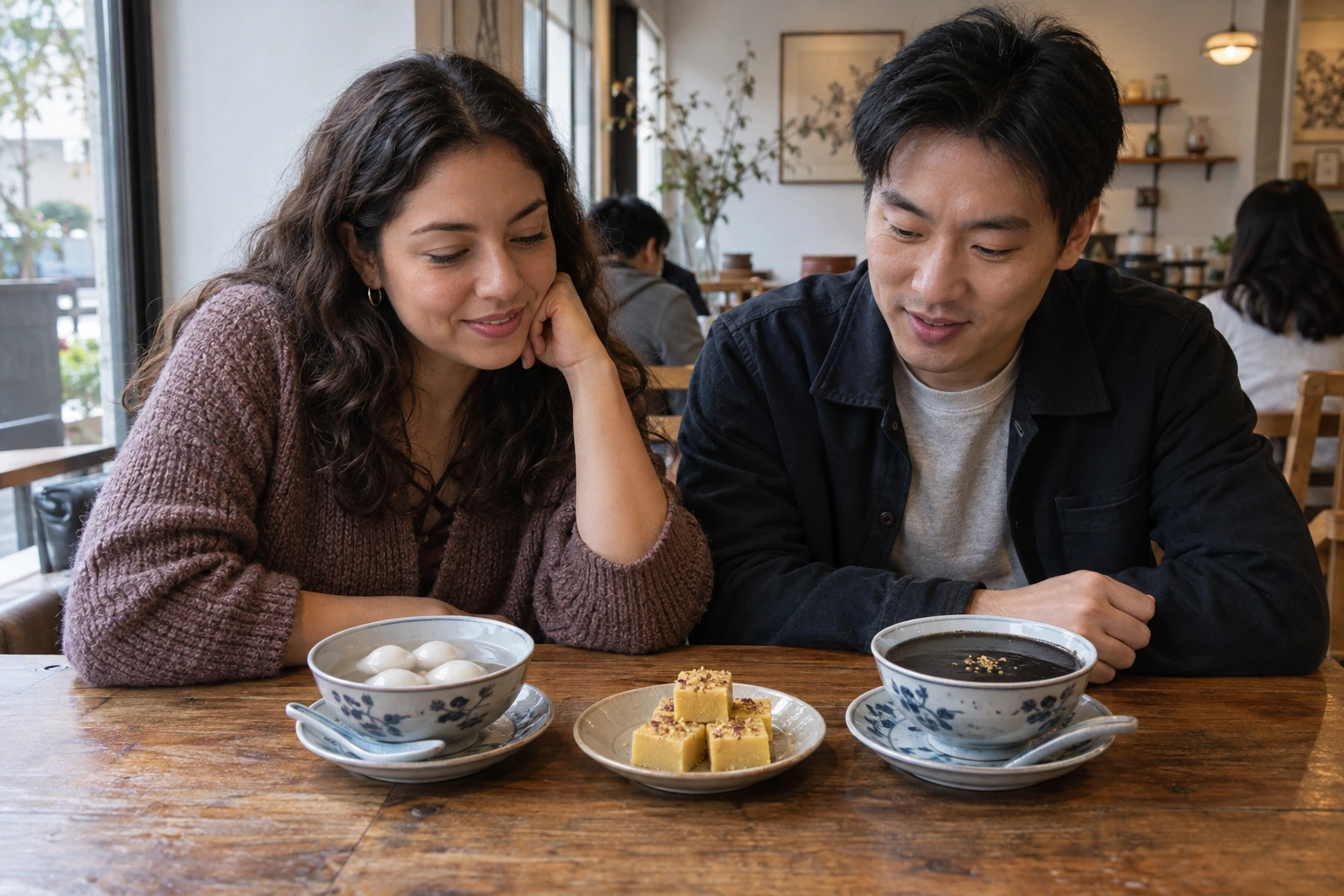
Reviewed 29 October 2026. The opening image is an original travel illustration of fictional adults at a dessert table. It does not show a named restaurant, actual Vero Trip guests, a verified recipe or an included meal.
Find a texture you already enjoy
If you like crisp pastry, begin with an egg tart. If you enjoy custards or puddings, try a sweet tofu pudding after confirming the toppings. If you prefer something you can sip and spoon slowly, look for a sweet soup. Someone who dislikes chewy food should not order a large bowl of tangyuan just because the photograph looks appealing.
| If you like | Consider | Check first |
|---|---|---|
| Crisp and fruity | Tanghulu | Which fruit and coating? |
| Small, set sweets | Wandouhuang | What is in this version? |
| Chewy filled food | Tangyuan | Sweet or savoury, filling and serving size? |
| Soft or spoonable food | Sweet tofu pudding or sesame soup | Sweet seasoning, temperature and additions? |
| Custard and pastry | Egg tart | The actual pastry, filling and storage advice? |
These are starting descriptions, not standard recipes. A shop may sell a filled and an unfilled rice ball, several pastry styles, or a tofu dish with a different seasoning. Ask to see the menu name or the actual product rather than pointing at an unrelated photograph on your phone.
Six desserts worth understanding before you order
1. Tanghulu: fruit beneath a crisp sugar coating
Tanghulu (糖葫芦) is a useful choice when you want a small snack during a walk rather than another seated meal. The familiar version uses hawthorn, with a sweet coating around a tart fruit. The Beijing government’s 2026 food list includes candied hawthorn among the city’s snacks.
The tourism bureau’s older tanghulu introduction describes the hardened sugar coating and fruit variations. Use that for the food’s character, not its old vendor locations. Check which fruit the seller is offering and whether it is whole, cut or filled. Buy the skewer you intend to eat during the outing instead of planning to pack a sticky, delicate snack for several days.
2. Wandouhuang: a Beijing pea cake
Wandouhuang (豌豆黄) is a light-yellow, set pea sweet, usually presented in small pieces. It suits someone curious about a bean-based dessert who would rather start with a modest bite than a large bowl. Pea cake is the useful menu description; it should not be confused with a sponge cake simply because an English menu calls both “cake.”
Visit Beijing’s 2023 explanation describes pea paste, sugar and variations in preparation. The important takeaway is that different versions need not have the same ingredients or texture. Ask how the current product is served and stored. A decorative gift box can contain more than one kind of sweet, so inspect the contents before buying a whole assortment.
3. Tangyuan: check both the filling and the soup
Tangyuan (汤圆) are glutinous-rice balls. Sweet black sesame is one filling to investigate, but the name alone does not mean dessert: savoury meat versions also exist. Look for the flavour written beside the name and ask what liquid the balls are served in.
This distinction is documented in the Shanghai government’s March 2026 tangyuan guide, which describes sweet sesame and savoury pork or crab-and-pork varieties. It also identifies pork fat in some sweet sesame recipes. A sesame name is therefore not enough to establish vegetarian or halal suitability.
Ask how many pieces form a portion before ordering several bowls. If you are sharing, check whether there are smaller servings or separate bowls. Make room for the texture as well as the flavour: the rice wrapper is a substantial part of the experience, rather than a thin case around a familiar custard.
4. Sweet tofu pudding: soft texture, toppings to choose
Look for a sweet version of doufuhua or douhua (豆腐花 / 豆花). The Hong Kong Tourism Board’s dessert introduction describes soft bean curd with sweet ginger syrup. That is one regional serving, not a rule for every tofu bowl in China.
Ask whether the dish is sweet before ordering, then check the syrup and additions. If you want to understand the base texture, request a simple serving instead of immediately choosing several toppings. Confirm whether the syrup can be served separately.
5. Black sesame sweet soup: a spoonable dessert
Black sesame sweet soup or paste (芝麻糊) is an option when you would enjoy a sesame-focused bowl instead of pastry. The Hong Kong Tourism Board describes a thick, dark sweet soup; the exact consistency and additions depend on the shop.
A Hong Kong government introduction to dessert shops also notes sweet soups and the option of adding glutinous-rice balls. Treat the topping as another choice. A plain soup and a bowl with filled rice balls are different orders, especially when you have already eaten a full dinner.
6. Egg tarts: a small pastry choice
Egg tart (蛋挞) is a straightforward option if you prefer pastry to chewy rice or a sweet soup. The Hong Kong Tourism Board describes the local combination of pastry and egg custard. Ask which version is on sale and whether it is served warm or at room temperature.
Buy one first if you are comparing unfamiliar pastries. For a box to share later, ask about storage and how long the shop recommends keeping it. A tart that fits a short hotel return is a different purchase from something intended to survive a long transfer.
Use the menu to settle temperature, portion and additions
Show the Chinese dish name, then make the choices separately. “No ice” does not necessarily request a hot dish. A reduced-sugar request may affect a syrup or topping while leaving a pre-made filling unchanged. Ask what the kitchen can actually adjust.
| What to ask | Chinese to show | What it settles |
|---|---|---|
| Is this sweet or savoury? | 这是甜的还是咸的? | The flavour of the particular dish. |
| What is the filling? | 里面是什么馅? | What is inside a filled item. |
| Can the syrup be served separately? | 糖浆可以分开放吗? | Whether the serving can be adjusted. |
| How many pieces are in one serving? | 一份有几个? | Portion size before you order several. |
| I would like it hot. | 我要热的。 | A clear temperature request, if available. |
When language is limited, keep the exchange short: point to one item, ask one question and confirm the answer before adding another request. A picture of six dishes can make a simple order harder. Save the exact name of a dessert you liked so the next shop can tell you whether its version is comparable.
Do not infer dietary suitability from appearance
Use the Shanghai sesame-filling example as a reason to ask clearly, not as a claim that every tangyuan contains pork fat. If you avoid animal ingredients, need halal preparation or have an allergy, explain the actual ingredients and handling requirements before ordering. A sweet name, a rice wrapper or a bean-based main ingredient does not answer all of those questions.
Ask about fillings, cooking fats, milk or egg additions, toppings and any alcohol in the recipe when relevant. A menu translation can help start the conversation, but it is not confirmation from the person preparing the food. If the shop cannot establish whether an order meets an essential requirement, choose another dish or venue rather than accepting a reassuring guess.
For drinks to accompany the stop, the non-alcoholic drinks guide explains tea, soy milk and ordering choices. Keep the drink and dessert as separate orders: a drink labelled without alcohol does not establish the ingredients of the food beside it.
Make one dessert stop fit the day
A good stop needs somewhere to sit or pause, enough appetite to enjoy the food and a practical return. Choose it near a neighbourhood you already plan to visit. There is little benefit in crossing a large city for a particular bowl if that removes the evening you wanted to spend there.
| Your day | A manageable choice | Keep room for |
|---|---|---|
| A neighbourhood walk | One small ready-to-eat item or a nearby seated stop. | The walking route and your next meal. |
| After a full dinner | A modest bowl, pastry or shared order if offered. | Portion size and the journey back to the hotel. |
| A food-interest morning | A deliberately booked tasting or making session. | Explanation, participation and any transfer. |
| An onward travel day | Something suitable for immediate eating or the confirmed storage conditions. | Checkout, bags and the correct departure point. |
Check the current menu and opening details of the particular branch before making a special journey. A tourism article explains a dish; it does not reserve a table or establish today’s stock. Seasonal festival coverage can also describe queues and products that are different on an ordinary weekday.
For cost, read the amount per item, bowl, portion or box and ask about additions. A low price for one small piece is not the price of a platter. Set a small tasting budget, order less at first and add another item only if you still want it. Avoid treating an old online price as a current quotation.
Choose a tasting or a making session deliberately
Our China food-and-culture planning guide separates an ordinary meal, a guided tasting and a hands-on lesson. Dessert can be a short part of a sightseeing day, or the purpose of a more substantial activity. The amount of time, explanation and participation should match your interest.
The existing Beijing hutong, folk crafts and traditional dessert outline includes candied-haw and rolling-donkey dessert preparation alongside other activities. It is a Beijing option to discuss, not a national dessert tasting or a promise that all six foods in this article are included.
Ask Vero Trip to confirm the actual workshop, recipes, language, walking, participant ages and transfers in the dated written proposal. Price is on request. If you only want to try a small sweet during a town walk, say so; there is no need to reserve a full making session for that purpose.
Common questions
Are Chinese desserts always less sweet than Western desserts?
There is no useful universal rule. Coatings, syrups, fillings and portion sizes differ. Describe what you enjoy and ask whether the actual item can be adjusted. A pre-made pastry may offer less flexibility than syrup added at serving.
Do I need to travel during a festival to try tangyuan?
A festival article can introduce the dish without defining every shop’s calendar. Check the current menu where you are staying. If a specific flavour is essential, establish availability rather than building a journey around an old seasonal list.
What should I send when planning a food-focused day?
Use Plan My Trip with your dates, city, group size, preferred pace and essential dietary requirements. Say whether you want a short dessert stop, explanation during a tasting or hands-on preparation. That distinction helps keep the day enjoyable and the proposed services clear.