Choose an ice-driving experience in China when learning car control on a managed training course is the purpose of the trip. Choose a winter road holiday when the purpose is visiting towns, landscapes and snow attractions. They require different vehicles, permissions, supervision and insurance. A scenic journey through snow does not include a driving course, and a course booking does not make an ordinary rental car suitable for practising on a frozen lake.
For an overseas visitor, start with the actual activity and the named operator. Establish whether you will drive, ride as a passenger or only observe, then ask which documents and experience the organiser accepts. Plan the surrounding flights, hotels and sightseeing after that answer. If you only want winter scenery, a suitable vehicle with an experienced licensed driver may fit the holiday better.
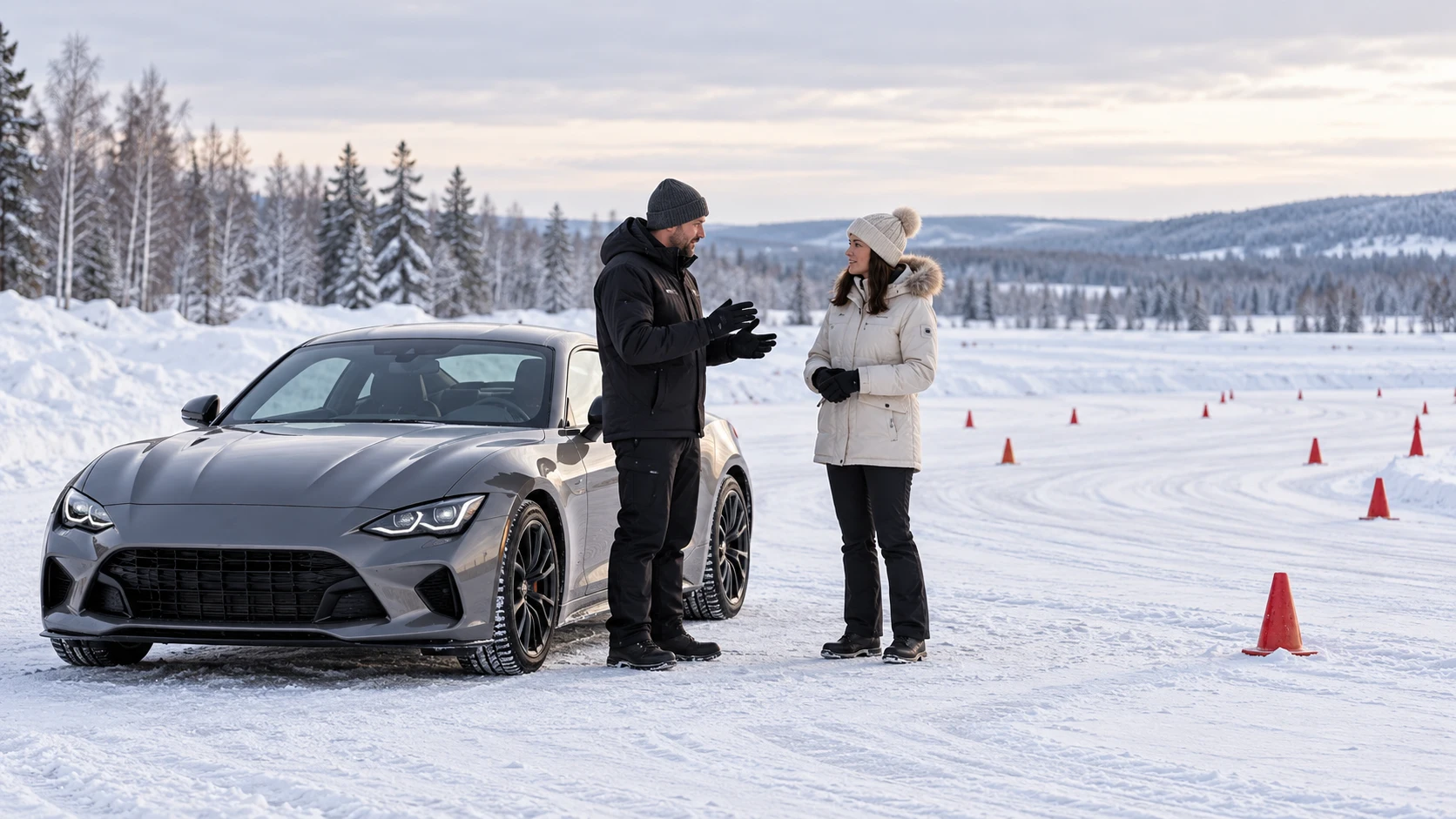
Updated 24 October 2026. The opening image is an illustration of a generic training briefing, not an actual venue, instructor, customer or available course.
Which winter-driving holiday do you want?
Explain what would make the journey worthwhile. “Drive on snow” can describe a practical transfer, an introduction to controlled training or an advanced sports-car programme. Comparing them as if they were the same excursion makes price, time and risk difficult to understand.
| Your purpose | Arrange this | Separate decision |
|---|---|---|
| Winter scenery and towns | A sightseeing route with appropriate transport, rooms and flexible weather days. | Who lawfully drives and how the road transfers work. |
| Introduction to car control | A named training programme with an appropriate level and instruction. | Participant eligibility and the actual activity/insurance terms. |
| Advanced ice-driving practice | An operator-accepted advanced course and its supplied vehicle arrangements. | Required previous training, experience and approved level. |
| Enjoy the trip without driving | A companion programme or another winter holiday. | Whether venue access, meals and passenger rides are actually included. |
For a mixed party, identify who actually wants to drive. A partner or child may prefer a warm hotel and a separate outing, but passenger or companion access depends on the programme. Obtain their arrangements before buying the same travel package for everyone. Spectator access, riding with an instructor and sitting in a training car are separate permissions.
A published course is a useful starting point, not your confirmed place
Porsche China’s published 2027 Ice Experience programme identifies Yakeshi and distinguishes Snow Force Pro from Ice Force. It describes each as four days with two driving days, with different training levels and vehicle arrangements. This illustrates a managed training product with instructors; it is different from independently taking a hire car onto snow.
Ask the organiser which level fits your actual driving history and which prerequisites apply. An introductory label does not necessarily mean suitable for someone who has never driven a car. An advanced label does not establish that experience in another country or on a simulator meets admission requirements.
Use the operator’s current dated programme, participant conditions and written booking response. Confirm nationality and document acceptance, instruction language, the precise venue, included transfers and accommodation, and what happens if conditions alter the programme. This guide does not confirm an available place, an accepted foreign licence or a Vero Trip allocation. Avoid treating general experience-centre prices elsewhere on a website as the price of the ice programme.
Foreign driving documents: separate the course from public roads
Tell the organiser your nationality, age, home licence country and categories, driving history and whether you hold Chinese driving permission. Ask what original documents must be presented, whether translations are needed and whether the course includes any driving on public roads. Get the response before booking flights.
For ordinary road driving, Shanghai’s official temporary-permit guidance distinguishes permission for temporarily imported vehicles from permission for small rental vehicles, with passport, foreign licence and translation requirements. Its local offices and application procedure are an example for Shanghai, not a course-admission decision in Inner Mongolia or a national same-day service promise.
A closed-course acceptance letter does not replace the permission needed to drive between the hotel and venue on public roads. Conversely, a road-driving permit does not establish acceptance by a course or its insurer. Arrange the transfer separately when you are not the lawful driver of that vehicle. The China driving-permission guide explains the wider road-planning questions.
Before paying, put the activity and insurance in writing
The useful quotation names what you will do and what happens when something changes. Request the participant terms and insurance information in a language you understand. Ask the organiser and insurer to resolve exclusions for the exact activity; a general holiday policy or a road-rental policy may have different cover.
| Topic | Get a written answer | Keep distinct |
|---|---|---|
| Admission | Age, nationality, licence, experience, language and documents for the named level. | Enquiry, accepted application and confirmed booking. |
| Actual driving | Driving sessions, instructor ratio, car sharing and training level. | Total programme days and actual time driving. |
| Vehicle and liability | Supplied model/class, preparation, damage assessment, deposit and excess. | Vehicle damage, participant injury and third-party liability. |
| Insurance | Insurer, exact covered activity, exclusions and emergency/repatriation arrangements. | Ordinary travel insurance and course-specific cover. |
| Changes | Weather cancellation, substitutions, refunds and additional hotel/transfer costs. | The organiser’s programme and separately booked flights. |
Keep the operator’s legal identity, terms, payment receipt and agreed changes together. Ask how an incident is reported and who handles medical assistance, vehicle recovery and any damage assessment. A deposit amount does not automatically limit every possible liability. If a document is unclear, have it explained before signing rather than assuming a verbal reassurance changes the written terms.
Do not bring an ordinary rental vehicle onto a course without the owner’s explicit agreement and the correct cover. The provider’s training vehicles may have tyres, preparation and maintenance specific to that site. Their use there does not establish that the same equipment or driving methods are permitted on a public road.
Keep arrival, training and departure as separate blocks
Use the programme’s actual reporting time and finish time to build the surrounding journey. A four-day programme containing two driving days is not four full days of driving. Arrival, registration, briefing, transfers and departure may occupy the other time. Confirm the actual schedule rather than adding sightseeing to every apparent gap.
| Block | Protect this time | Useful question |
|---|---|---|
| Arrival and registration | The complete airport/station transfer, rest and document checks. | Must I arrive the previous day for the actual reporting time? |
| Briefing and preparation | Safety instruction, equipment and the accepted activity level. | Which parts are mandatory before entering the car? |
| Training sessions | The published course and the group’s breaks. | What happens if weather changes one session? |
| Companion time | A named warm base, meals and separate activities if desired. | How does the companion return independently? |
| Departure | The actual finish, transfer and a workable onward connection. | Who pays if the activity or road transfer is delayed? |
If you want Harbin as well as Yakeshi, treat the city connection as a separate travel project. They are different destinations; a regional winter label does not establish a convenient same-day transfer. Check actual dated flights or trains, baggage, pickup points and the final return before combining them. For a conventional snow holiday, compare the Harbin city guide and a named resort stay instead.
Why a test facility or frozen lake is not a substitute
A vehicle-testing site, a commercial experience and an unregulated natural ice surface are different places. An automotive test facility may be built for manufacturers and may not receive ordinary tourists. A photograph of cars there does not establish public entry, training supervision or a bookable visitor activity. Ask for the actual visitor product and authorised operator.
A January 2026 Beijing water-authority warning about Guanting Reservoir describes enforcement against vehicles on the ice and explains uneven thickness and concealed cracks. It is a local warning, not a description of every training venue. The practical conclusion is to stay off unapproved natural ice, rather than judging access from other tyre tracks or a social video.
If the booked programme cannot operate, choose an agreed replacement, a changed date or the contractual refund process. Do not recreate it independently on a nearby lake, car park or public road. A meaningful alternative should suit the group’s interests and lawful access, not merely produce a similar photograph.
Winter road transfers still need their own weather plan
The transport planning institute’s January 2026 guidance on winter disruption describes forecasting, road controls, snow clearance and assistance. A managed course does not remove the possibility of disruption on the journey to it. Follow current weather, traffic controls and the transport provider’s instructions.
For a sightseeing journey, ask the actual transport provider about suitable tyres and equipment, driver experience, recovery support, daytime stages and room to add a night. Do not schedule a remote road return immediately before an essential flight. If you are uncomfortable driving in the forecast conditions, use an appropriate driver service, change transport or postpone the road stage.
For an EV, add low-temperature range and charging access to the route discussion. Use the EV charging-planning guide for account tests and reachable alternatives. The existence of a charger on a map does not settle its availability when a winter road stage changes.
Comfort, companions and useful luggage
Ask the course what clothing, footwear and protective equipment it requires or supplies. Bring adjustable warm layers and dry items for the travel days, while following the instructor’s rules about what can be worn in the car. Keep passport, licence, medication and essentials accessible when the main case is stored.
Confirm heated breaks, meals, toilets, the walk from transport to the venue and the arrangements for a non-participating companion. Explain mobility needs and any dietary, halal or prayer requirements before choosing accommodation. A premium car brand or a winter resort description does not establish those particular facilities.
Tell the organiser about any health concern that could affect participation and seek individual clinical advice when needed. Do not rely on a travel planner or an online course label to decide medical fitness. Agree how a participant can stop early and return to a warm place without disrupting the rest of the group.
Send a brief that separates training from travel
Send your dates, nationality, licence details, driving experience and desired activity through Vero Trip’s planning enquiry. Include the named course if you have selected one, who will participate, companion ages, the surrounding destinations and your food, language and mobility needs. Say which parts you already booked directly.
Ask for the travel arrangements around a confirmed activity to be itemised. The winter-tour collection provides different sightseeing outlines; it does not include an ice-driving course unless the written proposal explicitly names it. Confirm training admission, cars, instructors, liability and programme terms with the responsible operator before treating the activity as booked.
Related Journeys to Compare
These existing routes offer starting points for the region or travel interests discussed above. Read the full daily itinerary to see what is included. A visit described in this guide, a specialist session or an international border crossing is added only when confirmed in your own programme.