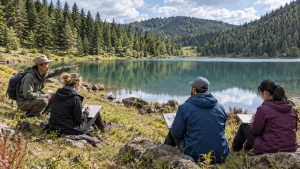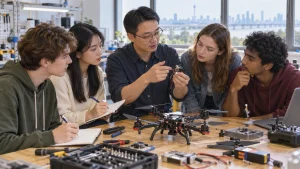
Plan a China educational trip around one learning question, an age-appropriate pace and activities the actual host has accepted. Choose the region after deciding what students should be able to explain or do by the end. A campus photograph, a factory name or a busy sightseeing schedule does not establish a teaching programme.
Families, school groups and university delegations need different arrangements. A family museum holiday can use ordinary visitor admissions; a school exchange, laboratory session or supervised residential programme needs a separate agreement. Explain which type you want before comparing routes or prices.
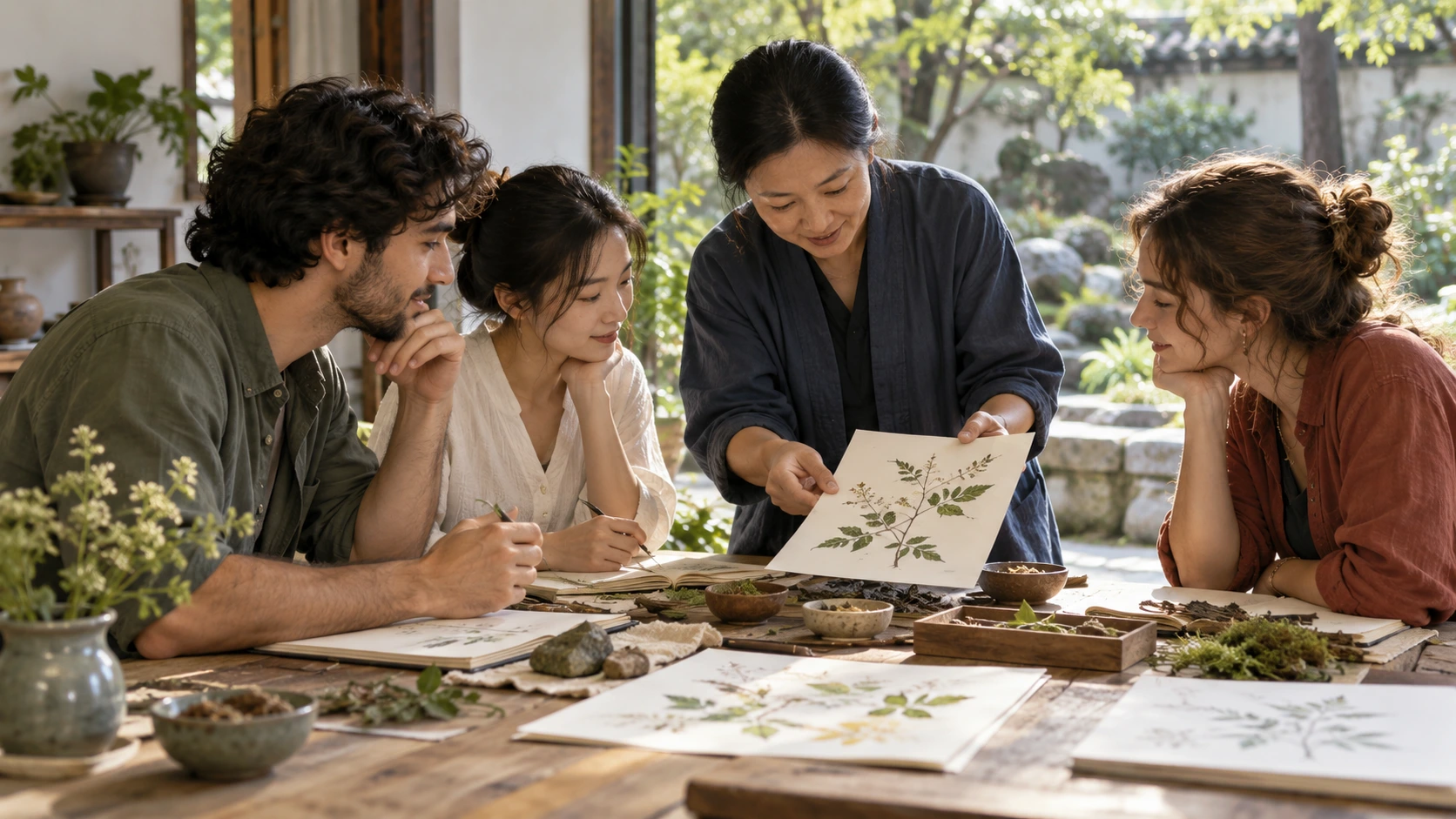
Updated 24 October 2026. The feature image is an illustration of a generic adult learning-travel scene, not a photograph of a named host, accepted programme or actual guests.
Choose the type of learning trip first
Write a short outcome in everyday language. For example: compare how water shapes cultivation, explain one production process, or use objects and buildings to discuss a historical period. A clear question helps you remove visits that add distance without helping students understand the subject.
| Trip type | Main purpose | Essential arrangement |
|---|---|---|
| Family learning holiday | Age-appropriate observation with flexible rest and meals. | Visitor admissions and any separately booked educator or workshop. |
| School field programme | A shared subject, supervised activities and a useful learning record. | Named staff, host acceptance, safeguarding and a group plan. |
| University field visit | Deeper questions, relevant practitioners and time for comparison. | Appropriate host, subject specialist and permission for the proposed work. |
| Professional delegation | Industry learning or institutional discussion. | A host who accepts the delegation profile and meeting purpose. |
The Vero Trip educational-tour collection offers route outlines to compare. Read the actual daily activities and request the accepted hosts for your dates. A regional outline helps form a brief; the final agreement establishes what your group will receive.
Match the region to a subject, not a list of famous names
A Yunnan programme can focus on cultivation, ecology, materials or community knowledge. Select a manageable area rather than combining distant tea, coffee, terrace and highland locations merely because all are in the province. A long road day leaves less time for observation and discussion.
For tea or coffee, distinguish a visitor exhibition, a working farm, a processing demonstration and a hands-on session. Ask what the group will actually see and whether the season supports the intended activity. A harvest photograph does not establish a harvest session during your school break.
For a Wuhan-based science or history programme, ask which museum, public exhibition or accepted institutional visit develops the question. A public transport ride can illustrate a topic without providing access to its operating centre. A university name should identify a specific accepted activity, not simply a gate photograph.
Keep the learning question when choosing an alternative. A closed workshop might be replaced by a materials demonstration at another consenting venue. A shopping stop with no teaching activity is not an equivalent substitute. Agree who decides whether the alternative still meets the educational purpose.
Read a proposed learning day in detail
A useful programme shows what students do before, during and after the visit. An observation task can be simple: draw a process, compare two objects or record a question to ask the educator. The activity should suit the age, language and time available rather than turning the holiday into a hurried worksheet exercise.
| Part of the day | A useful activity | Details to agree |
|---|---|---|
| Before the visit | Introduce the question, key words and expected conduct. | Who teaches it and how language or access needs are handled. |
| At the venue | Observe, ask questions or complete the specifically booked practical task. | Host, materials, group size, supervision and permitted areas. |
| After the visit | Compare observations and explain what changed in the students’ understanding. | A quiet setting, usable time and an appropriate format. |
| Between sessions | Eat, use toilets, travel and rest. | Real transfer time and responsibility for every student. |
Ask for a sample activity and the educator’s role before choosing a programme. A sightseeing guide can support a visit, but may not be the subject teacher or person responsible for safeguarding. One person should not silently be expected to interpret, teach, count students and solve a transport problem at the same time.
Keep a manageable amount of content each day. Younger children may learn more from a short demonstration they can discuss than from several large collections. Older students may need more independent questions, a longer conversation or time to compare evidence. Avoid advertising a guaranteed grade, credential or academic credit unless the responsible institution actually provides it.
Campus and laboratory visits need the institution’s agreement
Ask whether the proposed activity enters the campus, uses a public exhibition, includes a hosted discussion or visits a laboratory. These are different permissions. A booking for a campus visitor route does not automatically include a class, student exchange, dormitory or research space.
For a hosted session, request the institution, contact role, accepted date, audience, language, duration and subject. Explain the group honestly, including ages and purpose. If the host declines, revise the programme before selling that visit as part of a fixed route.
Beijing’s service rules for travel agencies organising minors’ study groups require clear descriptions of teaching, staffing, activities and whether a school visit actually enters the school. They also address contracts, supervision and safety responsibilities. These are Beijing rules for the activities they cover, not a universal foreign-group admission policy.
Use that distinction when comparing proposals anywhere: request the real activity and written terms. A claim of “exclusive university access” is not enough. A public museum with a well-designed lesson may serve your objective better than an uncertain institutional name.
Booking a public venue is separate from organising a teaching activity
The Henan Science and Technology Museum visitor rules offer a concrete example. They provide for foreign-passport reservations and a separate group process requiring museum acceptance. They also require permission for activities such as organised teaching, surveys and filming. An ordinary visitor ticket therefore should not be treated as permission to run an independent class inside the halls.
Check the chosen venue’s own rules for your dates and group. Ask whether an external guide can speak, where students can sit or write, whether materials may be brought in and which activity needs another reservation. A theatre, workshop or temporary exhibition may not be included in general admission.
Collect the details actually required by the legitimate booking channel and explain who receives them. Use accurate passport names and document information. Keep a group leader’s copy of the accepted booking and the correct entrance; do not assume the individual visitor queue is the group meeting point.
Make supervision, accommodation and daily care concrete
For minors, identify who is responsible throughout the day: at the activity, in transport, during free time and overnight. Agree the staff arrangement for the ages and activities, including what happens if a student is ill or needs to leave a session. Do not accept a ratio without understanding the roles it covers.
Rooming needs an actual property and room list. Check bed configuration, bathroom access, floor arrangement, staff rooms, access control and how students contact the responsible adult. A hotel label alone does not explain the overnight supervision.
Discuss dietary requirements and allergies before selecting meals. Ask how ingredients and shared preparation are handled and what alternative is available. Plan prayer breaks and suitable private time where needed. These arrangements should fit the timetable rather than depend on a free moment after a long transfer.
Share relevant support and accessibility needs through an agreed, appropriate channel. Establish medication responsibility, emergency contacts, local response arrangements and how parents are contacted. Ask the insurer which activities and assistance are actually covered, including any outdoor or practical work; a general insurance line in a brochure is not the policy wording.
| Responsibility | What should be named | Question for the organiser |
|---|---|---|
| Group leadership | Responsible school or family contact and on-trip lead. | Who makes decisions and contacts guardians? |
| Teaching and activities | Educator, language support, materials and host limits. | Who teaches while the other adults supervise? |
| Daily care | Rooming, meals, toilets, rest, accessibility and prayer breaks. | How does the plan accommodate a student who cannot do one activity? |
| Disruption | Weather, illness, host cancellation and insurance response. | Who changes the programme and what costs or refunds apply? |
Photography, exchanges and community visits
Separate taking part from publicity. Ask who may photograph students, where the images may be used and how a family declines promotional use. Agree the practical procedure for respecting that choice during group activities. Do not assume that agreeing to travel also grants an unrestricted advertising permission.
Apply the same courtesy to hosts and local participants. A school exchange needs the school and relevant participants to accept the activity and photography arrangements. Avoid presenting children’s private lives, community routines or a working household as an attraction available on demand.
For craft or community learning, ask what the practitioner will demonstrate, how they are paid, which materials students use and whether finished items can be taken home. A respectful, small, accepted session is more useful than an unannounced group arriving with cameras and an expectation of participation.
Compare the complete proposal before paying
Compare programmes with the same learning and care requirements. A lower total may omit educator time, materials, interpretation, staff rooms or a necessary extra night. Keep optional activities and personal purchases separate so that families can understand the real commitment.
| Proposal section | Look for | Do not infer |
|---|---|---|
| Learning | Question, age suitability, named activity and educator role. | That an attraction list includes teaching. |
| Host access | Accepted venue, date, audience and scope. | That a campus or company name establishes entry. |
| Price and contract | Transport, rooms, meals, staff, materials, insurance and changes. | That one bundled number covers every listed interest. |
| Records and consent | Guardian arrangements, emergency contacts and image choices. | That publicity permission is automatic. |
For industry-focused university or professional groups, compare the factory and technology programme collection. Those visits require a different host brief from a general school field day.
To request an educational programme from Vero Trip, send the ages, group size, dates, preferred region, learning question, language, staff arrangement, accessibility and food needs, and budget scope. Name any institution essential to the trip. Ask for the accepted host and a suitable alternative before treating that activity as the reason to buy the journey.
Related Journeys to Compare
These existing routes offer starting points for the region or travel interests discussed above. Read the full daily itinerary to see what is included. A visit described in this guide, a specialist session or an international border crossing is added only when confirmed in your own programme.