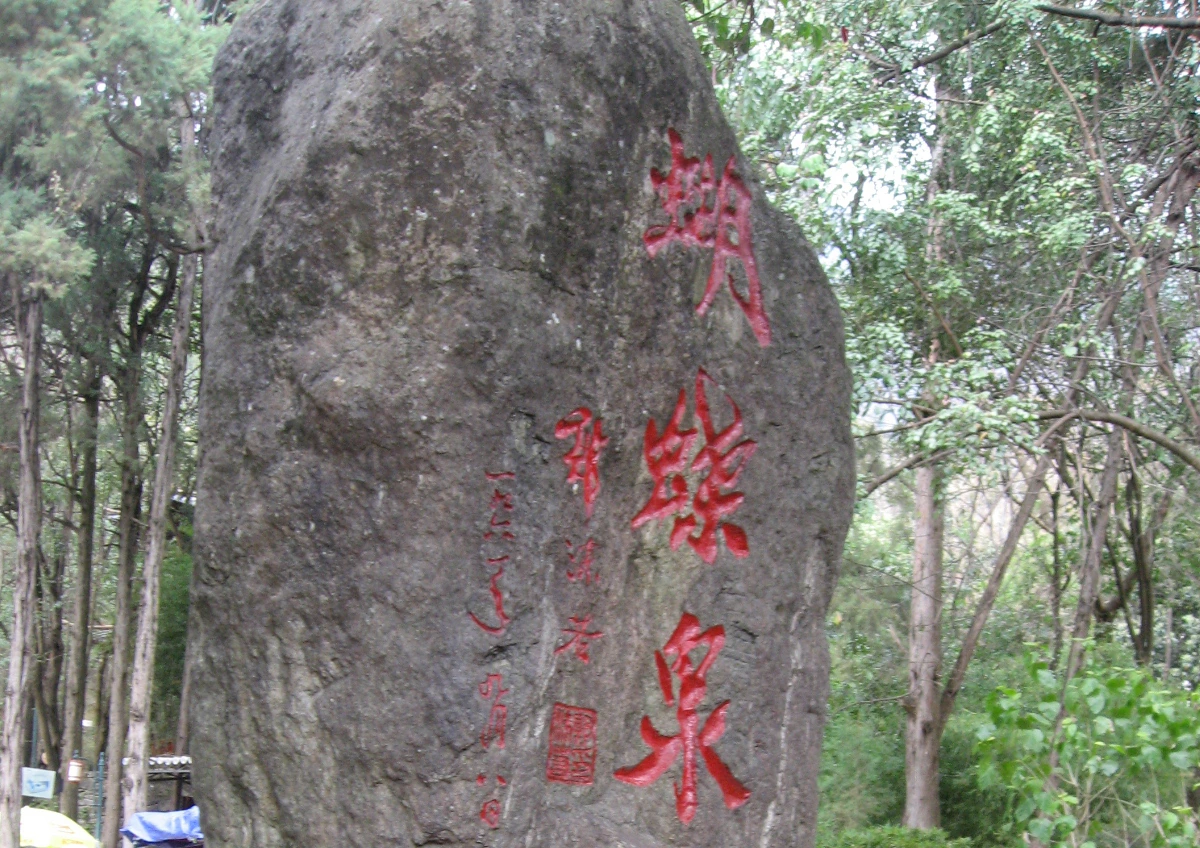
Choose Butterfly Spring for its pool, overhanging tree and Bai cultural setting, with butterflies as a possibility rather than the condition for a worthwhile morning. Start at the water, then choose one display and lunch. A half-day works best when the pool itself interests everyone.
The park is north of Zhoucheng village in Xizhou township, roughly 25 kilometres from Dali Old Town according to the operator. That distance begins at the old town. If your hotel is near Dali railway station in Xiaguan or across Erhai Lake, plot the journey from your actual address. For a short stay, a base on the western side of the lake makes this outing easier to combine with a village meal.
The spring pool and its tree
At the marble railing, compare the basin’s straight edge with the old trunk leaning across it. Look through the reflection before following the branches overhead. Wait where others can pass; changing light will alter the water more than a brochure photograph suggests.
The water comes from below: a fissure spring in fractured granite, emerging beneath gravel at the mountain foot. Look into the small basin instead of searching the hillside for a waterfall. That detail changes how you read the quiet surface beneath the tree.
Find 蝴蝶泉 on the stone, with calligraphy attributed to Guo Moruo’s 1961 visit. Then consider Xu Xiake’s 1639 account: butterfly-like flowers and actual insects hanging from branches are two distinct observations. Neither establishes what will be on the tree today.
| What you want to see | Where to spend your time | What to look for |
|---|---|---|
| The landscape behind the name | The spring pool and its railing | See the shape of the basin, then follow the trunk out over the water. |
| Wing patterns in detail | The butterfly museum, if open | Pick a pair of specimens. Compare the outlines of their wings and the placement of markings. |
| How a butterfly behaves | The public part of Butterfly World, if open | Wait by a plant and watch how an insect settles or feeds. Activity and visibility vary. |
| A shorter walk with a cultural focus | The inscribed name and the pool | Use the inscription and Xu Xiake’s account as two different ways of reading the same place. |
Wild butterflies, the museum and Butterfly World
Choose the display according to the question you bring. Specimens suit close comparison of wing markings; the public live display suits watching movement. Ask which rooms or enclosure are accessible that day before promising either to children, then allow time for one patient look.
Wild gatherings have become difficult to see, according to the October 2026 habitat reporting. Along the public path, notice leaves as well as flowers: caterpillars need suitable host plants while adults need nectar. Leave insects, eggs and vegetation undisturbed even when the garden seems quiet.
Keep greenhouse sightings, outdoor habitat and research areas separate in your expectations. An insect in the live display does not show how many gather over the pool, and researchers’ nursery access does not create a public route. Confirm the actual visitor area if living butterflies are the main purpose.
The Bai Butterfly Festival
Butterfly Spring also has a place in Bai courtship traditions. The prefectural tourism account associates the festival with the fifteenth day of the fourth lunar month, when people gathered at the spring and young people exchanged songs. In antiphonal singing, a voice or group answers another. That exchange helps explain why local stories about a spring, trees and insects are also stories about human relationships.
The date follows the lunar calendar and falls on a different civil-calendar date from year to year. If singing is the reason you plan to come, ask for the programme for the particular year, the public venue and the return arrangement. Someone visiting on an ordinary weekday can still enjoy the association through the site and its name. There is no need to build the afternoon around an unconfirmed performance.
A half-day from the hotel door to lunch and back
Leave large bags at your Dali hotel if you are staying there again. Dali Old Town has lanes where a vehicle pickup may be easier at a gate or a named road than at the front desk. Agree the meeting point on a map, ask the hotel how far it is on foot, and save the Chinese park name. Also save the entrance or exit where your driver expects to meet you afterwards. A destination pin for an entire scenic area leaves too much room for misunderstanding.
At the entrance map, join the pool, one chosen display and the return exit into a manageable walk. Stop at the spring before deciding to extend it. For a split group, name a reunion place and the side of the ticket boundary; everyone needs to know where the tickets will be.
For lunch, choose between an arranged stop near Zhoucheng and a meal in Xizhou on the return towards Dali Old Town. Xizhou baba, a local flatbread, comes with different fillings. Ask what is in the sweet or savoury version before ordering. For a full meal, sit down, ask which vegetables are available, and confirm meat, dairy or nut ingredients if needed. Allow the person who wants a slower lunch to finish before deciding whether to add another stop. The Dali food and markets guide has more on the flatbread and rushan milk fan.
If textiles are your priority, allow a separate visit to Zhoucheng’s Bai tie-dye displays. A booked workshop needs its own start time and enough time to finish. If architecture interests you more, use lunch in Xizhou and one accessible courtyard as the afternoon. Either addition extends the half-day. For a shorter outing, travel straight back after lunch, collect any stored bags and finish at your hotel.
Where to sleep and how many nights to allow
With two nights, the full day between arrival and departure is the one to reserve for the spring. With three nights, there is room for a separate village day. A fourth night helps if different members of the group want an outdoor day and time for crafts. Changing hotels solely for one visit adds luggage handling and checkout time. The Dali base and overnight planning guide compares old-town access with other places to stay.
| Stay | Suggested sequence | Why choose it |
|---|---|---|
| 3 days, 2 nights in Dali Old Town | Arrive and settle in. Visit the spring on day two, have lunch and return to the same hotel. Leave on day three. | A practical plan if the spring is your one outing north and you want dinner close to your room. |
| 4 days, 3 nights near Xizhou | Allow for the transfer on arrival. Use one full day for the spring and a meal, the other for village lanes or a textile visit. Return to your departure point on day four. | A village base for repeat visits on the west side of Erhai. Check where a vehicle can collect bags. |
| 5 days, 4 nights at one Dali base | Keep separate days for Butterfly Spring and Zhoucheng. Use the third full day for an old-town or lakeside outing according to the weather. | More freedom to switch days around and a full night at the hotel before your onward journey. |
Access, weather and costs
Some visitors want a photo at the spring and a short return. Others are comfortable standing at museum cases or waiting beside plants. Tell your travel consultant how long each person can walk and stand, whether steps are manageable and whether anyone uses a wheelchair or pushchair. Ask about the actual route between the entrance, pool, chosen display, toilets and pickup point. A gentle-looking poolside photograph cannot establish an accessible route from the road.
| Before you go | What to settle | How it affects the plan |
|---|---|---|
| Admission and language | Give the travel date, nationality and document type. Confirm the purchase or collection channel for your original passport and whether English interpretation is arranged. | A park listing or an English title alone cannot settle payment, collection or who will accompany you inside. |
| Rain or limited walking | Ask which paths and displays are open. Plan for wet paving and an earlier return if the surface is uncomfortable. | Choose the shortest suitable public route, take lunch earlier or use a different day. |
| Transport and luggage | Agree the hotel or road pickup, entrance drop-off, driver waiting, meeting point after lunch and final destination. | A ride to the park covers only the first leg. A station drop with bags needs its own arrangement. |
| Price on request | Request separate written terms for vehicle, admission, any extra activity, interpretation, meals and accommodation. | The proposal can then reflect your chosen display, meal stop, hotel and group size. |
Questions about Butterfly Spring
Is it worth going if I see few butterflies?
Yes, if the spring, tree and Bai cultural history interest you. The inscribed name and the pool make a coherent short visit on their own. If your only aim is to photograph a wild swarm, the published habitat reporting gives good reason to choose a different plan.
Which display suits someone with a close interest in insects?
Choose the specimen museum for slow comparison of wing shapes and markings. Choose the public live display if the goal is to observe a moving insect among plants. Ask what is open that day and whether any labels or interpretation are available in a language you read.
Can I combine Butterfly Spring with a train out of Dali?
It depends on the departure, the station and where your bags are. Work backward from the station arrival you need, including the road journey, any baggage collection and the walk in from the drop-off. If lunch or the return drive would be rushed, visit on a full day earlier in the stay.
What should I send Verotrip for an itinerary?
Send your dates, hotel address, number of travellers, preferred display, walking needs and the place you want to finish. Mention a meal in Xizhou or a craft appointment in Zhoucheng if either matters. Your travel consultant can use those details to put together a written Price on request proposal for the trip you have in mind.
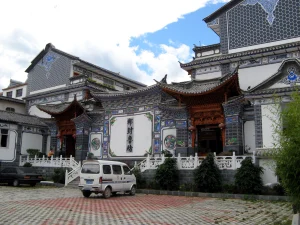
Cover photograph of the Butterfly Spring inscription by Kcx36, 12 March 2011. Converted to WebP and cropped for display under CC BY-SA 4.0.