Give Zhoucheng’s cloth and makers a Dali village day. Begin by understanding Bai tie-dye, then choose a display-led visit or a reserved beginner activity, with lunch and the complete hotel return. Several villages and an Erhai circuit are not required.
Zhoucheng / 周城 is in Xizhou township, north of Dali Old Town. Save both the village name and the Chinese name of your chosen venue. A shop in Dali selling blue-and-white cloth, a workshop in Xizhou and an appointment in Zhoucheng are different destinations. This guide focuses on a textile-led village day, with the overnight base and practical finish planned around it.
Choose a display visit or a hands-on session
Select observing a demonstration, studying finished cloth or making a small piece as the main purpose. They use time differently, and the named host must accept the actual format and date. Museum entry includes no automatic lesson or working-area access.
| Main interest | A useful visit | Confirm before setting out |
|---|---|---|
| Understanding textiles | A selected display and an explanation of tying, dyeing and finishing. | Which rooms are open, interpretation language and whether a demonstration is scheduled. |
| Trying the process | One simple item with a willing, prearranged craft host. | Material, techniques, supervision, total session and drying or collection. |
| Looking for a useful purchase | Compare fabric, workmanship and care instructions after the visit. | Item price and payment; buying remains optional. |
| A shorter village outing | One confirmed venue and a manageable public-lane walk. | A seated rest, lunch and a clear road pickup for the return. |
What to look for in Bai tie-dye
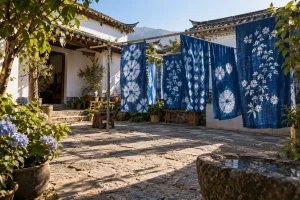
The national intangible-heritage listing records Bai tie-dye as a first-batch national project in 2006. It identifies Zhoucheng as an important centre and describes cotton or cotton-linen cloth, plant indigo, tying and dyeing skills, and tools such as vats, drying frames and stone rollers. These details give you a way to look beyond the colour of a souvenir.
Compare tied fabric and the pattern after opening if samples are available. Look at repeated motifs and their arrangement. Two explained pieces may reveal more of the process than naming every pattern on a wall.
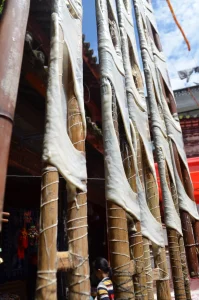
Ask which stages the host actually performs. Drawing, preparing, tying, dyeing and finishing may take place elsewhere. A displayed tool can be historic, working or demonstrative; wait for permission before touching it or moving drying cloth.
Treat the particular textile and the heritage tradition separately. Ask about fibre, dye, origin, making and care rather than applying plant-dyed, entirely handmade or colourfast claims to every blue item sold in the village.
Puzhen Museum and a named workshop: choose the actual address
The Dali culture and tourism bureau’s museum introduction places Puzhen Bai Tie-Dye Museum / 璞真白族扎染博物馆 in Zhoucheng. It describes Bai courtyard forms and displays concerned with the origins of tie-dye, craft families, finished work and visitor experience. Treat this as a venue to investigate, with its current visitor areas and activity arrangements checked separately.
In admitted Puzhen spaces, notice rooms around light and the screen wall or multiple light wells described in the official account. This architecture can be appreciated without entry to every working court, room and upper floor.
A June 2026 Yunnan Net visit describes traditional looms and textile displays at Puzhen. It also discusses ambitious tie-dyed works drawing on the historic Zhang Shengwen scroll. A textile interpretation of a painting is a different object from the original painted scroll: ask what a label identifies, and check whether the particular work interests you enough to confirm its display before travelling.
The same report visits Lanxu / 蓝续, another named craft business in the village. Choose a host for the explanation or activity you want, rather than assume all courtyards provide the same session. Save the address supplied for your appointment; an English business name alone may not identify the entrance or a particular branch.
The report quotes Puzhen’s operator describing visitors from Malaysia and Singapore. That provides ordinary international-visitor context, not a guarantee of today’s admission or booking process for every passport. Establish the named venue’s current document requirements, whether an original passport is needed, and the actual payment and reservation channel before committing to a timed activity.
A complete day from your Dali hotel
Start with the appointment, then arrange the road journey
Have breakfast before leaving and travel from the hotel’s full address to the agreed legal drop-off. Dali Old Town, Xiaguan and an east-shore hotel involve different approaches. Set the departure around the confirmed appointment and current road conditions, leaving room for the final walk from the vehicle. Do not convert a map estimate into a guaranteed arrival time.
Begin the main visit while attention is fresh: a few objects and one pattern question for a display visit, or agreed item and instructions for a workshop. Observers need a suitable accepted seat rather than being counted as active participants by assumption.
Protect lunch and the finishing time
Stop for a seated lunch, either after a shorter visit or at the break agreed with a longer session. Ask about a cooked rice or noodle meal and suitable vegetables or protein, rather than rely on finding a particular village speciality. If a Xizhou food stop is important, allow the separate transfer and shorten another part of the day. It should not displace the craft appointment or the return.
For broader choices such as Xizhou baba and rushan milk fan, read the Dali food and market guide. Check fillings, dairy and cooking ingredients individually. A snack or tasting is not a complete lunch arrangement, and a dish that looks vegetarian may use a meat-based broth. Explain allergies or other dietary needs before the day and confirm what the selected kitchen can provide.
Finish the cloth, then finish the journey
After the main visit, take a short walk only on public lanes or in areas where the host permits visitors. Keep doorways and working spaces clear, and ask before photographing people or entering a residential courtyard. A closed doorway is not an invitation to search for a more photogenic route through someone’s home.
Return to the agreed pickup point and continue all the way to the hotel. Include the final lane walk and any stored-bag collection. A car hired only for the outward journey is not a complete day arrangement. With independent transport, identify the actual return boarding point and a usable alternative before leaving your base; do not depend on an unspecified last bus.
If you make a piece, plan beyond the dye bath
A Xinhua report from October 2026 describes visitors taking part in tying, dyeing, rinsing and opening their work in Zhoucheng. It is evidence of the kind of experience offered locally, not a timetable for your chosen workshop. Ask which steps a beginner actually performs and which are handled by staff.
Choose a manageable small piece when learning the process matters. Establish fabric, finishing, optional sizes or colours, charges and seated effort. Children’s suitability rests on actual age and supervision terms, not a family-activity label.
Ask about protective clothing and tools before beginning. Follow the host’s instructions around needles, scissors, dye and any heated equipment; keep food away from the work surface. Travellers who want to avoid contact with dyes can choose an observation-led visit. Do not treat a plant-based description as proof that a material is suitable for every skin sensitivity.
Agree what happens to damp cloth before beginning. Later collection, instructed packing and delivery carry different costs and practical effects. Follow maker washing and drying advice; do not place unfinished work against luggage or rely on an unconfirmed drying time before a train.
Keep one hotel base for three, four or five days
For a first Dali stay, a road-accessible property near the old town can combine varied meals with a Zhoucheng day. Xizhou is another option when the northern villages are the main interest. An east-shore room works best when you also want time there; repeatedly crossing to the western villages can make a short stay feel dominated by transfers. Compare the Dali base choices before selecting a room.
| Stay | A practical sequence | What the nights provide |
|---|---|---|
| 3 days, 2 nights | Arrival and settle; Zhoucheng visit with lunch and hotel return; departure. | One complete local day without a hotel move. |
| 4 days, 3 nights | Arrival; Zhoucheng; a separate town or selected lake day; departure. | Two full days with different priorities. |
| 5 days, 4 nights | Arrival; Zhoucheng; Xizhou; a flexible local day; departure. | Time for textiles and architecture on separate days. |
These patterns assume arrival and departure occupy their own days. A late first evening or early final train does not add sightseeing time. Leave the flexible day available for rest or a weather change; a mountain trip would need its own route, operating conditions and return arrangements.
Check the actual room, bathroom, steps, evening meals and vehicle stopping point before choosing a courtyard stay. The look of a building does not tell you whether your room is accessible. Keep large suitcases at the hotel for the village day where possible. If you change hotels, agree secure luggage handling and capacity in the actual vehicle, and keep documents and essential belongings with you.
If you want both villages, the existing two-day Xizhou and Zhoucheng private-car itinerary puts Xizhou on Day 1 and a confirmed Zhoucheng craft host on Day 2, with one Dali night between. Its second day returns to a Dali hotel; a station or airport finish needs a separately suitable connection. That route is a useful starting point for a written proposal, with the workshop and language service specified individually.
Walking, weather and language
A seated activity can still involve substantial time leaning over a table, using the hands or waiting while work is finished. Tell the host about limited grip, back discomfort or the need for regular breaks. Ask for the entrance-to-seat distance and toilet access. Do not assume that a courtyard photograph establishes a step-free route for a wheelchair or stroller.
Wear comfortable shoes with grip and clothing that you are willing to protect during a workshop. In rain, shorten the exposed village walk and check that the booked activity can still take place under suitable cover. Wet weather can change drying arrangements even when the lesson itself continues. Strong wind or uncomfortable conditions are reasons to return earlier, not to add another outdoor stop.
An English explanation of the process should be arranged explicitly. A driver, an interpreter and the craft instructor perform different jobs. If the host teaches in Chinese, establish who explains each practical step and who remains with the group. A translation app can help with simple questions, but it should not be the only plan for understanding tool or dye instructions.
What a written proposal should include
| Part of the visit | Specify in writing |
|---|---|
| Venue and documents | Exact Chinese name and address, current visitor areas, date, admission or appointment channel and document requirements. |
| Craft activity | Observation or participation, item and material, steps, supervision, language, finishing and collection or delivery. |
| Transport and return | Hotel addresses, legal drop-off and pickup, waiting, luggage capacity, final walk and complete return. |
| Meals and accommodation | Lunch arrangement, dietary needs, payment; any named hotel, room and number of nights. |
Price on request. Ask for admissions, instruction, interpretation, materials, transport, meals and accommodation to be listed separately. Souvenir purchases and additional craft items should remain your choice. The written offer should identify the actual arrangements and applicable change or cancellation terms; this guide does not establish included tickets, an available instructor or a confirmed departure.
Frequently asked questions
Can I visit without taking a workshop?
Yes, an observation-led visit can be the purpose of the day when the selected venue accepts that arrangement. Confirm the open displays and interpretation, then leave time for lunch and a short public-lane walk. Do not assume a lesson is required to appreciate the textiles.
Should I combine Zhoucheng and Xizhou in one day?
It can work with a short, confirmed activity and a deliberately reduced town visit. For a longer workshop, give Zhoucheng the main day and keep Xizhou separate. The Xizhou courtyard guide helps you decide what would otherwise be squeezed out.
Will I leave with a dry, finished item?
Only if the host confirms that the selected process and conditions allow it. Establish the finishing, packing or later collection before starting, especially on a day with onward travel. An activity description alone does not guarantee a ready-to-pack result.
Is buying cloth part of the visit?
Only purchases you choose should be added. A lesson fee, museum admission and a shop purchase are separate matters. Ask about the materials and care of an item, and take time to decide without making shopping the condition for the rest of the day.
Plan a textile visit with a clear finish
Tell Verotrip whether you want to understand the craft, try a small piece or spend longer with textile displays. Send your date, Dali hotel address, party size, language, walking comfort and dietary needs through Plan My Trip. Your travel consultant can shape the proposal around one named visit, lunch, the handling of any finished work and the full return to your base.
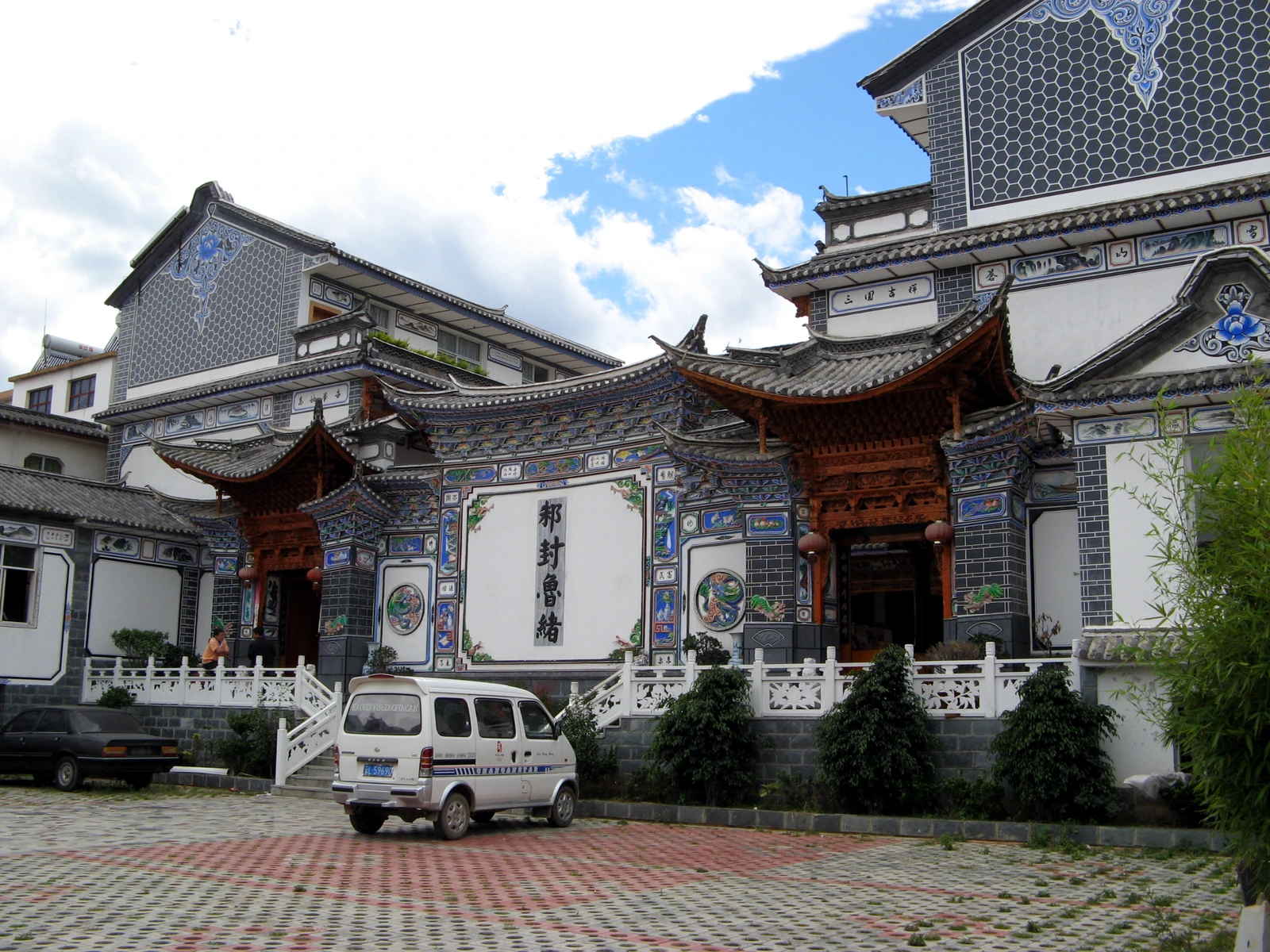
Header photograph: Bai-style architecture in Zhoucheng village near Dali, photographed in 2007 by G41rn8 / Wikimedia Commons, CC BY-SA 4.0. Resized and converted to WebP, with responsive cropping; the adapted image is available under the same license. The building is modern and incorporates traditional Bai design features. The photograph is a historical village view and does not identify a particular workshop or a current visitor activity.