Bai three-course tea is worth choosing for the contrast between three small drinks and the conversation around them. In Dali, it can make a thoughtful stop within a Xizhou village day: look at a few courtyard buildings, sit down for tea, eat a proper lunch and return to your hotel without trying to circle the whole lake. Decide first whether you want a quiet tasting, a presentation with performance, or a practical lesson. They are different experiences.
The Chinese name is 白族三道茶, or Bai san dao cha. “Three-course” refers to a sequence of teas, rather than a three-course meal or three refills of one brew. This guide explains the flavours, the ingredients to ask about, and how to fit a confirmed tea stop into a comfortable Dali stay.
Understand the three flavours
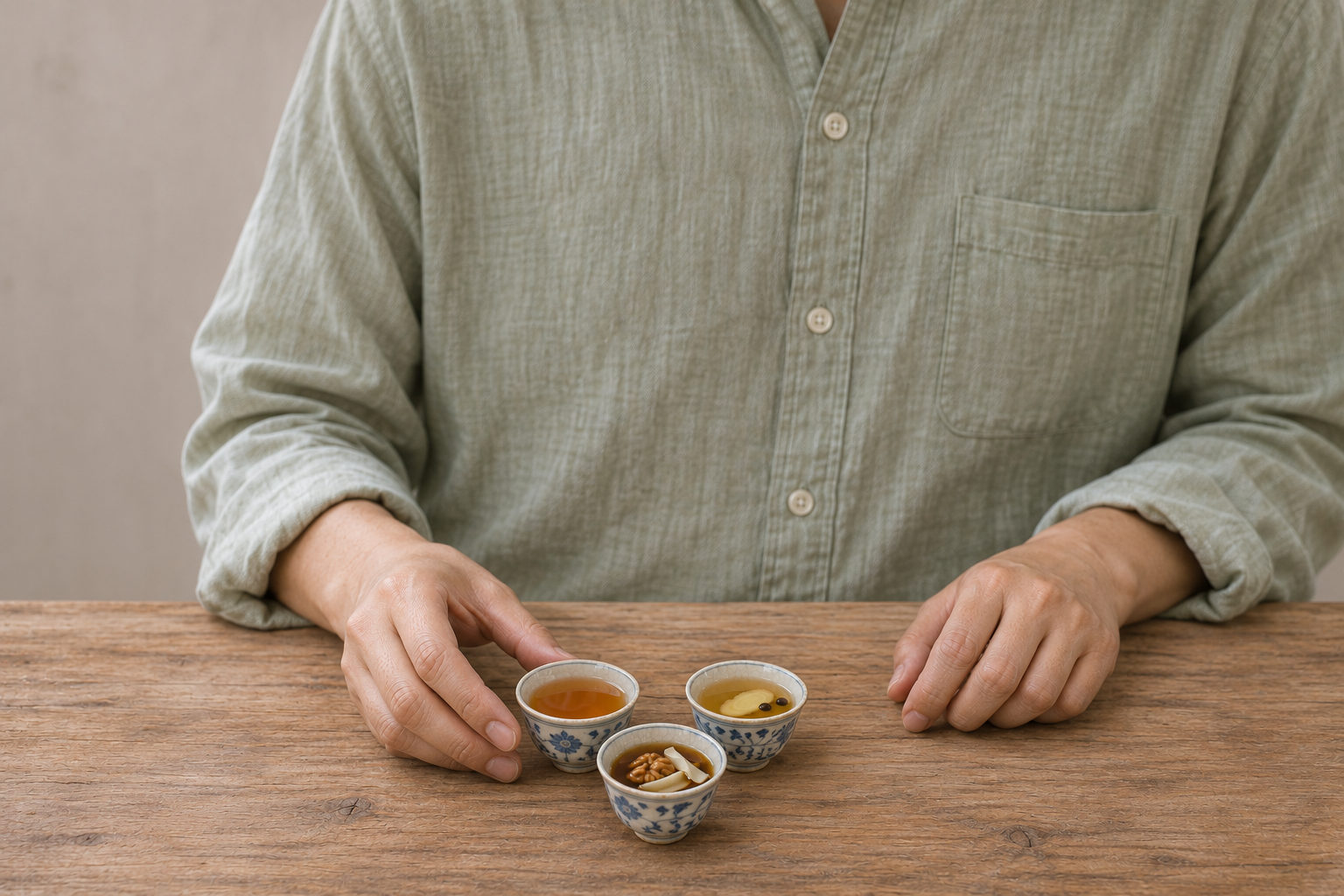
The familiar sequence is bitter, sweet and a lingering final taste. A 2024 Dali cultural-tourism account published by Yunnan Daily describes it through a demonstration by practitioner Dong Li at a Fengyangyi tea room. The first tea uses green leaves roasted in a clay pot before hot water is added. The account presents the sequence as hospitality and a reflection on life, moving from hardship towards sweetness and reflection.
For a visitor, the useful starting point is the change in the cup. Notice the first tea’s roasted character before comparing it with the richer sweet course. Leave a little time between drinks and ask what has been added. You need not turn the visit into a test of how much tea you can finish, and you should not assume that “sweet tea” is simply the first tea with a spoonful of sugar.
A 2022 Xinhua production report describes ginger, liquorice and brown sugar in the sweet preparation, served with rushan milk fan and walnut. Its final tea includes honey and spices such as peppercorn, ginger and cinnamon. These are documented examples, not a compulsory recipe shared by every host. The last cup may combine several sensations rather than taste like plain green tea.
| Course | What to notice | What to ask |
|---|---|---|
| First: bitter | The roasted tea and its comparatively simple preparation | Which tea is used, and how hot it will be served |
| Second: sweet | A richer cup, sometimes with milk fan, nuts and sweetening | The actual ingredients, including dairy, nuts and added sugar |
| Third: lingering taste | The effect of honey and spices in the host’s version | Which spices and sweeteners are present; whether anything can be omitted |
Listen to the explanation offered by the person preparing your tea, while keeping a distinction between a cultural interpretation and a promise about the drink. The sequence does not provide a medical benefit or a guarantee that one version is suitable for everyone. Its appeal is the opportunity to taste carefully and hear how the host explains it.
Choose a tasting, a presentation or a lesson
A quiet seated tasting suits travellers who want to ask about ingredients and compare flavours. A presentation that includes music or dance gives a broader performance setting, but the schedule and attention available for individual questions may differ. A hands-on session needs a separate arrangement: watching a clay pot being used does not automatically mean visitors can handle it or prepare their own tea.
In a December 2025 Economic Daily interview reproduced by Sohu, a Xizhou courtyard tourism operator described foreign guests enjoying Bai tea, song and dance, and craft activities. This is a dated account of international visitors taking part. It does not establish that every courtyard offers the same programme now, or that every passport can use every booking channel. Confirm the named venue, date, actual activity and accepted documents for your party.
| Format | Best reason to choose it | Check before booking |
|---|---|---|
| Quiet tasting | Time to compare the cups and ask questions | Seating, interpretation, ingredients and the agreed length of the visit |
| Tea and performance | A scheduled cultural presentation as part of the outing | The actual programme and whether tea, seating and admission are included |
| Practical session | An opportunity to learn a small part of the preparation | What guests may do, supervision, materials and teaching language |
| Tea within another package | Convenience when a confirmed itinerary already includes it | The exact activity and package; do not infer it from a general attraction name |
Ask for a description of what happens after you sit down. Is someone explaining each drink, are cups served during a performance, or is the stop mostly a chance to buy tea? None of those formats should be confused with another. If conversation matters, confirm spoken English or an accompanying interpreter; an English booking message alone does not establish the language used at the tea table.
A cruise programme is another separate choice. Some historically advertised lake packages include cultural presentations, but a shore-based tea visit does not include a boat ride. Read the Erhai cruise planning guide if a cruise is the main reason for your day, and confirm its actual inclusions separately. Adding a crossing simply to obtain a tea tasting can change the whole transport and return plan.
Make Xizhou one focused village day
Xizhou works best here as one place to explore at a measured pace. Choose a small number of publicly accessible streets and one agreed courtyard visit, followed by the tea stop and lunch. The Xizhou Ancient Town guide helps distinguish street walking from entry to particular courtyards. A building being visible from a lane does not mean its rooms, upper floors or private residential areas are open to visitors.
Arrange the tea venue by its full Chinese name and entrance, rather than telling a driver only “three-course tea in Xizhou”. A broad village address can leave you some distance from the actual meeting point. The same applies if you choose a session elsewhere around Dali: confirm a particular provider before placing it in the day’s transport plan.
The 2024 Fengyangyi account is useful background to the tradition, but it is not a current appointment calendar for Dong Li or the tea room described. A dedicated visit there would be a different geographical choice from the Xizhou day proposed here. Pick the location that fits your confirmed arrangements; avoid adding two distant tea stops simply because both appear in articles.
For travellers with limited time, one unhurried session is usually enough to compare the sequence. Use the rest of the outing to understand the village and eat locally. Keep any additional lake-shore stop short and on the agreed return route, with a clear vehicle collection point. Do not describe a whole-lake circuit as a small extension to a village tea visit.
A complete tea day, from hotel to hotel
Start at your agreed Dali hotel after breakfast. Leave overnight bags with the hotel by arrangement, and carry only what you need for the day. Confirm whether the collection vehicle can reach the entrance or whether a short walk to a roadside meeting point is necessary. For an arrival directly from a station or the airport, settle the bags and hotel transfer first; do not rely on a courtyard venue to store luggage.
Reach Xizhou, take a short orientation walk and visit the agreed public area or courtyard. Build in time to find a seat and settle before the tea session. If a performance has a fixed start, work backwards from the confirmed booking; do not invent a daily timetable or assume the next show starts when your vehicle arrives.
After tea, have a seated lunch in the village or another agreed place on the route. A small drink served with nuts or milk fan is not a substitute for a meal. Then choose between a little more village walking and an early return. A lake-side stop should depend on the party’s energy, the weather and the actual road arrangement, rather than become an obligatory extra.
Finish at the same hotel unless a different endpoint has been written into the plan. Specify the waiting arrangement, final collection point and full return transfer before departure. A driver dropping you at a village entrance is not the same service as waiting during the visit and taking you home. If travelling independently, decide how you will obtain the return journey before you begin.
Lunch, ingredients and taking tea home
Use the Dali food and markets guide to choose a meal rather than accumulating snacks. Xizhou baba can be a small local food stop, while rushan may already appear in the sweet tea. If you want a substantial lunch, ask for dishes and portions that suit the group instead of assuming the tea programme includes them. Check where lunch is taken and who pays.
Describe dietary requirements before booking, then check the actual recipe on the day. Milk fan is a dairy ingredient; walnut is a nut; honey and sweeteners may be used. A host’s version may contain other ingredients. If you cannot consume an ingredient, ask whether a suitable alternative can actually be prepared and served separately. Do not assume that removing a visible garnish changes everything already mixed into the drink.
It is reasonable to enjoy the explanation without tasting every cup. Make the preference clear politely, and arrange ordinary drinking water separately if needed. Let hot drinks cool to a comfortable temperature and keep hands away from a hot preparation pot. These choices are easier in a small, clearly described session than in a rushed stop whose contents were never discussed.
If you buy tea, ask what is in the package and whether it contains plain leaves or a prepared blend with additional ingredients. Check the label, quantity and storage advice. The cups served during a visit need not correspond to one ready-made product you can reproduce by adding water. Buying a packet also does not purchase a lesson, cultural explanation or permission to photograph the preparation.
Choose a Dali base and the right number of nights
Stay near Dali Old Town if a wider choice of town walks and meals suits the rest of your visit; travel to Xizhou for the agreed outing. Staying in Xizhou can reduce movement on the tea day and allow a quieter village-based rhythm, but check access with luggage, nearby meals and the next departure transfer. A courtyard-style room should not be assumed to include cultural activities, step-free access or a particular level of sound insulation.
The Dali planning guide covers the broader choice of bases. Keep one base for a short tea-focused stay unless there is a separate reason to move. Arrival and departure transfers use real time, and the most useful extra night may be the one that removes a hurried connection rather than adds another attraction.
| Length | Night allocation | A workable rhythm |
|---|---|---|
| 3 days / 2 nights | Two nights at one Dali base | Arrive and settle; one Xizhou tea-and-village day; depart after bag collection |
| 4 days / 3 nights | Three nights at one Dali base | Arrival day, the tea day and a separate town or agreed shore outing, then departure |
| 5 days / 4 nights | Four nights at one Dali base | Keep the tea day focused; add separate interests and a flexible period before the final transfer |
These are local stay patterns, not promises that every arrival leaves a full sightseeing day. Keep a substantial fixed activity away from a tight train or flight connection. On the final day, collect all stored bags and arrange the hotel-to-station or airport leg for the actual departure point. A tea-room drop-off is not the end of that travel day.
How this fits an existing Verotrip itinerary
The 8-Day Relaxed Yunnan Private Tour: Kunming, Dali and Lijiang places a three-course-tea introduction in Xizhou on Day 4, alongside village architecture and a selected west-shore outing, before returning to the Dali hotel. That is the specific connection to this guide. It is a wider journey, rather than a standalone tea class or a three-day Dali package.
The published route has seven hotel nights: two in Kunming, two in Dali, two in Lijiang and one final night in Kunming. It continues to Lijiang after the Dali stay, then returns to Kunming before departure. Read its complete daily programme when comparing it with the local stay options above. The precise tea venue, format, language and dietary arrangements should be written into your proposal rather than inferred from the itinerary heading.
Walking, weather and the written price
A seated activity can still involve standing before entry, uneven village lanes and walking between the vehicle and the courtyard. Ask about steps, toilets, chair availability and the distance from the actual drop-off if these affect anyone in the party. “Tea experience” does not by itself describe accessibility. Choose a shorter approach and fewer buildings when prolonged walking or standing would be difficult.
For wet or windy weather, shorten optional street and shore walking. A confirmed indoor tea session may remain the main activity, provided the venue is operating and the access is suitable. If the session cannot proceed, agree a different visit or a relaxed town meal rather than promising an equivalent show nearby. Keep the complete hotel return in either version of the day.
Price on request. Ask for the named venue, actual format, date, party size and meeting point, then list admission, tea, interpretation, lesson materials, vehicle waiting and the full return separately. Lunch, other drinks, shopping, hotel nights and station or airport transfers also need explicit treatment. A price for a drink is not a price for an accompanied village day, and an itinerary suggestion is not confirmation of daily departures.
Questions about Bai three-course tea
Is three-course tea a full meal?
No. It is a sequence of tea preparations. Even when the sweet course contains nuts or milk fan, plan a separate lunch or dinner and confirm whether any food service is included.
Does every tasting include Bai music and dance?
No. A quiet tasting, a cultural presentation and a practical lesson are different formats. Ask what your named venue will provide on the chosen date rather than relying on a general description of the tradition.
Can I visit if I do not want every ingredient?
Ask about the exact recipe before booking and explain what you cannot consume. A suitable alternative or observing without tasting may be possible by agreement; neither is guaranteed for every session.
Can I do this from a Dali Old Town hotel?
A confirmed Xizhou outing can be planned from a Dali hotel with lunch and a full hotel return. Agree collection and waiting arrangements, and avoid adding a whole-lake circuit or a tight departure connection to the same day.
To plan with Verotrip, share your dates, party size, Dali hotel preference, arrival and departure points, dietary requirements and whether you want tasting, performance or practical learning. A travel consultant can use those details to prepare a personal travel proposal with the activity and transport arrangements stated clearly.