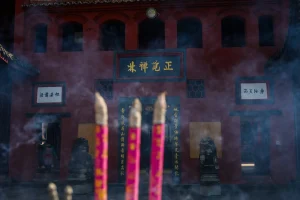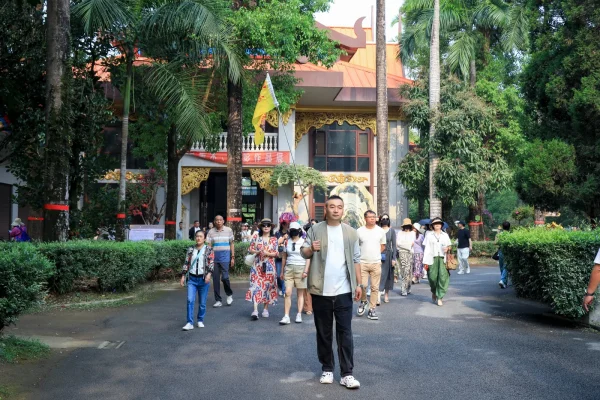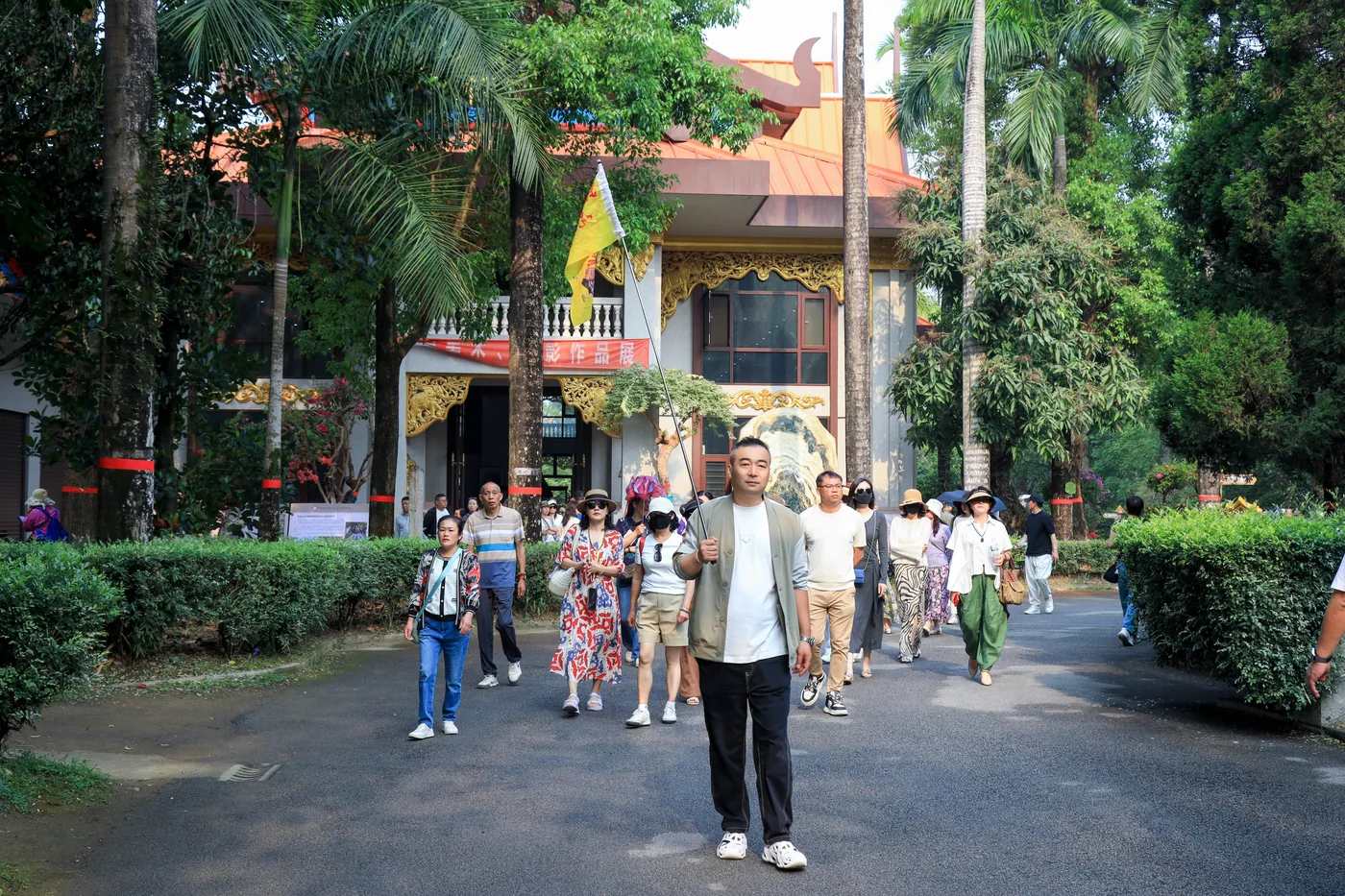
Give Guangde Temple (广德寺) a half-day in Suining. Start with the Imperial Decree Arch, continue to the Song stele if its viewing area is open, and finish with a look at the outside of Shanji Pagoda. The three stops show different sides of the same temple: a gateway built for receiving imperial edicts, a written record of patronage, and a stone tower tied to the memory of a monk.
Guangde stands on Wolong Hill on the west side of Suining. The foundation goes back to the Tang, while the buildings and monuments visible today belong to different periods of rebuilding. The short route works well from a central Suining hotel, with a seated lunch and a return to town afterwards.
Start with the Imperial Decree Arch
Look for Shengzhi Fang (圣旨坊) inside the temple precinct. The surviving structure is from the Ming Chenghua period. Give yourself a moment to see why a freestanding arch within the complex differs from the gate you used to enter it. An outer gate brings visitors into the temple. The Imperial Decree Arch marks the relationship between the monastery and the court. Its location is part of the story.
Stand back to see the two levels of eaves and the three bays beneath them. If a side view is available from the public route, the shallow depth of the arch and the stacked timber supports become easier to distinguish. The arch reads as a threshold even though the temple continues beyond it. A short explanation from a guide is useful here if you want to understand the plaque or the court titles instead of simply photographing the roof.
| Stop | Look for | If access changes |
|---|---|---|
| Imperial Decree Arch | The two levels of eaves above three bays, and the position inside the temple. | Use any permitted view of the arch and keep the arrival and descent easy. |
| Song stele | The carved dragon ornament above the written record of imperial patronage. | Read an available interpretation panel, or replace the stop with the pagoda exterior. |
| Shanji Pagoda | The outline of its square base and layered stone eaves. | Look from the nearest permitted public point and skip closed sections. |
Read the stele and view Shanji Pagoda from outside
The Song stele (宋碑), also called the Nine Dragons Stele (九龙碑), records earlier imperial grants to Guangde. If the stone is visible from the visitor area, look for separate parts of the monument. The decorative top has carved dragons. Below it, the inscription is a written account, with names and formal titles used to record the temple’s standing. Look for an interpretation panel or request a translation of one passage. Viewing the stele from a distance works better than trying to make out every character in worn stone.
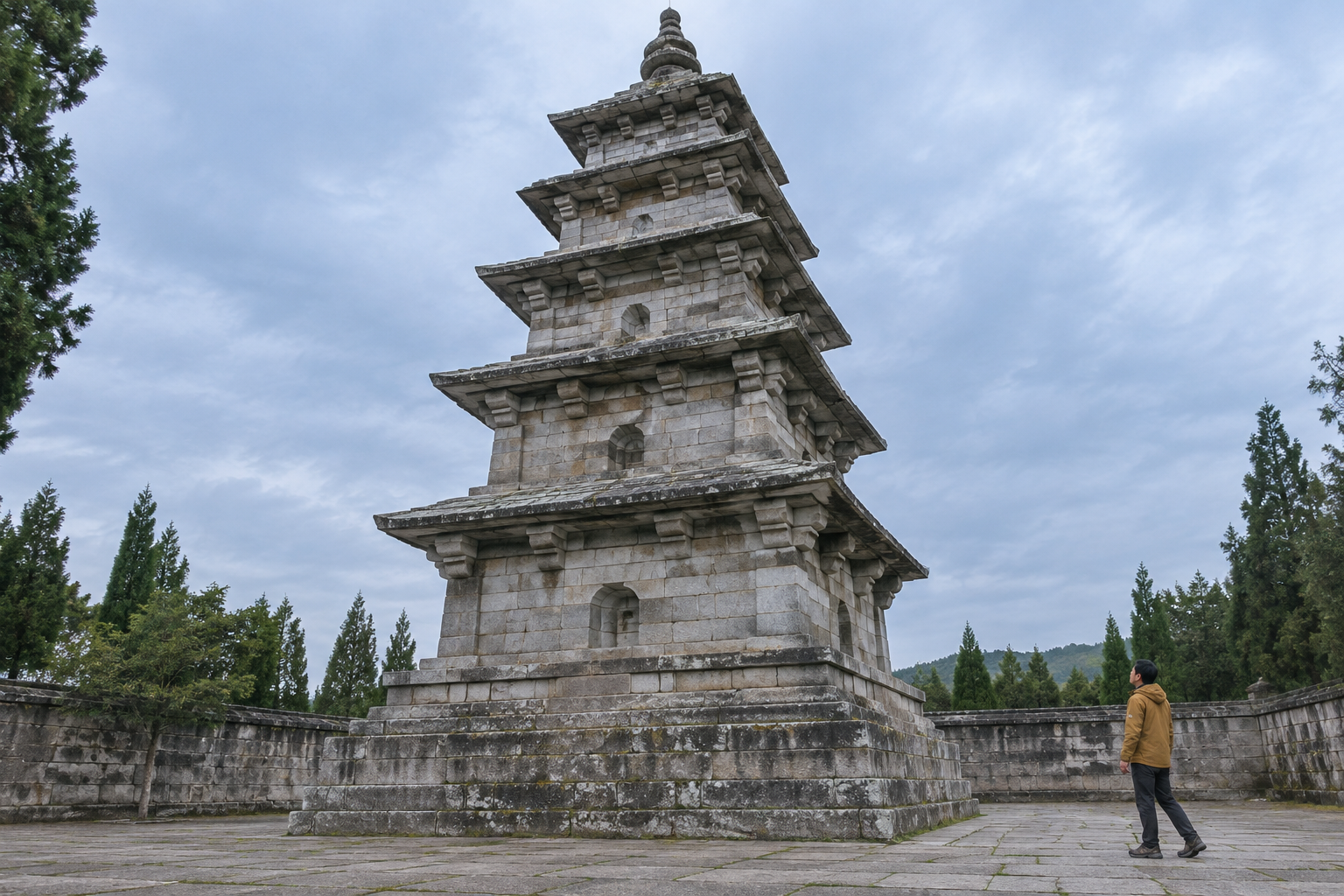
Shanji Pagoda (善济塔) is associated with the monk Keyou. The conservation inventory gives the original tower Tang roots and dates the surviving structure to the Northern Song. Look at the shape from outside. Its square base gives the structure a strong footprint and the projecting stone eaves let you read the levels without entering. If you can see two faces from a public path, use the corner to compare how the layers step back toward the top.
Check access to the stele and the pagoda separately. If one is behind a barrier, use the other after the arch. Keep the route beside the buildings that are open. Ceremonies and worship take priority inside the active temple. Follow signs about photography, stay behind ropes and keep doorways clear for people coming to pray.
Guangde and Lingquan are distinct temple areas. Choose Guangde if this sequence of historic objects is your priority. If you have another morning, you can give Lingquan its own visit. For a different look at how Sichuan temples use their halls and terrain, read the Wuyou Temple guide for Leshan.
Plan the climb, lunch and complete return
Have breakfast at the Suining hotel, then take a car to the agreed visitor entrance for 遂宁广德寺. Ask where the vehicle can stop outside the grounds. If you plan to return from the same point, save the location before starting up the temple path. A driver needs to know whether to wait throughout the visit or return when you call.
Leave energy for the downhill leg. This is a hillside site, so count steps on the way down as part of the visit. On wet stone, shorten the route to the arch and whichever next stop can be reached on safe footing. Ask ahead about the closest vehicle access, distance from drop-off, thresholds, steps, toilets and a place to sit. If your party needs a step-free route, check coverage for each stop individually before planning around the whole set.
Return to town for a Suining clay-pot meal (砂锅). Ask whether beef and potato (土豆炖牛肉) or another slow-cooked clay-pot dish is on the menu. Ask how spicy it is before ordering and check the base stock if you avoid meat. Local pressed dried tofu (豆干) makes a snack or side dish. A restaurant with seating is a practical choice for families and for anyone who has already spent the morning on their feet. If you hope to eat at the temple, confirm meal service and timing separately.
After lunch, return to the same hotel. If you are leaving the city, collect the bags and schedule a separate transfer to the station shown on your ticket. Confirm the station entrance and vehicle space in advance. A visit to the temple from another city means adding both rail journeys and both station transfers. Leave room to shorten the temple route if the arrival runs late.
| Stage | Route | Decision on the day |
|---|---|---|
| After breakfast | Hotel to the agreed Guangde entrance. | Agree the pickup pin and whether the driver waits. |
| Temple visit | See the arch, plus the stele or pagoda from the open route. | Reduce hillside walking when paving is wet or the approach is closed. |
| Lunch and return | Go into town for a seated clay-pot lunch, then return to the hotel. | Collect bags and allow a separate, properly timed ride to the station. |
Choose your Suining base and next day
Central Suining works well if Guangde is the main stop and you want convenient meals after the walk. For a trip that also includes the Sichuan Song Porcelain Museum, compare a central hotel with one in the Hedong area. The temple and the museum are separate stops. Give the museum another morning if you want time to look closely at the ceramics.
One or two nights in Suining make it possible to avoid a dawn start from Chengdu or Chongqing. If you are travelling onward, put the temple on a morning when your bags can stay at the hotel and you have time to return. You can combine this region with other Sichuan heritage stops on a longer trip. Keep Suining separate from a day at Leshan and Mount Emei, with travel time and accommodation planned around the actual route.
| Trip length | Hotel nights | Suggested rhythm |
|---|---|---|
| 3 days / 2 nights | Suining × 2 | Arrive and settle in. Visit Guangde and return to the hotel on Day 2. Leave after breakfast on Day 3. |
| 4 days / 3 nights | Suining × 3 | Give Guangde and the Song Porcelain Museum different mornings. Return to the same base and leave on Day 4. |
| 5 days / 4 nights | Chengdu × 2, Suining × 2 | Use Day 3 to change bases. Visit Guangde on Day 4 and take the agreed onward connection after checkout on Day 5. |
Price on request. For a privately arranged half-day, ask what will be open and how to register with your original passport if registration is in use. Agree what is included for vehicle timing, waiting, return destination, any site charges, English interpretation, meals and hotel nights. Put the intended stop order and a shorter rain option in the written itinerary. When the temple changes access for a ceremony, agree whether to use the open public portion or substitute a confirmed city visit.
Questions about visiting Guangde Temple
What should I prioritize if I only have a short time?
See the Imperial Decree Arch, then add either the stele or the exterior of Shanji Pagoda. Choose the stele for inscriptions and temple history, or the pagoda for stone construction and its silhouette against the hillside.
Can overseas visitors visit Guangde?
The operator announced access for the public in 2025, and international visitors have been reported at Guangde. Confirm current entrance registration and the method accepted for your original passport. Check individual viewing areas separately.
Can I climb the pagoda or see the imperial seals?
Plan to read the pagoda from the outside. Access to a building or a particular object can differ on the day. Ask for the current public viewing arrangements before planning around the seals or any other object indoors.
How should I arrange a return with luggage?
Book the hotel return or named station as part of the full day and tell the driver how much luggage you have. Use Plan My Trip to send a Verotrip travel consultant your dates, preferred stops, walking limits and departure details.