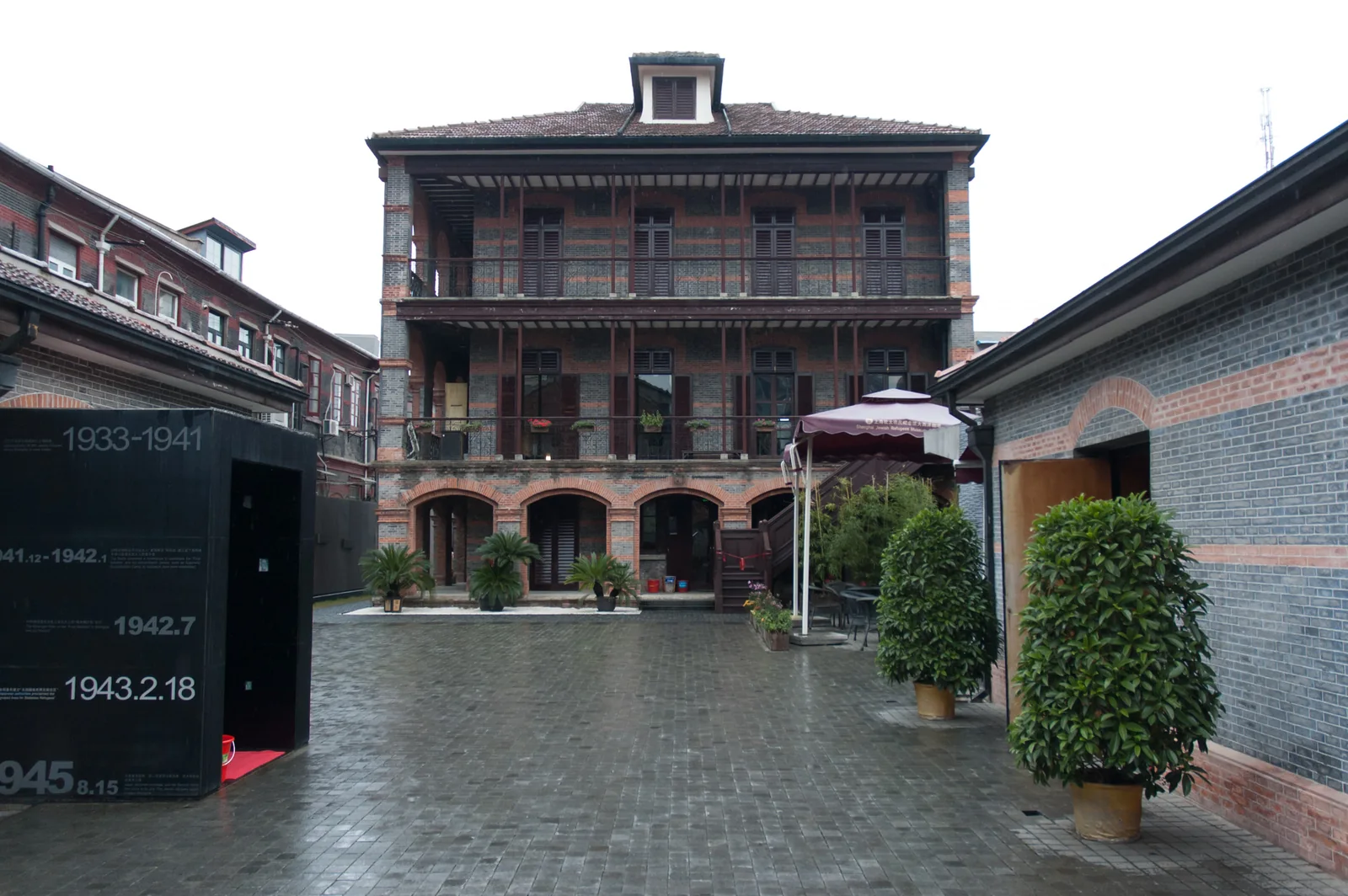
Start your Shanghai Jewish heritage visit at the Shanghai Jewish Refugees Museum (上海犹太难民纪念馆) in Hongkou. Choose a museum-led visit if you have about 90 minutes and want to follow individual refugee stories. With half a day, add the short neighbourhood route from Changyang Road through Zhoushan Road to Huoshan Park. A guide can show where the history in the museum happened, including how a café was reconstructed and what a park memorial tells you about wartime restrictions.
The former Ohel Moshe Synagogue and museum courtyard in November 2014, before the museum expansion. Photograph by Difference engine, Wikimedia Commons, CC BY-SA 4.0. Resized and converted to WebP under the same license.
Choose the museum or make time for Hongkou
| Visit style | What to do | Time and arrangements |
|---|---|---|
| Museum-led | Visit the former synagogue, read one or two family stories in the exhibition, then spend time at the Wall of Names. | Allow around 90 minutes. Save the museum’s English object pages if you want to read the stories at your own pace. |
| Museum and neighbourhood | Start in the museum, cross to the White Horse Inn area, then follow Zhoushan Road to the memorial at Huoshan Park. | Allow around 2½ to 3 hours for the combined visit. For a guided walk, confirm route, language, museum entry and where the visit ends. |
Inside the museum: start with two objects and the Wall of Names
The former Ohel Moshe Synagogue became a place of worship and gathering for Jewish refugees during the war. Use the permanent exhibition to follow how refugees escaped Nazi persecution, established lives in Shanghai and made decisions about where to go after the war. The museum’s online collection can help you pick a story even if an individual object is off display during your visit.
- Otto Pinkus’s suitcase has his initials. His daughter Ivy Green donated it to the museum. The suitcase travelled with him from Germany to Shanghai and later to Australia, so one object connects all three stages of his family’s journey.
- Betty Grebenschikoff’s wedding dress was made by her mother-in-law in Shanghai. Her two daughters later wore it at their own weddings. Look at the closure and the combination of fabrics and embroidery when it is on display, or use the museum’s photograph and English notes.
- At the Wall of Names, read how the museum used refugee Sonja Mühlberger’s research and how the project grew through additional records. Give the memorial time before moving on to the street route.
On foot: the White Horse Inn, Zhoushan Road and Huoshan Park
- Begin at 62 Changyang Road. Use Tilanqiao (提篮桥) on Metro Line 12 for the museum. Across Changyang Road, at No. 67, is the reconstructed White Horse Inn (白马咖啡馆). Look from the public pavement first. An indoor café stop depends on its hours and the route you booked.
- Follow Zhoushan Road toward Huoshan Road. The museum’s neighbourhood notes identify buildings connected with refugee families and relief work. Use the public pavement at former residences. At the former American Jewish Joint Distribution Committee site on Huoshan Road, a guide can explain what organised relief meant for food, housing and medical care.
- Finish at Huoshan Park (霍山公园), 118 Huoshan Road. Read the memorial for the designated area. In 1943 the Japanese occupation authorities imposed restrictions on where stateless refugees could live and conduct business. The museum’s refugee directory shows the kind of information the authorities were already collecting about refugee households before the restrictions.
What a guide can add at the White Horse Inn
Ask the guide to point out the original corner at Changyang and Lintong roads alongside the reconstructed building at No. 67. The museum dates the café to 1939, describes its demolition and records its reconstruction in 2015. Ron Klinger, the founder’s grandson, told the museum and Shanghai International Studies University how his family ran the café and provided family photographs. The address and his family account explain how the neighbourhood remembers a meeting place whose building was lost.
Hongkou District documented a museum-led heritage walk in August 2026. The museum also lists longer heritage tours with a Hongkou walk and stops elsewhere in Shanghai. For a compact visit, ask whether your guide stays with you in the museum, where the street walk ends, what is included and what language the guide uses. Confirm a session for your date before booking.
Plan your arrival and the end of the walk
Check the museum’s visitor information for opening days, ticketing and identification requirements. If you need English interpretation or step-free access to a particular gallery, ask the museum which arrangements it can provide. Allow time to find your return pickup or metro entrance. In heavy rain, keep the museum and read the neighbourhood accounts before rescheduling the outdoor part.
For help fitting Hongkou into a longer stay, share your hotel, available time and any access or language needs with a Verotrip travel consultant. For the rest of your trip, see the Shanghai trip planning guide.