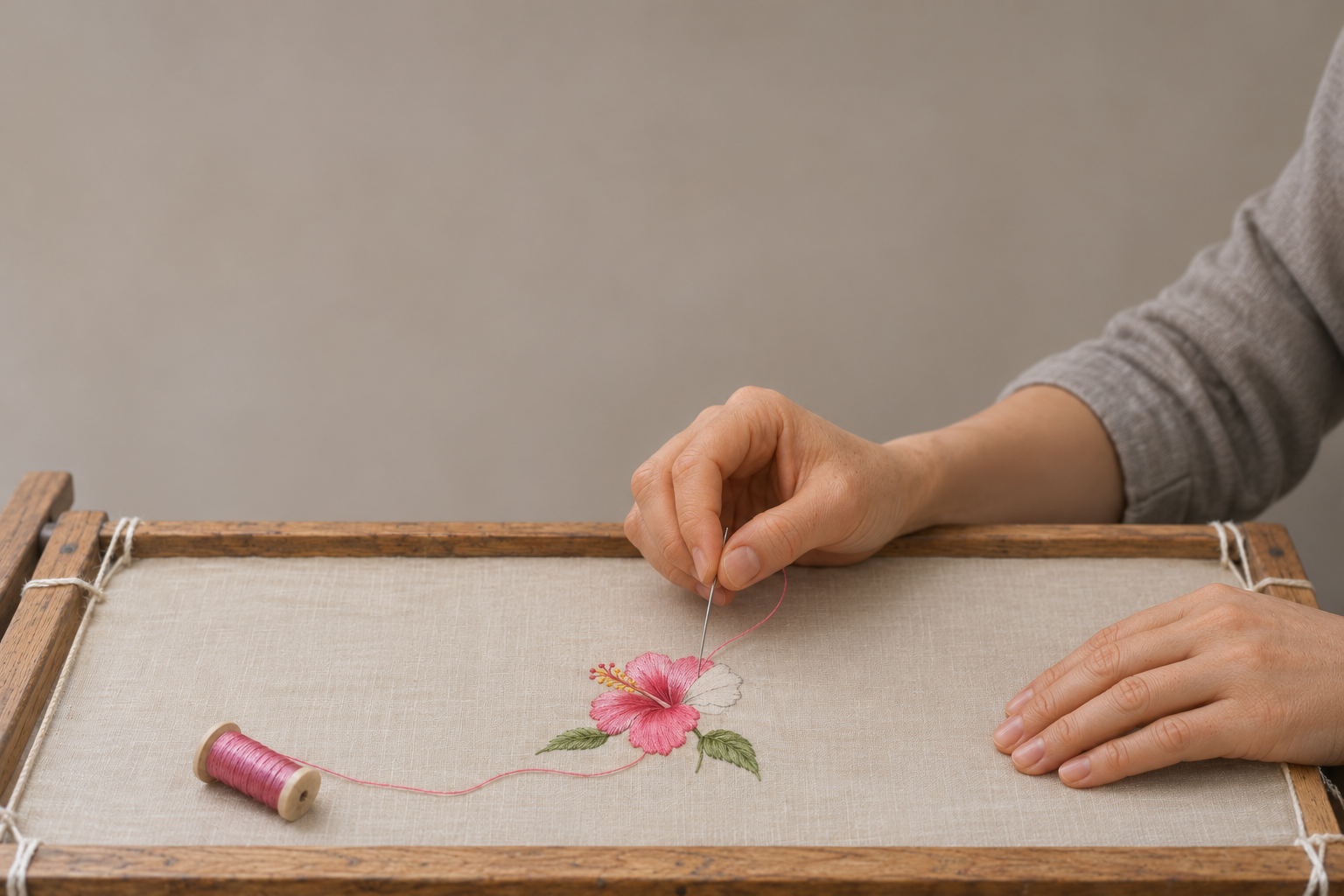
Choose a small number of embroidered pieces to study before deciding whether to buy anything. In Chengdu, Shu embroidery rewards close attention: the direction of a thread, a change of colour across a petal, and the difference between the two sides of a screen can matter more than the size of the display. A short, focused craft visit can fit around lunch and a comfortable return to your hotel.
The Chinese name is 蜀绣, usually written Shu xiu; Chuan xiu is another name. This guide helps you look at needlework, choose between a souvenir and a display piece, and decide whether a practical session deserves part of your Chengdu stay. A visit, a purchase and a lesson each need their own plan.
Start with the stitches and the surface
Shu embroidery belongs to Sichuan’s textile tradition. The national intangible-heritage portal’s introduction explains how varied stitches depict flowers, birds, fish, landscapes and different textures. It describes an orderly, fine surface, lustrous threads and clear colour. These are useful looking points rather than a checklist that every contemporary piece must satisfy.
Pick one flower or animal detail. Follow where the threads change direction, where one colour gives way to another, and how the maker suggests a soft petal or a harder edge. Then step back to see how that detail works within the whole image. Looking at two well-chosen pieces can be more rewarding than rushing past a wall of framed work.
Do this from the permitted viewing position. Ask before bringing a phone close, moving around a display or taking detailed photographs. Do not touch a textile to test its smoothness, lift a frame or move lighting. A modern object can still be delicate, and a retail display is not an invitation to handle everything.
Keep embroidery distinct from brocade. Embroidery adds stitches to fabric; brocade creates its pattern through weaving. If your main interest is looms and the construction of patterned cloth, use the Shu Brocade Museum guide instead. Here the focus is the stitched object and the choices you make around it.
Single-sided and double-sided embroidery
A picture intended to be viewed from the front and a screen designed to be seen from both sides invite different attention. The account published by China’s arts-and-crafts society describes double-sided embroidery on one ground fabric, including advanced work with different colours or images on opposite sides. Those are particular techniques, not a promise that every item labelled Shu embroidery has two different pictures.
Ask how the specific work is constructed and whether the reverse is intended for viewing. If staff can show both sides safely, compare the outline, colour and image. Do not assume that two framed pictures mounted back to back are the same thing as one double-sided textile. Ask for the description of the actual piece rather than relying on the display’s general sign.
The Chengdu heritage centre records practitioners working in different-colour, different-image and other embroidery forms. These examples help explain the range of the craft. They do not establish which named works are currently on display or whether a particular maker is available to meet visitors.
| Your priority | A useful focus | Allow for |
|---|---|---|
| Understanding the craft | A few labelled pieces and an explanation of thread and stitch choices | Standing, close looking and interpretation in a language you understand |
| A portable souvenir | One manageable item with clear material and making information | Packaging, care and space in your luggage |
| A display piece for home | Dimensions, viewing sides, mounting and the actual maker’s description | Fragility, transport and the place where it will be displayed |
| Trying the technique | A small beginner exercise with a named tutor or provider | Seated concentration, materials and a separately arranged session |
Where Anjing fits into a Chengdu craft day
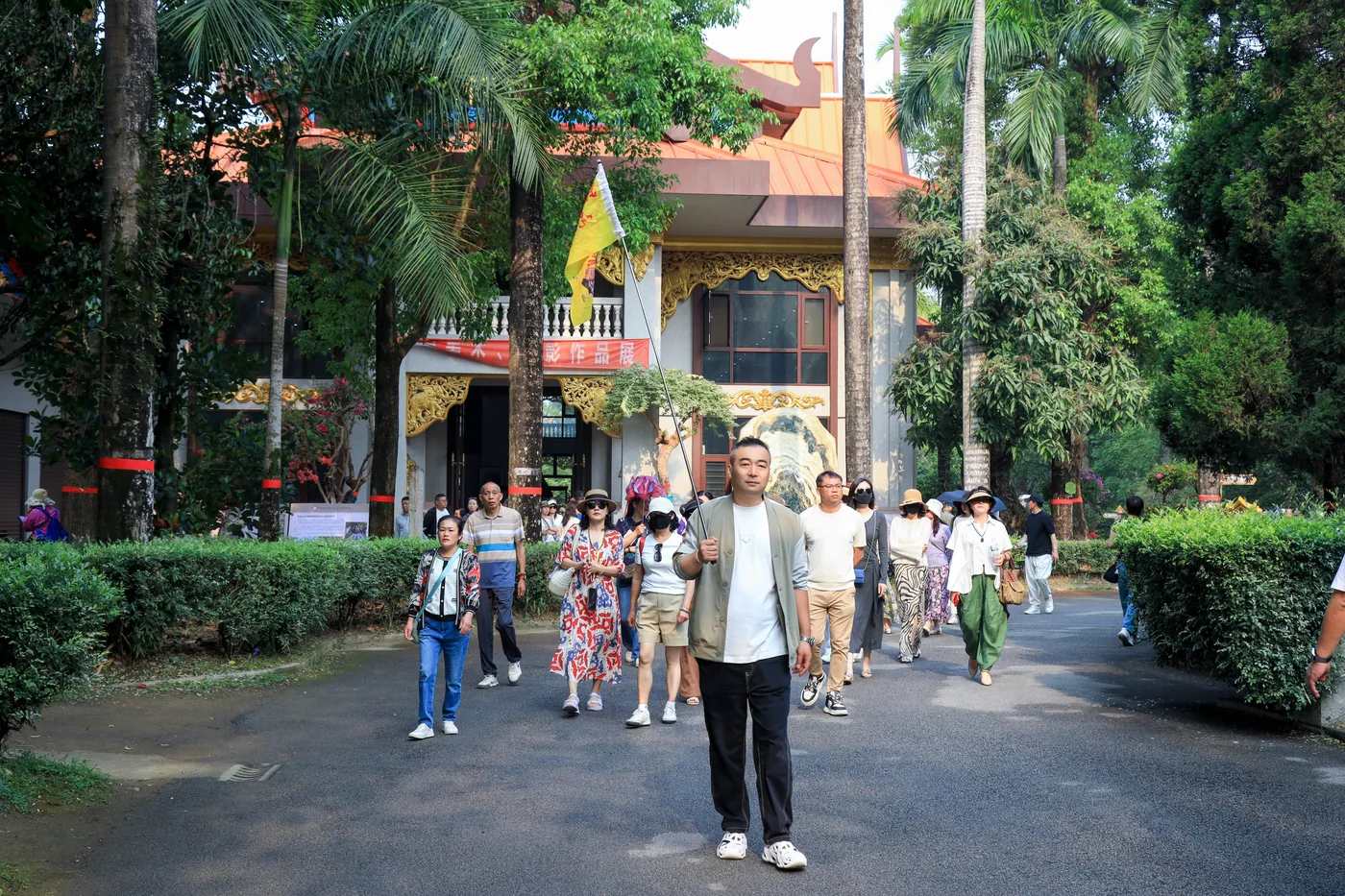
Anjing, in Chengdu’s Pidu District, is associated with Shu embroidery production and learning. A 2020 People’s Daily Overseas Edition visit described the embroidery cultural park’s displays, workshops and visitor learning spaces. This gives useful background to the district; it does not provide a current list of open studios or today’s lesson timetable.
A September 2026 report supplied by Pidu’s cultural-tourism authority records the reopening of an embroidery commercial street during an arts week. The concerts, student displays and holiday food stalls in that account were dated events. Plan around a currently confirmed venue, not an expectation that the entire festival programme continues throughout the year.
For a specific studio outing, obtain the full Chinese name, current entrance and appointment details first. “Anjing embroidery” is a district interest, not a precise meeting point. If the party mainly wants an introduction within a city cultural day, the central brocade-and-embroidery museum is a different option. There is little reason to travel to both places simply to collect venue names.
A May 2025 Sichuan Daily reporting visit described international visitors engaging with Chengdu’s craft activities, including the textile museum’s programmes. That supports ordinary international-visitor context in Chengdu. It does not verify every passport’s registration channel at an Anjing studio. Confirm the named venue’s requirements, actual session and accepted documents before making a special journey.
Choosing a piece you will enjoy after the trip
Begin with its intended use. A small embroidered accessory can be easier to carry than a framed screen, but check the material, fastening and care instructions. A display piece needs a place at home as well as room in your luggage. Measure the whole mounted object, not just the stitched panel; the stand and protective case can add substantially to its bulk.
Ask whether the actual item is hand embroidered, machine embroidered, or combines processes. Ask which parts are stitched and which may be printed or painted. A 2023 Chengdu textile-college visit to Anjing specifically discusses work combining painting and embroidery. Mixed technique is worth understanding on its own terms; it should be described clearly rather than mistaken for a surface made entirely of stitches.
Request the maker or workshop name, fibre content, dimensions and a written description of what you are purchasing. A motif, regional label or museum setting is not sufficient evidence of handwork, age or investment value. Looking closely is enjoyable, but it does not turn a short visitor session into professional authentication.
Compare complete purchases. One quotation may include a stand, mounting and a protective box, while another covers only the textile. Ask whether the displayed sample is the item you will take away or whether your order would be made later. For a commission, settle design approval, materials, size, delivery arrangements and what happens if the result differs from the agreement.
Keep receipts and agreed terms together. If shipping is proposed, establish who packs the piece, who is responsible for loss or damage and how the recipient will receive it. Ask the seller for the care information suited to the exact materials and mounting. Do not promise yourself easy international delivery or a fixed customs outcome before checking the relevant arrangements.
It is also reasonable to leave without buying. A useful craft stop can be a careful look at two pieces and a better understanding of how they were made. Set a budget and a finish time before browsing, especially if a larger framed object would complicate the rest of your journey.
A short lesson should start with a small project
Choose a beginner task that fits the available time: a small area of a flower, leaf or similarly limited exercise. Completing a modest section can teach more about patience and thread direction than rushing to finish a complicated picture. Ask whether you will work on a practice sample, an accessory or part of a larger design.
Before reserving, confirm the actual teaching language, tutor arrangement, materials, seating, duration and take-home item. A demonstration you watch is different from a supervised lesson in which you handle the tools. Admission to a museum or access to a commercial street does not reserve a place at an embroidery frame.
Mention eyesight, hand-movement limits and children’s ages. Ask the provider about lighting, tools and supervision rather than assuming every activity suits every participant. Companions who do not want to stitch may prefer a shorter viewing visit and a seated break. A long session can become tiring even when little walking is involved.
Build in lunch and the whole return journey
For a city-based outing, leave large bags at agreed hotel storage after breakfast. Travel to the confirmed craft venue, spend time on the chosen display or appointment, then have lunch before returning to the hotel. Treat shopping as an optional part of that block, not an extra stop that expands without limit.
For Anjing, allow a larger part of the day around the actual studio appointment and both transfers. The practical sequence is hotel departure, arrival at the named entrance, craft visit, seated lunch, any agreed collection or purchase, and the complete return to the same hotel. Do not combine it casually with several distant Chengdu attractions.
A bowl of noodles, wontons or rice with separately ordered dishes can provide a straightforward lunch. Select an actual open restaurant near the venue or on the return route. Ask about fillings, stock, cooking fat and chilli separately; mild food is not automatically vegetarian, halal or suitable for an allergy. Keep textiles and food in separate bags.
Agree a clear finish and meeting point before you separate from a driver. Specify whether the car waits, the collection window, the contact method and the final hotel address. When travelling independently, save the hotel name and return route offline. A completed outward journey does not by itself solve the evening return.
| Stage | City visit | Anjing appointment |
|---|---|---|
| Before leaving | Check the venue, documents, opening and any reserved activity | Check the exact studio entrance, host and appointment; allow for both transfers |
| Main visit | Choose a small display selection or a specific lesson | Keep the named studio or learning session as the main purpose |
| Meal and purchases | Sit down for lunch; check packaging before leaving | Choose a current restaurant; do not rely on old festival stalls |
| Finish | Return to the agreed hotel and collect any stored bags | Return to the same agreed address; station or airport transfers need separate timing |
Keep one Chengdu hotel base
An embroidery interest usually fits more comfortably into a Chengdu stay than into a hotel move. Compare the hotel’s actual transport links, vehicle access, room noise and nearby meals with the rest of your trip. A western-city base may suit several cultural visits; a different central base may work better if your other days lead elsewhere.
| Stay | Hotel nights | Suggested balance |
|---|---|---|
| 3 days / 2 nights | 2 nights in Chengdu | Arrival; one city day with the craft visit and lunch; departure |
| 4 days / 3 nights | 3 nights in Chengdu | Arrival; a craft day; one separate city or excursion day; departure |
| 5 days / 4 nights | 4 nights in Chengdu | Arrival; craft interest; a separate main outing; another cultural or rest day; departure |
These are planning structures, not fixed departures. Put the confirmed session on a suitable day, then arrange the other activities around it. The Chengdu trip-planning guide helps compare the wider stay. Confirm the chosen hotel’s passport registration, bed arrangement, lift, bathroom and luggage storage as needed; an area recommendation does not reserve a room.
On your final day, include bag collection and the full journey to the correct station or airport. Tianfu and Shuangliu are different airports. Avoid making an unconfirmed commission collection or a lesson with an uncertain finish the last task before a flight. Check any carrier restrictions before packing a take-home tool kit.
Walking, weather and the written price
Close looking involves standing, and a practical session involves sustained sitting and handwork. Explain the party’s limits and ask about steps, lifts, seating and toilets at the actual venue. Indoor craft activity can suit a wet day, but the approach, meal and transfers still need shelter and practical footwear. Protect any purchase from rain and pressure in transit.
Price on request. The written plan should identify the date, named venue, activity, language support, materials, transport and complete return. Meals, accommodation, purchases, shipping and insurance need their own stated treatment. A travel consultant can help organise the request; this guide does not confirm a particular artisan, class, English-speaking tutor or service as included.
Questions about Shu embroidery in Chengdu
Is Shu embroidery the same as Shu brocade?
No. Embroidery adds stitches to an existing fabric; brocade forms a pattern through weaving. Some objects combine techniques. Say which process interests you before choosing a venue or booking an activity.
Does double-sided embroidery always show different pictures?
No. Double-sided work and advanced different-image or different-colour techniques are not identical claims. Ask about the particular textile and view both sides only as staff permit.
Can I arrive in Anjing and expect a lesson?
Historical visits and recent events establish a craft district, not a guaranteed daily class. Confirm the named provider, documents, language, materials and appointment first. If those cannot be arranged, choose a confirmed city display visit or another interest.
What information helps plan a craft stop?
Send your dates, hotel, party size, language, standing or handwork limits, and whether you want to look, learn or buy through Plan My Trip. Explain any meal needs and luggage constraints so the proposal can include a comfortable finish and a complete return.