Steam-pot chicken, or qiguoji (汽锅鸡), makes a good seated meal in a Yunnan itinerary when you want to spend time over broth and a shared dish. Choose the restaurant and portion before building the day around it: one pot of chicken, a larger steam-pot banquet and a meal with a performance are different experiences.
Jianshui gives the dish a useful pottery and town-culture context. Kunming lets you try it within a city stay, without adding another hotel or a long journey just for lunch. This guide explains what to look for, how to order and how to fit the meal into either base.
What makes the steam pot different?
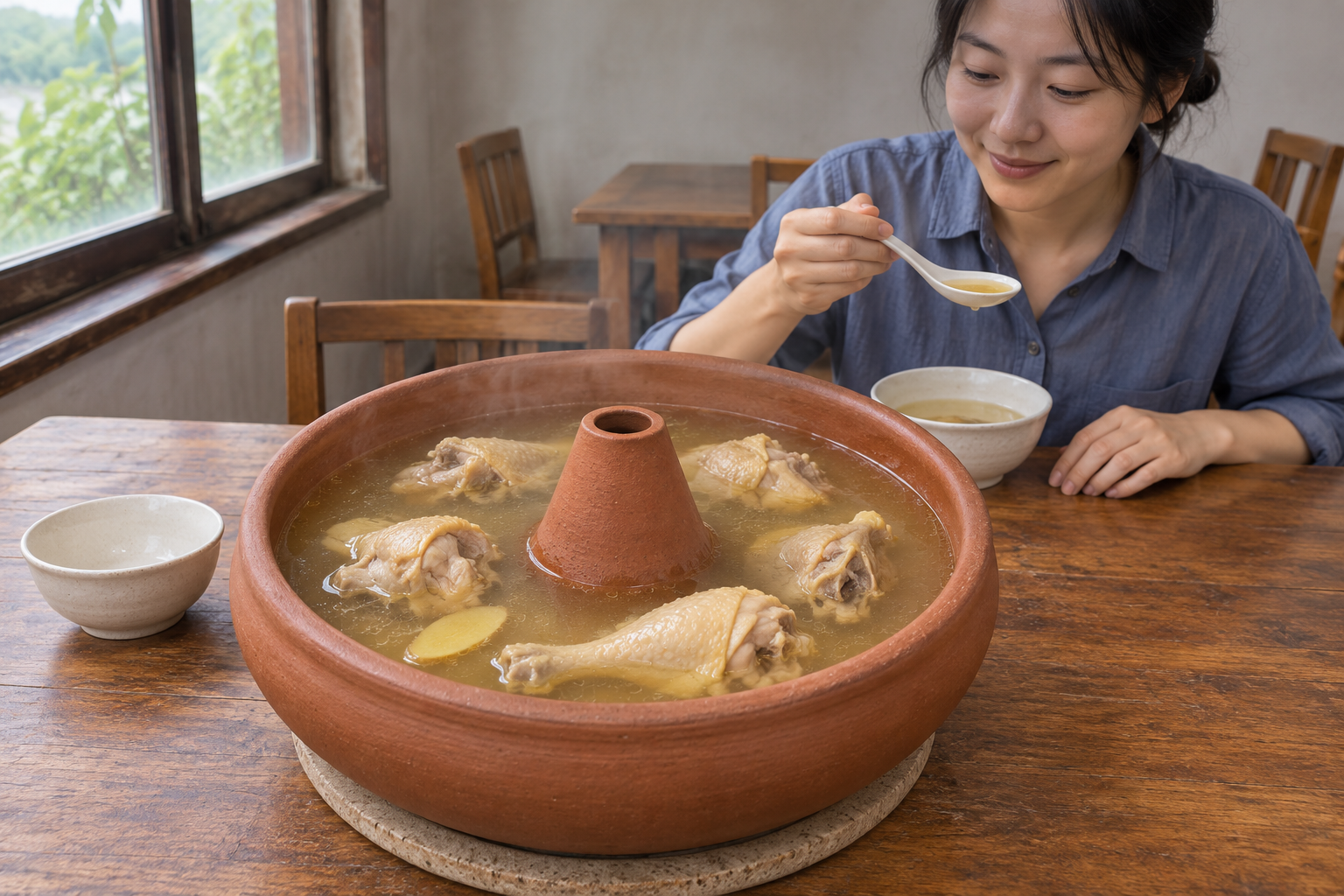
Look for the hollow chimney rising through the centre of the cooking vessel. In the preparation described by CCTV’s Yunnan food programme, the upper clay pot holds chicken while steam enters through that central passage and condenses into broth. Water supplies the steam from below; the description does not mean the dish produces water from nothing. The programme associates the vessel with Jianshui purple pottery. See the April 2025 account of the cooking method.
For a diner, the useful distinction is that you are ordering a prepared chicken dish. Do not assume you will choose raw ingredients and cook them at the table, as at a hot-pot restaurant. Ask how the particular serving is presented and whether accompaniments arrive separately.
Let the first bowl be about the broth. Taste it before adding a dipping sauce or other seasoning, then decide how you prefer the chicken. If the pieces are bone-in, leave yourself time to eat them comfortably. A photograph of a deep serving bowl tells you little about the amount of meat available for your party.
The pot itself rewards a closer look: its central opening, curved sides and lid have a cooking purpose. Keep that observation separate from a purchase. A display pot, a working restaurant vessel and a new pot sold for home cooking need not have the same specification. Ask a seller about intended food use, compatible equipment, care and packing before buying one.
One chicken pot or a whole banquet?
A chicken meal can remain quite simple: the agreed pot, a vegetable dish and a staple appropriate to your appetite. Start with a small order and add food if necessary. This is especially useful for two people who also want to try other Yunnan dishes over several days.
A steam-pot banquet is a different commitment. A January 2025 Yunnan Daily report from Jianshui described a meal using different pots for meats, fish, vegetables and other dishes. It illustrates how the technique can become a whole menu; it is not a current package or a promise that every restaurant serves the same selection.
| Meal choice | When it fits | What to settle before ordering |
|---|---|---|
| One chicken pot with a few sides | A couple, family or first tasting during a normal sightseeing day | Portion size, amount of chicken, staple and vegetable choices, and the total order |
| A version with additional ingredients | You already know what you want to taste and can check the recipe | Every addition, whether it can be omitted, and whether the price changes |
| A multi-dish steam-pot banquet | A group wanting the meal to be a main event | The complete menu, servings, minimum party size if any, advance ordering and cancellation terms |
| A different local meal that day | The dish is unavailable, the timing is poor or the ingredients do not suit you | A clear alternative rather than a hurried meal before a fixed train or activity |
There is no need to order a banquet to make the visit worthwhile. A well-timed lunch can leave more energy for a courtyard or town walk. Conversely, a group particularly interested in food can give the meal a longer slot and reduce the afternoon sightseeing.
Ordering: portions, additions and the final bill
Show staff the Chinese name 汽锅鸡 and confirm that the dish you want is available for that service. Ask whether it must be ordered ahead and when it can be ready. A restaurant listing the dish does not establish that a fresh serving can appear immediately after you sit down.
Clarify the unit of sale. Is the displayed amount for a pot, an individual portion or a set menu? If there are different sizes, ask which suits your party and what else the suggested order contains. Agree on the quantity before accepting several side dishes or an upgrade.
Additional ingredients deserve their own question. Do not identify a mushroom, herb or seasoning from a menu photograph and assume the recipe. Ask for the actual ingredients, including stock and sauces. A clear-looking broth does not establish that it is free of a particular allergen, alcohol or an ingredient you avoid.
The following questions can be shown on a phone. They help start a conversation; translation alone does not guarantee that a kitchen can meet a dietary requirement. Keep the answer with the booking if the meal matters to your plans.
| What you need to know | Chinese question to show staff | Use the answer to decide |
|---|---|---|
| Is this the available dish? | 今天有汽锅鸡吗?需要提前预订吗? | Whether to book it ahead, come at another meal or choose an alternative |
| How much food is in the order? | 这份汽锅鸡适合几个人吃? | Whether one serving and a few sides suit your party |
| What is the pricing unit? | 价格是按锅、按人,还是套餐? | The total for the actual order, including any selected extras |
| What is added to the chicken? | 里面有哪些配料和调味料? | Whether this specific recipe meets your needs |
| Are the pieces bone-in? | 鸡肉带骨头吗? | Whether the serving works for children or anyone needing easier eating |
| When will it be ready? | 大概什么时候可以上菜? | Whether the meal fits the afternoon and the agreed return |
For a child, ask about a smaller bowl and suitable pieces rather than assuming the shared dish is ready to eat unaided. If your party has mixed preferences, order separate dishes with their ingredients checked. Keep serving utensils separate from individual eating utensils and ask staff to handle the hot vessel.
A vegetable side does not make the chicken meal vegetarian. Likewise, chicken without pork is not proof of halal preparation. If a restaurant cannot answer a requirement important to you, choose a meal whose ingredients and preparation can be established. There is no advantage in protecting a famous dish at the expense of a workable lunch.
For other options across the province, use our Yunnan food guide to compare noodles, market food, tea and regional dishes. Spread those choices across the trip rather than turning one lunch into a tasting of everything.
Jianshui: connect the meal with pottery and town time
The connection is more than a name on a menu. Honghe’s culture and tourism department records the local making technique and an identified inheritor in its Jianshui steam-pot chicken heritage entry. That supports treating the dish as part of local food craft. It does not establish an available lesson, a chef meeting or a public kitchen visit.
For an independent town day, start from your Jianshui hotel after breakfast and choose one cultural focus for the morning. A courtyard visit or a short old-street walk leaves room for a seated lunch. Arrange the meal time around the actual opening of the place you intend to visit, with a simpler option if either booking changes.
After lunch, choose a short pottery-shop browse if that interests you, or return to the hotel for a rest. A shop visit can be enough to notice how the steam-pot shape differs from cups, jars and decorative pieces. A demonstration or hands-on activity needs a separate arrangement; buying an object does not include firing, overseas shipping or a workshop place.
Keep the afternoon flexible. If you have booked the tourist railway, plan its departure station, boarding requirements and final return first. Do not fit a slow lunch into an assumed gap. The Jianshui narrow-gauge train guide explains why the tourist railway and the intercity station should be treated separately.
Finish at the agreed hotel or vehicle meeting point. When a street is unsuitable for vehicle access, identify where everyone will meet and how far the walk is. Rain makes a short meal-and-rest day a reasonable choice; it does not require replacing a cancelled outdoor activity with several unconfirmed interiors.
Kunming: make it part of a city day
Kunming is the easier choice when your nights are already booked in the city. You can plan the dish around your existing neighbourhood and avoid turning a single meal into a separate regional excursion. Choose a restaurant with an address and a return arrangement that work for your hotel, rather than a distant name seen in an old travel list.
On arrival, allow for collecting luggage, reaching the hotel and settling in. If the flight or train is late, have a straightforward meal nearby and move the steam-pot booking to a full day. The first evening should not depend on an exact connection between an uncertain arrival and a restaurant’s kitchen schedule.
On that full day, take breakfast, choose a manageable city visit and leave a proper lunch interval. After the meal, a short walk or hotel rest can be the whole afternoon plan. For dinner, choose according to appetite instead of booking a second large set meal automatically. Our Kunming travel guide helps you choose a base and nearby sightseeing.
If performance is part of your interest, compare the separate Kunming Jueyan dining and cultural show. Its reference banquet description mentions steam-pot chicken, but that is not a guarantee for every date or package. Confirm the actual menu and performance option. It is a different outing from a simple restaurant lunch, with its own journey, seating and finishing time.
Hotel base, language and a complete return
Choose the base for the wider journey. In Jianshui, an atmospheric address can still mean steps or a walk with luggage from vehicle access. In Kunming, being close to your next activity may be more useful than being close to a single restaurant. Confirm the actual room, access and luggage arrangements before paying.
These are suggested travel rhythms, not inclusive packages. Count the nights explicitly and leave the departure day free of a meal that could delay an important connection.
| Length and overnight plan | A workable food-and-sightseeing rhythm | Arrival and final return |
|---|---|---|
| 3 days / 2 nights: Kunming 2 | Day 1 arrival and a simple dinner; Day 2 city visit, steam-pot lunch and rest; Day 3 departure | Use the actual arrival terminal or station; return to the hotel after lunch and allow a separate departure transfer |
| 4 days / 3 nights: Jianshui 3 | Day 1 reach the hotel; Day 2 town culture and the meal; Day 3 a separately planned railway or another town focus; Day 4 leave | Include the intercity station-to-hotel connection in both directions; this pattern begins and ends in Jianshui |
| 5 days / 4 nights: Kunming 1, Jianshui 2, Kunming 1 | Day 1 Kunming arrival; Day 2 transfer and settle in Jianshui; Day 3 culture and lunch; Day 4 return to Kunming; Day 5 onward departure | Keep both ends of the Jianshui transfer explicit and use the final Kunming night as a buffer |
For the five-day version, eat a simple lunch around the transfer on Day 2 and leave the main food experience for Day 3. On Day 4, check out, collect all bags, travel back and reach the Kunming hotel before deciding on an evening outing. The last morning then starts from the city where you are departing.
Save the restaurant and hotel names in Chinese, map pins and an agreed meeting point. Ask whether an English-speaking person will accompany you or whether you will order independently with translation help. English customer messaging does not establish that someone will be present at the table.
Tell a travel consultant about limited walking, difficulty with steps or prolonged sitting, larger suitcases and children. The comfortable version may use one nearby visit and a hotel return. A booked vehicle must specify waiting and the final drop-off; a ride to lunch alone leaves the rest of the day unresolved.
Costs and arranging the meal with Verotrip
Price on request. Send your dates, hotel base, party size, preferred meal and dietary requirements when asking for a plan. Include whether you want a straightforward restaurant booking, time with a travel consultant, pottery shopping or a longer cultural itinerary.
The written proposal should distinguish the food order from transport, English accompaniment, admissions, room nights and any performance or workshop. Specify whether drinks and additional dishes are included and who pays for changes at the table. A restaurant suggestion alone does not include any of those services.
No fixed menu, current price, opening time or seat availability is promised here. Overseas visitors should have the actual reservation and payment method explained for the chosen venue; a general visitor food guide cannot verify every passport, payment app or booking channel. Use Plan My Trip to discuss a meal within your route and a complete return.
Questions about Yunnan steam-pot chicken
Is steam-pot chicken the same as hot pot?
The meal described here is prepared chicken and broth in a steam pot. Do not assume there is a burner and a selection of raw ingredients for you to cook. Confirm how the restaurant serves its version before ordering.
Do I need to travel to Jianshui to try it?
No. Kunming is an option within a city stay. Choose Jianshui when the town, its craft context and a slower overnight visit also interest you. An extra hotel change is unnecessary if your main aim is simply to taste the dish.
Can I assume the broth is mild and suits my diet?
Ask about the specific recipe, seasonings and additions. Appearance and the word chicken do not establish allergy suitability, halal preparation or the absence of alcohol. Use a different dish if an essential requirement cannot be checked.
Should I reserve a whole steam-pot banquet?
Only if the menu, quantity and time suit your party. One chicken pot with selected accompaniments may be a better first meal. A banquet should be chosen from its actual dated menu, with portions and the final bill understood beforehand.