Start at Yunnan Military Academy History Museum with the school’s story, then choose one exhibition to explore closely. Beside Green Lake, the academy suits a Kunming half-day with time to read, sit down for lunch and return to your hotel.
Save 云南陆军讲武堂历史博物馆, 翠湖西路22号: Yunnan Military Academy History Museum, 22 Cuihu West Road. Jiangwutang is another name you may encounter. This is a historic school site and museum; it is a different visit from the provincial museum, the municipal museum or a military activity.
Begin with the buildings and the school chronology. The China Expeditionary Force displays suit an interest in wartime Yunnan; a temporary art show offers another focus when dates and open rooms fit. Leave a second collection optional.
Understand the school before entering the galleries
A May 2024 Xinhua report dates the academy’s foundation to 1909 and identifies Zhu De and Ye Jianying among its alumni. This gives the visit a clear starting question: how did military education in Yunnan connect individual students with the major changes of twentieth-century China?
Find the school chronology before following the biographies. Place a graduate’s student years beside their later career: the portraits span decades of change, rather than one shared moment.
Follow one graduate’s story through the records on view. Look for the education they received and the events that followed. One well-understood life can make the school more memorable than a list of names.
Read the room labels as well as the exhibits. A former school room may now hold a gallery, and a furnished scene may be a later reconstruction. The label helps explain the space you are standing in.
Look at the courtyard and the rhythm of the buildings
A first-person account of a December 2017 visit describes yellow walls, red windows and grey roofs enclosing an inner parade ground. It also records that the original academy extended beyond the surviving area. Use that account as architectural background, not as a map of every space open today.
From the public route, look along the repeated windows and across the courtyard. The long building lines and open space reveal the scale of a working school beyond its familiar facade.
If a corridor or upper level is closed, keep to the view available from the public area. There is no need to find an unofficial elevated position to understand the arrangement. Photographing through an open doorway does not mean the room beyond is open for entry.
With children, look for places for learning, sleeping and gathering identified by the displays. A sketch on your own paper is a useful way to compare them while leaving historic fittings and furniture untouched.
Certificates, photographs and the difference between an object and a copy
The Xinhua collection report describes material such as appointment documents, medals, manuscripts, photographs and letters, including a photograph caption identifying Ye Jianying’s graduation certificate. These are collection examples reported in 2024, not a guarantee that each item remains in a particular case.
For a displayed certificate, read the name, date and purpose first. Check whether it is the original, a reproduction or an enlarged image, then connect it with the biography. The small details explain what the document can tell you.
Give a photograph the same attention: who is shown, when was it taken and is this a modern print? Its subject and the age of the print are different questions. A letter or personal object may add something a large reconstruction cannot.
With limited time, choose one document and one contrasting object. If close reading matters, arrange interpretation of a short passage in advance; general English-language company is a different service.
Choose a museum visit that fits your interest
| Interest | Main subject | Keep optional |
|---|---|---|
| School and personal history | The academy chronology and one graduate’s records. | Every biography and every room. |
| Wartime Yunnan | A selected China Expeditionary Force display, if open. | A complete survey of all wartime galleries. |
| Art and historical memory | A current exhibition whose dates and rooms are confirmed. | Works from an expired show or future collection plans. |
| Architecture and a gentle outing | A public courtyard view, one short display and seated lunch. | Upper floors, extended standing and another museum. |
A February 2025 museum feature describes two established exhibition subjects: the academy’s history and the China Expeditionary Force. The latter concerns Chinese forces in the China–Burma–India wartime setting, including cooperation with Allied forces and Yunnan’s contribution.
For the wartime galleries, follow a map alongside a personal story. Connect places with the movement of people and supplies, then find a photograph or object that brings the account into focus. Keep the separate dates and locations in view.
This is also a useful point to distinguish the army campaign from the Flying Tigers aviation story at Kunming Municipal Museum. They belong to a connected wider history, but they are different museum visits. Choose the subject you most want to understand instead of assuming that one admission covers both.
An adult can check difficult wartime material before children see it. Take a shorter route when appropriate, make room for questions and finish with a calmer activity.
A dated art option: Li Zhongxiang and the Long March
For visitors whose dates fall within its announced run, the 25 October 2026 exhibition report introduces a Li Zhongxiang show in the museum’s cultural-art gallery, scheduled through 22 January 2027. It brings together paintings, sketches and historical material concerning the Long March through Yunnan.
Read Li Zhongxiang’s pictures as later interpretations of historical events, shaped by years of visits and gathered memories. Where a working sketch is shown, compare it with the finished scene to see how the artist developed the subject.
Choose a finished work and related preparatory material, where displayed, and compare the landscape and viewpoint. Confirm the show before including it: a planned donation after the exhibition does not guarantee permanent display.
Check the specific open areas and your passport procedure
Opening notices need their dates. A January 2026 report described roof maintenance and limited access around the east-front square, with a National Protection War exhibition in the area then open. The later October art-show report establishes a subsequent gallery event; it does not prove that every main building and upper floor has reopened.
Before travelling, establish the visitor entrance, open rooms and the subject you want for your actual date. If your essential gallery is unavailable, choose another day or a different museum. A photograph of an open door, an old holiday performance or a previous visitor’s full circuit cannot settle today’s access.
The museum’s September 2024 reservation notice announced real-name reservations through the official WeChat account, 云南陆军讲武堂历史博物馆. That notice does not explain every foreign-passport field or phone-number situation. Establish the accepted booking or staffed-registration method for your original document; do not enter a substitute Chinese identity number.
International visitors are part of the site’s published visitor context: a 2018 Kunming Daily reporting visit quotes staff discussing its appeal to foreign visitors. This historical context is not a current test of every passport channel. Keep the date-specific procedure, capacity, last entry and any special-exhibition conditions separate from the general decision to visit.
Carry the original passport matching an accepted reservation and the confirmation you have been asked to present. Settle interpretation separately: translated labels, a public talk and an English-speaking companion for your party are different arrangements. This guide promises no fixed opening hours, admission charge, daily ceremony or available English staff member.
A complete half-day: arrival, a focused visit, lunch and return
Leave large bags at the agreed storage point after breakfast. At the museum, begin with the school layout and chronology, then give most of your attention to the chosen exhibition. Allow for the approach walk and admission checks.
Pause before another room. Standing and reading are part of the effort; lunch can be a satisfying finish once the main subject is understood. Half a day is a planning allowance, not a fixed museum circuit.
Choose a seated lunch outside the galleries on the route back or near your hotel. A rice-noodle meal, erkuai rice-cake dish or a simple cooked meal can suit a Kunming city day. Ask about broth, sauces, fillings and spice rather than deciding from the dish name alone. Written Chinese requirements help a venue assess allergies or strict dietary needs.
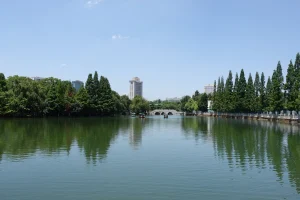
An optional short pause in Green Lake Park can follow when the weather and walking energy allow. The park is a separate outing with its own gate and finish point; a full lake circuit is unnecessary after a substantial museum visit. Return to the named hotel after the meal or the agreed short extension.
For an arranged vehicle, specify waiting or a timed return, the legal meeting place and the method for contacting the driver. For independent transport, retain the hotel address and a workable return payment method. If a station or airport follows, add luggage collection and that separate transfer explicitly. Kunming Station and Kunming South are different destinations.
Keep one Kunming base and count the nights
| Stay | Full days between travel dates | A workable balance |
|---|---|---|
| 3 days / 2 nights | One. | Academy museum, lunch and a gentle city remainder. |
| 4 days / 3 nights | Two. | One museum-and-city day; one separate planned excursion. |
| 5 days / 4 nights | Three. | Museum day, excursion day, and a distinct city interest or rest day. |
All nights in these examples stay at one Kunming hotel. Day 1 is arrival and settling in; the final day is departure. With four days, Days 2 and 3 hold the two full activities; five days adds Day 4. Put the museum on an available date before allocating the other activities.
Choose one Kunming hotel for the wider stay. Green Lake may suit this visit, but compare pickup, luggage access, lifts, noise, nearby meals and passport registration against the rest of your trip.
The Kunming city planner helps balance a longer stay. If transport history interests you, Yunnan Railway Museum is another independently arranged option. Do not stack multiple museums onto the academy half-day merely to use every available hour.
Walking, documents and costs to settle
Describe standing tolerance as well as walking ability. Ask about the exact entrance, thresholds, steps, lifts, seating and toilets for the chosen rooms. A courtyard-level visit may be shorter, but this guide does not certify a continuous step-free route. Keep any essential medication and original documents in a manageable day bag.
Rain may make indoor displays appealing, but the entrance approach and courtyard remain part of the journey. Wear shoes with grip, shorten exposed sections and keep a seated indoor break available. If admission or a gallery closure removes the main interest, a hotel rest or separately available alternative is preferable to an improvised visit through restricted areas.
| Part | Written detail | Separate unless listed |
|---|---|---|
| Admission and interpretation | Date, original-document channel, named open areas, language and accompanying time. | Special activities and additional museums. |
| Travel and belongings | Hotel, legal meeting points, waiting, bag custody and complete return. | Station or airport transfers and extra stops. |
| Meals and rooms | Meal arrangement, dietary needs, named property and exact nights. | Personal purchases, drinks, extra nights and insurance. |
Price on request. Agree the actual services, total and change terms in the accepted proposal. This guide does not reserve admission, interpretation, transport, meals or accommodation.
Questions before visiting the academy
Is this the same place as Kunming Municipal Museum?
No. The academy museum is at 22 Cuihu West Road and focuses on the historic school and related history. The municipal museum on Tuodong Road has different collections, including its pillar and aviation subjects. Use the full Chinese name for the venue you intend to visit.
Can I rely on an old full-building tour description?
No. Maintenance and exhibitions change the accessible route. Confirm the open rooms for your date, especially if an upper floor, a particular collection or the full courtyard circuit is essential.
Do I have to combine the museum with Green Lake?
No. The museum, a proper lunch and the hotel return can be a complete half-day. Add only a short park section if you want it and everyone has enough energy; the two places need not become an extended walking circuit.
Will the Long March paintings always be there?
The October 2026 announcement gives the Li Zhongxiang exhibition an end date of 22 January 2027. A planned donation to the collection does not establish permanent display. Confirm the current show and choose the academy history instead if that better fits your dates.
Plan a museum visit with a comfortable finish
Send your Verotrip travel consultant the date, Kunming hotel, party ages, language, passport nationalities, walking and standing limits, luggage and meal needs through Plan My Trip. Say whether school history, documents, wartime Yunnan or art matters most. A useful proposal protects that subject, allows a real meal and finishes at the agreed address.
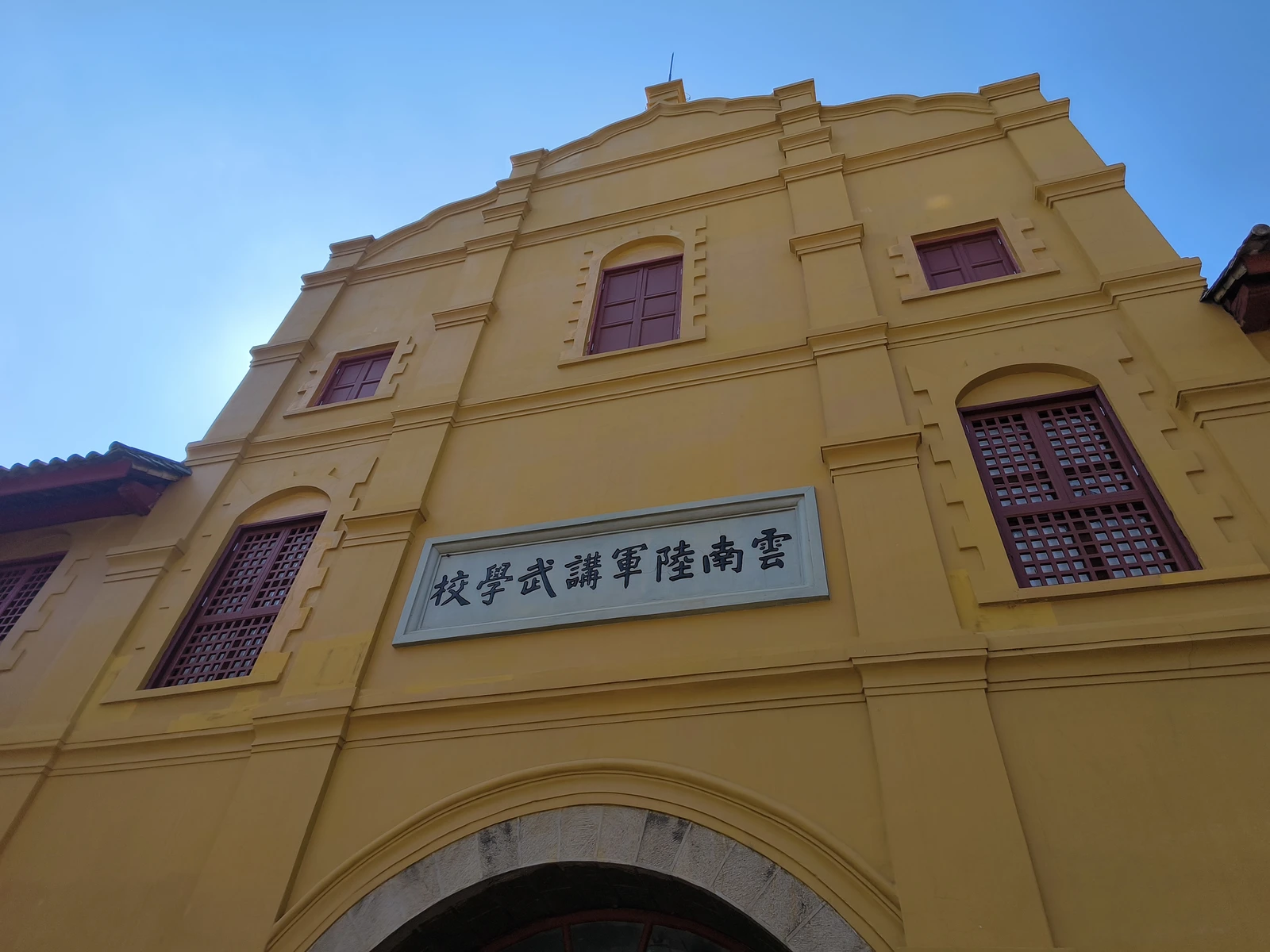
Header photograph: the facade and sign of Yunnan Military Academy, photographed on 5 February 2025 by 源義信 / Wikimedia Commons, CC BY 4.0. Resized and converted to WebP, with responsive cropping. The photograph records the building on that date.