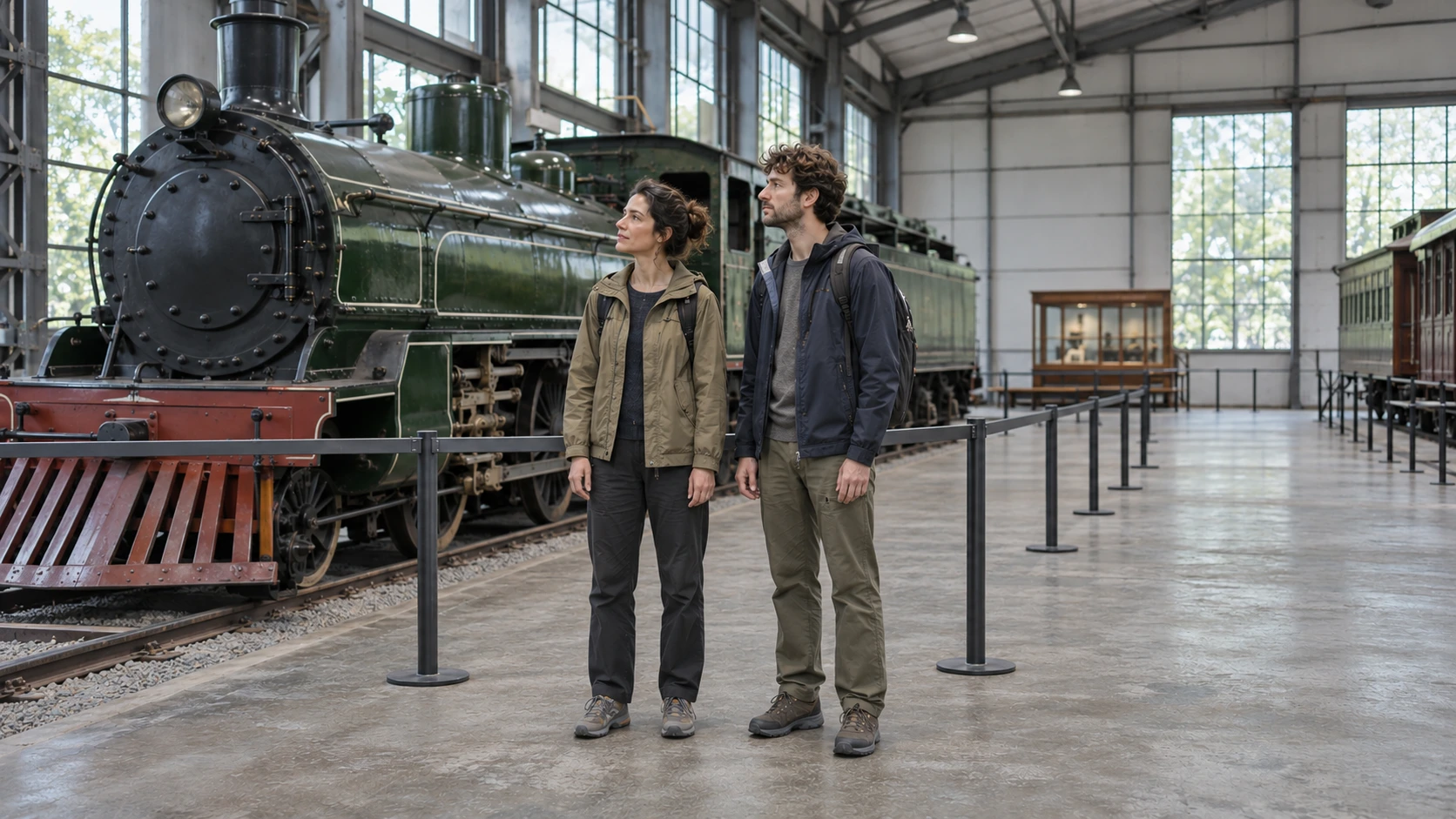
Header image: original AI illustration of two fictional adults behind a visitor barrier in a generic railway museum. It is not a photograph or reconstruction of Yunnan Railway Museum, a particular locomotive, exhibit, building or facility. It does not show current conditions, actual customers, guides or an operated Verotrip departure.
Give Yunnan Railway Museum a deliberate half-day when trains, engineering or Yunnan’s connections with its neighbours interest you. Choose a history-led visit or concentrate on the vehicles, then leave room for lunch and the journey back. It can fit a Kunming city stay without becoming a full railway-themed expedition.
The museum is associated with Kunming North Station. That name can cause a costly planning mistake: a museum visit here does not put you at Kunming Railway Station or Kunming South for an onward train. Keep sightseeing and passenger transport as separate stages, especially with luggage or a fixed departure.
Find the museum, not your onward railway station
Save 云南铁路博物馆 and the address 北京路913号, 913 Beijing Road, with the actual visitor entrance. The surrounding station name is 昆明北站, also encountered as 火车北站, Huoche Beizhan. A map pin for a railway building may lead to a different side from the public entrance.
The China Railway Society’s museum introduction describes the museum’s close relationship with the North Station site and its focus on railway construction and development in Yunnan. That setting is part of the interest, but it is not an invitation to enter railway workplaces, cross tracks or follow an informal line-side route.
Use your exact hotel and the museum entrance to choose a metro or road journey. Ask about the useful exit, stairs and final walk if carrying a stroller or using a mobility aid. An arrival described only as North Station is not enough to establish a comfortable route to the door.
History displays or the trains themselves?
A first-hand account of a December 2025 visit describes south and north halls connected above the tracks, with historical material and larger vehicles. Use the current visitor map to decide which section deserves your best attention; do not assume every gallery or connecting passage will be available on your date.
For history, start with a question rather than every panel: how did railways change the way Yunnan connected with surrounding regions? Follow a map, an example of engineering and a photograph of people at work. Look for the relationship between the line, the terrain and the communities served.
For a vehicle-led visit, choose a few contrasting objects. Compare what carries passengers with what provides the power, then look at the physical scale of the wheels, cab and carriage. Ask what the label establishes about the vehicle’s use. An attractive old locomotive need not represent every railway described elsewhere in the building.
| Your interest | A useful approach | Keep optional |
|---|---|---|
| Railway history | Follow a route map, an engineering problem and the people involved. | Reading every display panel. |
| Locomotives and carriages | Compare a few contrasting vehicles and the track beneath them. | Every model number or interior. |
| A family visit | Choose one locomotive and one coach, then discuss their different jobs. | A long technical explanation after the children need a rest. |
Families can keep the visit concrete: find a locomotive and a coach, compare their jobs, then take a break. Enthusiasts can spend longer on a particular vehicle or engineering problem. Neither approach requires reading every label or turning the museum into a test of how many exhibits you can identify.
Three gauges give the visit a useful theme
Gauge is the distance between the rails. Yunnan’s railway history includes metre gauge at 1,000 millimetres, the much narrower 600-millimetre system often called cun-gauge, and 1,435-millimetre standard gauge. These differences provide a practical way to compare the vehicles rather than looking only at their age or colour.
The same visitor account identifies the SN No. 29 steam locomotive with the 600-millimetre railway and the Chuncheng electric train with the later standard-gauge story. Treat particular exhibit names as interests to ask about, not a guarantee that every vehicle will be accessible, open inside or positioned exactly as an old photograph shows.
Look at the track beneath an exhibit before guessing its gauge from the size of the body. With children, the simple comparison between rail spacing and vehicle size can be more rewarding than a list of manufacturing dates. If a label raises a technical question, record it for later rather than filling the gap with an assumption.
A museum display, an engineering model and an original vehicle are different forms of evidence. Notice which you are looking at and how the interpretation connects them. Ask before touching controls or boarding anything; a carriage doorway visible in a travel photograph does not establish permission to enter.
Check the date and your document procedure first
A 21 January 2026 local report records reopening after equipment maintenance in November 2025 and describes a Wednesday-to-Sunday visiting pattern. It helps explain why older closure accounts differ. Check the museum’s current calendar, last entry and any affected sections for your chosen date instead of carrying an old timetable to the door.
The December 2025 visitor describes difficulty completing advance booking without a mainland Chinese mobile number, followed by a successful same-day QR-code entry. That is one person’s dated experience, not a promise of walk-in admission, an exemption from capacity limits or a universal passport procedure.
Before travelling, establish which current channel accepts your actual document and contact details, whether individual admission requires a reservation, and whether an official staffed option is available. Carry the original passport used for any booking. Do not substitute a made-up Chinese identity number when a form does not fit your document.
Individual entry, group visits, special activities and historical exhibitions can have different arrangements. A successful request for one does not establish the others. If the date or document process cannot be settled, keep a flexible city activity in reserve before committing to a dedicated transfer.
A half-day that includes a meal and the return
For a morning visit, have breakfast first, make the local journey and give your main interest the first part of the visit. Leave time for a second selected section only while everyone is comfortable. Finish with lunch outside the exhibition spaces and the agreed return or next local journey.
This is a planning allowance, not a measured circuit or a promise of a particular number of hours inside. The useful time depends on admission, open sections, how much you read and the party’s need for rest. A focused shorter visit can be worthwhile when its main interest is clear.
For an afternoon visit, work back from the actual last entry and closing arrangements before deciding when to leave the hotel. A late arrival that permits only a hurried look is a reason to choose another date. Do not plan to finish the final gallery at closing time and immediately catch a train from a different station.
| Stage | Allow for | Keep clear |
|---|---|---|
| Arrival | Hotel journey, entrance and actual document procedure. | The museum location versus an onward departure station. |
| Visit | One main theme, an optional second section and seated rests. | Open visitor areas and the party’s walking limits. |
| Finish | A proper meal, return transport or a separate city visit. | Bag collection and the final hotel or station address. |
Green Lake or an old-street outing can provide a different kind of afternoon, with a local transfer and a meal between them. Choose the sequence for your hotel and walking needs; these are not all one continuous museum circuit. The existing Kunming city guide compares the wider areas without requiring another hotel move.
Fit the museum into two or three Kunming nights
With three days and two hotel nights, use day one for arrival, day two for the museum half-day and a modest city choice, and day three for departure. This gives one complete local day. An early departure or late arrival does not create additional sightseeing time.
If the Stone Forest is also important, add one hotel night for a separate full excursion day, or replace the city-focused day. Four days and three nights can then provide arrival, a museum-and-city day, a Stone Forest day and departure. Compare the dates before booking, because the museum calendar may determine which local day comes first.
A central hotel can remain a useful base even when the museum is the main cultural interest. Choose a North Station-area room only after comparing its actual position, meals, noise and onward transfer. A museum with the word station beside it is not a reason to change hotels automatically.
On checkout day, agree where the large bags stay and when you will collect them. Museum lockers or reception storage should not be assumed to fit a suitcase. Keep a small day bag for the visit, then put baggage collection and the correct station or airport transfer into the departure plan.
A museum ticket is not a sightseeing-train ticket
The January 2026 report discusses proposed urban metre-gauge sightseeing operations alongside existing railway-themed streets. Its descriptions of procurement, planning and future services are not a confirmed passenger timetable. The museum can be enjoyed without boarding a train.
If riding a heritage train is your main aim, identify the actual operating location, date, departure and return separately. A displayed carriage, a railway café, a commercial street and a scheduled rail journey are different experiences. Do not infer a museum departure from pictures of a train elsewhere in Yunnan.
For an onward intercity journey, follow the station printed on your ticket and consult the Yunnan train and station guide. Keep Kunming, Kunming South and the museum’s North Station setting distinct throughout the booking and transfer conversation.
Walking, wet weather, language and costs
Large vehicles can make a museum visit surprisingly physical: standing, moving between sections and following viewing levels all take energy. Ask about the actual lift route, steps, seating and toilets for a wheelchair, stroller or limited walking ability. This guide does not certify a step-free circuit.
Indoor displays can make this a useful rainy-day subject, but the approach and changes between spaces still deserve attention. Keep a rain layer and shoes with grip. If closure removes the part you most want, choose a meal or rest near your base rather than entering a railway area outside the visitor route.
Ask what interpretation is available in your preferred language. Written English, an audio device, a scheduled talk and a guide accompanying your party are different services. Historical bilingual displays do not establish today’s English tour, and transport assistance does not automatically provide specialist interpretation.
| Item | Specify in the plan | Check separately |
|---|---|---|
| Admission and activities | Current individual or group process and chosen visit. | Special exhibitions, workshops and any paid extra. |
| Language | Guide, device or written support, with actual coverage. | Private explanation and a scheduled public talk. |
| Travel and stay | Local return, correct onward station and agreed bag storage. | Meal supply, hotel nights, purchases and insurance. |
Price on request for a tailored Kunming arrangement. The written proposal should identify any transport, interpretation, admission, meals and room nights, with exclusions and change terms. No departure, guide, vehicle, museum access or train ride is confirmed by this article.
Questions about Yunnan Railway Museum
Can I visit before an onward train?
Only when the booked museum arrangements, baggage collection and transfer to the correct departure station leave a generous margin. North Station’s museum setting is not the same place as Kunming or Kunming South for a ticketed journey.
Do I have to be a railway enthusiast?
No. A map, a locomotive and a passenger coach can introduce how transport changed Yunnan. Choose a shorter question-led visit if your party prefers people and places to detailed technical labels.
Can I use an old account to book or board a train?
No. An old museum-entry experience or proposed sightseeing line does not establish today’s reservation method or operating train. Settle those specific arrangements separately for the travel date.
What details help with a personal plan?
Send dates, hotel area, the exact arrival and departure stations, bags, party ages and walking needs through Verotrip’s planning enquiry. Say whether your priority is railway history, vehicles, family learning or a separate operating train ride.
Updated 6 November 2026. Museum background comes from the China Railway Society, a dated local report and a first-hand December 2025 visit. Current admission, open sections, document handling, interpretation and any operating train require arrangements for the actual date. Historical closure notices and development plans are not current service promises.