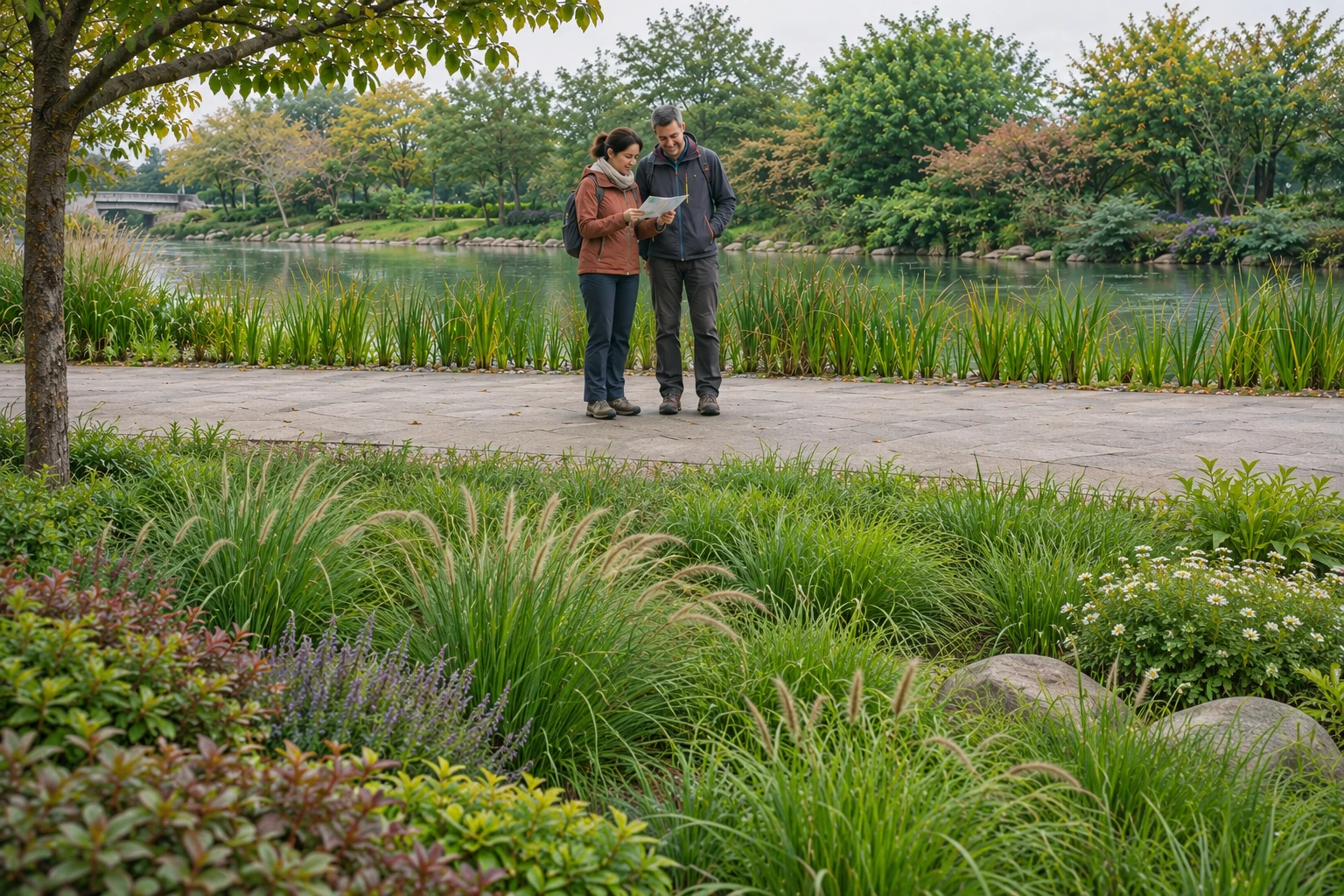
Use Living Water Park to look at how planting and design can help clean water. A short attentive walk, lunch and the hotel return give this small Chengdu landscape its own subject. It can offer urban-river or design interest between larger bookings.
Save the name Chengdu Living Water Park / 成都活水公园. Living Water Garden is another English name for the same project. This is an urban environmental garden, rather than a swimming attraction or a mountain wetland hike. Give the public walking areas the main role; an indoor exhibition, demonstration, tea purchase or river cruise needs its own arrangements.
Follow the water story, then choose your walking route
The park grew from Chengdu’s river-restoration work in the 1990s. Environmental artist Betsy Damon and landscape architect Margie Ruddick collaborated on the project. Keepers of the Waters describes its fish-shaped design and its purpose as a place where people can understand natural water treatment. That educational idea is a useful starting point for a visit, without needing to memorise an engineering diagram.
A 2022 account published by China’s environment ministry records restoration of the park’s purification system and planting. It describes river water passing through sedimentation, sculptural water features and constructed wetland elements before returning to the river. This explains the sequence to look for; it does not establish today’s flow, water quality or access to every element.
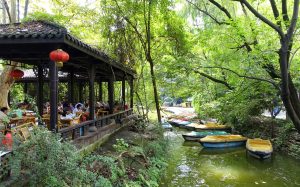
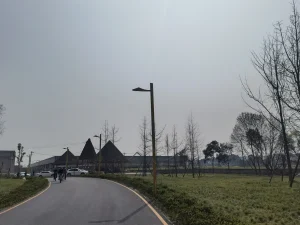
At the public entrance, find two or three reachable features and the way back on current signs. The fish-shaped plan needs no aerial viewpoint; ground-level flow and planting can explain the idea.
| Your interest | A useful focus | How to keep the visit manageable |
|---|---|---|
| Water and environmental design | Look for the relationship between settling, moving water and planted treatment areas. | Follow the signed public paths; one clear sequence is enough. |
| A gentle garden visit | Choose an open planted section and a short riverside view. | Use a return route you already know instead of extending along the river. |
| Learning with children | Ask what changes between a still pool, a moving channel and a planted bed. | Keep the discussion short and observe from the path. |
| Indoor interpretation | Consider the water-education hall only if its current visitor arrangements suit your party. | Keep the outdoor visit worthwhile if the hall is unavailable. |
Three observations that make the garden more interesting
First, compare still water with moving water. A settling area and a channel have different jobs. Ruddick’s project description explains a progression from settling to sculptural forms and constructed wetlands, with changes of level contributing aeration. The design connects a visual experience to a practical process.
Watch how form guides water instead of judging the whole system from one clear or cloudy pool. Even a dry feature may be understood through its surrounding layout. Stay behind visitor barriers without inspecting treatment equipment at close quarters.
Distinguish a planted treatment bed from ordinary garden border using the signs. Planting participates in the process as well as the view. Every species need not be identified, and old photographs promise no present seasonal growth.
Look towards the river to place this small demonstration within a much larger urban water system. Understanding that relationship is the point, without claiming one garden cleans the entire river.
Do not drink from the treatment ponds or use clear-looking water as evidence that bathing is safe. Historical project descriptions discuss particular water-quality results and recreational use; they are not a current instruction for visitors. Keep this outing on dry public paths and follow the notices in front of you.
Plants, the education hall and optional extras
A 2024 visitor feature produced with Chengdu’s river-and-lake team describes planting inspired by Mount Emei, a water-education hall and a sponge-city demonstration area. These offer different ways into the subject: plant communities, the city’s river-restoration history, and how surfaces handle rainfall.
Choose plant communities, river restoration or sponge-city interpretation if one appeals. The report describes its own visit, not daily hall staffing, English service or a scheduled rainfall demonstration now. An essential educational session needs separate acceptance.
The same report discusses tea venues and a river departure point. Treat those as separate choices rather than building them into an ordinary park walk. A cruise would need a named operator, actual boarding point, passport and payment arrangements, operating conditions and its own final return. This half-day works without a boat.
A complete half-day from a Chengdu hotel
Leave the morning or afternoon flexible enough for an unhurried meal. The sequence below is a planning suggestion, not a timed departure or a claim about walking distances. Choose the actual arrival point first; a vehicle cannot necessarily stop beside the part of the park you want to see.
| Stage | Suggested sequence | What to settle before the day |
|---|---|---|
| Hotel to park | Travel to a confirmed public entrance and read the visitor map. | Save the Chinese park name, hotel address and permitted roadside drop-off. |
| A selective walk | Follow a short water-treatment sequence, then one planted or riverside section. | Choose a shorter route if surfaces, crowds or energy make it preferable. |
| Lunch and a seated pause | Leave time for a simple meal near the agreed exit or back towards the hotel. | Confirm dietary needs and whether the meal is independently paid or quoted. |
| Complete return | Walk to the agreed collection point and return to the same hotel. | Clarify vehicle waiting, the final destination and any separately charged extra stop. |
For a short version, keep the easiest water features and finish with lunch. Extend through interpretation or a seated pause before increasing distance. The park need not occupy the whole sightseeing day to be worthwhile.
If you plan to travel independently, compare the complete journey from your hotel to the chosen entrance. A nearby station name does not settle the exit, crossings or final walk. Check the current transport map and save the return route before setting off. For a taxi, use a roadside collection point that the driver can actually reach.
Keep this separate from a tight flight or train connection. A departure-day version needs time to return for luggage and then make the station or airport transfer. Chengdu Tianfu and Shuangliu are different airports, so send the flight details rather than requesting a transfer to “Chengdu airport”.
Lunch should be part of the plan
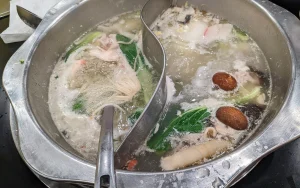
Place a noodle lunch or shared seated meal beside the actual exit and return route. An old restaurant feature is no reason to cross the city. Tea and snacks can add a pause without replacing the food and rest the party needs.
For a simple order, establish the noodle or rice base, broth, toppings and chilli separately. Explain allergies or religious requirements explicitly; asking for mild food does not answer questions about ingredients or shared preparation. A translated note can help when an English menu is unavailable.
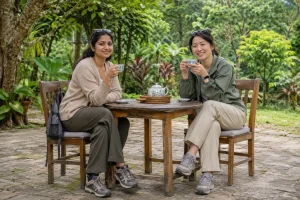
Look at the current menu and charging basis before ordering. If a tea table is priced per person, confirm the number of drinks, refills and any extra food. A place to sit is useful only if it fits your budget and leaves enough time for the agreed return. No meal or tea service is included merely because it appears in this suggested day.
Keep one hotel base for three, four or five days
Choose accommodation for the whole Chengdu stay. A hotel beside this one park is not necessary if your main visits are elsewhere. Central areas around Chunxi Road, Tianfu Square or Wenshu can be compared against your actual programme, arrival transport and preference for evening restaurants or a quieter room. The Chengdu trip-planning guide develops those wider choices.
At the property level, check the room configuration, lift access, street noise, vehicle stopping point and arrangements for your passport. Confirm luggage storage if you will arrive before the room is available. A short park visit is easier with a small day bag than with rolling suitcases.
| Stay | A balanced outline | Where the park fits |
|---|---|---|
| 3 days / 2 nights | Day 1 arrival; Day 2 one main city interest; Day 3 departure. Both nights in Chengdu. | Use a short park visit only if the main visit and transfers leave enough time. |
| 4 days / 3 nights | Arrival, one major visit day, a flexible city day, then departure. Three nights at one Chengdu base. | Give the flexible city day a park walk, lunch and hotel return. |
| 5 days / 4 nights | Arrival, a major visit day, a city day, a separate excursion or second city day, then departure. Four Chengdu nights. | Keep the park within the city day; give an out-of-city excursion its own complete return. |
These outlines assume arrival and departure are travel days, not two extra full sightseeing days. A late arrival makes the first evening a hotel-and-food task. An early departure removes the last morning from sightseeing. Adjust the number of nights before squeezing another attraction into the middle.
For a city day centred on tea and everyday social life, compare People’s Park and Heming Teahouse. For a longer bicycle outing, use the separate Chengdu greenway cycling guide. Neither experience is interchangeable with this small environmental garden, and you do not need all three in a short stay.
Walking comfort, wet weather and language
Plan for standing while looking at signs and features as well as time spent walking. Ask about the specific entrance, steps, surfaces, resting places and toilets if someone has limited mobility. A public park label does not establish an entirely step-free circuit. Agree an early exit so a companion can shorten the visit without losing the return transport.
Wear shoes with useful grip and carry the layers appropriate to the forecast. Rain changes the appeal of exposed paths and waterside edges. Shorten or postpone the outing when conditions are unsuitable; a closed indoor hall should not be the only wet-weather fallback. A hotel rest and a later confirmed indoor city visit may fit better.
With children, make a few clear comparisons and keep them with the responsible adult near water. Bring drinking water and use toilets before the walk. Fish, birds, flowers and demonstrations should not be promised as completion rewards.
Save the park name and meeting pin offline. Ordinary public-garden information in English provides context for overseas visitors, but it does not establish English-speaking staff, guided admission or every passport-based booking channel. If you need an interpreter or a reserved educational programme, name that service in the proposal.
What a written proposal should include
Price on request. Ask a Verotrip travel consultant to connect the park visit with your actual hotel, meal and complete return. The quote should identify the chosen public areas, any separately requested hall or activity, the guiding language and the time the person or vehicle remains available.
Separate the costs of transport, interpretation, food, drinks and optional activities. Do not use an old listing’s admission statement or tea price as the total budget. Confirm the current visitor arrangements for the date; if a booked activity requires identification, establish its actual channel and carry the original document requested.
A suggested route does not reserve a guide, vehicle, table, hotel or ticket. Request a dated service list and change terms, particularly if weather would shorten the walk. An existing Chengdu itinerary should include this park by name before you assume it is one of its stops.
Questions before choosing Living Water Park
Is this the same as a water park with pools and rides?
No. This guide concerns Chengdu’s environmental garden, with water-treatment landscape features and public walking areas. Plan a dry-path visit. Swimming, slides and recreational pool admission are not part of the suggested outing.
Can international visitors use this as an ordinary city stop?
The designers describe it as a public park, and it is presented in international visitor information. Use the ordinary public entrance and current notices. A reserved hall visit, demonstration or guided programme needs its own date, document and language confirmation; this guide does not promise access through every booking channel.
Do I need a boat trip to understand the park?
No. The walking visit is built around the garden’s water-treatment sequence and planting. A river cruise is a separate activity with its own operator, boarding arrangements and return, and can be left out entirely.
Should I change hotels to stay beside the park?
Usually the more useful decision is a base that works for your full Chengdu programme. Keep the same hotel, arrange a manageable outward journey and return after lunch. Move accommodation only when the rest of the trip gives you a practical reason.
Plan a garden visit with a clear finish
Send Verotrip your travel dates, hotel or preferred area, party size, children’s ages, walking needs and interest in environmental design. Add food and language requirements. Choose a short public walk or a separately arranged educational visit, then ask for a proposal that takes you from the hotel through the visit and lunch to a complete return.