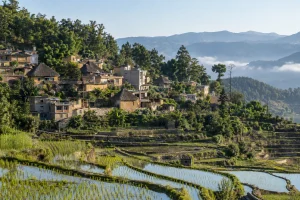
Choose Tuanshan for a village architecture outing from Jianshui, with stone lanes, admitted courts and time for doors, windows and painted detail. Make it the main visit with lunch and the hotel return. A road-led half-day lets the buildings have more attention than a stop governed by another departure.
Save 团山村, 建水县西庄镇 with the agreed entrance and meeting pin. Tuanshan lies outside Jianshui’s old town. Its Zhang Family Garden, 张家花园, is a different complex from Zhu Family Garden in town; neither admission nor the name “family garden” makes the two interchangeable.
The choice at a glance
| Interest | Main visit | Keep optional |
|---|---|---|
| Architecture | Selected Zhang Family Garden courts and one lane approach. | Additional houses and upper floors. |
| Village history | A currently open display and a shorter village walk. | A separately arranged craft activity. |
| Heritage railway | The actual booked ride and its village stop. | A longer stay requiring a different return. |
The half-day here is a planning suggestion covering the approach, admission, a selective walk, lunch and return. It is not an official visiting duration. If drawing, architectural interpretation or a particular interior is your main interest, allow a longer visit and arrange that access first.
A village of households, courtyards and changing uses
The Honghe culture and tourism authority’s introduction describes a settlement associated with the Zhang family, whose late-Qing mining prosperity helped finance its residences. Its buildings combine courtyard-and-screen-wall arrangements with connecting corner galleries. The account also identifies carved timber, stone and brick alongside painted and literary decoration.
Use screen walls, covered edges and changing light as questions for each admitted building. How does a wall alter the first view, or a gallery join rooms? Ask the interpreter to point to the actual form. A village description sets no fixed route through all houses.
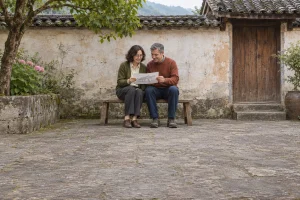
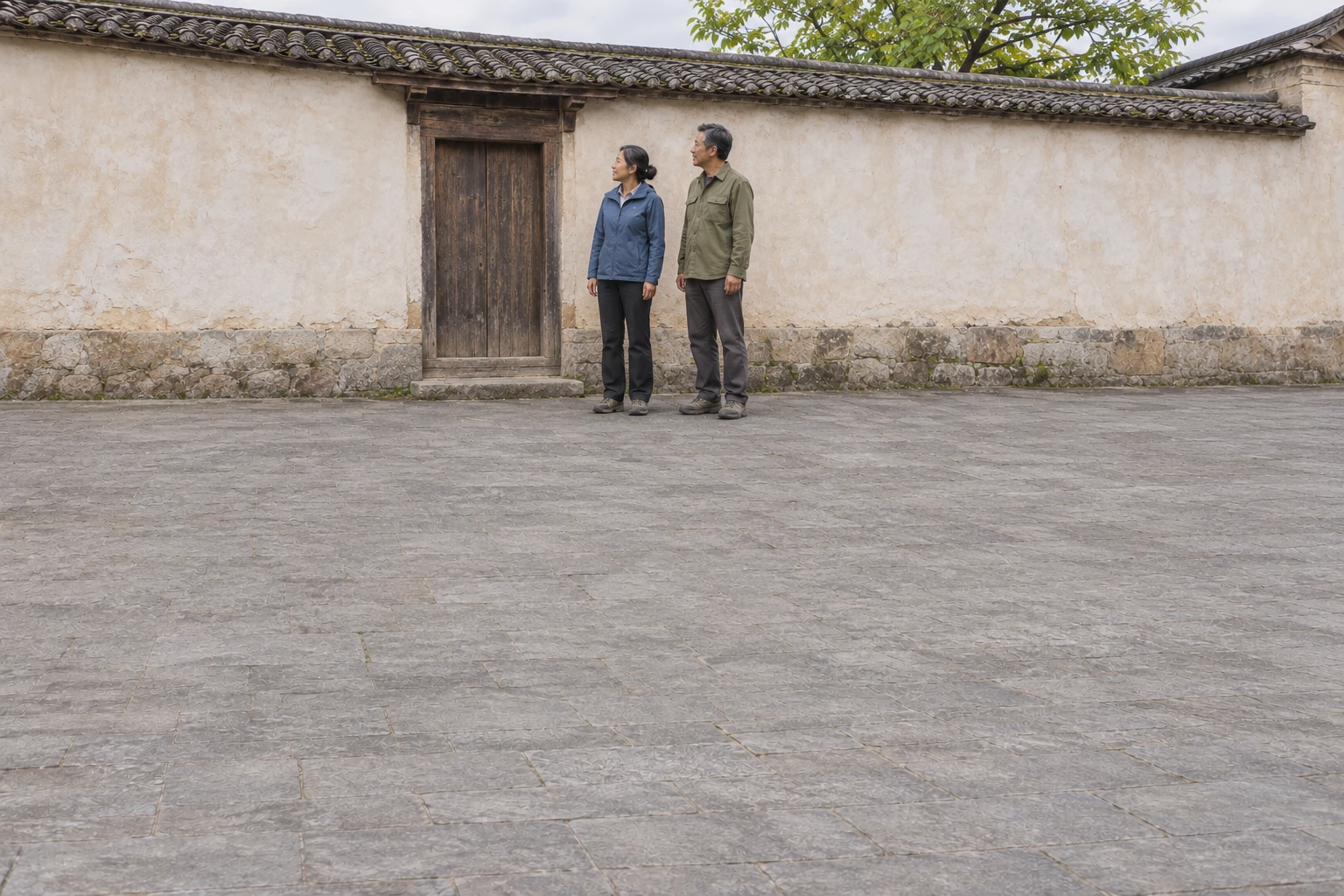
Distinguish public lane from ticketed interior, business and home. These uses share the settlement. Follow present signs and ask before entering; an open doorway alone does not admit visitors.
Compare the enclosed lane, elaborate entrance and open court where access is permitted. Their relationship gives Tuanshan its architectural appeal. The change can be appreciated without entering private living rooms.
Give Zhang Family Garden the main architectural block
A July 2025 Yunnan Daily account describes Zhang Family Garden’s successive courts, garden and ancestral spaces, with carved wooden doors, lattice windows and painting of plants, people and landscapes. It also discusses the family’s Bairen tradition of forbearance and its emphasis on learning and conduct. These are useful themes for interpretation, rather than a promise that every described space is accessible today.
Establish open areas and exit on arrival, then see the whole court before its details. Look through an opening and back again from an allowed point. The changing view can explain a sequence better than isolated doorway photographs.
Choose one door or lattice window to examine from the visitor path. Compare solid timber, openings, repeating shapes, carving and paint. Ask which parts support the building and which decorate it, rather than inventing symbolism for every figure or plant.
With children, compare windows, find a repeated pattern or sketch a screen wall in place. Remain on the permitted route without touching fragile work. A remembered arrangement can tell more than a long building-name list.
Where accessible, translate one piece of household instruction in context. Family values, anecdotes and surviving architecture connect without being identical evidence. Keep the inscription’s actual words distinct from a story about a resident.
End detailed looking while attention remains. Another court adds value when it shows something different, not merely because it appears on the map. Upper rooms, rear spaces and connecting galleries require their own access established.
Add a village-history display or a short lane walk
A November 2024 report from Gucheng Jianshui describes village-history and intangible-heritage exhibits in Zhang Family Garden, as well as restoration and new uses for older spaces. A resident interviewed in that report explained how straw weaving had become a product sold to visitors. These dated examples help explain a living village, without establishing today’s shop list or activity programme.
An open village-history display can connect family residence, ancestral precinct and shared lane. If unavailable, a shorter admitted lane walk still contrasts with the main courtyard. The visit need not depend on an unconfirmed display.
Huangenfu, 皇恩府, and the Zhang ancestral hall are additional names in published descriptions. Treat them as optional interests to check, not automatic entries on a route. Establish whether the named area is currently public, what admission applies and whether the party wants another interior after the main visit.
A craft purchase, demonstration and hands-on class are separate experiences. If straw weaving is important, ask for the actual host, language, duration, materials and appointment. Do not plan the day’s success around encountering someone at work. Photograph a maker or household only with permission, and leave room for residents to pass.
Road visit or heritage train: decide which experience matters
A road-based outing suits visitors who want to set their time around the buildings, lunch and walking comfort. Agree the legal drop-off, final walk to the visitor entrance and collection point before leaving Jianshui. Confirm whether the driver waits or returns at an agreed time, and have a usable contact method for any change.
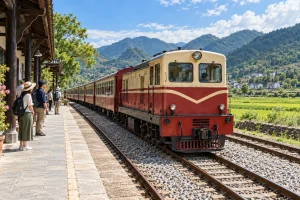
The heritage railway offers a different emphasis: the carriage journey and its stopping rhythm become part of the experience. Use the Jianshui narrow-gauge train guide to compare the actual service, village window and complete return. Lin’an Station for the excursion is distinct from Jianshui Station on an intercity booking.
If choosing the train, work backwards from its confirmed return and leave time to get back to the platform. Do not assume another departure will accept the same ticket. A one-way train with a road return needs both parts arranged; the village visit should not end with an improvised search for transport.
Double Dragon Bridge can be discussed as one additional countryside stop when the chosen route and energy allow. It is optional in this village-focused plan. Avoid automatically adding the bridge, a pottery class and several town interiors to a visit intended for slow architectural observation.
A complete outing from your Jianshui hotel
Before leaving: have breakfast, carry the original document required for your confirmed admission and leave large cases in agreed hotel storage. Save the village entrance, transport contact and hotel address offline. Take water, suitable shoes and protection for the forecast.
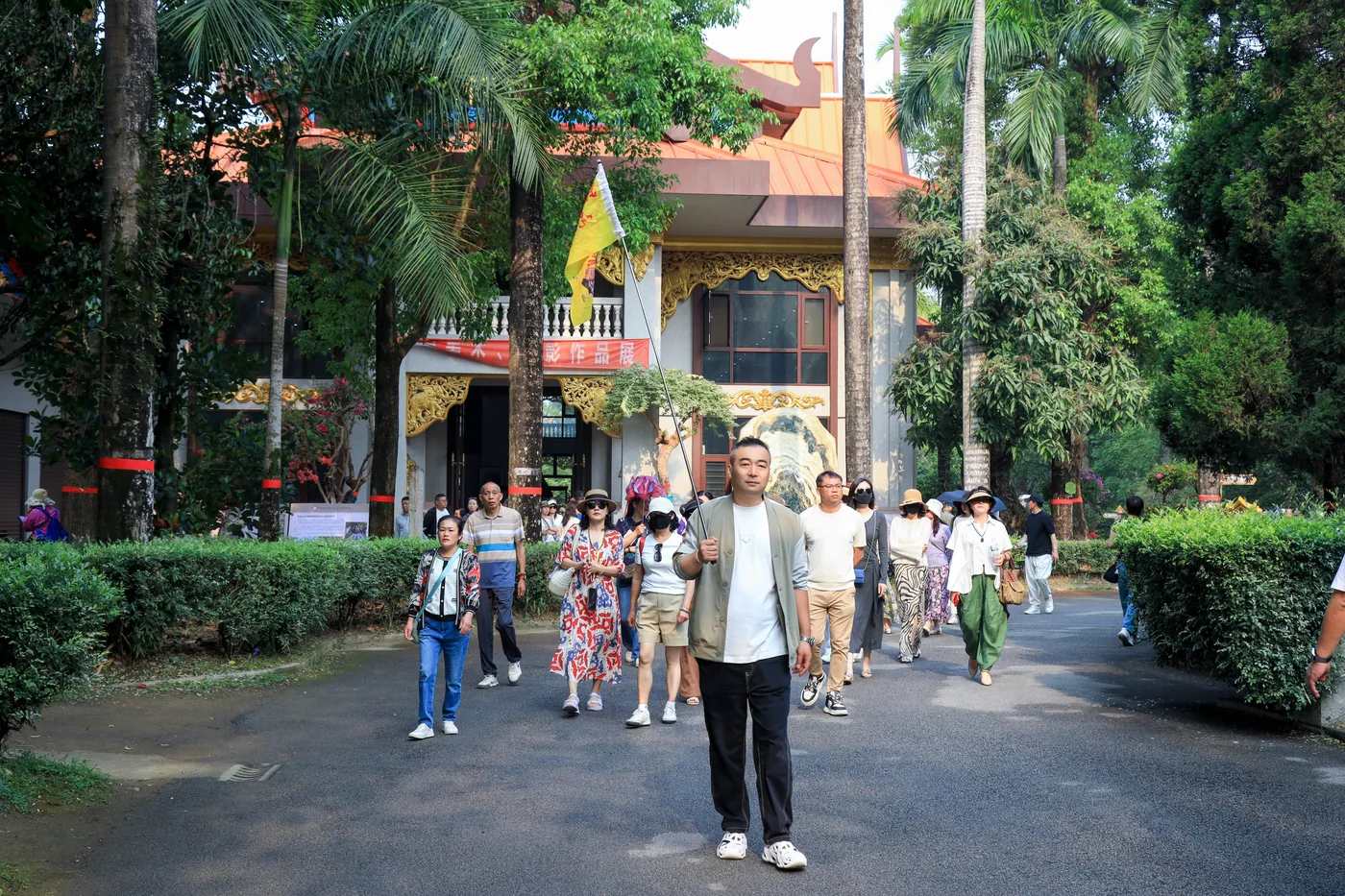
At arrival: complete the document and ticket process, check the open visitor route and identify a meeting point. Begin with a short lane approach, give the selected Zhang Family Garden spaces the main attention, then choose a display or one further lane section if people still want to continue.
At lunch: sit down for a proper break. Choose a confirmed village option or return towards Jianshui according to the day’s arrangement. A roadside snack or tofu tasting does not have to replace a meal. Explain allergies and vegetarian or halal requirements in advance, including questions about broth, sauces and shared preparation.
To finish: meet at the agreed collection point and complete the journey to your hotel. Settle any stored bags and leave the remaining afternoon flexible. A morning drop-off, an attraction ticket and a complete hotel-return service have different scopes; choose the one you actually need.
Keep a Jianshui base and count the nights
| Stay | Suggested sequence | Hotel nights |
|---|---|---|
| 3 days / 2 nights | Arrival; Tuanshan-focused day; departure. | Two in Jianshui. |
| 4 days / 3 nights | Arrival; town day; separate village day; departure. | Three in Jianshui. |
| 5 days / 4 nights | Kunming arrival; Jianshui transfer; village day; return to Kunming; departure. | Kunming one, Jianshui two, Kunming one. |
Two Jianshui nights provide one full day between arrival and departure. Choose Tuanshan for that day when village architecture is the priority. Three nights create a second full day for a town interest, with less pressure to combine everything.
For the five-day Kunming-return pattern, the four nights are one in Kunming, two in Jianshui and one back in Kunming. The single full Jianshui day can centre on Tuanshan. If you also want a substantial temple or town-garden visit, add a Jianshui night or use a genuinely workable arrival block.
Choose accommodation by its actual entrance, room and vehicle access. Ask about passport registration, stairs or lifts, noise and how far cases must be carried. A historic-looking property does not establish convenient bag handling. Staying in a village guesthouse is a separate accommodation decision, requiring a named property and confirmed arrangements.
Zhu Family Garden provides a separate town-based courtyard visit. Choose it for another block if comparing domestic architecture interests you. The Jianshui and Mengzi gateway comparison covers an onward terrace journey, including the difference between reaching a gateway town and reaching the actual mountain accommodation.
The existing seven-day Jianshui and Yuanyang culture itinerary places Tuanshan on Day 2, followed by a return towards Jianshui for lunch and a separately arranged pottery interest. Its tourist train is optional, and later days continue to the terraces. That is a wider journey with several bases, rather than the short village stay outlined here.
Passports, costs and the written day plan
A 2010 interview with Tuanshan’s residential-site manager records ordinary foreign visitors. It supports a history of international visits, but cannot establish today’s booking form, identity checks or every courtyard’s admission. Confirm the actual original-passport purchase and validation channel for your party before paying for a dependent service.
Ask which village and house areas the ticket covers, the operating date and the entry window. Check any essential interior separately. Do not assume a railway ticket includes village admission, or that a concession described for a resident identity card applies to an overseas passport.
| Part | Detail for the written arrangement |
|---|---|
| Admission | Date, actual passport channel, village entrance and named open interiors. |
| Interpretation and meals | Language, duration, meeting point, meal venue and payment basis. |
| Transport and stay | Exact hotel, road or rail legs, waiting, luggage custody, complete return and room nights. |
Price on request. The accepted dated proposal determines the services arranged through Verotrip. Village admission, interpretation, transport, waiting, lunch and accommodation should each have a clear basis. Classes, performances, purchases, insurance, onward tickets and extra hotel nights are separate unless expressly included.
Walking, weather and belongings
Expect a mixture of standing to look at details and walking between spaces. Describe any limit on steps, thresholds or continuous standing before choosing the route. Ask about the actual entrance, surfaces, toilets and resting opportunities needed for a wheelchair, stroller or older traveller. A compact village is not automatically an accessible one.
Wet paving and thresholds can change the comfortable walk. Wear shoes with grip and shorten exposed sections in poor weather. A roofed room does not make every connecting court or lane sheltered. In hot or bright conditions, allow water and shade breaks without relying on a particular shop being open.
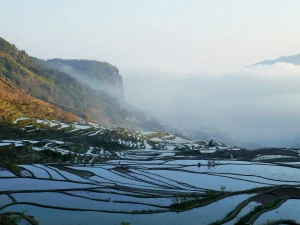
Keep landscape expectations modest: crops, flowers, pond water and visibility vary. The architecture can remain the focus without a seasonal photographic backdrop. Follow public visitor paths and barriers; do not enter fields, climb walls or step onto railway tracks for a better angle.
When returning to the same hotel, agreed storage can keep the village walk light. On checkout day, establish storage acceptance and collection time, or specify vehicle luggage capacity and custody. Keep medication, valuables and your original passport with you. An onward train needs its own transfer margin after collecting the bags.
Questions before visiting Tuanshan
Is Zhang Family Garden the same as Zhu Family Garden?
No. Zhang Family Garden is in Tuanshan village; Zhu Family Garden is a separate Jianshui town complex. Use the Chinese names and exact locations when arranging admission and transport.
Must I take the small train to visit?
No. A road-based visit is a separate option, useful when time in the village matters more than the railway ride. Confirm the entrance, drop-off, collection and full return whichever transport you select.
Can I enter every old house and take photographs?
No. Follow the current public route and each interior’s rules. Some spaces serve households or businesses. Ask before entering private areas or photographing residents, and check restrictions inside the selected attraction.
Can this fit before continuing to Yuanyang?
Only after checking the complete road stage, meal breaks, luggage and actual terrace hotel. A separate village day gives more time for architecture. Keep an onward-day visit shorter and optional instead of promising a fixed mountain sunset.
Plan a village visit with a complete return
Send Verotrip your dates, Jianshui accommodation or arrival details, party size, language needs, walking comfort and onward connection through Plan My Trip. Say whether the priority is courtyard architecture, village history or the railway ride, so the proposed sequence protects that interest and includes the complete finish.