Give Zhu Family Garden a Jianshui half-day for courtyard architecture and family commemoration. Move from domestic space towards a garden pause, then a seated meal and the complete hotel return. Every room, a performance and another major sight are not required before lunch.
Save 朱家花园, 建水 with the entrance and ticket information. This is the historic residence-and-ancestral-hall complex on Hanlin Street in Jianshui, southern Yunnan. It is a separate attraction from Jianshui Confucian Temple, Tuanshan’s courtyard houses and similarly named gardens elsewhere in China.
The choice at a glance
| Interest | Main attention | Keep optional |
|---|---|---|
| Courtyard houses | One residential sequence, doors, windows and household lettering. | Additional rooms after a rest. |
| Family history | The relationship between residence and ancestral precinct; an open interpretive display. | A separately arranged specialist explanation. |
| A gentler visit | A confirmed shorter courtyard route and garden pause. | Upper floors, longer garden sections and another major attraction. |
Choose the house-led visit for doors, windows, thresholds and courts opening into one another. A shorter selection serves anyone tired by standing or level changes. Confirm a named exhibition or performance separately if that is the reason for coming.
A residence and ancestral hall, with a later rebuilt garden
The Honghe culture and tourism authority’s 2019 introduction identifies Zhu Family Garden as a late-Qing family residence and ancestral hall on Hanlin Street. Its importance lies in the combination of living courts, halls and garden spaces. Read it as a connected domestic complex rather than an isolated ornamental garden.
The county government’s April 2025 account explains that the rear garden was restored and rebuilt in 2016, bringing it together with the inner residence and ancestral precinct. That distinction matters when looking at the site: the family history, surviving house fabric, later restoration and present visitor arrangements are different layers.
Read the interpretation for each room or object instead of making a late-Qing origin a claim for every furnishing, plant, paint surface and garden structure. Restoration is part of the story, especially when comparing enclosed house courts with the garden beyond.
Use the visitor map to select a few open courts rather than count the complex’s rooms. Published totals describe the place, not an entitlement to enter every door. A shorter understood sequence can reveal more than completing the inventory.
Look closely at the entrance and one residential courtyard
Begin at the gate without blocking it
Pause outside the permitted viewing position and look at the entrance’s roofline, layered timber decoration and relationship to the street. A 2006 Tianfu Morning Post feature described carved auspicious motifs and stone drums at the entrance. Use that as historical context, while letting the current signs and interpretation identify the details actually visible today.
Choose one entrance motif for an interpreter to explain. Distinguish support, decoration and repaired work instead of assigning meanings to every carving. Keep other visitors moving and leave carved surfaces and barriers alone for photographs.
Follow the transition from passage to open court
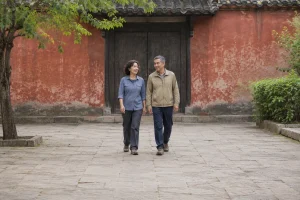
Follow a short residential sequence and notice changes in light and enclosure. A narrow passage can open into a bright court; a doorway can frame the next hall. Windows and threshold levels help explain how the adjoining rooms work.
Give one court a second look: first its arrangement, then a door panel, roof edge or inscription. Children can find a repeated shape from the permitted path. A simple plan sketch can help remember the rooms without entering all the side spaces.
Follow the current visitor direction when moving between courts. A historical description of a passage does not establish that it is still a public through-route. Keep together at junctions and agree a recognisable meeting point. If you need a shorter walk, ask staff how to return before adding another set of rooms.
Family instructions, plaques and the ancestral precinct
The 2025 county account describes a courtyard image with household instructions used for a literary bookmark. It offers a useful subject for the visit: what values did a prosperous family choose to display in its domestic space? Ask for a short explanation of the actual text before taking a photograph, rather than treating the lettering only as decoration.
The older Tianfu feature recorded the Xungui Daoju and Jinyan Shenxing inscriptions, broadly concerned with rules of conduct and careful speech, as well as the Zhongjiangdi plaque. These are historical reading prompts. If included in the open route, compare where words are placed and who would have encountered them; do not assume access to the same rooms described by the writer two decades ago.
In the ancestral precinct, compare commemoration and family identity with the living courts. Ask how the spaces relate while observing barriers and interior photography rules. This family hall remains distinct from Jianshui’s Confucian Temple.
Where a family-history display is open, use it to distinguish documented events from legend or literary interpretation. The county’s 2025 article connects the complex with Fan Wen’s novel Qing Yun Ti, whose fictional Wu-family garden draws on this setting. A novel can encourage interest in the place without serving as a literal inventory of its residents or rooms.
Choose the garden pause and treat the stage as architecture
After the house, choose the garden or a shorter return according to energy. Keep its documented 2016 rebuilding in mind. Look at how an opening frames planting and a path changes the view; the contrast with domestic courts is the reason to pause.
Where the waterside stage’s visitor area is open, consider stage, water and audience position as an architectural composition. The Honghe introduction identifies the feature but does not establish a performance that day.
A local-government news account carried in October 2026 described National Day role-play activities, an auction-themed event and other festive programmes. They belonged to that holiday programme. Do not book an ordinary later visit expecting the same performances, a costume activity or access to every event space.
Keep flower, foliage and water expectations flexible. A restored garden photograph illustrates a particular moment, not a promise of reflections, blossom or a quiet seat. Remain on managed paths and keep children close beside water. End the visit when the main architectural sequence is complete rather than extending it only to reproduce a photograph.
A half-day with arrival, lunch and the full return
Begin at your actual Jianshui accommodation, with the garden’s Chinese name and confirmed entrance saved offline. For a car, name a legal drop-off and collection point and the remaining walk. A central old-town address does not mean the vehicle can stop at the ticket gate.
At arrival, complete the admission and document process, orient yourself and choose the residential sequence. Give the household text or ancestral precinct its own attention, then choose the garden if it suits the open route and the group’s energy. This is a suggested visiting rhythm, not a surveyed one-way route or an official duration.
After leaving, have a seated lunch in town. Grilled tofu can be a tasting interest, but it need not be the whole meal. Discuss the actual dishes, broth, sauces, cooking oil and shared preparation when allergies, vegetarian or halal needs matter. A heritage-house admission does not reserve a restaurant or a food demonstration.
Return to the hotel after lunch, or add one short old-street section if the weather and energy suit. Establish the final meeting point, collect any stored belongings and complete the return. If a car is booked to wait, specify the waiting period; a morning drop-off alone does not arrange the afternoon journey.
Choose a Jianshui base and count the nights
| Length | Sequence | Nights |
|---|---|---|
| 3 days / 2 nights in Jianshui | Arrival; garden-led town day; departure. | Two Jianshui nights. |
| 4 days / 3 nights in Jianshui | Arrival; garden-led town day; separate temple, train or countryside day; departure. | Three Jianshui nights. |
| 5 days / 4 nights, Kunming return | Kunming arrival; transfer to Jianshui; full town day; return to Kunming; departure. | One Kunming, two Jianshui, then one Kunming night. |
Two Jianshui nights provide one complete day between arrival and departure. Make the garden and town the purpose of that day, with the afternoon kept modest. Three nights add a second full day for another interest without making every morning a checkout.
For the five-day Kunming-return example, count one Kunming night before the journey, two Jianshui nights and one Kunming night after returning. That gives four nights overall. Additional countryside sightseeing on the Jianshui departure day stays optional; protect the train or road transfer and hotel arrival first.
Compare a property inside the old town with one offering easier vehicle access. Ask about passport registration, the distance bags must be carried, stairs or lifts, bathroom arrangements and room noise. A sightseeing ticket to the historic complex does not book accommodation inside it; choose the actual hotel and room on their own merits.
If continuing to the terraces, use the Jianshui and Mengzi gateway comparison. An arrival in Yuanyang county town is different from reaching a terrace-village property. Allow the complete road stage, a meal or comfort stops and the final luggage approach before adding an evening viewpoint.
Give the temple and heritage railway separate visiting time
The Jianshui Confucian Temple guide follows a different architectural story: pond, ceremonial gateways and learning. Choose it on another visiting block if both interests matter. Trying to give both places detailed interpretation in one short arrival afternoon reduces the time that makes each worthwhile.
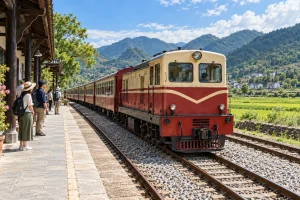
The Jianshui narrow-gauge train guide covers a separate excursion from Lin’an Station. Its timetable and return should shape its own day. Do not confuse that station with Jianshui Station on an intercity booking, or insert the garden between two rail departures without checking the complete journeys.
The existing ten-day southern Yunnan itinerary includes Zhu Family Garden on Day 2 after the confirmed train from Kunming. It then continues through Yuanyang, Pu’er and other southern bases, finishing in Jinghong. That is a longer one-way journey, rather than the short Jianshui stay above. Keep its arrival-day garden visit flexible around the actual train and hotel check-in.
Passports, paid services and the written proposal
International visitor research describes the garden as part of a Jianshui visit, and older reporting records ordinary overseas visitors in the complex. These sources do not establish today’s purchase form or every passport collection procedure. Confirm the actual channel for your party, the original document required, the visit date and which areas the admission covers.
Check opening and last admission for the chosen day before fixing transport. A historical article, an old hotel listing or a holiday event schedule cannot supply a current operating guarantee. Children and older visitors need their own eligibility checks; do not transfer resident-document concessions to an overseas passport without confirmation.
For an accompanied explanation, name the language, meeting point, duration and whether the person stays throughout the walk. A ticket seller, an attraction interpreter and an English-speaking companion perform different roles. If a particular room, plaque or event is central to a specialist visit, have it checked before committing.
| Part | Written detail |
|---|---|
| Admission | Named complex, date, original-passport purchase and collection channel, open areas and any essential room. |
| Interpretation and meals | Explanation language, duration and meeting point; meal venue, ingredients and payment basis. |
| Transport and stay | Actual hotel and room nights, legal pickup, waiting, bag responsibility and complete hotel or station finish. |
Price on request. Verotrip services apply when listed in the accepted dated proposal. Admission, interpretation, meals, hotel nights, vehicle waiting and the complete return each need a clear basis. Workshops, costumes, performances, shopping, insurance and onward travel are separate unless expressly included.
Rain, thresholds and luggage
Covered rooms and passages do not make the entire visit weatherproof. Courts and garden sections still involve exposure, and wet paving can alter the comfortable route. Wear shoes with grip, carry suitable rain or sun protection and shorten the outdoor portion when necessary. A seated meal can be a better finish than another long street walk.
Describe the actual mobility requirement: stair limits, a wheelchair, a stroller or the maximum comfortable standing period. Ask about the selected entrance, thresholds, surfaces, toilets and resting opportunities. A small courtyard in a photograph does not show every transition required to reach it, and access to an upper floor should never be assumed.
Leave large cases in agreed hotel storage when returning there. On checkout day, settle acceptance and collection time before relying on storage. Keep the original passport, medication and valuables with you. A vehicle’s passenger capacity does not establish luggage capacity, custody or all-day waiting.
Questions before visiting Zhu Family Garden
Is it the same visit as Jianshui Confucian Temple?
No. The garden is a domestic and ancestral complex; the temple develops the town’s ceremonial and educational history. Give each its own admission and attention if you choose both.
Is every part an untouched Qing-dynasty original?
No. The complex has a late-Qing history, while the county records restoration and rebuilding of the rear garden in 2016. Read the interpretation for the actual building or object and distinguish historical use from later restoration.
Can I expect a performance at the water stage?
Only a confirmed programme for your date establishes a show. The stage can be an architectural subject when its visitor area is open. National Day activities described in older reporting are not a daily timetable.
Can the visit fit after arriving from Kunming?
It can be discussed when the actual arrival, luggage, hotel check-in and admission window leave a useful block. Keep it optional after a delayed connection. An overnight plan gives a more dependable opportunity for a focused visit the next day.
Plan the courtyard visit around your stay
Send Verotrip your dates, arrival station or hotel, party size and ages, language preference and walking comfort. Say whether the priority is domestic architecture, family history or the garden, and add luggage, meal needs and the onward connection. Ask for a selective visiting sequence and complete return, with any particular room or activity confirmed separately.