Choose Hailuogou for a Moxi-based visit that can combine a managed glacier viewpoint with forest and town time; choose Dagu for a Heishui-based mountain visit centred on its much higher cable-car viewpoint. For a short Sichuan extension, choose one park and protect its approach, full visiting day and return. Neither name describes a simple walk on the ice.
The useful comparison is between the days you will actually spend, rather than the snowiest photograph. Hailuogou’s Camp 4 visitor area is around 3,600 metres according to its operator; Dagu’s cable-car viewpoint is 4,860 metres. Those figures describe different exposures, not a personal medical recommendation or a guarantee that the lower destination suits everyone.
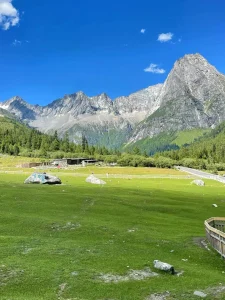
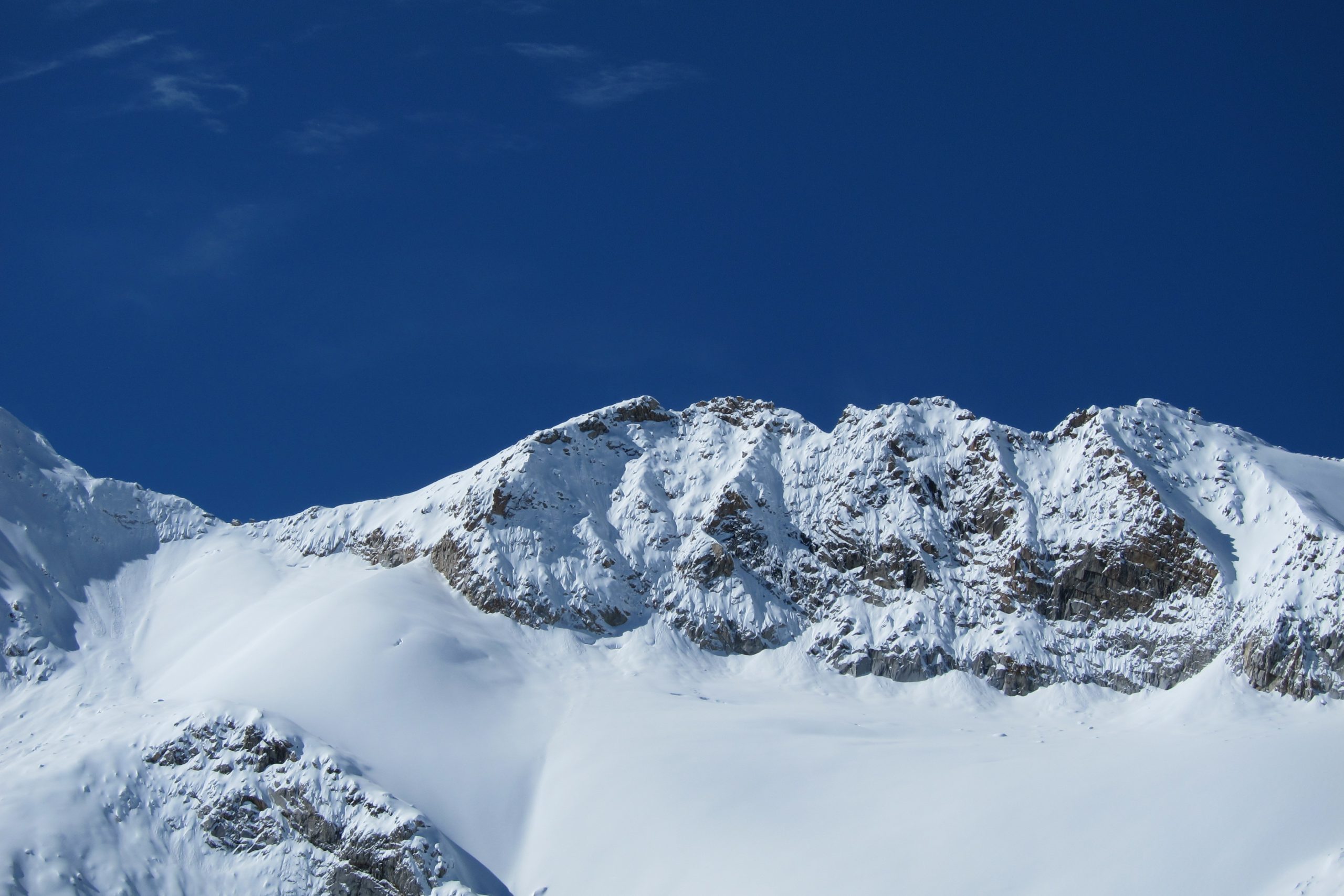
Checked 5 November 2026. Lead photograph: mountains in Heishui, photographed on 25 October 2012 by Anders Johnson, CC BY 3.0. The existing original JPEG is reused with website resizing and responsive cropping. This archival Heishui regional photograph illustrates the Dagu side of the comparison; it does not depict Hailuogou, a named walking route, current snow conditions or Vero Trip guests.
Compare the base and the main day first
Hailuogou (海螺沟) and Dagu Glacier (达古冰川) occupy different parts of western Sichuan. Moxi (磨西) is the town to discuss for a focused Hailuogou stay; Heishui (黑水) is the base to discuss for Dagu. A booking described simply as a mountain-area hotel leaves too much unresolved. Ask for the property, entrance and actual pickup pin together.
| Decision | Hailuogou | Dagu |
|---|---|---|
| Overnight base | Moxi town, with the exact property and entrance transfer confirmed. | Heishui, with the exact property and park transfer confirmed. |
| Defining upper visit | Scenic-bus and cable-car approach towards Camp 4, around 3,600 metres. | Scenic-bus and cable-car visit to the 4,860-metre viewpoint. |
| Walking emphasis | An agreed open forest section can be the main objective instead of adding every viewpoint. | Ordinary sightseeing links differ from a separately arranged sustained forest programme. |
| Good reason to choose it | A Moxi stay with forest, town time and an optional upper panorama. | The particular high Dagu panorama, after individual altitude planning. |
| Essential return question | How do the selected forest stop, bus and cable-car connections fit the descent? | When do you descend, rejoin the vehicle and return to the same confirmed base? |
For a party with mixed walking preferences, Hailuogou offers a useful conversation about which open forest section and which viewpoint actually interest you. For someone whose principal wish is Dagu’s high panorama, assess that specific altitude before building the rest of the holiday around it. In either case, retain the option to leave the upper visit out.
Hailuogou: Moxi, forest stops and Camp 4
The operator’s 2025 description of the visitor elevations places Moxi at approximately 1,580 metres, Camp 3 at about 2,940 metres and Camp 4 at about 3,600 metres. Old articles use different Camp 4 figures. Use the current park’s named visitor areas when discussing a route, rather than treating every historical camp number as an overnight camp or an open walking destination.
Its visitor interpretation itinerary describes the scenic-bus approach to Ganheba and Gongga Ladder, followed by the cable car towards Camp 4. It also identifies forest interpretation around the Camp 3 and Caohai area. These are choices to reconcile with the day’s open sections and internal transport; they are not an instruction to complete every stop in one visit.
A sensible first version of the day has one main objective. If the cable-car viewpoint is your priority, allow the bus journey, transfer, queue, short visitor-area walking and complete descent before adding forest time. If a forest outing is the priority, obtain the currently permitted walking section, surface, steps, turnaround and last return connection before paying. Ask whether changing between plans changes the ticket components.
Keep the town evening separate from that mountain schedule. Moxi’s streets can provide a modest arrival or return-day pause without another major attraction. The operator also discusses cultural interpretation sites in town, but any exhibition opening and admission need their own check. A quiet meal and an early night can be the better use of the evening after a road transfer.
Stay inside managed visitor areas. The operator explicitly prohibits crossing barriers and entering the glacier or unopened areas. This guide does not recommend glacier contact, ice climbing, unmarked approaches or closed neighbouring attractions. A photograph taken beyond a barrier is not evidence of a public route.
Dagu: Heishui and the high cable-car viewpoint
The administration’s description of the 4,860-metre viewpoint establishes the defining feature of the standard Dagu visit. Plan the whole scenic-bus and cable-car sequence, including the way down, rather than using the cable journey alone as the duration of the outing. Visibility, queues, wind and an individual’s decision to descend can all change how the day feels.
The standard sightseeing day also differs from a sustained forest trek. In its 29 October 2026 activity report, the administration describes a separate 12-kilometre forest programme at roughly 3,500–3,800 metres, alongside a distinct mountaineering component. That report does not establish an ordinary ticket’s inclusions or individual foreign-visitor admission to those separate programmes. This comparison recommends the normal managed sightseeing areas, not the climbing component or an unconfirmed trek.
For the fuller Dagu-only explanation, use our Dagu visitor guide. When comparing quotations, keep the standard viewpoint day and any separately verified walking programme on different lines. A description such as gentle forest walking does not make a long route at that elevation equivalent to a short town walk.
In Heishui, choose accommodation by the actual pickup location and room arrangements. Heating, hot water, stairs, meal times and foreign-passport registration are more useful questions than an unexplained regional hotel label. Two nights in the same confirmed property keep luggage and the visiting-day return straightforward; they do not guarantee acclimatisation for a sudden journey to the upper viewpoint.
Three days and two nights for one park
This is an editorial planning framework, not a published departure, a minimum medical acclimatisation period or a promise of current road conditions. Start and finish in Chengdu only if the complete transfers fit your travel dates. Hailuogou and Dagu need separate road plans; do not substitute one destination’s drive estimate for the other.
| Stage | Hailuogou version | Dagu version |
|---|---|---|
| Day 1: approach and night 1 | Travel to the confirmed Moxi property; settle bags and keep any town walk optional. | Travel to the confirmed Heishui property; check the following morning pickup and meals. |
| Day 2: one main visit and night 2 | Follow the agreed open bus, forest and/or cable-car plan, returning to Moxi. | Take the agreed managed viewpoint day, with an early-descent option, returning to Heishui. |
| Day 3: return | Collect all bags and make the complete return; protect the final city drop-off. | Collect all bags and make the complete return; protect the final city drop-off. |
| Onward travel | Prefer the onward flight or long-distance train on a later day, rather than making it depend on the road return. | Prefer the onward flight or long-distance train on a later day, rather than making it depend on the road return. |
If weather flexibility matters, consider a third night in the same base before booking the rest of the holiday. An extra night buys time, not another park entry or a guaranteed clear morning. Establish whether tickets can move, whether the room can extend and what the vehicle arrangement costs. An additional day should have a worthwhile town or rest option even if the upper attraction remains unavailable.
For a wider road circuit, compare every sleeping location. Our existing three-day Siguniang, Bipenggou and Dagu proposal reaches Dagu on its last day and then returns to Chengdu. It offers a compressed multi-park pattern, with a Heishui or Maoxian overnight choice before Dagu and scenic admission and internal transport additional. It does not include Hailuogou or reproduce the two-nights-in-one-base framework above. Request a rewritten itinerary if that focused stay is what you want.
Weather and operating notices change the choice
Cloud can remove the mountain panorama while leaving some lower visitor areas open. Snow, ice, wind or maintenance can instead affect transport or close areas altogether. Agree which of those situations would still make the visit worthwhile to your party. A forest alternative remains conditional on the forest section actually being open and suitable that day.
Read notices by their dates. Hailuogou’s 25 October 2026 announcement planned cable-car resumption from 26 October after maintenance. Dagu’s official notices page lists a separate October inspection announcement. Neither is a basis for calling November continuously closed, nor proof that every cable-car service will operate on your future date. Recheck before final payment and again before leaving the base.
Do not promise autumn colour, fresh snow, sunrise access or blue skies. Promotional views of dawn and stars do not establish ordinary visitor access outside operating arrangements. In poor conditions, a revised day might mean town time, a meal, rest or an earlier return. It should not mean driving to an unverified remote alternative simply to retain a mountain activity.
Walking, altitude and what to carry
Compare more than distance. Ask about bus boarding steps, the cable station approach, wet or icy surfaces, toilets, shelter and the point where someone can turn back. A cable car reduces climbing effort while still taking passengers high. Neither park should be sold as step-free on the basis of transport alone.
The CDC’s altitude guidance explains that altitude, ascent and exposure matter, and fitness does not prevent altitude illness. Seek individual travel-health advice where appropriate; if unwell, stop ascending, tell staff and obtain help. A lower hotel, an oxygen product or a short visit does not establish personal safety.
Carry warm layers, a windproof outer layer, sun protection, water, food suitable for your dietary needs and your usual essential medication in the day bag. Confirm where the main luggage stays and when it rejoins you. Do not leave your passport or the layers needed for the descent in a vehicle or hotel that may be inaccessible during the visit.
Documents, fees and the written proposal
Both are managed tourism destinations with published visitor information. That does not confirm every booking interface for every passport. Before payment, establish the accepted document category, name format, booking channel and entrance procedure for each traveller. Carry the original document used. If a domestic-ID field prevents booking, resolve it through a supported channel rather than entering invented details.
Price on request. Separate the complete road journeys, hotel nights, meals, admission, scenic bus, cable car, guiding and any optional activities. State the pickup and final drop-off, the language of any guide and the actual hotel. A private car does not automatically include an English-speaking guide; a driver does not automatically accompany visitors inside the park.
For a changed mountain day, ask which unused services are refundable, which can be rearranged and who bears an extra room or vehicle cost. Do not import an online supplier’s replacement or cancellation terms into a Vero Trip quotation. Use the Sichuan walking planner to compare the wider holiday after deciding whether either high mountain visit suits your group.
Questions before choosing a glacier park
Which is better for limited walking?
Compare the actual open visitor route and boarding links first. Both have transport-based sightseeing, but Dagu’s upper viewpoint is substantially higher. Limited walking and limited altitude exposure are different requirements; a suitable answer may be a lower visitor plan or another destination.
Can we visit both on consecutive days?
Do not assume so. These are different bases and road corridors, not adjoining entrances. Price the full transfer and consider an intermediate stop or a different holiday structure. For a short extension, one well-planned park usually leaves more useful time than two rushed upper viewpoints.
Does choosing Hailuogou mean we can walk on the glacier?
No. Stay within the open managed visitor areas and respect barriers. The comparison concerns a viewpoint and permitted visitor walking, not access onto the ice or a mountaineering itinerary.
What information makes a quotation useful?
Send dates, previous overnight locations, party ages, walking preferences, room needs, luggage and onward travel through Vero Trip’s planning enquiry. Name the experience you want most, the altitude concern and the fallback you would accept. The written reply should identify the actual services and remaining confirmations.