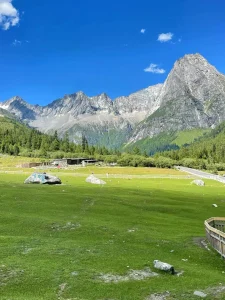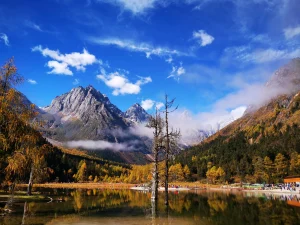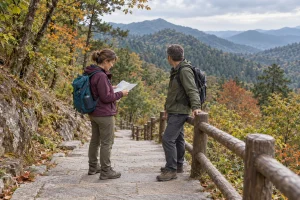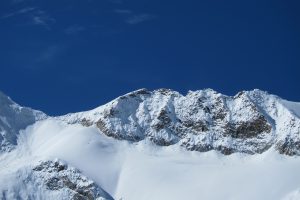
Plan Dagu Glacier around one main experience: the managed scenic visit with its high cable-car viewpoint, or a separately arranged forest-walking day. They have different walking demands, booking arrangements and return needs. The cable car reaches 4,860 metres; a ride that reduces climbing effort still involves a substantial high-altitude exposure.
Dagu Glacier (达古冰川) is a Heishui County extension in northern Sichuan. For a focused visit, organise the approach and an overnight base before the park day, then protect the journey back. A mountain photograph should not decide the route before you know the actual entrance, sleeping location and amount of walking everyone wants.
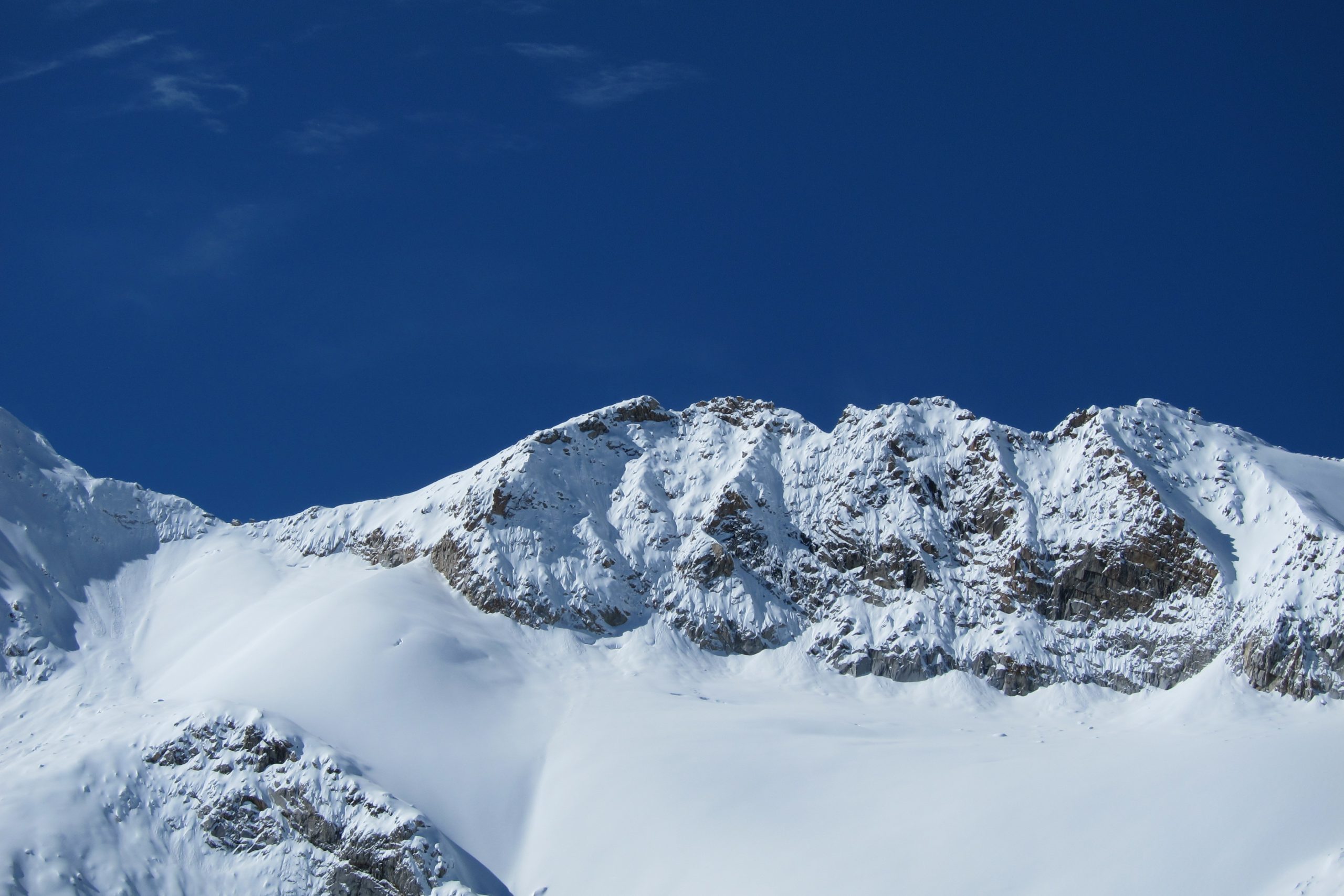
Updated 5 November 2026. Lead photograph: snow-covered mountains in Heishui, photographed on 25 October 2012 by Anders Johnson, CC BY 3.0. Original JPEG uploaded; website-generated resizing and responsive cropping apply. This archival regional landscape is not a named walking-path photograph, current snow report or record of Vero Trip guests.
Choose the visitor experience before the photograph
The Dagu administration’s description of the 4,860-metre viewpoint explains the cable-car approach and the surrounding mountain landscape. Use it to understand the objective. Its scenic descriptions of dawn and stars do not establish visitor access outside the day’s operating arrangements.
The forest-walking product is a separate decision. In its 29 October 2026 activity report, the administration describes a 12-kilometre forest route at approximately 3,500–3,800 metres, alongside a different high-mountain climbing component. Gentle gradients in that report should not be read as a short, low-altitude stroll.
| Your priority | Programme to discuss | The decision that changes the day |
|---|---|---|
| Mountain panorama with limited walking | The ordinary managed scenic-bus and cable-car visit, when operating. | The high viewpoint is optional in the wider holiday; queues, weather and altitude still matter. |
| Forest scenery and a sustained walk | A separately confirmed forest-walking programme. | Establish its exact permitted course, passport acceptance, distance, height profile and organised return. |
| A mixed-ability party | A shorter shared visitor programme with an agreed turnaround. | Confirm the actual steps and waiting facilities; do not assume everyone can split independently. |
| A summit or glacier expedition | A separate specialist undertaking outside this visitor guide. | Ordinary scenic admission is not a climbing arrangement, equipment package or access approval. |
For a first visit, keep one objective. Combining the full forest route with a high-viewpoint visit and a long onward drive creates a different undertaking from the ordinary sightseeing day. A numbered route or a distance in an event announcement is not a promise that an individual visitor can join it on any date.
Give the Heishui approach its own place in the trip
Heishui is the local planning base; Chengdu is the wider gateway. Compare the complete hotel-to-hotel road stage, including stops and the final approach to your room. The public traffic-guide page did not provide a usable timetable when checked, so this guide gives no assumed direct bus departure or guaranteed driving time.
Send your arrival location, travel date, party size and bag count before requesting a transfer. Ask for the route, any expected road controls, the driver’s service hours and the actual endpoint. If a proposal names Maoxian as the overnight instead of Heishui, examine the next morning’s road approach again; the towns are not interchangeable hotel labels.
The following is a scheduling framework, not an acclimatisation prescription or a confirmed package. Individual health needs can require a different approach or abandoning the high visit altogether.
| Part of the trip | A sensible allocation | Room and return boundary |
|---|---|---|
| Approach day | Travel to the confirmed Heishui-area base, eat and settle in. | Local night1. Agree the exact property and next morning pickup; do not add a compulsory high viewpoint on arrival. |
| Dagu visitor day | Use the dated managed circuit and the agreed walking limit. | A second local night avoids attaching every park delay to a long Chengdu return. |
| Return day | Collect bags and travel along the confirmed road route. | Keep a Chengdu night before a separate fixed flight or train when flexibility is needed. |
| Extra flexibility | Retain a spare day only if it benefits the whole trip. | An extra room night does not guarantee cable-car operation, clear views or suitability at altitude. |
A circuit with the Dagu visit followed immediately by Chengdu can work differently: it joins the park day to the long return stage. Assess it from the actual pickup, last park transport and driver plan. Do not borrow a four-hour sightseeing allowance from one tour and treat it as a dependable gate-to-gate duration for every visitor.
Separate the road car, park bus and cable car
Arrange three connections explicitly. First, establish where the road vehicle drops you and waits. Second, identify the scenic-bus boarding and return arrangements. Third, confirm the cable-car ticket, current operation and boarding limit if you intend to use it. Paying a road driver does not automatically cover the internal visitor transport.
At entry, photograph the current visitor map and confirm the return sequence before travelling inward. Keep the driver’s meeting point and contact offline. Ask staff which lower stops you can use, where to board the return bus and whether a short stop would leave enough time for the next stage.
Check the official operating notices, including cable-car maintenance, rather than relying on the general hours displayed on the home page. A park opening time, a last admission and a final cable-car boarding are different limits. Use the dated arrangements to set your turnaround and preserve a margin for queues.
A useful example is the operator’s 12 October notice for maintenance on 26 October 2026. It suspended the cable car for that date while keeping Jinhouhai (Golden Monkey Lake), Zenacuo, Dagu Lake and Loges visitor areas open. That is a dated example of a lower-area alternative, not a November closure announcement or confirmation that every stop will operate on your date. Ask which of those named stops fits the current bus circuit before choosing a replacement day.
If mechanical access is essential, establish its precise scope before buying. A cable car does not prove that every approach, viewing area, toilet or bus entrance is step-free. For a wheelchair, pushchair or painful knee, ask about the actual walking links and assistance available, and retain a shorter shared option.
Understand the new walking route without assuming a ticket includes it
The Aba government’s September launch report distinguishes forest walking from a high-mountain challenge and describes organised support at the launch event. That event’s guides and medical arrangements do not automatically accompany an ordinary admission ticket.
Before choosing a forest-walking day, obtain the actual meeting point, open course, organiser, foreign-guest acceptance, guiding language, return transport and cancellation terms. Check the length of the route you will actually walk, rather than mixing figures from differently named products. A family-oriented description does not settle whether a particular child or adult can complete a high-altitude day.
This guide provides no turn-by-turn instructions for a summit, glacier crossing or an unconfirmed self-guided trail. Choose a permitted managed visitor outing while a separate walking arrangement remains unresolved. Keep to the signed course and barriers; a photograph showing people beyond them does not establish access.
Altitude and weather can change the objective
The CDC’s altitude guidance stresses gradual ascent and explains that physical fitness does not protect against altitude illness. Discuss the actual ascent and sleeping locations with a clinician, particularly with relevant medical conditions or previous problems. A local overnight is a scheduling choice, not a guarantee of acclimatisation.
Do not continue higher with symptoms of altitude illness. Worsening symptoms call for descent and medical help; confusion, difficulty walking or breathlessness at rest require urgent assistance. Tell staff promptly and use the organised exit. Small oxygen cans cannot replace a workable descent and medical plan.
Keep the high viewpoint optional. Cloud, wind, snow or an operating restriction can change what is feasible, and a snow photograph from another year does not establish today’s conditions. Carry warm layers, gloves, weather protection, footwear with grip, drinking water, suitable food and sun protection. Use the forecast for the actual mountain area rather than Chengdu alone.
When the cable car stops, ask what lower visitor programme is genuinely open. A shorter walk may be suitable only after its path and return are confirmed. The alternative can also be a quiet hotel day or a revised journey; do not replace a closed circuit with an unofficial approach to the ice.
Book the room, passport entry and meals as practical arrangements
Dagu receives international visitors: Sichuan Daily’s reporting on inbound guiding includes foreign visitors at its entrance, and recent reporting records the administration’s inbound-tourism work. That establishes an international visitor audience, not the acceptance of every passport in every booking interface.
The operator website links to Aba Tourism as its official ticket channel. Before paying, confirm the supported foreign-passport procedure, the name and document fields, successful order status and collection method for your date. Carry the original document used. If an interface requires a domestic ID, resolve the booking through a supported channel instead of entering invented details.
For the room, request the exact Chinese property name, map pin, foreign-passport registration, heating, hot water, lift or stairs and meal times. “Heishui area” can cover materially different pickups. Confirm where large bags stay during the visit and when they rejoin you; keep documents, medication and essential layers in your day bag.
Check lunch arrangements separately from the scenic timetable. Carry food that meets allergies or dietary requirements when the actual restaurant cannot confirm them. A regional Tibetan meal description does not establish halal preparation, vegetarian stock or an allergy-safe kitchen. Agree the real ingredients and dining place before treating meals as settled.
Compare an existing circuit with a focused Dagu stay
The existing three-day Siguniang, Bipenggou and Dagu proposal reaches Dagu on the final day before returning to Chengdu. It lists two hotel nights across the wider circuit, with a Heishui or Maoxian choice before Dagu. It is a compact road-and-sightseeing programme, with scenic admission and internal transport additional.
For a focused Dagu stay, ask for the Heishui nights, complete return and any extra nights to be rewritten specifically. The circuit does not establish an English mountain guide, a forest-trek place, a summit permit or extra recovery accommodation. A driver-accompanied sightseeing route is not automatically a guided hiking holiday.
Use the Bipenggou visitor-walking guide if comparing valley experiences, and the Sichuan walking planner for the wider choice. Evaluate each open visitor programme on its own altitude, steps and transfers; changing the mountain name does not settle those questions.
Questions before choosing Dagu
Can I make it a simple Chengdu day trip?
Work out both complete road journeys and the actual visitor time before considering that format. This guide favours a local base and a separate return stage so the park day does not depend on every queue and road section running exactly to plan.
Does an easy cable-car ride mean an easy outing?
It reduces the ascent you climb on foot, while taking you to a very high viewpoint. Assess health, weather, walking links and the return independently; a short ride is not an individual suitability assessment.
Will the forest walk be included in a standard scenic ticket?
Do not assume it. Ask for that exact walking product, booking, permitted course and support in writing. Keep a normal managed sightseeing alternative until the separate arrangement is established.
What should a quotation separate?
Price on request. List road transport, park admission, scenic bus, cable car, guiding, meals, rooms, optional walking and any extra night separately. Record what happens when weather, maintenance or an individual decision changes the visit.
Send your dates, previous overnight locations, party ages, walking preferences, room needs, bags and onward travel through Vero Trip’s planning enquiry. Start with the experience you want and a workable return; let the written proposal identify the actual services and conditions.