A current Kyrgyzstan-to-Nepal journey through China should not depend on an assumed Gyirong road exit. Settle the Nepal end before committing a foreign vehicle to a long transit across Xinjiang and Tibet. A workable passenger holiday with separate transport is a different choice from taking the same car or motorcycle all the way.
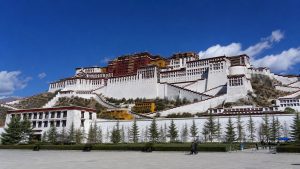
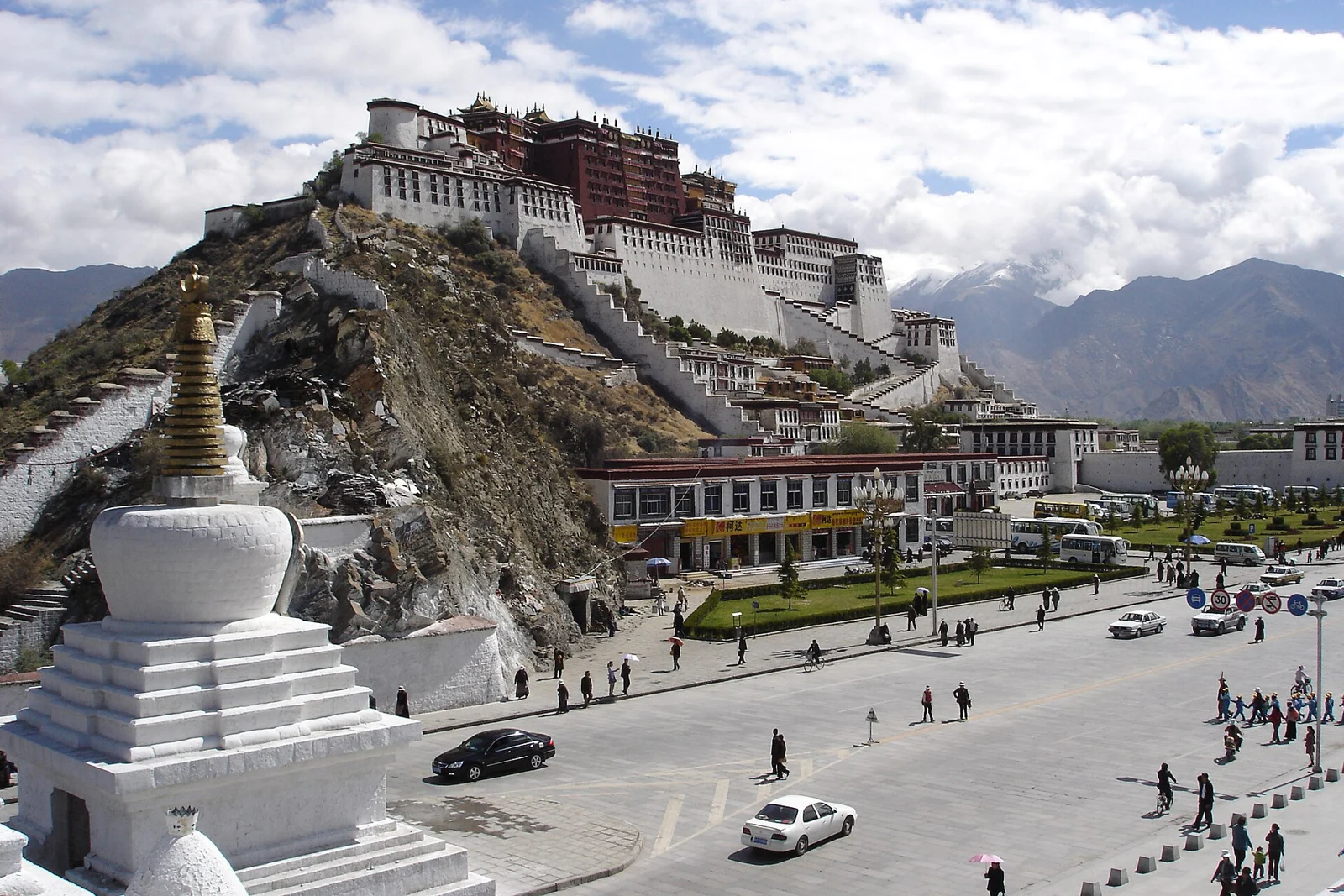
Lead photograph: Potala Palace in Lhasa, photographed by Ondřej Žváček, 23 May 2006, CC BY 2.5. The existing licensed photograph was resized and converted to WebP; responsive display crops may apply. It illustrates the Lhasa component, not current border access, included admission or a Vero Trip departure.
This guide compares the China entry, two highland road concepts and an alternative with separate Kashgar and Lhasa stays. It does not advertise an accepted Kyrgyzstan–China–Nepal vehicle movement. The nationality of the travellers, the car’s registration, receiving arrangements and actual roads remain separate decisions.
Updated 5 November 2026.
Start with the Nepal exit, then work back to Kyrgyzstan
Canada’s China advice updated 3 November 2026 continues to identify access restrictions and closures on the affected Gyirong approach. Do not treat an old Lhasa-to-Kathmandu tour as evidence that an ordinary tourist road departure is currently available.
The Nepal–China border and trip-choice guide explains the distinct road restrictions, Shigatse electronic border-document notice and foreign Tibet arrangements. None should be collapsed into a blanket claim that all Tibet is closed or that a different document allows a closed road.
For a future same-vehicle project, obtain actual acceptance at both international ends before building the highland days between them. If the Nepal road end cannot support the people and vehicle, postpone that continuous movement or redesign the journey. Do not import the car first and assume a different China exit can be chosen at the last minute.
Irkeshtam and Torugart are different entry proposals
Choose the actual Kyrgyz starting point and the receiving channel before selecting the China corridor. The Xinjiang transport authority’s 2024 passenger-route licensing notice lists Kashgar–Irkeshtam–Osh and Kashgar–Torugart–Bishkek as distinct corridors. The licence record identifies route structures, not an operating bus, a seat or private-vehicle acceptance for your dates.
Ask who handles each side, where passengers and bags are handed over, the reporting location and how the party reaches its first confirmed China room. A sightseeing transfer, an international passenger service and a foreign car’s customs movement are different arrangements. A driver taking you towards the frontier is not evidence that the same vehicle can cross.
| Proposal | First question | Do not assume |
|---|---|---|
| Irkeshtam approach | Does the proposed Kyrgyz-side route and receiving arrangement fit the actual starting point and documents? | A licensed Osh corridor establishes every current timetable or foreign car movement. |
| Torugart approach | Which current service or accepted vehicle process covers this precise crossing and party? | An Irkeshtam response or permit also applies at Torugart. |
| Separate passenger arrival in China | What is the actual service, gateway, baggage arrangement and onward hotel? | A direct flight, through-checked bags or same-day Kashgar arrival. |
| A different border suggested after a problem | Has the whole revised movement been independently accepted? | A map detour, freight report or another traveller’s successful entry is approval. |
An April 2026 report quoting Xinjiang border inspection describes expanded trial working arrangements at these ports. Such a report does not establish that every passenger channel, customs procedure and receiving team operates at any hour. Obtain the actual appointment and delay contact for the movement you are arranging.
Compare the two highland concepts without treating either as approved
The western Xinjiang–Tibet concept associated with G219 and a longer approach via Qinghai are different journeys. They change the approach, remote nights, support and time away from larger city services. Neither becomes an accepted foreign-visitor road merely because it appears on a commercial map or an old cross-China itinerary.
This comparison deliberately supplies no turn-by-turn route, camp locations, minimum driving-day count or unverified foreign-visitor detour. Ask a qualified receiving team first whether the exact corridor can be accepted for the actual people, vehicle and dates. A road plan then needs named lawful nights and an appropriate sleeping-altitude sequence.
| Concept | What changes | Evidence needed before a driving schedule |
|---|---|---|
| Western Xinjiang–Tibet / G219 concept | A sustained remote western highland journey, beyond ordinary endpoint-city visits. | Accepted roads and every overnight, actual foreign-guest reception, medical access, fuel and vehicle recovery. |
| Approach through Qinghai to Tibet | A different long approach across China before the Tibet section. | Complete Xinjiang–Qinghai link, exact permitted Tibet entry, current roads and suitable staged nights. |
| Separate Kashgar and Lhasa passenger stays | Regional holidays joined by actual booked transport, with extra connection time where needed. | Accepted passenger entry, Tibet receiving programme, carrier documents and the real departure to Nepal. |
| Kashgar-focused China visit, Tibet omitted | A smaller holiday when Tibet approval, health suitability or available time does not fit. | A complete China departure and Nepal arrival arrangement that avoids an assumed land exit. |
The G219 road-planning guide develops the western road’s overnight and support decisions. Reversing its Lhasa-to-Kashgar direction does not produce an appropriate Kashgar-to-Lhasa ascent schedule. The Qinghai guide covers regional choices; its sightseeing loop is not a permit or a complete driving connection to Tibet.
Do not choose the Qinghai concept on a general claim that it is always easier, or the western concept solely because it looks shorter. A larger vehicle, one driver, winter conditions, uncertain rooms and assistance limitations can change the decision. If the accepted road and sleeping plan cannot be made suitable, keep the regional visits separate or postpone the road project.
A smaller alternative: three Kashgar nights and a separate Lhasa stay
If seeing China is more important than keeping the same vehicle, compare three nights in Kashgar followed by four nights in Lhasa after separately accepted arrivals. These seven China nights are a planning allocation, not an overland transit duration or an acclimatisation guarantee. Add any gateway, connection or border-waiting nights; Nepal travel and time in Nepal sit outside the allocation.
No direct Kashgar–Lhasa service or direct Lhasa–Kathmandu flight is promised. Obtain the actual dated connections before choosing hotels or final admissions. If the available transport needs an intervening city night, keep it visible rather than borrowing the time from the rest or visiting days.
Kashgar: give the city two usable days
On arrival, finish the actual entry or terminal procedures, reach the room and have an easy meal. A short orientation is enough if time remains. Keep the next full day for selected secular old-town lanes and an agreed craft or market interest, asking before entering working premises or photographing residents.
Use the other full day for a different neighbourhood, a relaxed food interest or rest. A market’s trading day, a performance and a religious interior are not guaranteed. This city version does not add the Pamir lakes, a border-area excursion or a desert drive. Those would be separate access, road and altitude decisions rather than spare-time stops.
Choose a room with a clear approach from legal vehicle access, practical meals and the quietness the party needs. Arrange luggage storage only with the property’s agreement, keeping documents and valuables accessible. A flight or long transfer on the following day matters more than fitting another distant visit into the final evening.
Lhasa: arrange the programme before buying the approach
The UK’s Tibet guidance says permission must be arranged through a specialist travel agent in China and travel must be organised. It also warns that permissions and regional access can change. Ask the receiving agency about the actual nationality, lawful China-entry basis, route, document handover and carrier requirements.
Begin with a gentle arrival and the actual hotel. Choose one major accepted visit at a time, with meals and rest between outings. Potala Palace admission, monastery visiting arrangements and time in the Barkhor area are different parts of the programme; an exterior photo is not an interior ticket or a step-free visit.
The existing four-day Lhasa city proposal has arrival on Day 1, Drepung and Sera on Day 2, Potala Palace and Jokhang–Barkhor on Day 3, then departure on Day 4. It is a domestic component to enquire about. The alternative’s fourth Lhasa night would require an amended programme and quotation; it is not silently included in the four-day title.
| Stage | Proposed stay | Decision to protect |
|---|---|---|
| Accepted China arrival and Kashgar | Three nights, with two full city days between arrival and departure. | Keep border/terminal transfer, room access, rest and the next actual departure separate. |
| Kashgar to the accepted Tibet gateway | No connection nights assumed in the seven-night total. | Add the real intervening city stay and bag collection if required. |
| Lhasa regional visit | Four nights only in an expressly amended accepted programme. | Arrival condition, admissions, rest and the exact onward departure. |
| Separate continuation to Nepal | Actual passenger service and any transit stops. | Passport admission, bags, Nepal receiving and changes; no Gyirong road exit assumed. |
Keep people, drivers and the vehicle in separate files
Starting in Kyrgyzstan does not make every traveller a Kyrgyz national or every car Kyrgyz-registered. State each nationality, registration country, vehicle class, owner and intended driver. A passenger’s China visa or exemption does not establish customs admission for the vehicle or authority to drive it.
For a same-vehicle enquiry, ask for the actual customs procedure, temporary road documents, appropriate Chinese driving authorisation, insurance scope and lawful exit obligations. The own-car and campervan guide frames those questions. A car accepted for one crossing or route is not automatically accepted for another; a motorcycle or trailer needs its own assessment.
For separate regional transport, establish where the foreign vehicle stays and how its obligations are discharged. Flying passengers to another city does not solve temporary import, storage, repair or eventual re-export. Do not leave the vehicle in unagreed custody while the group follows an attractive passenger alternative.
Make a delay workable before committing to a remote road
Ask for the actual daily road, longest uninterrupted driving section, meal and toilet opportunities, lawful stopping place and expected finish. A navigation estimate does not include inspections, queues, walking, bag handling and room check-in. Agree which optional visit is removed when the day runs late.
For a highland project, give a clinician the proposed sleeping sequence and medical background. Keep rest, help and a practical change of direction possible. Fitness, a four-wheel-drive car or a room advertised with oxygen does not certify personal suitability. A permission date or paid room should not prevent an appropriate response to illness.
Have the receiving team identify rooms that can register the actual foreign guests, heating, bathrooms, meal choices and access with luggage. Ask who answers if the proposed property cannot receive the party. A replacement needs to be known, lawful and suitable; driving into a remote town and hoping for a room is not a support plan.
Agree bag capacity, fuel or charging arrangements, communication, mechanical assistance and the responsibility for a vehicle that cannot continue. Carry permitted backup food, water and essentials. Explain dietary and prayer needs before long stages; driver support, English interpretation and a specialist host are different services.
Questions before a Kyrgyzstan–China–Nepal enquiry
Does the old seven-day Lhasa-to-Kathmandu itinerary establish a current exit?
No. A published historical sequence does not confirm today’s damaged border approach, the party’s documents or its receiving arrangements. This guide does not associate that road product as an available service.
Which highland road is guaranteed for foreign visitors?
No blanket guarantee is established here. Assess the specific roads and stops with the qualified receiving team before choosing a driving duration. If a suitable accepted route cannot be established, omit that road project.
Can the smaller regional holiday keep the same car throughout?
It is a passenger alternative using separately agreed transport. It does not move a foreign car between Kashgar, Tibet and Nepal. Vehicle custody, customs and lawful departure need their own accepted solution.
Can we book the Lhasa component first and solve the border later?
A regional visit can be arranged only on its own accepted arrival and departure basis. Avoid making it depend on an unconfirmed Kyrgyz entry, a closed Nepal approach or a car that has no lawful exit plan.
Ask for a proposal that identifies the accepted journey
Price on request. Separate border and vehicle work, security funds if applicable, road transport, drivers, guiding language, rooms, meals, admissions, international tickets, insurance and disruption costs. Ask which payments are refundable and who handles a changed entry, unused service or vehicle recovery. A supplier’s old price or photograph does not establish Vero Trip’s services.
Send the actual Kyrgyz starting point, Nepal destination, dates, nationalities, vehicle details and whether keeping the same vehicle is essential through Vero Trip’s planning enquiry. State the experiences you want to protect, the room standard and daily pace the party can accept. Request case-specific feasibility before a booking; no through departure, permit outcome or receiving service is confirmed by this information guide.