Give Daci Temple and Taikoo Li a selective half-day rather than a race through every central Chengdu landmark. Begin with the temple interest while its visitor areas are available, then choose a few surrounding lanes and a seated tea, coffee or meal. Keep shopping optional and finish at a meeting point that works for your hotel or next connection.
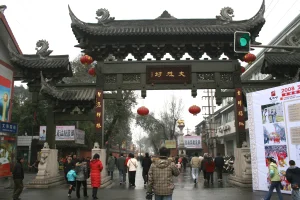
Daci Temple, 大慈寺, and Taikoo Li Chengdu, 成都太古里, share a central setting near Chunxi Road, but they offer different experiences. One is a Buddhist religious site; the other is a contemporary commercial development with lanes, plazas and adapted heritage buildings. Decide which matters most before allowing the commercial district to absorb the whole visit.
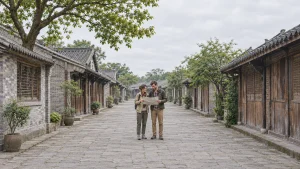
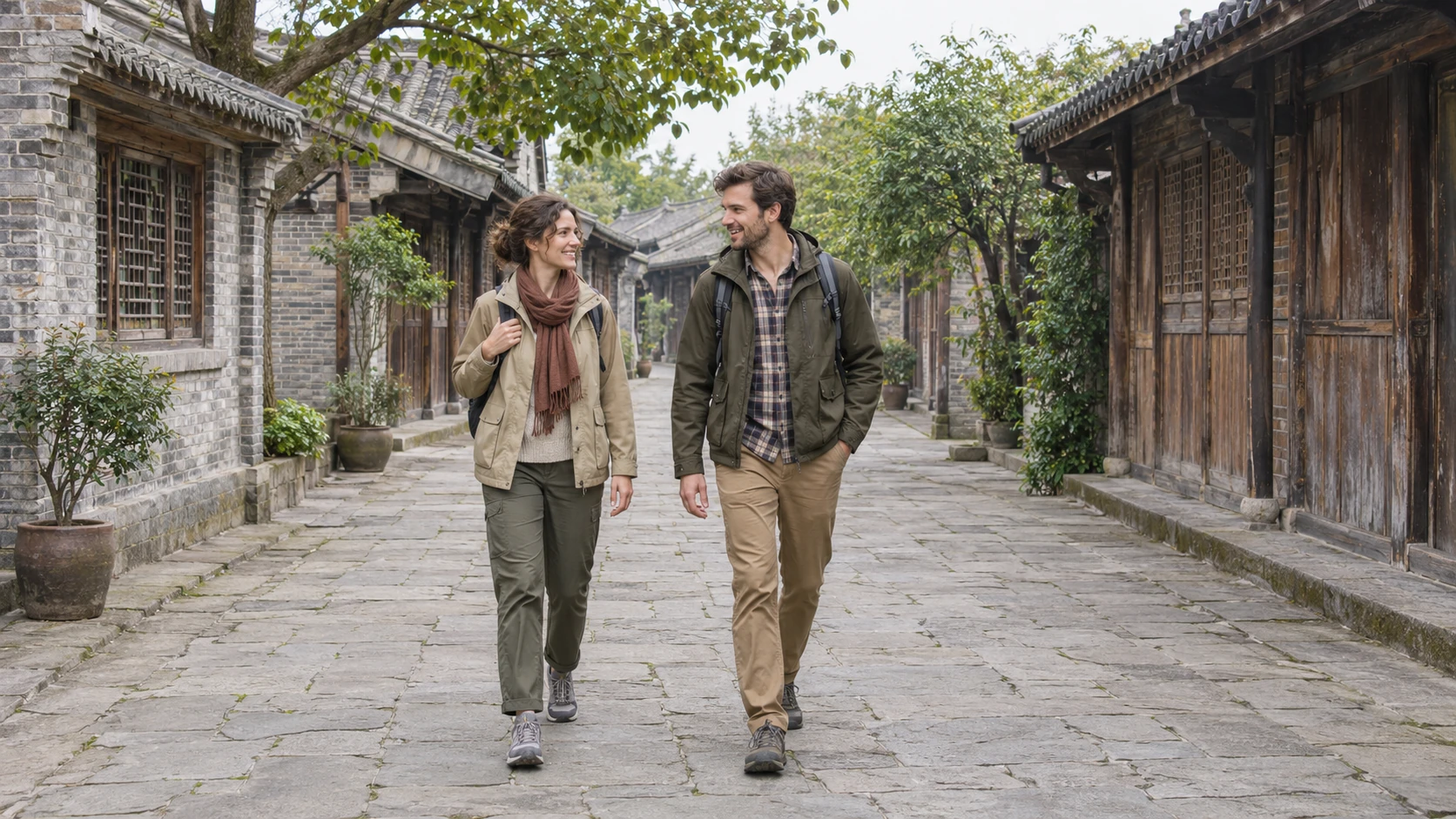
Reviewed 4 November 2026. Lead image: AI-generated travel illustration with two fictional adult travellers in a generic western Sichuan lane. It is not a photograph of Daci Temple, Taikoo Li, a named courtyard or business, current conditions, real customers or a Vero Trip departure.
Start with the temple, the lanes or a longer shopping visit
Choose the temple-led visit when Buddhist history or a quieter courtyard pause is the reason for coming. Check the visitor entrance and the areas available on the day, then give the visit your attention before turning towards the surrounding shops. A religious courtyard is a place to behave respectfully, rather than an automatic backdrop for a portrait session.
Choose an architecture-led walk when the contrast between the traditional buildings and the modern development interests you. The developer’s current description of Taikoo Li identifies preserved and revitalised courtyards alongside a modern interpretation of Sichuan architecture. It also confirms the connection with Chunxi Road metro station. That makes this a useful urban walking block, without treating every shopfront as an untouched historical building.
For a shopping-led visit, name the actual shops or purchases that matter. Leave enough time for trying an item, discussing its price and arranging any collection. That is a different pace from a brief cultural walk. A luxury label or a district’s reputation does not make every purchase suitable for the traveller.
| Main interest | Useful emphasis | Leave flexible |
|---|---|---|
| Temple and religious history | Begin with the permitted temple visitor areas, then a modest lane walk and seated break. | A long shopping list or an unrelated attraction across Chengdu. |
| Architecture and city life | Look at the temple surroundings, restored courtyards and contemporary lane design. | Entering private rooms, hotel areas or every commercial building. |
| Shopping and a meal | Choose a few actual businesses and protect time for ordering or purchases. | A claim that a temple session, hosted tea lesson or private guide is included. |
Understand Daci without confusing it with another temple
The Japanese Consulate-General’s Daci Temple introduction explains its links with Xuanzang and the monk Lanxi Daolong, whose later work connected him with Japanese Zen institutions. This gives a short visit a historical question to follow: how did this Chengdu religious site participate in wider Buddhist exchange?
The temple’s long history does not mean that every visible building dates from its earliest foundation. Separate the religious institution’s history, later rebuilding and the modern commercial development around it. The consulate’s older visitor note provides context; use the current entrance information for any admission or visiting arrangement.
Do not confuse Chengdu’s Daci Temple with Da Ci’en Temple, 大慈恩寺, in Xi’an, associated with the Giant Wild Goose Pagoda. Similar English names can produce the wrong map result or itinerary match. Save the Chinese name and Chengdu location before selecting transport or discussing a tour.
Wenshu Monastery is another distinct Chengdu religious visit. If that is your main interest, the existing Wenshu Monastery guide explains its separate neighbourhood and planning choices. Visiting both need not be a requirement for understanding one temple well.
Choose a small lane walk with a clear meeting point
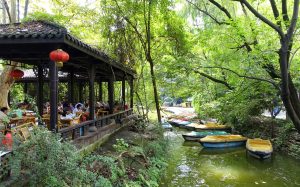
Taikoo Li is an open-plan development rather than a single enclosed mall. The operator’s account of its pedestrian layout distinguishes busier retail lanes from lanes around the temple with cafes, teahouses and lifestyle shops. Use that distinction to choose the atmosphere you want rather than attempting every passage.
Begin by orienting yourself around the temple surroundings and a recognisable plaza or business. Walk one selected section, return for a seated pause and decide whether the party wants another short loop. Multiple entrances make a precise meeting point more useful than an instruction to meet outside Taikoo Li.
GoChengdu’s April 2025 account of the development’s anniversary describes its mix of heritage surroundings and contemporary design. Its featured art installation was part of a dated event, so do not make an old exhibition photograph an essential stop. Check what is actually on show for your visit.
For street photographs, leave space for pedestrians and businesses. Ask before close portraits or photographing worshippers. Follow any interior restrictions and do not block a doorway while arranging a picture. Commercial filming, a reserved photo session and a casual personal photograph have different permissions and costs.
A half-day outline that leaves time to sit down
The following is a suggested rhythm rather than a fixed timed product. Move the temple portion to match its current visitor arrangements and your own arrival. If the district is only an evening option, retain the lanes and a meal without assuming the temple interior will still be available.
| Stage | What to do | Decision to protect |
|---|---|---|
| Arrival and orientation | Reach the correct Chengdu district, locate the temple entrance and agree a later meeting point. | Do not use a station exit or a nearby hotel name without checking the final walking approach. |
| Main cultural block | Visit the temple areas open to visitors, or take an architecture-focused walk around the surroundings. | Respect worship and barriers; keep the visit to the areas actually available. |
| Tea, coffee or a meal | Sit down at a chosen open venue and order according to the group and budget. | A seated order is not automatically a tea ceremony or a hosted cultural lesson. |
| Optional second lane and return | Choose one additional lane or purchase, then collect bags and make the full return. | Remove the extra loop when tired or late; retain the next booked departure. |
Tea and meals: choose the actual experience
Decide whether you want a straightforward drink and a chair, an explanation of tea or a separately arranged tasting. Ask what is served, how the order is charged and whether a seat or a particular space is available. A teahouse name in a travel post does not reserve a courtyard table.
A hosted tea session requires an actual host, agreed language, duration and price. Ask whether the programme involves tasting, preparation, a demonstration or a purchase. Do not infer an English explanation from a visitor photograph or assume a monk will join a commercial booking.
For meals, discuss the actual kitchen and dish. Vegetarian, halal and allergy requirements depend on ingredients, broth, cooking oil and shared preparation. A restaurant beside a temple does not necessarily follow the temple’s dietary practice. Keep a suitable alternative near your hotel when a particular meal cannot be confirmed.
Transport, bags and an evening return
Use Chunxi Road, 春熙路, and the operator’s current directions for the metro approach to Taikoo Li. Check the exit and final walk against the entrance you want. A station connection does not establish a step-free route through every courtyard, doorway or basement.
If using a car, agree a legal pickup point on the accessible street, who waits and how to find the vehicle again. A pedestrian plaza is not a dependable vehicle meeting point. Send the address of the actual hotel entrance and distinguish a taxi ride from a vehicle booked to remain with the group.
Carry a small day bag and leave the large case at confirmed storage. Keep the original document needed for your wider journey accessible, with the next train or flight details saved offline. A commercial district should not be assumed to provide storage for an unplanned airport detour.
For an evening visit, decide the return before sitting down for dinner. Check your actual transport choice and retain time to collect belongings. A useful arrival-day meal can be enough; there is no need to add a fixed temple visit after a delayed long-distance connection.
Weather and physical comfort change the walking extent
Open-air lanes still involve exposure between buildings. In rain, take shorter sections and choose a seated indoor stop that is actually operating. In hot weather, keep water and a rest break. Shops do not make every route covered, and a shopping detour should remain a choice rather than an improvised requirement to stay dry.
For limited mobility, ask about the exact entrance, thresholds, lifts, seating and toilets for the selected route. Keep a short return to the meeting point. A central-city address and nearby metro do not guarantee that every heritage interior is suitable for a wheelchair or that every seat will be free.
Fit Taikoo Li into an existing Chengdu itinerary
The existing five-day Chengdu city and panda proposal places Chunxi Road and Taikoo Li on Day 3 after Wuhou Shrine and Jinli. That creates a comparison between a historical area and contemporary central Chengdu, but it does not explicitly promise a Daci Temple interior visit or a hosted tea session.
If Daci is your priority, request a specific visiting block and reduce the other stops where necessary. Do not insert a full extra half-day into a programme that already needs meals and city transfers. The Chengdu trip-planning guide helps choose nights and a hotel area around the interests that matter most.
Separate purchases from the services in a quotation
| Item | Confirm for your date | Keep separate |
|---|---|---|
| Temple or cultural visit | Available visitor areas, any admission arrangement and explanation language. | A shopping walk does not reserve religious access or a private host. |
| Drinks, meals and shopping | Venue, menu, order basis, tasting or purchase terms. | A tea lesson, souvenir or photo session is included only when itemised. |
| Transport and assistance | Pickup, waiting, walking support, luggage and complete return. | A city-block title does not include a vehicle, tickets, meals or insurance. |
Price on request. Vero Trip services are confirmed only in the written proposal. Send your dates, hotel area, walking needs and whether the main interest is Buddhist history, architecture, a meal or shopping. Name the next departure so the district visit can end at a useful time.
Questions before a Daci and Taikoo Li visit
Are Daci Temple and Taikoo Li the same attraction?
They share a setting but have different purposes and visitor arrangements. Keep the temple’s religious space distinct from the surrounding commercial lanes, shops and restaurants.
Is an evening enough?
An evening can suit a meal and a selective lane walk. Choose a separate daytime block if entering the temple is essential, and check its current visitor arrangements before fixing the day.
Can I combine this with another temple?
You can discuss that choice, but give each its actual visiting and transfer time. A deeper visit to one temple and a restful meal may suit the party better than several brief religious stops.
Ask Vero Trip for a focused Daci and Taikoo Li block with the chosen visitor areas, one suitable seated break and the complete return. Add a hosted activity only when the actual provider and terms can be confirmed.