A Khorgos border crossing by car is a good option to investigate when your journey connects the Ili Valley with Zharkent and Almaty. Alashankou–Dostyk is a separate choice for the Bole and Alakol corridor. Choose between them using your accepted vehicle arrangements and onward route, then organise the overnight stops. A shorter line on the map cannot settle border admission.
Give the receiving team every traveller’s nationality, the vehicle’s registration country and class, your direction and proposed date. Request a response for the actual road crossing on both sides. Passenger entry, temporary vehicle import, driving entitlement and insurance are separate requirements; approval of one does not establish the others.
Updated 15 October 2026.
Khorgos or Alashankou: which matches your journey?
For a westbound approach from Urumqi, compare the two branches before committing to the final Xinjiang hotels. Khorgos fits a route continuing through Zharkent towards Almaty; Alashankou fits a different onward design through Dostyk. Neither should be described as universally easier, faster or open to every foreign vehicle.
| Road crossing | When it deserves consideration | What must be settled |
|---|---|---|
| Khorgos / Nur Zholy | An Ili or Huocheng approach, with an onward Kazakhstan route through Zharkent towards Almaty. Yining can be a separate sightseeing base. | The road-gate meeting point, acceptance of your particular vehicle and passports, and the first Kazakhstan overnight. |
| Alashankou / Dostyk | A Bole approach and onward travel through Dostyk towards the Alakol region. Compare the whole Kazakhstan route before choosing. | The passenger and private-vehicle channel, the onward road stages and a receiving contact on each side. |
| Change transport instead of importing the car | A short holiday, a rental with no cross-border permission, or a vehicle that cannot meet the required conditions. | A legal place to leave or return the car, an available passenger connection, and separate transport after the border. |
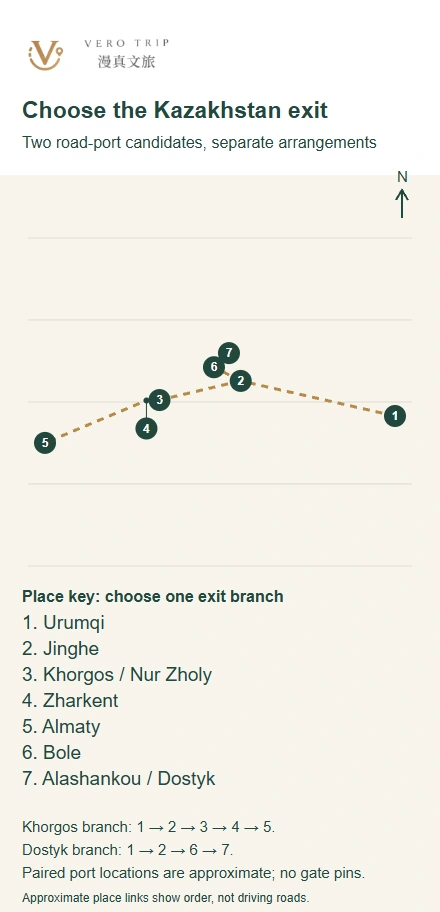
The paired port names describe the crossing you need to discuss. They are not hotel names or precise navigation pins. Ask for the designated approach and meeting location in writing, including the local-language name. Do not navigate to a railway freight terminal because it carries the same town name.
Do not confuse the Khorgos shopping centre with the road border
The China–Kazakhstan Khorgos International Border Cooperation Center is a special cross-border cooperation and shopping area. Its visitor arrangements concern that area. Entering the centre does not, by itself, authorise you or your car to continue into Kazakhstan.
For a through journey, specify Khorgos road port and Nur Zholy. For the northern option, specify Alashankou road port and Dostyk. The Kazakh revenue authority also uses the name Alakol for the customs facility serving the Dostyk road checkpoint. Clarify the facility when an agent uses a different name.
A January 2026 Xinjiang customs briefing identifies the Khorgos–Nur Zholy pairing. Its extended-working references do not provide a private-tourist-car appointment. Reports about freight clearance, exported vehicles, international coaches or railway traffic cannot establish the opening hours of every office your journey needs.
First confirm the people, then the vehicle
Check land-entry eligibility for each person before paying for a long approach drive. Mixed-nationality groups may need different documents. A visa-free arrangement for one passport does not cover the other passengers, and a visitor’s immigration stay does not determine how long the car may remain.
A Kazakhstan e-visa does not cover these road crossings
Kazakhstan’s official e-visa guidance says entry and exit using an electronic visa are permitted through international-airport checkpoints only. If you need a visa for a road journey, resolve the appropriate land-entry document with the Kazakh authorities first. Carry the passport matching the issued document and check the permitted stay and number of entries.
For China, check the entry policy applicable to your nationality, purpose, port and duration. Do not build a foreign-car journey around a general headline about visa-free transit. If you intend to leave China and come back, assess the return entry and the vehicle’s return arrangements separately.
| File to prepare | Information to include | Why it matters |
|---|---|---|
| Traveller and driver | Passports, residence information where relevant, entry documents, original driving licences and accepted translations. Identify every intended driver. | Immigration, driving entitlement and customs residence tests do different jobs. A passenger who can enter is not automatically authorised to drive. |
| Vehicle and ownership | Registration, registration country, vehicle class, dimensions, seating, owner details and authority to use a borrowed or company vehicle. Declare a trailer separately. | A passenger car, motorcycle, campervan and towed combination may need different handling. Do not describe a larger vehicle merely as a car. |
| Customs and route | Entry and exit ports, dates, temporary-import documents, any required security and the responsible declarant. Include existing China entry records when leaving. | Changing the exit or leaving the vehicle behind can affect outstanding customs obligations. |
| Road use and cover | Chinese temporary vehicle and driver documents where required; insurance for each country, actual vehicle and intended drivers. | A valid foreign policy, international permit or customs document does not replace all domestic road-use requirements. |
Driving into China from Kazakhstan
Arrange the China side before arrival. The January 2026 Chinese temporary-vehicle checklist identifies registration evidence and Chinese translation, customs admission evidence, inspection requirements and Chinese compulsory motor insurance covering the temporary-entry period. It also describes examination of the receiving plan for travel-agency-organised foreign self-drive tourism.
That checklist explains the paperwork; its Beijing office times and processing period are not an appointment promise at either Xinjiang port. Ask the receiving team where the vehicle must be presented, which translations and photographs are needed, and when it becomes legal to start the next road stage.
Confirm the permitted route and area on the issued vehicle documents. A border-area arrangement cannot be assumed to allow a journey across China. Driving credentials are separate: China’s current rules distinguish short-stay temporary driving permission from longer stays, but a longer driving credential does not extend immigration permission or the car’s admission. Use the foreign-car and campervan entry guide for the broader preparation process.
If two people will share the driving, establish both people’s entitlement and insurance before the first stage. A second person in the front seat is useful only if they may legally take over. Agree what happens if the principal driver becomes unwell.
Driving from China into Kazakhstan
Before Chinese departure, reconcile the vehicle’s original entry records with the planned exit. Ask who handles customs discharge, any security release and the documents you should retain afterwards. Leaving China as a passenger does not automatically close the car’s temporary-import file.
Kazakhstan’s revenue guidance on temporary vehicle import describes conditions for foreign individuals importing non-EAEU-registered personal vehicles and obligations tied to the declarant. Ask customs which category applies to your residence, registration and ownership situation, what deadline will be recorded, and whether another person may drive or take possession. Do not transfer the vehicle on the assumption that its customs status follows the keys.
Arrange appropriate Kazakhstan motor cover before driving. The government’s insurance guidance, updated 14 October 2026, distinguishes mandatory third-party liability cover from optional own-vehicle cover. Check the vehicle, drivers, dates and territory with an authorised insurer. A policy covering damage to your car is not automatically a substitute for mandatory liability insurance.
Request written clarification if the owner lives in a different country from their nationality or registration country. Those facts can matter to the vehicle’s treatment. Keep registration, customs and insurance records accessible even when a particular insurance document is electronic.
Plan the approach and overnight stops around the appointment
Keep the border day separate from a demanding sightseeing or onward-driving day. The following bases are planning choices, not booked services or fixed processing allowances. Use the actual gate appointment, accepted road and hotel entrance to calculate the final driving stages.
| Your approach | A practical planning base | What to protect in the schedule |
|---|---|---|
| Urumqi towards Khorgos | Break the western approach as needed; use a Khorgos-area final night near the agreed road approach. | Complete repairs and document checks before the final transfer. Keep a flexible first Kazakhstan night based on actual release time. |
| Ili sightseeing before crossing | Yining for a separate cultural stay; Huocheng or Khorgos for the final approach, according to your appointment. | Yining is an optional regional stay, not a necessary stop between the road gate and Zharkent. Do not combine all sightseeing with clearance. |
| Urumqi towards Alashankou | Compare Jinghe and Bole as approach stages; choose the final overnight according to the accepted meeting point. | Confirm the Dostyk-side onward plan independently. A hotel suitable for Khorgos is not a substitute for this branch. |
| Entering China from either port | Use the agreed local base while completing the required procedures. | Leave the first onward day flexible. Start the trans-China drive only when all required documents and conditions permit it. |
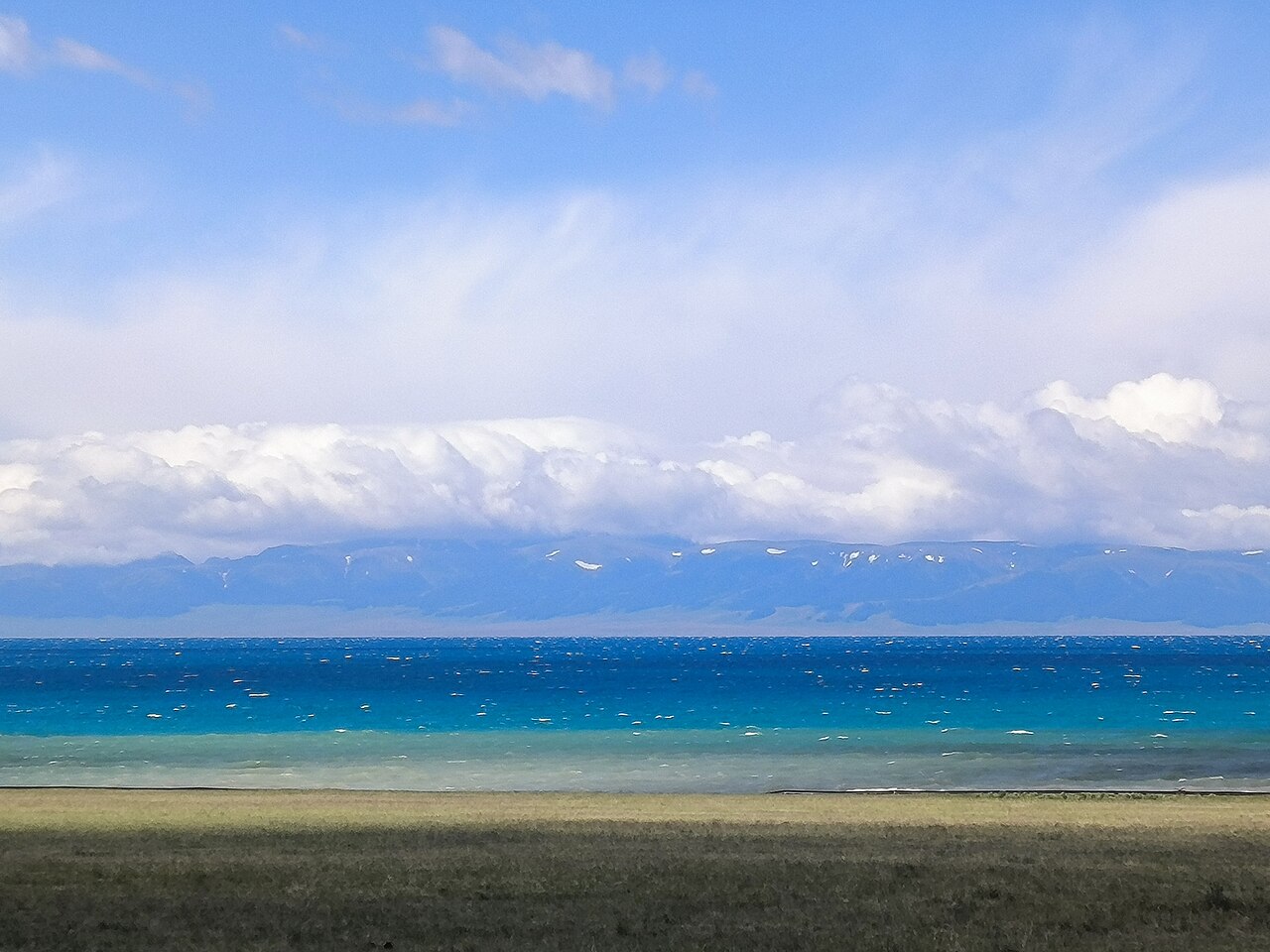
If you have more time in the Ili region, consider Sayram Lake as a separate sightseeing stop with its own weather, access and overnight plan. Keep that visit outside the border appointment day; a lake photograph does not describe the crossing facilities.
For families, choose parking that can accommodate the actual vehicle, a manageable luggage transfer and rooms with the required beds. Keep passports, medication, water and children’s essentials in a small accessible bag. Pack the load so an inspection does not require unloading heavy equipment into a traffic lane.
Discuss meal requirements before the approach day. Muslim travellers should confirm the actual restaurant and food preparation needed, and arrange a suitable private prayer space when a mosque visit does not fit the day. Carry permitted backup food and check customs restrictions rather than assuming every snack or animal product may cross.
Opening times, seasons and a workable fallback
Obtain the passenger-processing window, vehicle-office arrangements and holiday exceptions for your date. Specify the time zone when agreeing a meeting. A truck-clearance announcement or an old traveller’s quick crossing cannot guarantee the same experience for a tourist vehicle.
There is current evidence of passenger activity: an Alashankou government report dated 20 September 2026 describes passengers using the road-port inspection hall. This establishes passenger activity during that reporting period, rather than acceptance of every passport and private vehicle on your chosen day.
Weather affects the approach as well as the gate. Keep optional mountain sightseeing out of a tight departure window. The 8 October 2026 Duku Road notice closed that road to public vehicles for winter; the 2027 reopening date is to be announced separately. Do not use an old summer itinerary to add Duku to this border approach.
| If the plan changes | Useful immediate action | Avoid this assumption |
|---|---|---|
| The appointment or road is disrupted | Contact the responsible team before leaving your current base; preserve accommodation and immigration/vehicle validity. | That a nominally open border means every required counter is operating. |
| You want to switch ports | Check both sides’ acceptance and any changes to the route, customs documents and receiving arrangements first. | That Khorgos and Alashankou can be exchanged by changing one navigation pin. |
| The car cannot continue | Agree lawful storage, repair, return or removal with the relevant authorities and service providers. | That leaving the country by air ends the vehicle’s obligations. |
| You decide to travel without the car | Confirm passenger eligibility, the available transport and where each vehicle service ends or begins. | That an ordinary domestic rental or driver is authorised to cross the border. |
What to send before asking for a plan or quotation
Send your direction, preferred port, date range, all nationalities, vehicle registration country, ownership situation, vehicle class and dimensions, driver count and onward destination. Include the number and ages of children, luggage, dietary needs and preferred overnight standard. For an initial enquiry, describe the documents you hold; provide sensitive copies only through an agreed secure channel when needed.
Ask for a proposal that separates border assistance, translations, insurance, any customs security, accommodation, guide services and vehicle support. Identify who receives you on each side, what the service actually includes, and how waiting, port changes, breakdowns and cancellation are charged. A planning guide does not establish a quoted or bookable cross-border service.
If the aim is a broader China journey, compare the Laos–China–Kazakhstan route framework. For a regional holiday ending inside China, see the Xi’an–Urumqi Silk Road programme and China self-drive collection. Those programmes have their own arrangements; including Urumqi in an itinerary does not include foreign-vehicle border admission.
Ask VeroTrip about your route with the information above so the proposed China stages and required border arrangements can be assessed together.