For a China–Vietnam border crossing by car, start with the route: Youyiguan near Pingxiang connects the Lang Son side with inland Guangxi, while Dongxing connects Mong Cai with coastal Guangxi. Then establish whether your exact vehicle and every traveller can use the proposed crossing. An open passenger checkpoint, a through-bus ticket and permission to drive a foreign-registered car are three different things.
If your holiday centres on Hanoi and Nanning, investigate Youyiguan first. If it combines Ha Long, Mong Cai and the Guangxi coast, investigate Dongxing. For Yunnan, compare Hekou separately. Choose the border before fixing the approach hotel, but book that hotel only after the receiving arrangements identify the actual channel.
Updated 15 October 2026
Which crossing matches your trip?
The table describes route relationships, not an assurance that a particular car, passport or travel date will be accepted. Confirm the vehicle case before paying for a long approach drive.
| Your main route | Crossing to investigate | Why it fits |
|---|---|---|
| Hanoi / Lang Son to Nanning and inland Guangxi | Huu Nghi – Youyiguan, near Pingxiang | Connect the Lang Son approach with the Pingxiang–Chongzuo–Nanning corridor. |
| Ha Long / coastal northeast Vietnam to coastal Guangxi | Mong Cai – Dongxing | Keep the Mong Cai approach together with Dongxing and Fangchenggang. Establish the exact bridge first. |
| Lao Cai / northern Vietnam to southeast Yunnan | Lao Cai – Hekou | A separate Yunnan choice; compare this before making an eastward detour through Guangxi. |
| A short China holiday with fixed flights | Passenger crossing plus transport inside China | Keep the holiday independent of importing your own vehicle, if your passenger documents permit the journey. |
These choices matter even if the map shows two ways to the same city. An approved entry point, guide arrangement and vehicle exit plan can determine the journey more than the shortest road distance. If the car has already entered Vietnam temporarily, include its lawful departure and customs close-out in the comparison.
The Hekou–Lao Cai border guide covers the Yunnan option. Use it for that crossing’s own channel distinctions rather than applying Guangxi bridge arrangements to Hekou.
Youyiguan: distinguish Pingxiang city from the road checkpoint
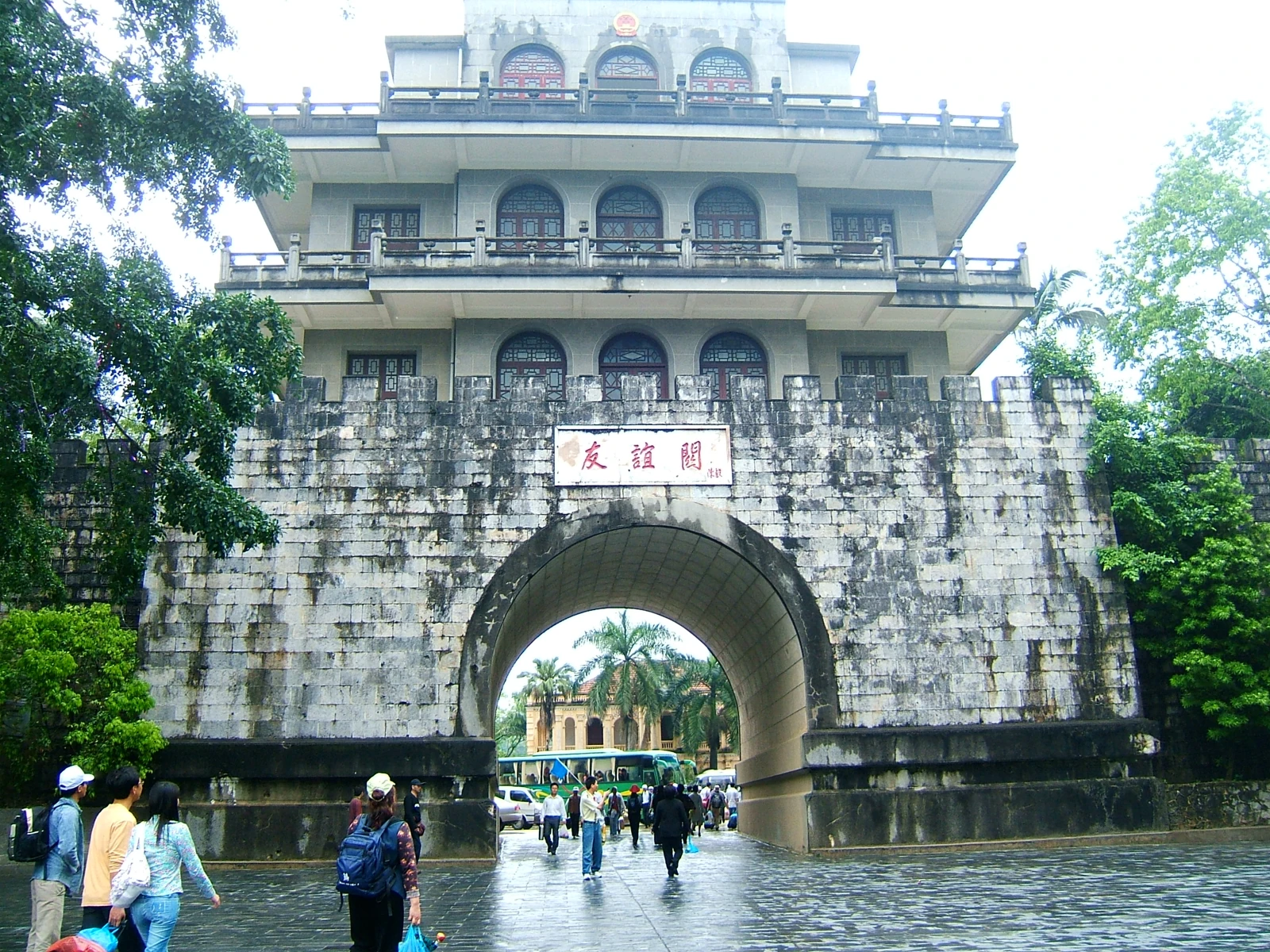
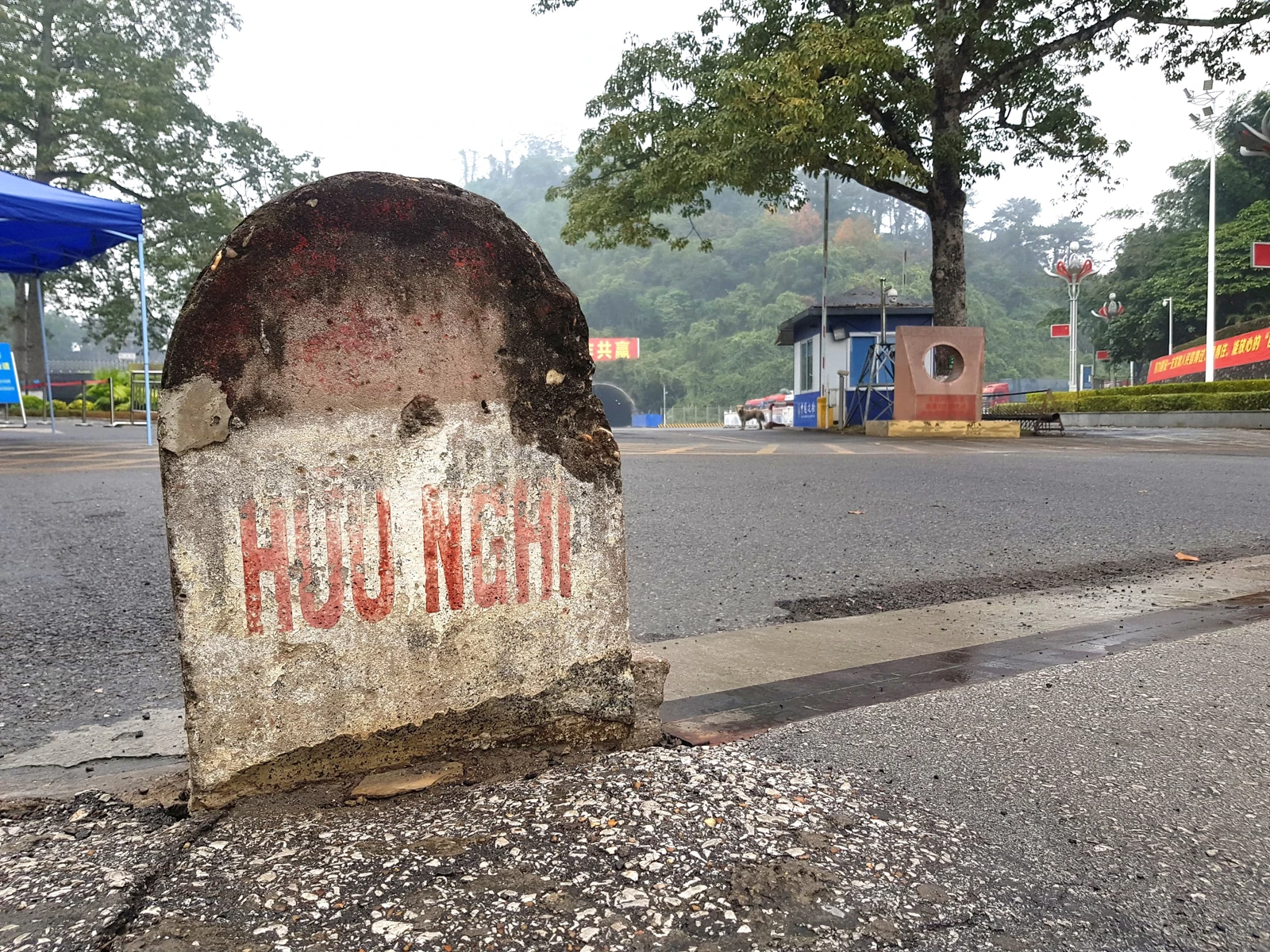
Pingxiang (凭祥) is the Chinese border city; Youyiguan (友谊关), also called Friendship Pass, is the road crossing paired with Huu Nghi (Hữu Nghị) on the Vietnamese side. Lang Son is the nearby Vietnamese regional centre. A pickup described only as “Pingxiang” leaves too much room for misunderstanding.
Ask the receiving team to send the meeting point in Chinese and Vietnamese, a map pin for the permitted arrival area, and the driver’s contact. A railway station, a city hotel, the historic gate and a vehicle-processing point are not interchangeable destinations. Specify whether someone meets you before departure formalities, after passenger entry, or only when the vehicle is released.
For a passenger alternative, check the station and road transfer shown on the ticket you actually buy. Do not assume that a rail arrival brings you to the road-control building or that a bus promising Hanoi–Nanning transport keeps you in the same vehicle throughout.
Puzhai (浦寨), paired with Vietnam’s Tan Thanh / Xinqing (新清), is another channel in the wider Pingxiang area. A September 2026 report about extended passenger hours there does not establish that your document or foreign car may use it. If your papers name Huu Nghi / Youyiguan, ask the relevant authority before substituting another channel.
Dongxing: confirm the bridge as well as the city
Do not rely on the old shorthand that Bridge 1 is for all passengers and Bridge 2 is only for freight. Dongxing’s 12 March 2026 passenger notice, effective 23 March, allocates travellers by document type.
It assigns Bridge 1 to specified border-pass holders and certain travellers obtaining entry documents at the port; Bridge 2 handles holders of valid exit/entry documents generally. This allocation does not itself grant a visa, establish eligibility for a port visa or approve a vehicle.
The notice also describes a shuttle between the bridges and a rail-station connection to Bridge 2. Check current departures and the pickup location before travelling. Give a pre-booked driver the bridge number, direction and passenger or vehicle meeting point, not just “Dongxing border”.
If accommodation is beside the riverside visitor area, do not assume you can carry your bags directly into your intended channel. Plan the local transfer before the morning rush. A family travelling with a stroller, an older relative or several suitcases should agree where assistance begins and whether luggage must be carried between vehicles.
Freight announcements need separate reading. The March report about regular weekend clearance at Bridge 2 concerns cargo and returning empty trucks. It is not evidence that a private tourist car can arrive without its own arrangements.
Four decisions to settle before bringing the car
Send the vehicle details at the start of planning. A campervan’s registered class, seats, dimensions, weight and ownership matter more than its holiday name. For a rented, company-owned or financed vehicle, establish both the owner’s permission and whether the proposed receiving arrangement accepts it.
| Decision | Evidence to obtain | A common wrong assumption |
|---|---|---|
| Each traveller may enter and leave | Passport-specific immigration conditions, valid documents and the intended checkpoint | A visa-free nationality automatically gives the car permission. |
| This vehicle may cross and remain temporarily | Receiving arrangement, customs requirements, vehicle papers, insurance and approved travel area / dates | An international border accepts every overseas registration. |
| Each driver may drive this vehicle | Required local driving permission, overseas licence and appropriate vehicle class | An International Driving Permit replaces the Chinese procedure. |
| The planned holiday fits the permission | Named entry/exit points, route, support obligations and change procedure | You can swap ports or travel independently after entry. |
China’s temporary foreign-vehicle guidance describes registration documents, customs permission, insurance and relevant inspection or receiving-plan requirements. Arrange the appropriate Chinese driving permission separately. Beijing’s published processing times and office arrangements are not a timetable for Youyiguan or Dongxing.
Use our guide to bringing a car or campervan into China for the broader document sequence, and the foreign-driver guide for the driving-permission distinction. This page focuses on choosing the Guangxi crossing and planning its handovers.
What the organised self-drive rules mean for your proposal
The Ministry of Culture and Tourism’s September 2024 account of Guangxi’s cross-border self-drive framework describes organised arrangements through Youyiguan and Dongxing. It specifies reporting routes, ports, stay periods and areas, with full tour-leader or guide accompaniment. The covered groups enter and leave together and contain three to ten vehicles.
Ask which legal arrangement the operator proposes for your registration country, nationality and route. Do not interpret that regional scheme as a universal convoy rule for every foreign vehicle entering China, or assume that paying a guide automatically makes a single-car trip eligible. The applicable arrangement must be clear before you commit.
Vietnam has its own requirements for covered foreign-registered tourist vehicles. Its 151/2024 framework, read with the 236/2026 amendments, provides for a Vietnamese international-tourism business to arrange the application and journey. The general 2026 changes took effect in July; some online and database provisions take effect in July 2027. A website application button is not evidence of approval.
That foreign-vehicle framework does not, by itself, answer the different question of taking a Vietnam-registered vehicle out of Vietnam. State the registration country and travel direction in your first enquiry. Also identify the planned return or onward exit: permission for one journey does not automatically settle the next border.
Build the border day around people, luggage and waiting
For an initial plan, keep the crossing day free of a long sightseeing programme or a tightly timed onward departure. Treat an overnight near the approach as a comfort option, not an official minimum stay. The receiving team should propose the sequence around its actual appointments and your passengers’ needs.
| Stage | What to settle | Practical fallback |
|---|---|---|
| Approach night | Correct town and bridge, secure legal parking, hotel access for all passports | Stay on the departure side if documents or the receiving appointment change. |
| Before departure formalities | Both receiving contacts, document originals, agreed vehicle channel and passengers’ handover | Resolve a missing acceptance or appointment before leaving the country. |
| During clearance | Who stays with the car; who carries family bags; where everyone reunites | Food, water, essential medicine and reachable support during a delay. |
| After entry | Compare issued details; collect required papers before driving onward | A nearby flexible overnight instead of a non-refundable connection. |
| At the eventual vehicle exit | Responsible team and evidence closing the temporary vehicle admission | Agree the procedure for a breakdown or change before taking action. |
Write appointment times in both countries’ clocks: China is one hour ahead of Vietnam. Save the two contacts, hotel address and pickup instructions offline. Check passport names against the documents before departure, and keep originals accessible instead of packed beneath the vehicle’s luggage.
Carry enough water, suitable food and necessary medicine for a delay; ask which items may cross the border. For Muslim travellers, arrange a meal you can rely on and a suitable prayer break on the approach or after clearance. Do not depend on finding halal food or a prayer room in the controlled area. Explain mobility needs before selecting the hotel and transfer vehicle.
Agree who remains with the vehicle if passengers and vehicle formalities follow different paths. Keep children with their accompanying adult and put essential family items in a carry bag. A generic “meet after customs” instruction is inadequate when two countries, several buildings and different vehicle releases are involved.
Compare the full quote and the alternative without your car
A border-service price is useful only when its scope is clear. Ask for an itemised proposal rather than comparing an old online total with a different vehicle, party size or route.
| Ask the quote to separate | Why it matters | Question to put in writing |
|---|---|---|
| Official charges and customs security | A refundable deposit is different from a fee; the return conditions matter | Who holds the security, what closes it and when can it be returned? |
| Receiving operator, guide and any required escort | Staffing and permitted route affect what you can do each day | Which side, dates and tasks does each named team cover? |
| Vehicle documents and insurance | Territorial cover, exclusions and recovery can differ | Which documents, cover and vehicle category are included? |
| Waiting, local transfers and changes | The border day may change the next hotel or transport booking | What happens to costs if the vehicle is refused or clearance is delayed? |
If the vehicle arrangement does not fit your dates or budget, compare leaving it lawfully on the departure side and crossing as passengers. Confirm secure parking, the owner’s consent where relevant, local storage limits and any existing temporary-import deadline. Parking does not cancel a customs obligation.
For travel inside China, compare a car with a driver, trains and any eligible local rental arrangement. Check passport entry conditions independently and book the transfer from the actual arrival channel. This alternative can suit a short holiday better than spending several days reorganising vehicle paperwork.
The China self-drive itinerary collection helps compare domestic route styles; it does not establish a foreign-car border service. If you choose the Hekou/Yunnan approach instead, the 10-day South Yunnan itinerary provides a separate domestic planning reference. Its published itinerary does not include these Guangxi border formalities.
Questions to answer before choosing the crossing
Can I arrive with my own car and arrange everything at the gate?
Do not plan on that. Establish the receiving arrangement and case-specific vehicle acceptance before the approach journey. Passenger opening hours do not guarantee that the necessary vehicle procedures can be completed on arrival.
Can I switch from Youyiguan to Dongxing if a queue is long?
Only if the change is permitted for all your documents and arrangements. A different crossing may affect immigration documents, customs handling, the receiving team and the approved route. Obtain the required changes before driving to another border.
Is a motorcycle or campervan treated like an ordinary car?
Do not assume so. Provide the registration and licence classes, vehicle dimensions, steering position and ownership. Ask for a response about that vehicle, rather than relying on photographs of another group’s crossing.
What should I send VeroTrip?
Use the VeroTrip trip-planning enquiry with every nationality, approximate dates, travel direction, intended entry and exit, vehicle registration country and class, driver’s licence classes, desired destinations and family or dietary needs. Say whether you would also consider a passenger crossing. These details help frame the route and the questions for the responsible receiving operators; any border service needs a separate written scope and case-specific acceptance.