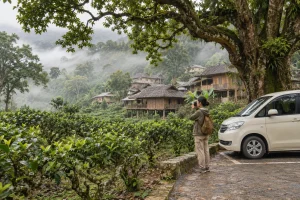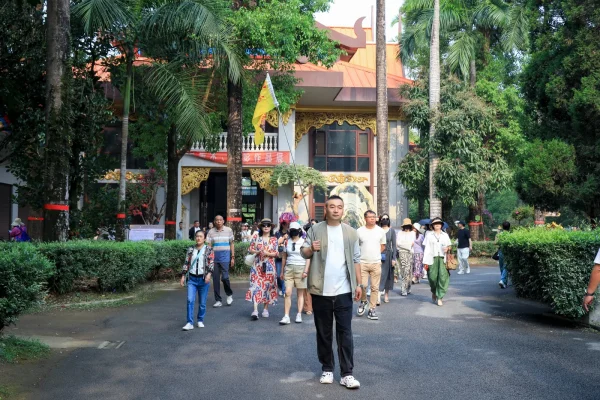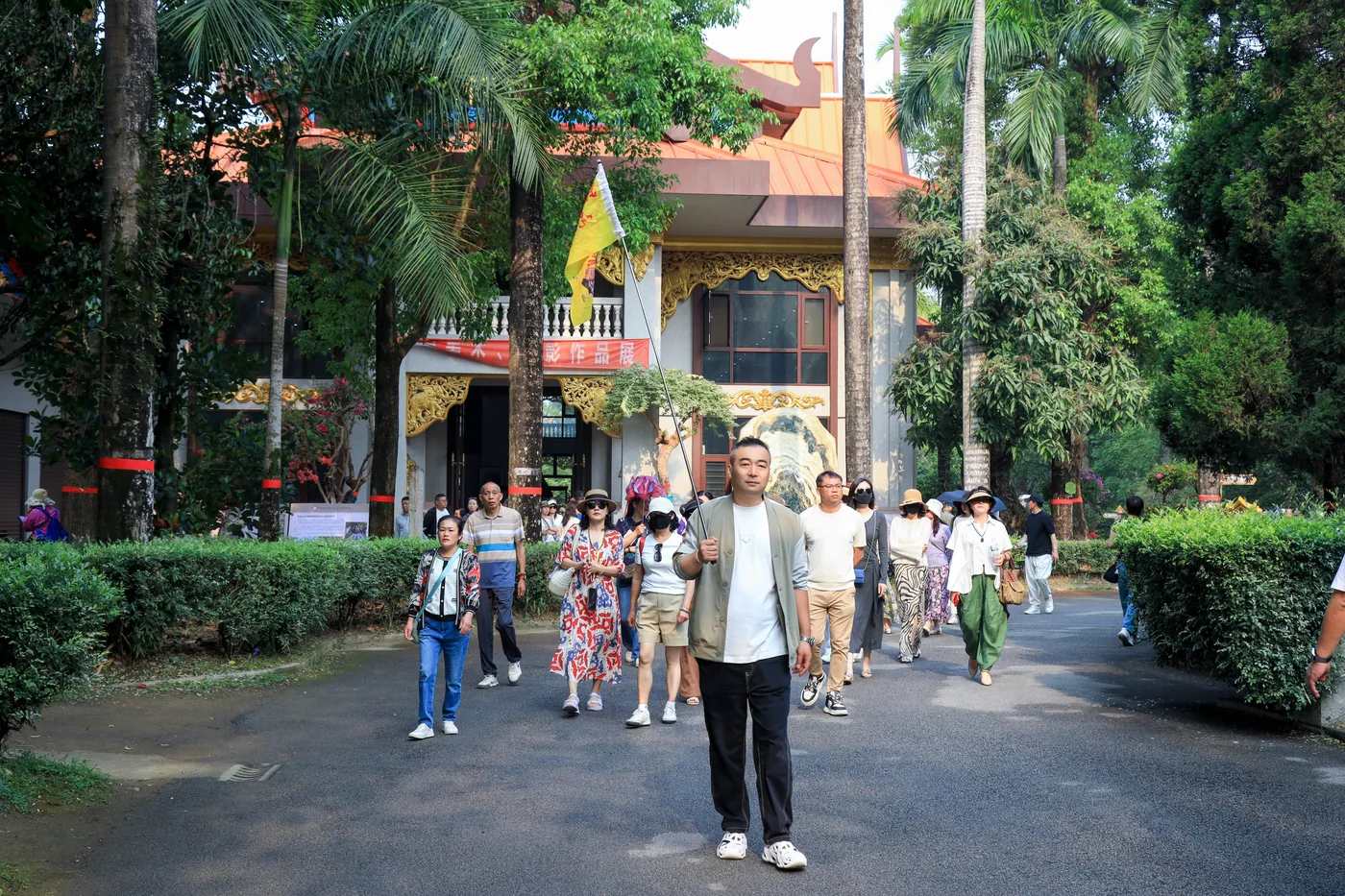
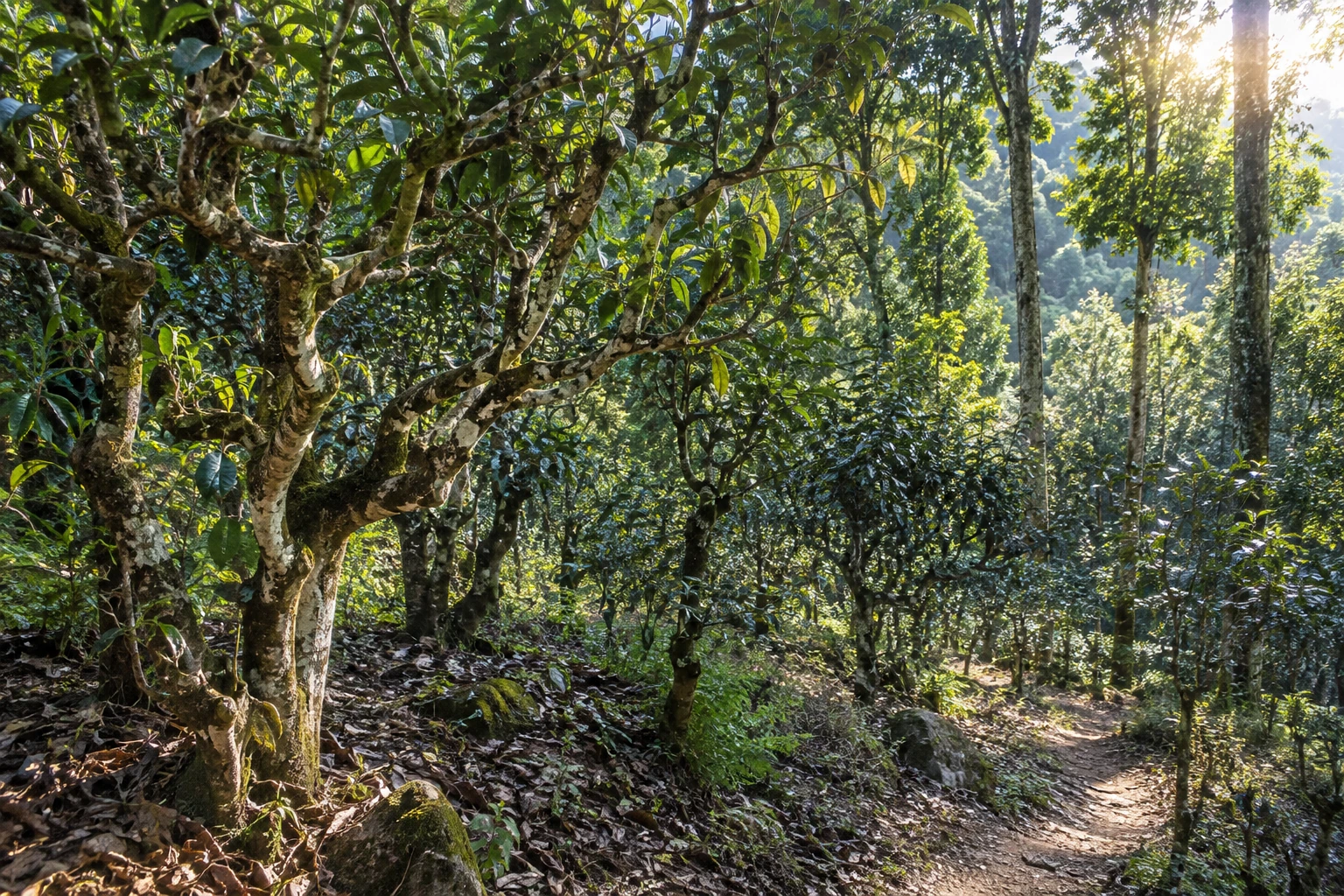
Updated 7 October 2026. Cover and tea-travel scenes are illustrations.
Book a Jingmai forest walk and hosted tasting as distinct experiences. The first shows how tea grows within the landscape; the second gives time to discuss finished tea. Public-path access does not permit leaf picking, and a shop stop does not include a workshop. Both visits can be worthwhile outside harvest.
Choose an experience you will actually enjoy
| Your priority | Ask for | Do not assume |
|---|---|---|
| Understand the landscape | A guided walk on an established, open tea-forest path | Access to any grove visible from the road |
| Taste and compare | Named samples, brewing explanation and your preferred language | Every sample is from the same village or ancient tree |
| Try making tea | A specific supervised activity and its duration | A full production process from leaf to finished cake in one short visit |
| Meet a producer | An agreed appointment and permission to photograph | A household or working workshop accepts unannounced visitors |
Begin with one forest outing, a meal and a tea conversation. That leaves time to understand more than several brief shop stops. Ask whether the host will discuss the actual sample served or provide a general introduction, choosing the session for your interests.
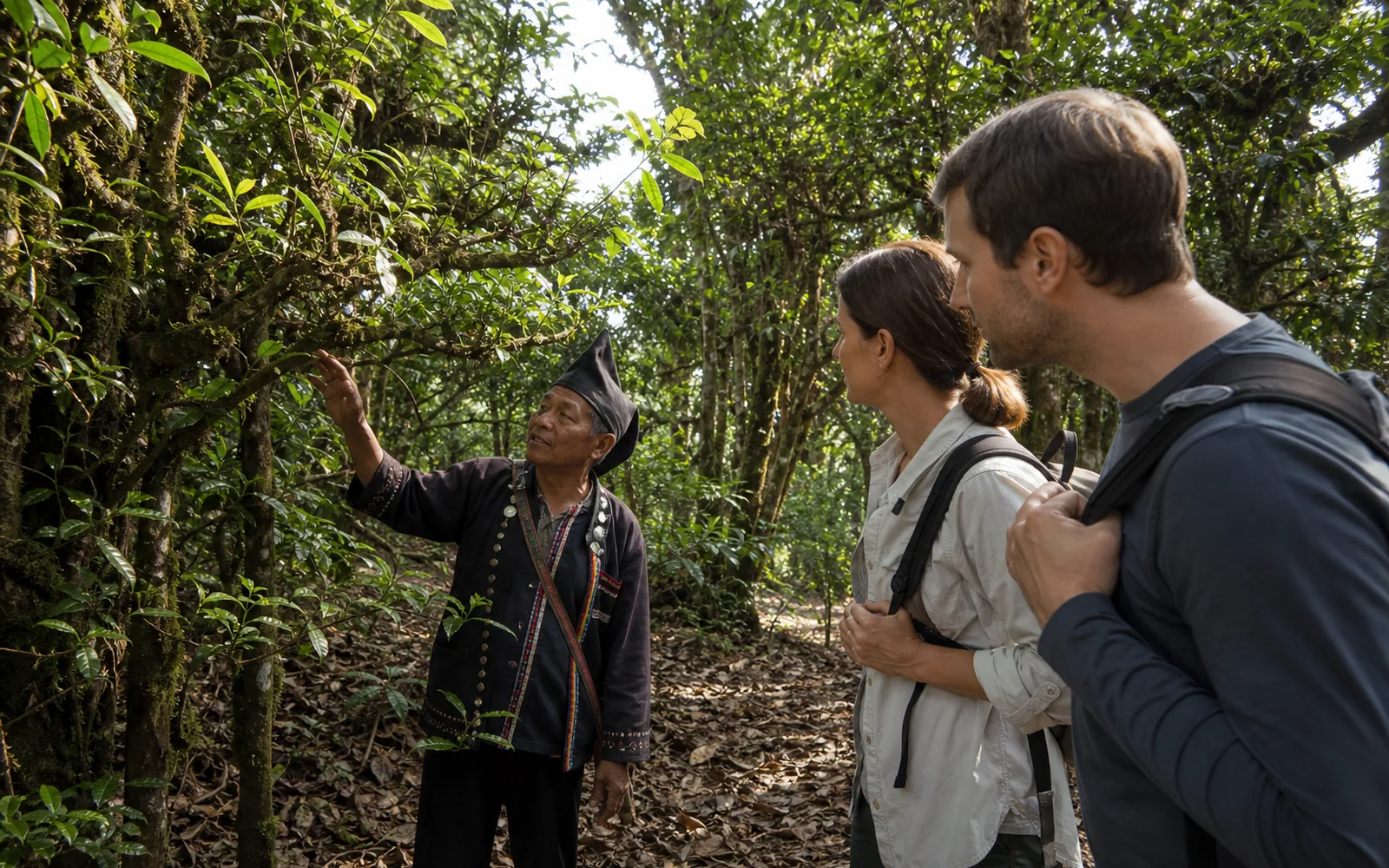
What makes a forest visit different from a tea garden photo stop?
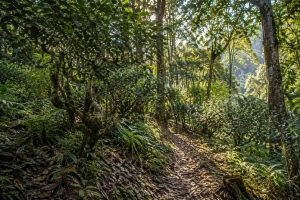
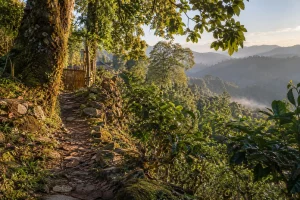
Notice the relationship between tea plants, forest shade and village paths. You can understand this landscape from permitted visitor routes without touching old trunks or stepping off-path. A guide helps explain the plants and where guests may walk.
Check steps, grip, toilets and a shorter turnaround before a forest walk. Wear suitable shoes and carry a rain layer. If uneven or slippery ground does not suit the party, arrange an easier-access village tasting and a short public viewpoint instead.
Picking, processing and cake pressing: confirm the exact activity
| Activity | What controls it | Useful alternative |
|---|---|---|
| Leaf picking | Season, suitable leaf, host permission and permitted garden | Observe plants and compare prepared leaf samples |
| Live processing | The producer’s actual work schedule | A clear explanation using equipment and finished tea |
| Tea-cake pressing | Booked materials, supervision and time for the result | A tasting of the stages or products the host can show |
| Private-home tasting | A willing host and agreed visit time | An established tea room with the right language support |
Picking needs a separately permitted garden activity, suitable leaf and the owner’s agreement. Do not pick from heritage groves independently. For hands-on work, establish its length, children’s suitability and whether a take-home item can be packed at once; an agricultural process cannot be promised simply by choosing a calendar date.
Questions that make a tasting more useful
Ask about the sample’s place, harvest, processing and storage, and note the brewing method. When comparing teas, notice whether water, leaf quantity or infusion time also changed. A description introduces that tea rather than guaranteeing one flavour across the entire mountain.
Keep tea purchases optional and separate from the visit. If buying, ask for a label, weight, price and receipt. A famous name does not independently authenticate the product. Commercial sourcing or laboratory assessment needs its own specialist arrangement beyond an introductory visitor tour.
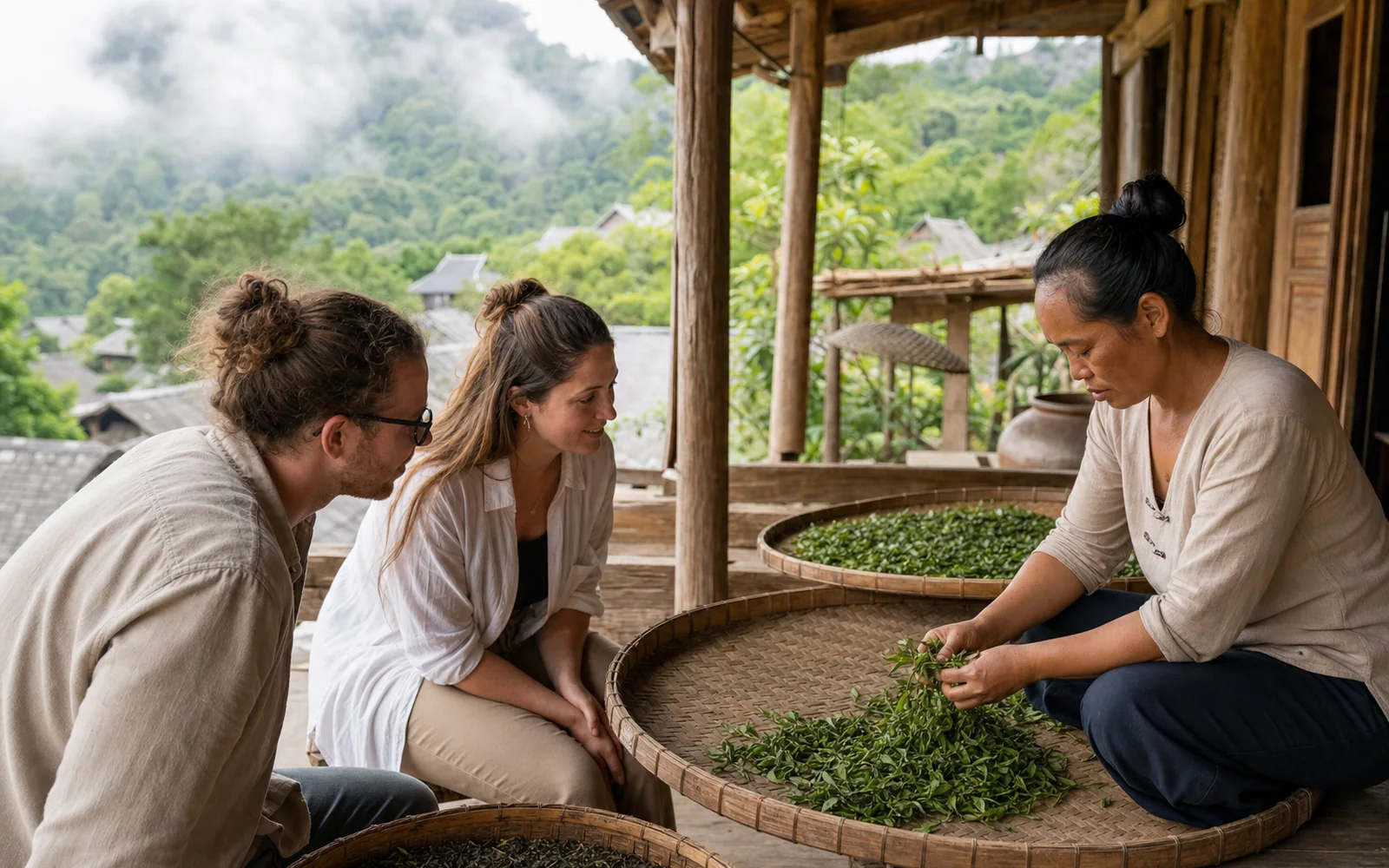
Village etiquette and photography
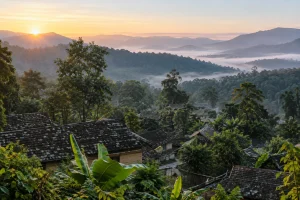
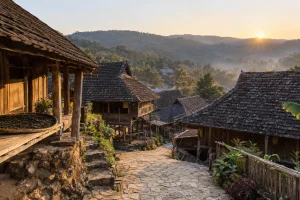
Walk through Wengji and Nuogan as living villages. Leave private interiors unphotographed without an invitation, ask before portraits and give way in narrow lanes. Follow local rules at rituals and ceremonies. Settle hosted-activity fees separately from any tea purchases.
For photography, use permitted ground viewpoints. The heritage authority’s April 2026 notice applies year-round controls across the heritage area and prohibits unauthorized drone flights. A travel booking is not flight permission. Follow the official drone notice and any current site instructions.
Arrange the return before you start
Confirm the village pickup point, driver contact, luggage arrangements and where the day ends. Do not assume an app will provide a car between villages at the moment you need it. Read the Jingmai gateway and transport guide before attaching a tea visit to a flight or train journey. For the overnight base, compare Wengji and Nuogan.
Can children or non-tea drinkers join?
Yes, if the plan emphasizes a manageable walk, landscape and village context rather than several long tastings. Children can listen and observe without drinking caffeinated tea. Ask about seating, toilet access, meal timing and a place to rest. A non-tea drinker should have a meaningful alternative, such as a short public-lane walk, rather than waiting through an entire specialist session.
Build your route with Verotrip
Share your tea knowledge, preferred activity, language, walking comfort and the place where you will already be staying. Send your dates and preferences. We can shape a written proposal around available hosts and transport. The quotation lists the services, dates, booking terms and alternatives you accept before payment.
Further reading
Matching routes
1-Day Jingmai Tea Forest and Village Tour · 4-Day Jingmai Tea Forest Walking Tour
Frequently asked questions
How should I arrange arrival, transport and the return?
Read the Jingmai gateway and transport guide before attaching a tea visit to a flight or train journey. For the overnight base, compare Wengji and Nuogan.
Can children or non-tea drinkers join?
Yes, if the plan emphasizes a manageable walk, landscape and village context rather than several long tastings. Children can listen and observe without drinking caffeinated tea. Ask about seating, toilet access, meal timing and a place to rest.