
3-Day Wuhan Food Culture & Industrial Heritage Study Tour
Overview
Quick answer: A compact three-day Wuhan study tour comparing a modern food-production visitor route, the city’s steelmaking heritage and hands-on pastry craft.
Your Route Map
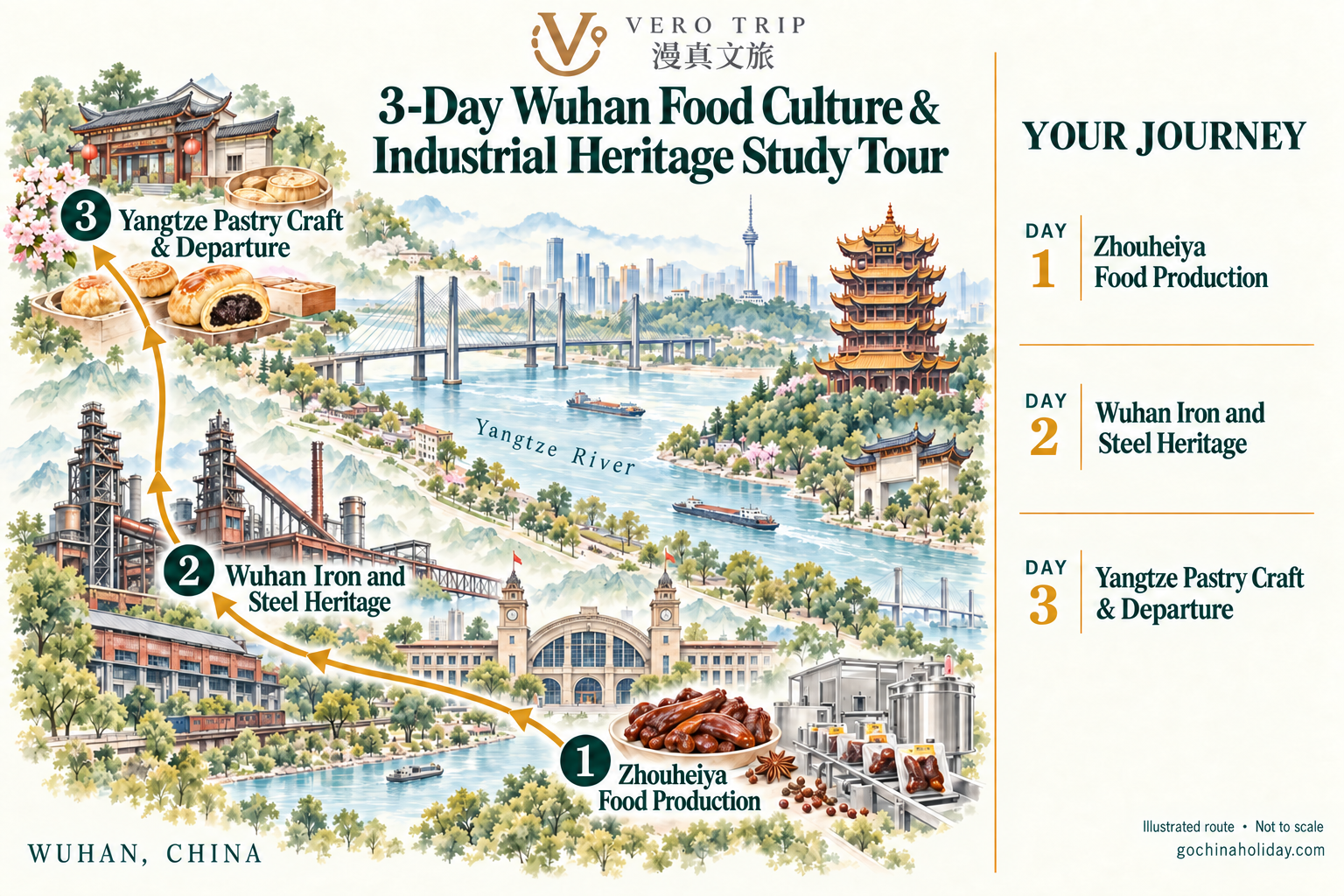
Route at a Glance
| Duration | 3 days / 2 nights |
|---|---|
| Route | Zhouheiya – Wuhan Iron and Steel – Yangtze Pastry Culture |
| Format | Private, date-specific educational program |
| Best for | Secondary schools, vocational colleges and family learning groups interested in production, labor, food culture and city identity. |
| Working language | English, with local interpretation where required |
Why This Route Works
The route lets participants compare heavy industry, standardized food production and hand craft. Facilitated questions focus on process, quality, worker roles, branding and how industrial sites explain themselves to visitors.
Learning and Visit Highlights
- Map a braised-food production process at Zhouheiya
- Trace Wuhan’s steelmaking history at the cultural tourism area
- Make a traditional pastry with an instructor
- Compare automation and hand skill across three sectors
Daily Program
- Day 1: Zhouheiya Food Production
- Day 2: Wuhan Iron and Steel Heritage
- Day 3: Yangtze Pastry Craft and Departure
How Company, School and Community Access Works
Visits are arranged for the specific group and date. The final proposal names the host, visitor route, discussion topic, group size, photography rules and any age or identification requirement. If a requested host cannot receive the group, we discuss a relevant alternative before the itinerary is issued.
Pace, Transport and Supervision
Each full day uses one main visit or two compatible half-day sessions. Road, rail and meal time are included in the working schedule. Student groups must provide participant ages, staff ratios, accessibility needs, allergies and emergency contacts before services are finalized.
What Is Included
- Private ground transport listed in the final program
- English-speaking local coordination and subject specialists as confirmed
- Admission and scheduled learning activities named in the final quotation
- Selected accommodation with breakfast for multi-day programs
What Is Not Included
- International and domestic flights or trains unless specifically quoted
- China entry documents, travel insurance and personal purchases
- Meals, talks, workshops or site access not named in the final quotation
- Optional activities and schedule changes requested during the trip
Frequently Asked Questions
Does the group enter an operating food factory?
The final program states which visitor route and production areas are open. Hygiene rules and operating schedules determine access.
Can students with food allergies join the workshops?
Yes, but all allergies must be provided in advance. Participation or tasting may need to be adapted.
Is the steel site noisy or hot?
Some viewing areas can be industrial in character. The host sets protective rules, and the group enters only areas open to visitors.
Can this tour focus on vocational education?
Yes. We can add process-mapping, workplace-role and production-management questions for vocational groups.
Are products included to take home?
Only items named by the workshop are included. Food transport and shelf-life rules still apply.
Plan This Program
Send the travel window, participant ages or professional roles, group size, learning goals and preferred accommodation through Plan My Trip. Compare related programs in China Educational Study Tours.
Daily Itinerary
Follow the confirmed visitor route to examine ingredients, seasoning, hygiene, temperature control and packaging. A workshop may include a supervised flavor or preparation exercise suited to the group.
Learning focus: Map a braised-food production process at Zhouheiya.
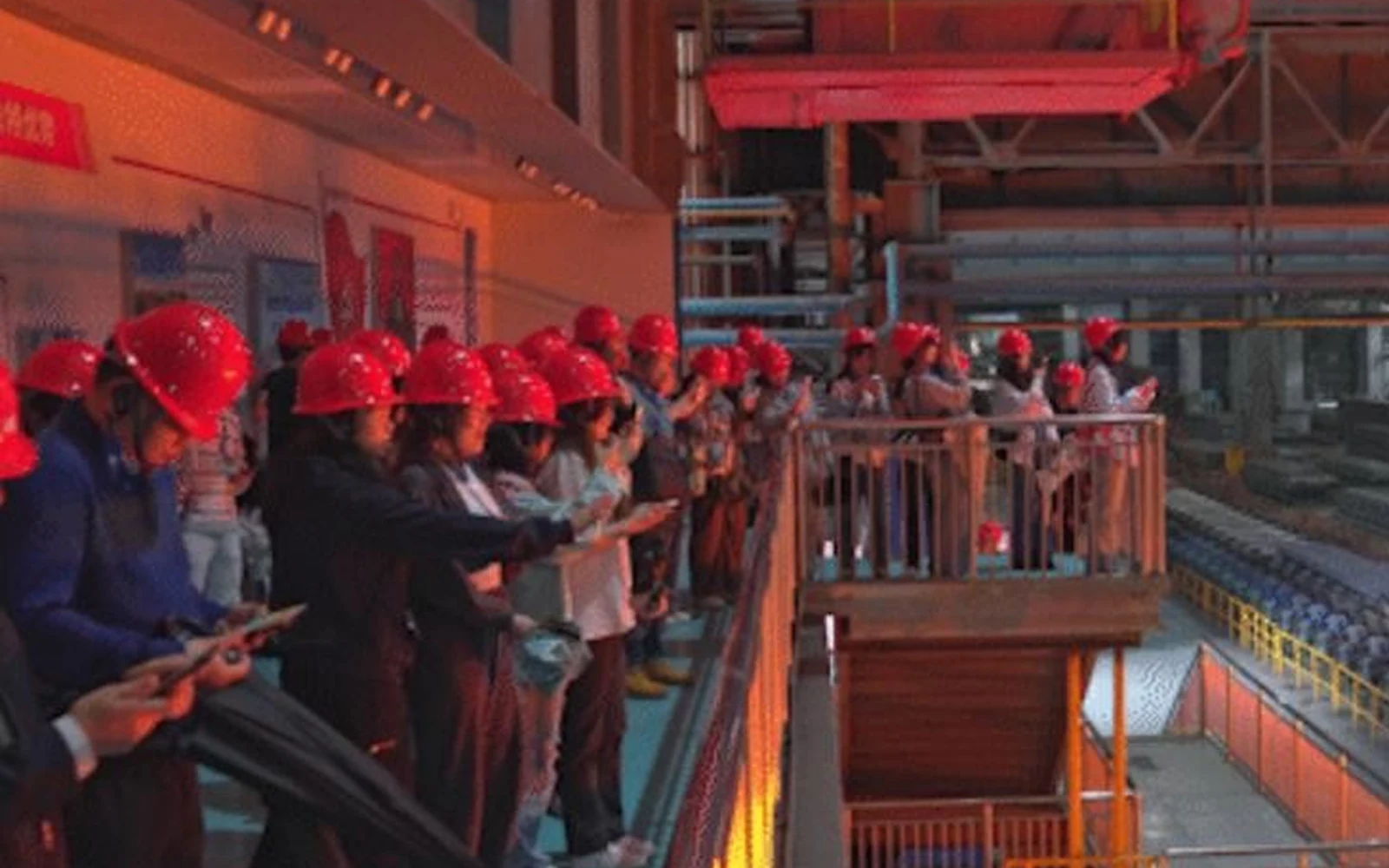
Use the designated industrial-tour route to understand raw materials, production stages and the role of steel in Wuhan’s development. Operational areas and viewing points depend on current plant arrangements.
Learning focus: Trace Wuhan’s steelmaking history at the cultural tourism area.
Meet an instructor for a scheduled pastry session covering ingredients, shaping and cultural meaning. Compare small-batch craft with the two industrial systems before departure.
Learning focus: Make a traditional pastry with an instructor.